AI-generated image
Tainaikou (Inner-Glow) Medaka
IntermediateOryzias latipes
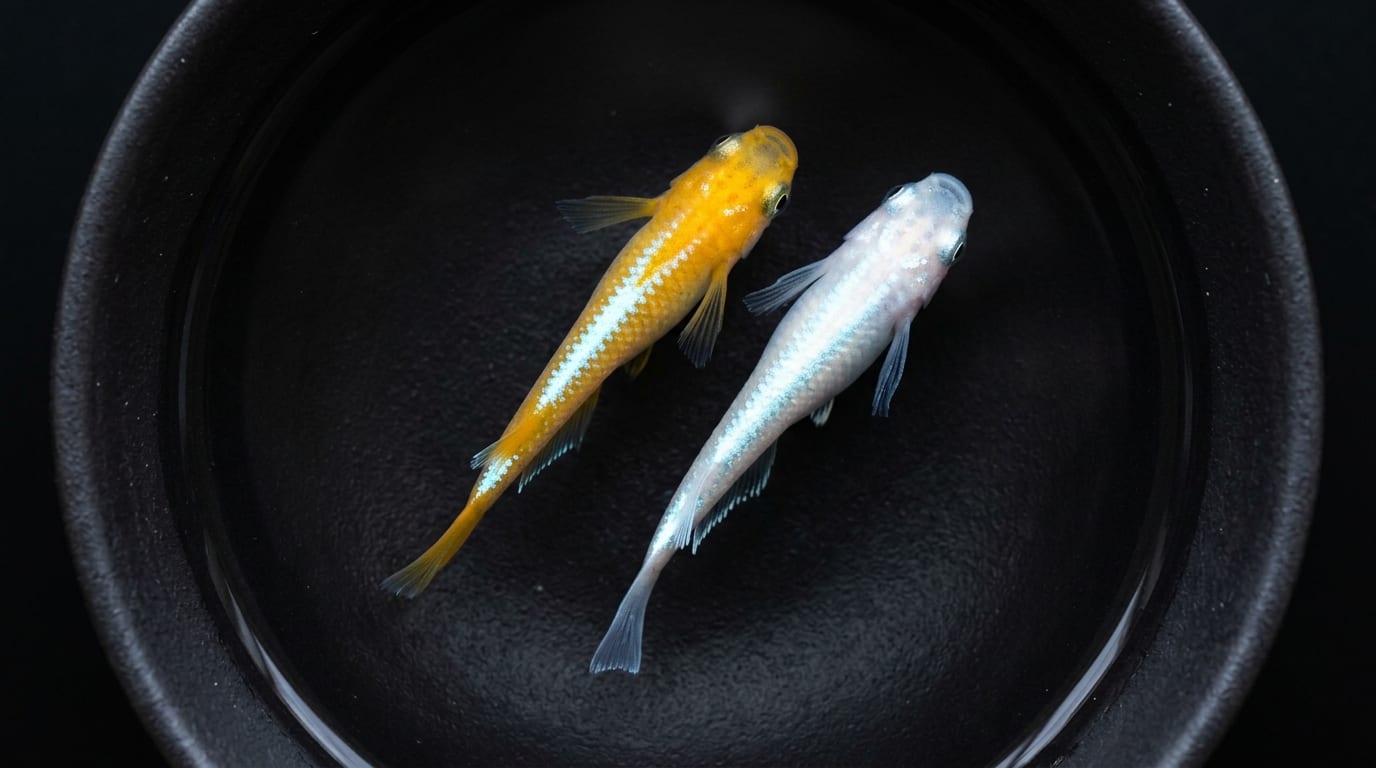
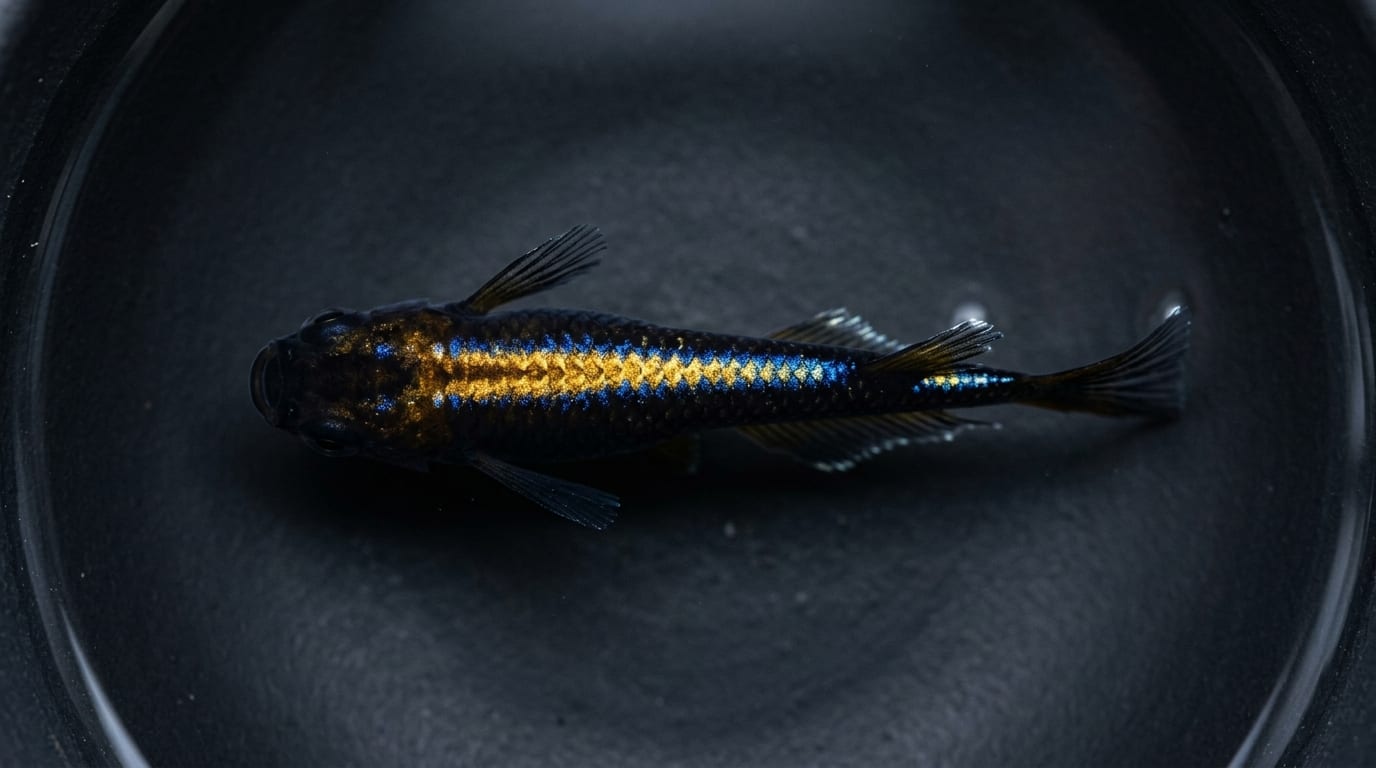
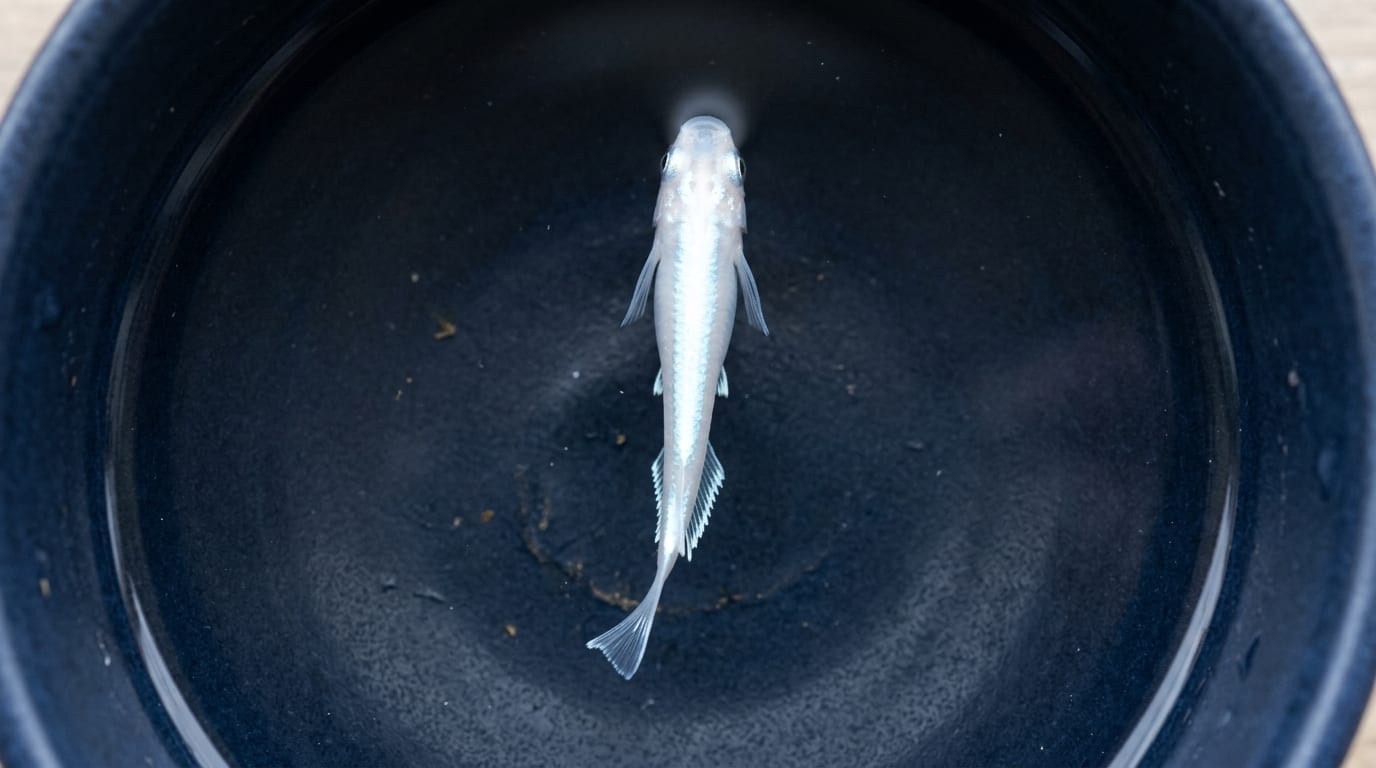
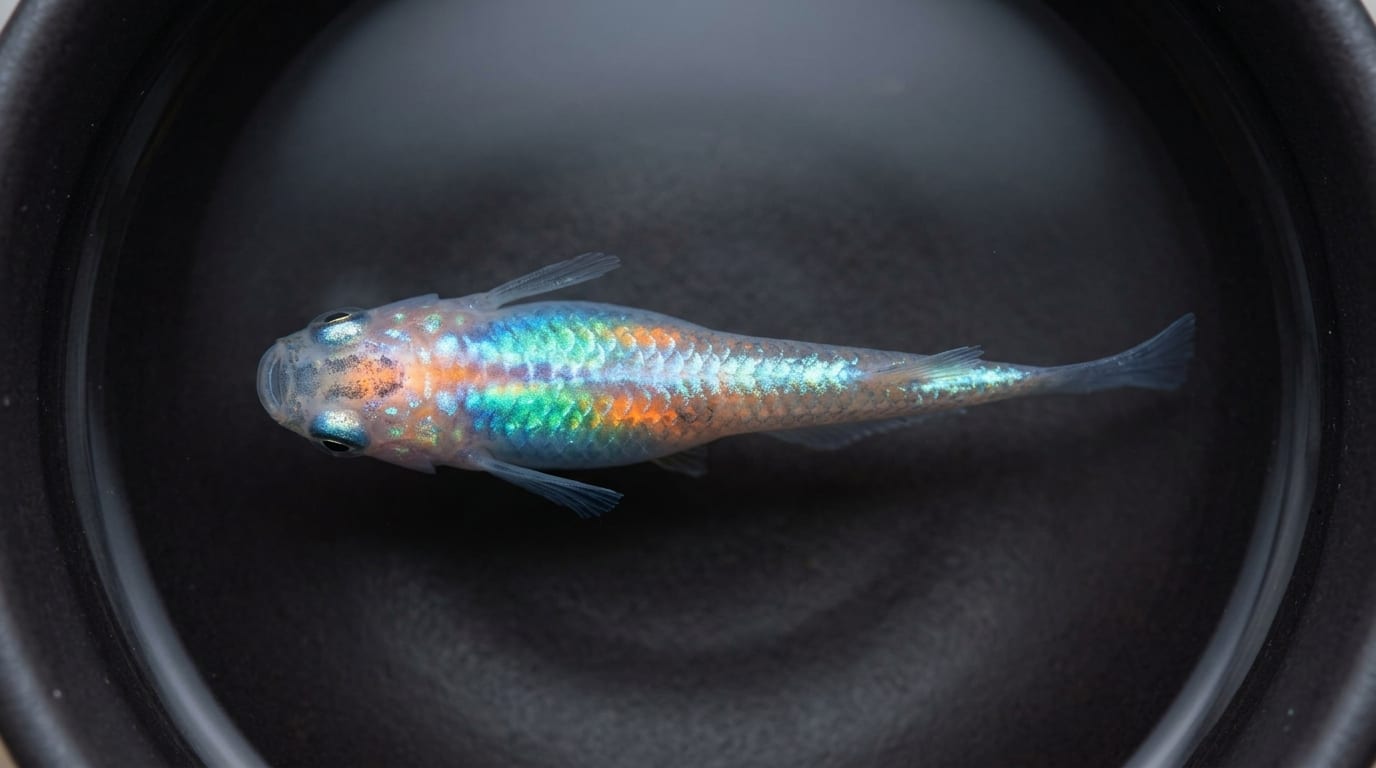
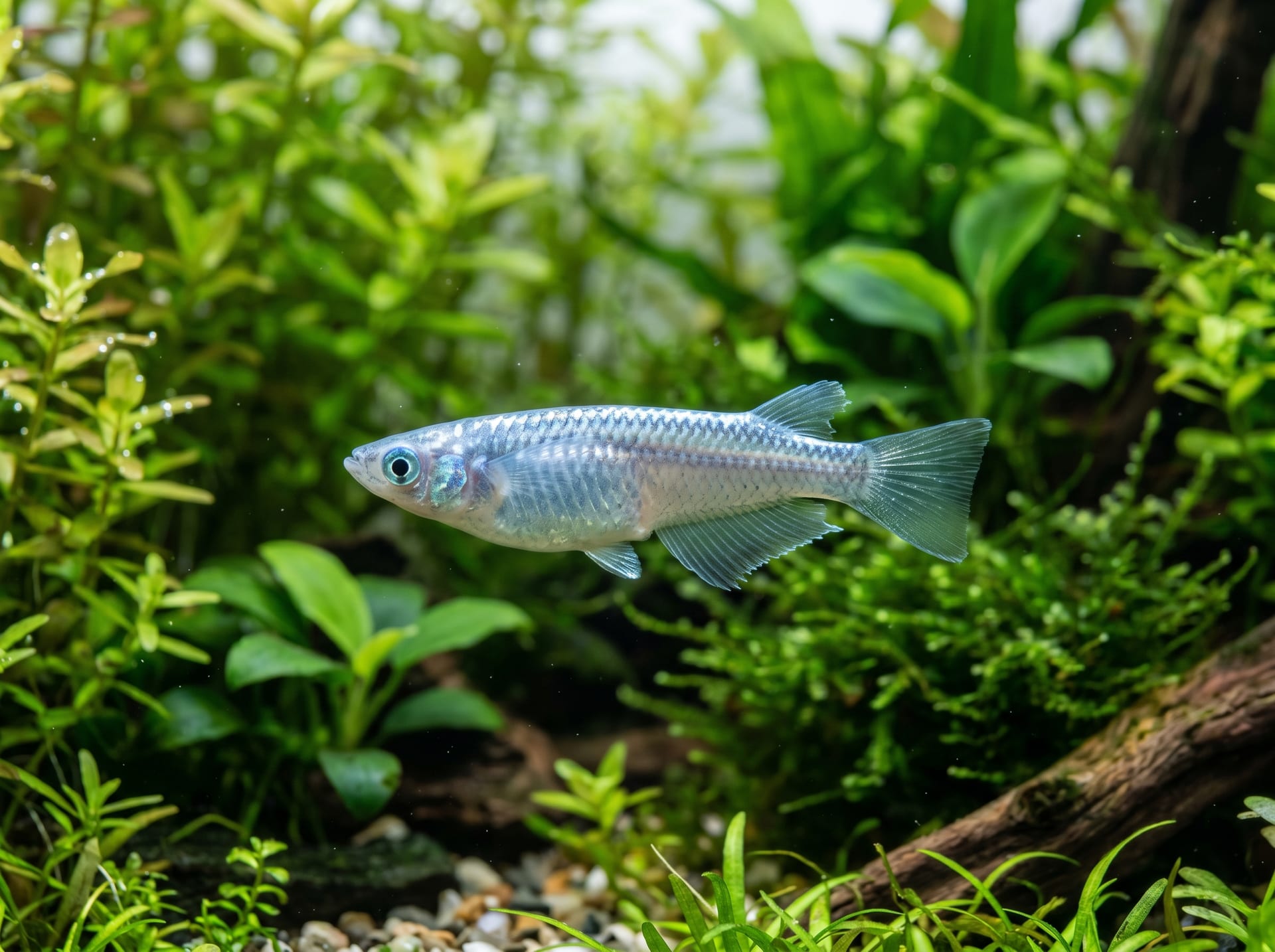
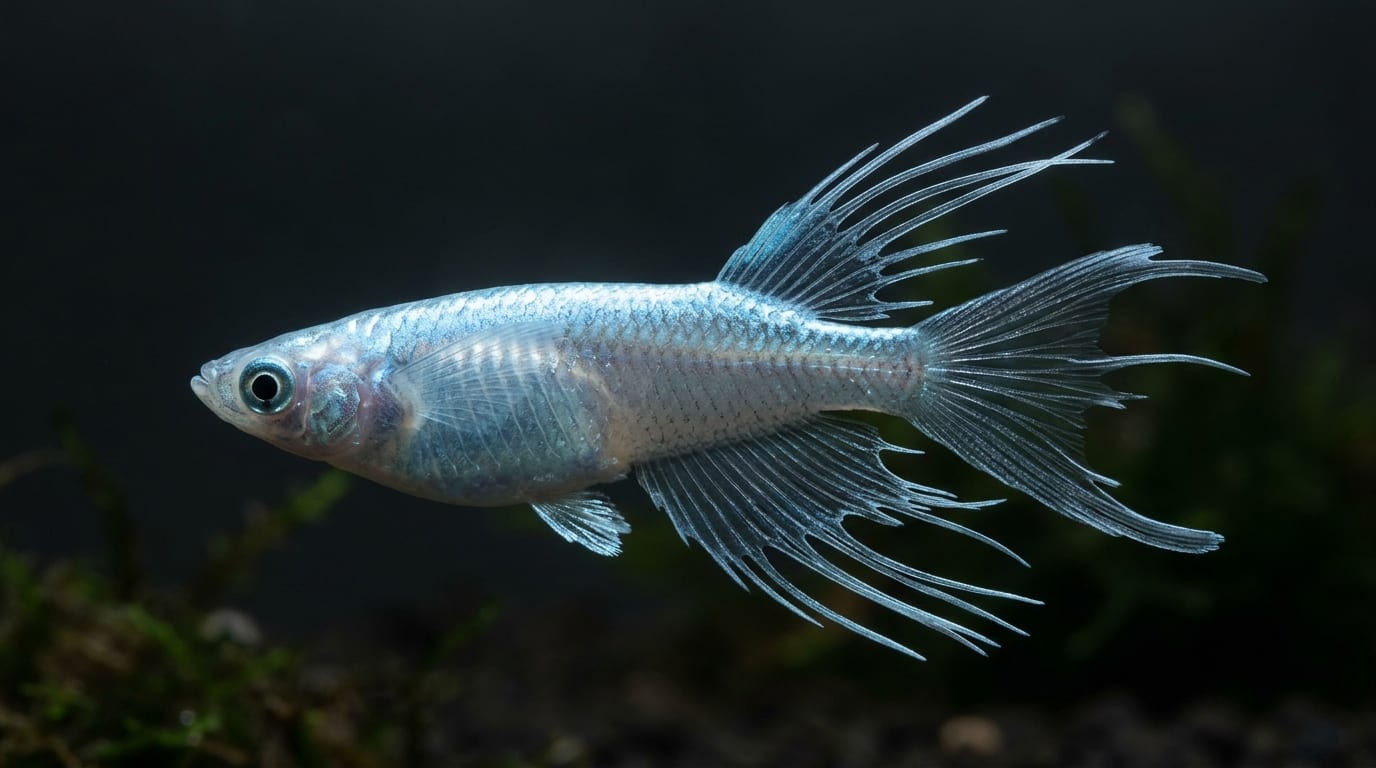
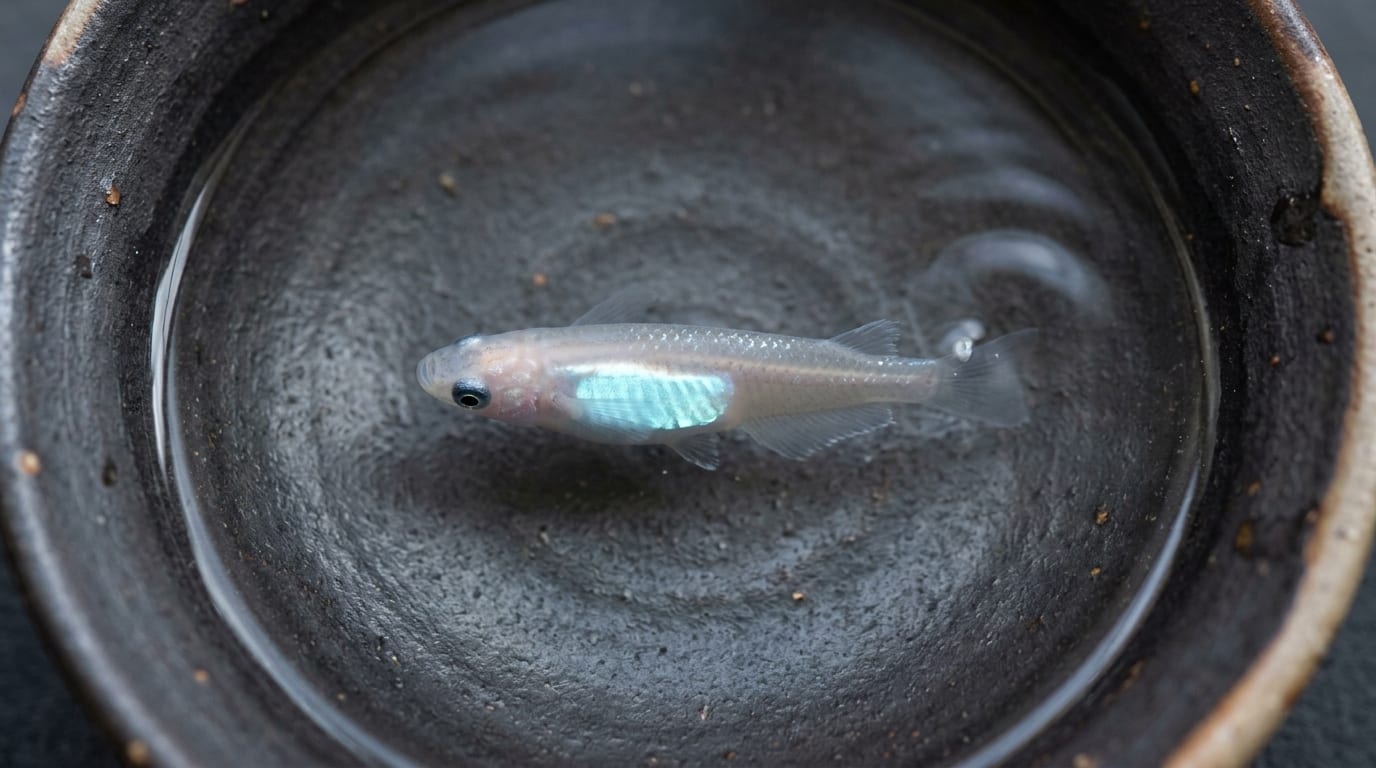
An improved medaka carrying a trait that produces a bluish-white glow inside the body. The glowing layer forms a horizontal plate, so it can only be seen from above, which distinguishes it from external luminescence on the back. It appears mainly on white and blue body colours.
Difficulty
Intermediate
Temperature
18〜28℃
Lifespan
2-3 years
Size
Up to about 4cm SL
Diet
Prepared medaka food, green water
About
Tainaikou is a trait that traces back to a medaka exhibited by Tomoyuki Tomatsu at the 2nd Japan Medaka Show in 2008, in which a bluish-white glow appears inside the body. The Japan Medaka Association classification manual places it among the iridophore traits, and the Medaka Web Encyclopedia lists it as trait 24. The colour resembles the afterglow of a fluorescent lamp just switched off, and because the glowing layer forms a horizontal plate it can be seen only from above and is almost invisible from the side. When first created the glow started near the dorsal fin and reached only about half the body length, but in 2014 fish glowing as far as the pectoral fins were produced, and the best of these are called super tainaikou. As the trait is derived from the miyuki variety, the glow appears mainly on white and blue body colours. The colour of the glow varies between individuals, and bluish-white, green (ryokkou tainaikou), orange, multi-colour and blue are recorded as sub-categories. Certified new varieties of the Japan Medaka Association also include white lame miyuki tainaikou (No.8, 2013, Toshihiro Wada) and miyuki tainaikou nishiki (No.12, 2015, Toshihiro Wada).
Source: Wikipedia (CC BY-SA 4.0)
Lifespan of the Tainaikou (Inner-Glow) Medaka
The Tainaikou (Inner-Glow) Medaka lives 2-3 years.
Size of the Tainaikou (Inner-Glow) Medaka
The Tainaikou (Inner-Glow) Medaka grows to Up to about 4cm SL.
Temperature & humidity for the Tainaikou (Inner-Glow) Medaka
The ideal temperature for the Tainaikou (Inner-Glow) Medaka is 18〜28℃.
Basic Info
Care Specifications
- pH
- 7–8
- Hardness (GH)
- 9–19 dGH
- Water Temp.
- 18–28℃
PeacefulGroupBreeding: Moderate
Sources: Medaka Web Encyclopedia: Complete Medaka Care Guide / FishBase Oryzias latipes / Medaka Web Encyclopedia: Tainaikou (inner glow)
Morphs (Varieties)
The Japan Medaka Association's classification manual sorts varieties by traits that can be seen rather than by genotype, and does not set out how individual traits are inherited. Traits the manual explicitly says can be passed on and produced by selective, multi-generation breeding are listed as line-bred; the rest are grouped under Other.
Other
Inner glow (bluish-white)Inner glow (green, ryokkou tainaikou)Inner glow (orange)Inner glow (multi-colour)Inner glow (blue)
Sources: Japan Medaka Association: Variety Classification Manual, 5th ed. (Sep 2025) / Medaka Web Encyclopedia: Medaka Traits / Medaka Web Encyclopedia: Tainaikou (inner glow)
A curated selection of notable morphs. Inheritance modes are a breeding-planning guide; actual appearance varies with combos.
References & Sources
Edited & verified by: BreederDirect editorial team
The taxonomic, regulatory, and husbandry data on this page are compiled and verified against the authoritative primary sources below.
Primary sources
- Wikipedia
- CITES Appendices (species not listed)
- FishBase (IUCN Red List: Least Concern, assessed 2018)
- Medaka Web Encyclopedia: Complete Medaka Care Guide
- Medaka Web Encyclopedia: Tainaikou (inner glow)
- Japan Medaka Association: Variety Classification Manual, 5th ed. (Sep 2025)
- Medaka Web Encyclopedia: Medaka Traits
- FishBase
- GBIF
Taxonomy & Authority
Accepted name: Oryzias latipes (Temminck & Schlegel, 1846)
Authority databases: FishBase · GBIF · Medaka Web Encyclopedia: Tainaikou (inner glow) · Medaka Web Encyclopedia No.0120 (Blue tainaikou)
Nomenclature follows global taxonomic authority databases.
Regulations & Conservation Status
Not CITES-listedIUCN LC · Least Concern
Sources: CITES Appendices (species not listed) / FishBase (IUCN Red List: Least Concern, assessed 2018)
Regulations may change. Always verify the latest information with the relevant authorities.
Tainaikou (Inner-Glow) Medaka Listings
Loading latest listingsFind listings for this species