Complete Beginner's Guide to Keeping Medaka
For beginners interested in starting medaka cultivation. Comprehensive guide covering tank and container selection, water preparation basics, feeding methods, differences between outdoor and indoor keeping, and recommended beginner varieties like Yohkihi and Miyuki.
Key Takeaways
For beginners interested in starting medaka cultivation. Comprehensive guide covering tank and container selection, water preparation basics, feeding methods, differences between outdoor and indoor keeping, and recommended beginner varieties like Yohkihi and Miyuki.
Things to Know Before Starting Medaka Cultivation
Medaka are freshwater fish that have long inhabited Japanese streams and rice paddies, and are popular pets among beginners for their hardiness and ease of care. In recent years, selective breeding has progressed rapidly, and high-value ornamental varieties of "refined medaka" such as Yohkihi, Miyuki, Tricolor Lame, and Yozakura have emerged one after another.
While keeping them is relatively easy, properly managing three key factors—water quality, water temperature, and light exposure—is essential for long-term care. This guide covers everything a first-time keeper should know, from selecting equipment to breeding.
Essential Equipment and How to Choose
First, gather the necessary items for keeping medaka. Initial costs typically range from a few thousand to around 10,000 yen.
Containers
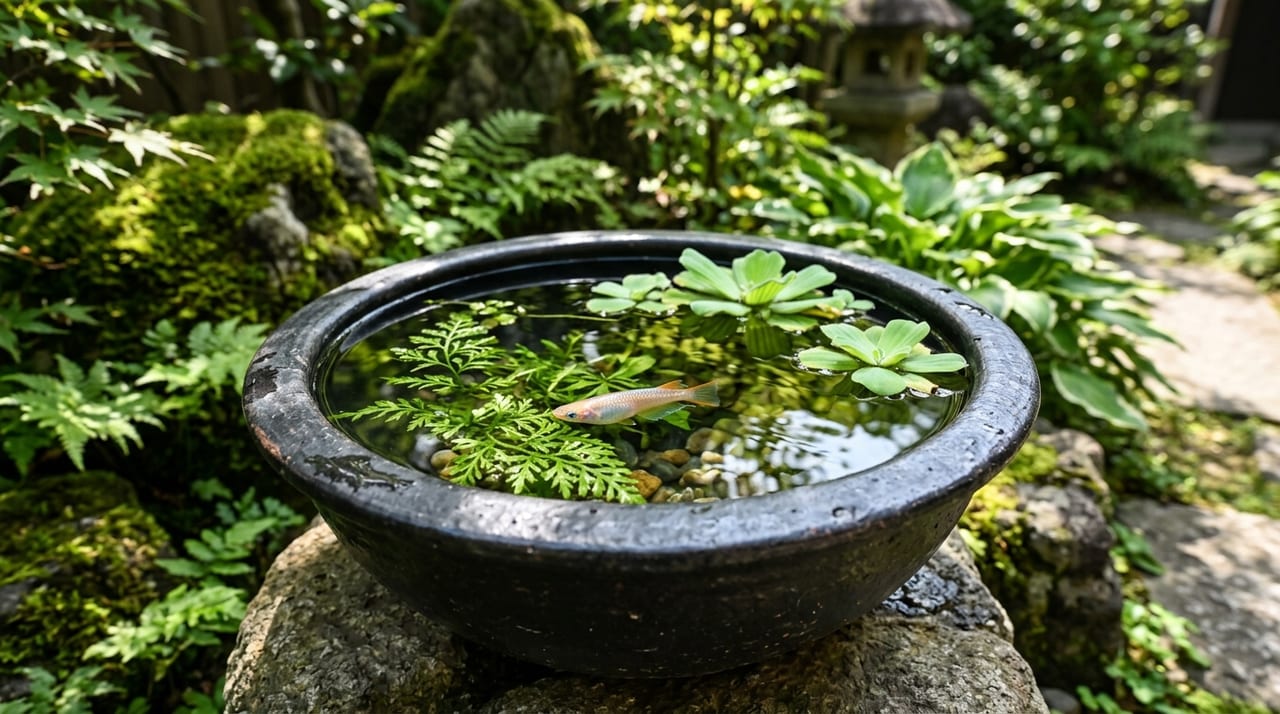
Water lily containers, plastic tubs, or aquariums are the most common choices. Ideally, maintain at least 10 liters of water, as larger volumes provide more stable water conditions. For outdoor setups, plastic tubs or water lily containers work well; for indoors, glass or acrylic tanks that allow side viewing are recommended.
Substrate and Aquatic Plants
Red clay balls (small grade) or aquatic soil work well for substrate. These promote beneficial bacteria colonization and stabilize water pH to slightly acidic or neutral. While large grain sand can also be used, note that it takes longer to establish a cycle.
Water hyacinth, waterweed, and water sprite are the standard plant choices. Since they also serve as spawning substrate, they are essential if you plan to breed. Water hyacinth roots especially function naturally as a spawning bed and provide shelter for fry.
Food and Dechlorinator
Use floating medaka food flakes. Feed once or twice daily, only an amount they can finish in 2–3 minutes. Overfeeding causes poor water quality, so remove uneaten food with a dropper.
Chlorine in tap water is harmful to medaka, so dechlorinator is essential. Liquid dechlorinator works quickly with just a few drops, making it ideal for beginners.
Outdoor vs. Indoor Keeping—Which is Better?
Outdoor Cultivation: Benefits and Precautions
The biggest advantage of outdoor cultivation is that aquatic plants and plankton naturally thrive in sunlight. "Green water" rich in plant plankton is highly beneficial for medaka health and increases fry survival rates. Creating a biotope-style layout is also a unique appeal of outdoor keeping.
Watch out for temperature changes in summer and winter. In summer, temperatures exceeding 35°C are dangerous, so use shade cloths or nets to block direct sunlight. In winter, medaka can survive even if the surface freezes as long as the bottom doesn't freeze; however, moving to a foam container or using a lid for insulation helps.
Indoor Keeping: Benefits and Precautions
Indoor keeping makes it easier to manage water temperature and quality, making it ideal if you want to closely observe the delicate patterns and shimmer of refined medaka from the side. Sponge or undergravel filters are optimal; avoid strong currents, which can exhaust medaka.
Running LED lights 8–10 hours daily maintains a light cycle that promotes spawning. Using a timer-equipped light simplifies management.
Water Preparation and Daily Care Tips
Water quality management is the most important task in medaka keeping. Following these steps alone significantly reduces disease occurrence.
- Add dechlorinator to tap water at the recommended dosage (drawing water into a bucket first ensures even mixing)
- Match water temperature before adding to the container (aim for a difference of 2°C or less between old and new water; sudden changes cause stress)
- Perform a partial water change of about 1/3 of the total volume once weekly (note that changing all the water at once removes beneficial bacteria)
- If cloudiness, odor, or foam persists, change water immediately (these are signs of bacterial imbalance)
Additionally, while medaka are relatively tolerant of high temperatures, they are sensitive to sudden temperature changes. Pay careful attention to temperature differences when changing water or moving containers.
Attempting to Breed Medaka
Medaka breed relatively easily when conditions are right. The requirements are water temperature of 20°C or above and 13 hours or more of light daily. When these conditions are met, females lay several to over a dozen eggs daily.
Eggs are laid on water hyacinth roots or commercial spawning substrate. Since parent fish eat eggs and fry, moving the eggs to a separate container is key to increasing fry numbers. At around 25°C, they hatch in approximately 10 days.
Newly hatched fry have very small mouths, so powdered fry-specific food or infusoria are ideal. Regular flakes can be crushed into powder as a substitute. Raise fry in a separate container from adults until they reach about 1 cm.
Popular Variety Guide
Over 2,000 varieties of refined medaka are said to exist today, and their collectibility is part of their appeal. Here are varieties especially recommended for beginners.
- Yohkihi — Features stunning bright orange to scarlet red coloring; hardy and easy to raise, making it perfect as a first medaka.
- Miyuki — Characterized by a shimmering "lateral line" along the back. Grades include Super Bright and Full Body depending on light intensity, making it highly collectible.
- Tricolor Lame — A luxurious variety with three colors (red, white, black) and glittering spots. Each individual has unique patterns, making each one truly one-of-a-kind.
- Yozakura — Features a complex beauty with yellow, black, and glittering colors. True to its name, it has a fantastical atmosphere reminiscent of cherry blossoms at night.
BreederDirect's Reliability and Safety System
BreederDirect is a platform where you can purchase medaka directly from dedicated breeders nationwide. The biggest difference from pet shops and mass retailers is that you see the breeder's face. You can directly confirm breeding conditions, parent fish lineage, and breeding specifics with the breeder themselves.
- Hand-selected quality individuals: Only beautiful specimens carefully selected by breeders are listed, making it easy to find your desired coloring or pattern.
- Transparent lineage information: You can ask breeders about parent fish characteristics, rearing temperature, food, and more, making it easier to plan post-purchase care.
- Fair pricing: Without middlemen, transactions occur at prices appropriate to quality.
- Post-purchase support: Peace of mind from being able to consult directly with experienced breeders about care questions and breeding tips.
For your first purchase of refined medaka, we encourage you to use BreederDirect. Meeting a trustworthy breeder will surely enrich your medaka-keeping experience.