Recommended Aquatic Plants for Medaka | Choosing for Biotopes and Indoor Aquariums
Carefully selected aquatic plants for medaka tanks and biotopes from a fish keeper's perspective. From species that serve as spawning beds, hardy species that grow without CO2, to floating plants that become hiding places for fry—this guide explains selection criteria and compatibility.
Key Takeaways
Carefully selected aquatic plants for medaka tanks and biotopes from a fish keeper's perspective. From species that serve as spawning beds, hardy species that grow without CO2, to floating plants that become hiding places for fry—this guide explains selection criteria and compatibility.
Benefits of Growing Medaka and Aquatic Plants Together
Medaka are not highly herbivorous fish and rarely actively eat aquatic plants. Therefore, they coexist without problems with most aquatic plant species. Adding aquatic plants to a medaka tank offers several advantages for fish keepers.
Water Quality Stability: Aquatic plants absorb ammonia (NH4+) and nitrates (NO3-) as ions through their roots and leaves, contributing to water quality stability by consuming nitrogen in the water (nitrogen absorption is a separate process from photosynthesis). In particular, fast-growing species like Anacharist and Hornwort thrive even in nutrient-rich water and significantly contribute to water stability.
Spawning Substrate: Medaka have a habit of laying eggs on aquatic plant leaves and roots. Willow moss with its fine leaves and Water sprite with its feathery roots function as natural spawning substrates.
Hiding Places for Fry: Densely vegetated areas serve as safe havens where fry can hide from adults. Utilizing floating plants and bushy aquatic plants increases fry survival rates.
Aesthetic Appeal: The presence of aquatic plants creates an environment where medaka feel secure and swim comfortably. Hiding behavior among plants is a sign of reduced stress.
For detailed cultivation methods and species information, visit botachoku.com's aquatic plant encyclopedia. This article focuses on selection and usage from the perspective of medaka keepers.
Aquatic Plants and Floating Plants for Biotopes
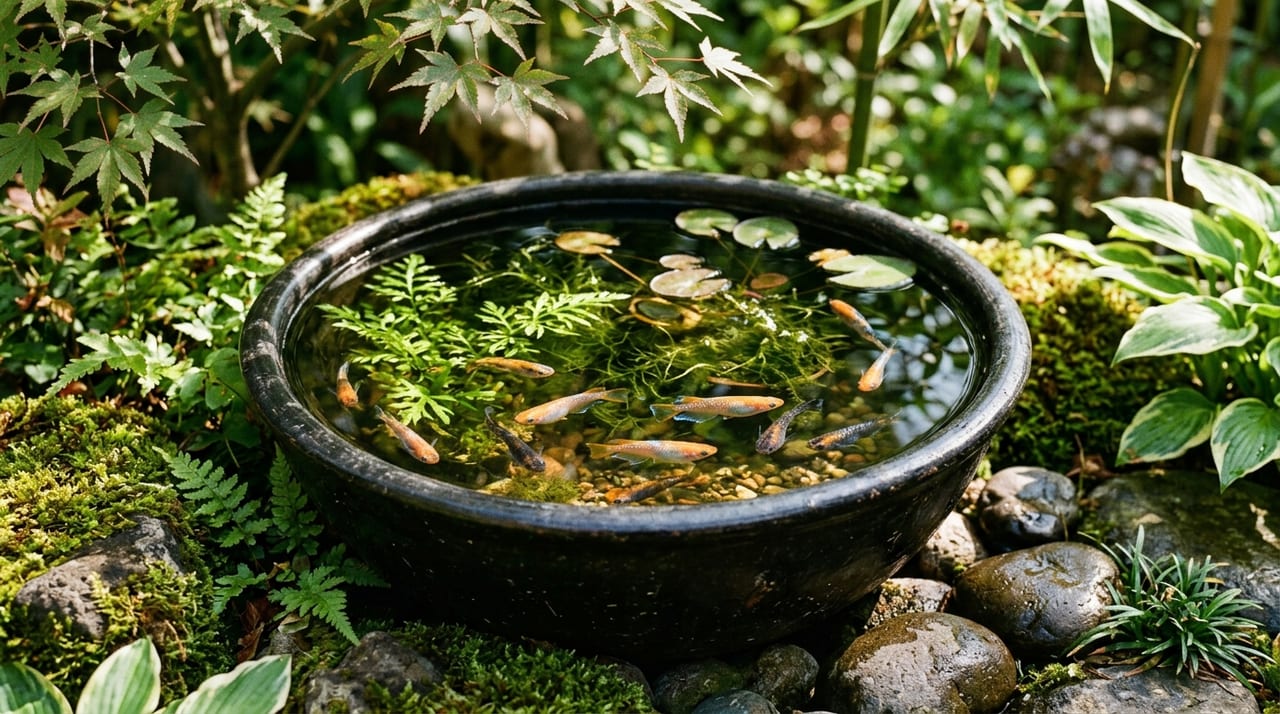
In outdoor biotopes (a keeping style creating natural-like environments in lotus bowls or large containers), aquatic plants that thrive in well-lit conditions shine.
Water Sprite (Hyphomicron)
A classic floating plant for biotopes. Its feathery roots serve as a natural spawning substrate and hiding places for fry. By covering the water surface, it softens intense summer sunlight and prevents rapid temperature spikes. It reproduces vigorously and will overgrow if left unchecked. Thin it out regularly to maintain water flow and light throughout the biotope. When managing outdoors, take care to prevent escapees from flowing into ponds or rivers.
Alternative Floating Plants if Water Sprite Becomes Difficult
Water sprite can sometimes grow too large. In such cases, smaller species like Salvinia or Amazon frogbit are easier to manage. Both have roots that provide hiding places for fry.
Anacharist (Waterplant Elodea)
A submerged aquatic plant that can be planted at the bottom or left floating. One of the easiest plants for medaka to spawn on, with high water purification capability. It rarely dies even in winter, making it suitable for year-round biotope use. Rapid growth allows regular pruning to maintain water flow. Take care to prevent outdoor escapees.
Hornwort
A floating aquatic plant that grows simply by being placed in water. Its strong reproduction makes it a common choice for medaka spawning. When water temperature drops below 10°C, it may enter dormancy or die, so it's easier to move it indoors during winter or plan to replace it fresh in spring.
Aquatic Plants for Indoor Tanks (Growing Without CO2 and in Low Light)
Indoor tanks use fluorescent or LED lights, so strong natural sunlight like in biotopes cannot be expected. The basic approach is selecting low-light aquatic plants that grow without CO2 supplementation.
Willow Moss
An attaching aquatic plant secured to driftwood or stones with thread. Its fine, delicate leaves are ideal as a spawning substrate where medaka naturally prefer to spawn. It grows slowly in low light without CO2 and is easy for beginners to maintain. Simply add driftwood with attached moss to the medaka tank and it immediately serves as a spawning substrate.
Anubias Nana
A hardy attaching plant with thick, hard leaves; its extremely slow growth makes it well-adapted to low light and CO2-free conditions. Secure the rhizome to driftwood or stone with cotton thread (do not bury the rhizome in substrate as it will rot). It becomes an accent in medaka tank layouts.
Microsorum (Java Fern)
A fern-type attaching aquatic plant with strong low-light tolerance and no CO2 requirement. Its large leaves create shade, helping medaka feel settled. Simply place it with roots attached to driftwood for easy care.
Tips for Using Aquatic Plants as Spawning Substrates and Fry Hiding Places
When breeding medaka, spawning substrate selection is crucial.
Ideal Spawning Substrate Plants: Willow moss, Anacharist, and Hornwort all have fine leaf structures where eggs are easily laid. Commercial artificial spawning substrates are available, but real aquatic plants tend to naturally inspire spawning behavior.
Ideal Plants for Fry Hiding Places: Water sprite roots, Salvinia, and densely bushy Hornwort. Newly hatched fry face predation risk from adults, so providing plants near the water surface where they can hide increases survival rates.
Precautions When Introducing Aquatic Plants
Pesticide Residue: Commercial aquatic plants may have pesticide residue. Medaka have higher pesticide tolerance than shrimp, but for safety, perform a "pesticide rinse" by keeping plants in a separate container with daily water changes for several days before introduction, or select pesticide-free plants.
Snail Contamination: Snail eggs may be attached to aquatic plants. Excessive snail reproduction can damage the aesthetic, so rinse well with running water before adding if concerned.
Aquatic Plant Balance: Excess vegetation can cause oxygen depletion at night when photosynthesis stops. Use aeration (air pump) alongside plants or manage aquatic plant volume appropriately.
For medaka care information, visit the medaka guide, and for general aquarium hub information, see the Aquatic Plants and Aquarium Feature.