A Guide to Aquatic Plants and Floating Plants Compatible with Medaka | Choosing Plants to Beautifully Enhance Your Biotope
Explains types of aquatic and floating plants suitable for medaka care. Introduces the characteristics, management methods, and benefits to medaka of water hyacinth, hornwort, anacharis, and more.
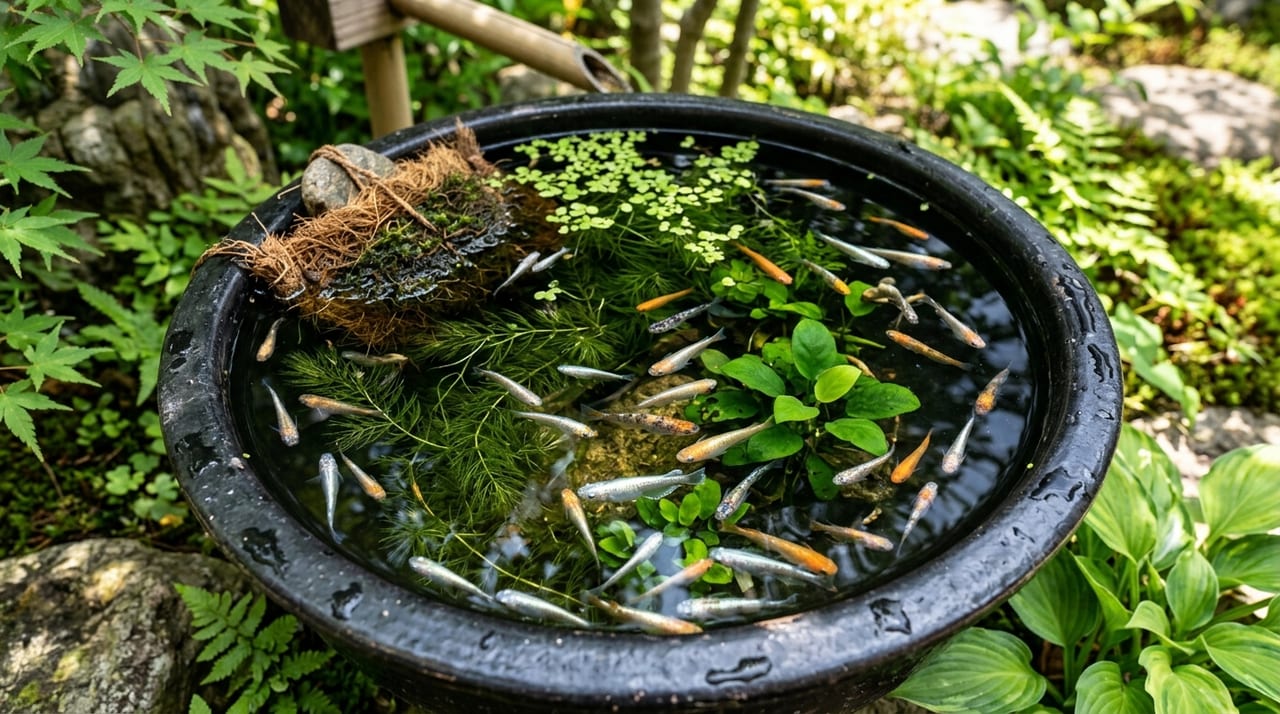
Key Takeaways
Explains types of aquatic and floating plants suitable for medaka care. Introduces the characteristics, management methods, and benefits to medaka of water hyacinth, hornwort, anacharis, and more.
Combining aquatic plants and floating plants with medaka cultivation not only provides aesthetic beauty but also practical benefits such as water purification and spawning beds. However, some types of aquatic plants are incompatible with medaka. This article explains how to select and manage aquatic plants and floating plants optimal for medaka cultivation.
Types and Characteristics of Floating Plants
- The most popular floating plant for medaka cultivation is water hyacinth (Eichhornia crassipes). The roots hang down long and function excellently as a spawning bed for medaka. Eggs laid on the roots can be moved to a separate container along with the roots, making egg collection very easy. Additionally, it has a high effect of purifying water quality by absorbing nitrogen and phosphorus in the water, and serves as a sunshade in summer. However, it has extremely strong reproductive power, and if left unattended, it will cover the entire water surface, so regular thinning is necessary. If more than 2/3 of the water surface is covered, sunlight cannot reach the water, affecting medaka activity.
- Amazon frogbit is a smaller floating plant than water hyacinth and is also suitable for indoor cultivation. The round leaves are cute, and it's a size that's easy to handle even in small containers.
- Salvinia cucullata (a relative of sensitive plant) is an interesting floating plant with a unique leaf shape that becomes a hiding place for medaka.
Recommended Submerged Aquatic Plants
Submerged aquatic plants grown underwater become hiding places and spawning beds for medaka, supply oxygen through photosynthesis, and contribute to water purification.
- Hornwort is the easiest submerged aquatic plant to grow, and since it has no roots and drifts in water, it can grow even without substrate. While it grows quickly and has high water purification ability, if it grows too much, it will compress the space where medaka swim, so thin it out appropriately.
- Anacharis is also a standard species alongside hornwort, and can also be planted in substrate. It's hardy and resistant to low temperatures, and can overwinter in outdoor cultivation.
- Cabomba (Fanwort) is an aquatic plant with delicate beautiful leaves, but it's weak to insufficient light and water quality changes, so it's somewhat for advanced users. In an outdoor biotope, it will grow beautifully if exposed to sufficient sunlight.
Emergent Plants and Biotope Plants
If you want to create a full-fledged biotope, incorporate emergent plants that extend stems and leaves above the water surface.
- Longleaf arrowhead extends thin long leaves from underwater and blooms white flowers. Easy to manage and recommended for beginners.
- Water bacopa is an emergent plant with cute small blue flowers, and you can enjoy both aquatic and terrestrial leaves.
- Dwarf papyrus (Cyperus helferi) has a height of 20-30cm and serves as an accent for your biotope.
- Water lily is a leading plant for biotopes, and the beauty when flowers bloom is exceptional. However, since the leaves are large, it's unsuitable for small containers, requiring containers of 60cm diameter or larger. Pygmy water lily is smaller and can be enjoyed in containers of about 40cm.
These emergent plants provide shade to medaka and also serve as hiding places from birds.
Aquatic Plant Management and Maintenance
Neglecting aquatic plant maintenance can negatively affect medaka cultivation environment. If floating plants increase too much, they cover the water surface and photosynthesis becomes impossible, causing insufficient oxygen in the water. Maintain at least 1/3 of the water surface in an open state. Dead aquatic plants worsen water quality, so remove yellowed leaves and stems regularly. Fertilizer is basically unnecessary, as nitrogen and phosphorus from medaka waste become nutrients for aquatic plants. Adding fertilizer disrupts the nutrient balance in the water and makes algae more likely to occur. Aquatic plants that wither in winter (such as water hyacinth) should be removed in autumn or taken indoors to overwinter. Hornwort and anacharis slow their growth when water temperature drops, but don't completely die and resume growth in spring.
Aquatic Plants Unsuitable for Medaka
Not all aquatic plants are suitable for medaka. Aquatic plants with pesticide residue cause fatal damage to medaka. In particular, aquatic plants sold at home centers are often treated with pesticides, so before introduction, always soak them in a bucket for 1-2 weeks to remove impurities. It's safest to obtain pesticide-free aquatic plants from aquatic plant specialty shops or medaka breeders. Some species of Myriophyllum grow extremely fast and can take away the space where medaka swim. Additionally, avoid aquatic plants that assume high light and CO2 supplementation (such as Glossostigma elatinoides and dwarf baby tears), as they're difficult to grow in a medaka cultivation environment.
Basic Principles of Tankmate Selection
When choosing creatures to keep with medaka, follow these three principles.
1. Water Temperature Compatibility
When medaka are kept outdoors, the water temperature drops considerably in winter without heating. If the creature cannot adapt to this wide range of water temperatures, one will suffer.
2. Size That Won't Be Eaten
Medaka may eat small creatures that fit in their mouths, and conversely, medaka themselves can be eaten if kept with fish larger than they are. Consider the size both will be when fully grown and select tankmates accordingly.
3. Creatures That Don't Injure Medaka
Creatures that could harm medaka fins or body, such as crayfish or crabs, are absolutely prohibited. Medaka, too, become susceptible to infection when the mucous membrane on their body is damaged.
Medaka and Aquatic Plants Set at BreederDirect
The combination of medaka and aquatic plants enhances the charm of your biotope many times over. At BreederDirect, you can also get information about aquatic plants that are compatible with medaka from medaka breeders. By asking breeders about the types of aquatic plants they actually use, you can start your biotope with combinations that have proven results.