Medaka Biotope & Outdoor Rearing Guide | Containers, Aquatic Plants & Management Tips
A guide to beginning outdoor biotope rearing of medaka. Detailed explanations of proper container selection, recommended aquatic plants, seasonal management methods, and predator countermeasures.
Key Takeaways
A guide to beginning outdoor biotope rearing of medaka. Detailed explanations of proper container selection, recommended aquatic plants, seasonal management methods, and predator countermeasures.
The Appeal and Fundamental Concepts of Biotope Rearing
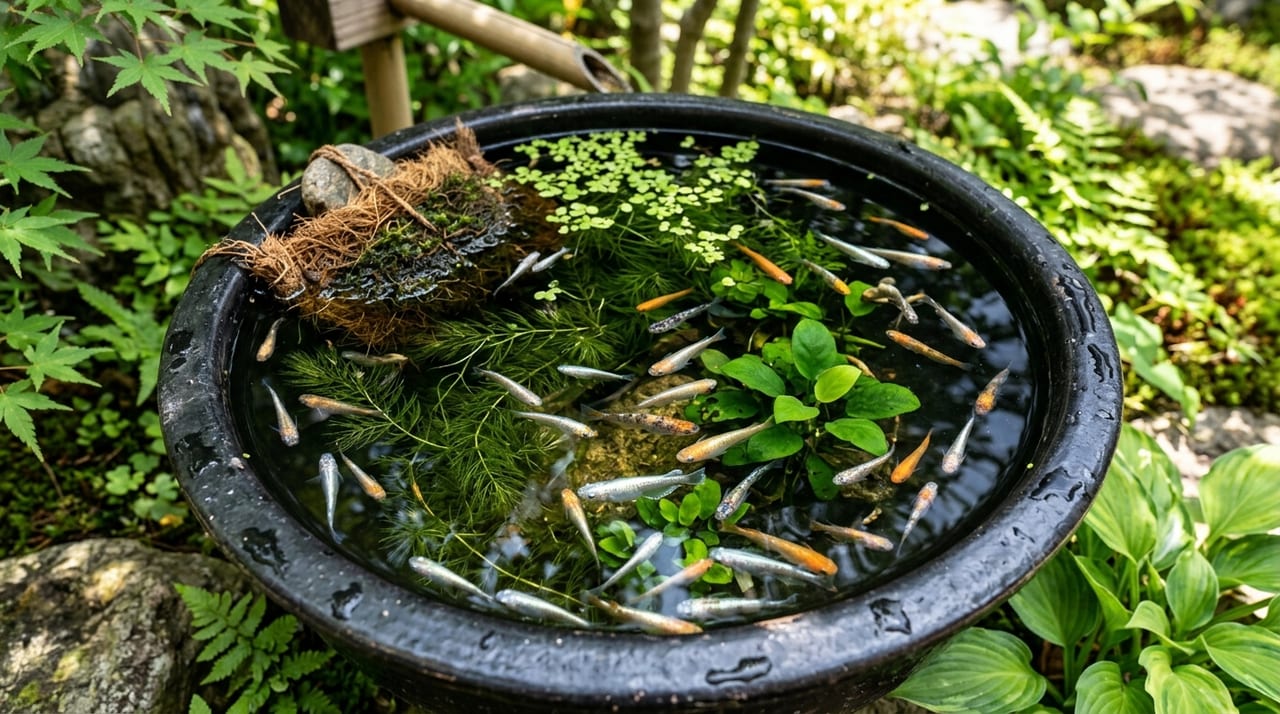
Medaka biotope rearing is a style of keeping medaka in outdoor containers—such as lily pots or plastic tubs—arranged with aquatic plants and substrate, in a manner that closely mimics natural outdoor environments. Unlike indoor aquariums, natural rhythms of sunlight, wind, and temperature fluctuations are incorporated into the rearing environment, making it easy to bring out the medaka's natural vitality. This is the greatest appeal of the biotope method.
In a biotope, water quality naturally stabilizes as plants photosynthesize, microorganisms break down waste, and medaka excretions cycle through the system. You can maintain a beautiful aquascape without relying on filters or frequent water changes—a major advantage for busy people. Biotope rearing is relatively failure-resistant even for beginners, and the changing landscapes across seasons make it increasingly popular.
Container Selection and Installation Location Tips
Types and Characteristics of Containers
Choose your biotope container based on aesthetics, cost, and heat retention.
- Lily pot (suiren-bachi): A ceramic container with a dignified appearance that blends well with Japanese-style gardens. Choosing a size of 40 cm diameter or larger makes it easier to maintain adequate water volume.
- Plastic tub (toro-bune): A lightweight plastic container originally designed for plastering work, with outstanding cost-performance. High capacity makes it ideal for breeding-oriented rearing.
- Expanded polystyrene container: Excellent heat retention for winter survival. Light and easy to handle, perfect for those wanting to start with minimal expense.
For detailed container comparisons, see Medaka Rearing Container Comparison Guide.
Aim for 1–2 liters per fish and maintain minimum depth of 15 cm or more. Greater water volume means more gradual changes in water temperature and quality, lowering difficulty.
Choosing an Installation Location
The ideal location receives morning sunlight with afternoon shade—what we call "dappled shade." Too much direct sun causes excessive summer heating, while too much shade stunts plant growth. A well-ventilated location helps suppress water temperature rises and improves oxygen supply.
Recommended Aquatic Plants and Arrangement Principles
Aquatic plants do far more than create the biotope's aesthetic. They purify water quality, provide spawning areas, create shade, and supply oxygen. Combining plants of different types creates a balanced environment.
Floating Plants (floating on the water surface)
- Water hyssop (Hottonia): Ideal for blocking intense summer sunlight. Fine roots make excellent spawning sites. However, propagate vigorously—watch for overgrowth.
- Amazon frogbit: Compact and easy to handle, even in small containers. Roots also serve as spawning beds.
Submerged Plants (fully submerged in water)
- Anacharum (Egeria densa): Hardy and most suitable for beginners. Excellent oxygen production through photosynthesis and strong water-purifying properties.
- Hornwort (Ceratophyllum): Requires no substrate—simply float it and it thrives. Used as a spawning bed and called "goldfish weed," a classic choice.
Emergent Plants (roots in water, stems and leaves above the surface)
- Japanese arrowhead (Sagittaria sagittifolia): Slender leaves and white flowers create a refined appearance. Adds visual accent to the biotope landscape.
- Water mushroom (Hydrocotyle): Round, coin-shaped leaves add charm and softness to the water's edge scenery.
Arrangement tips: Position taller plants toward the back or edges, lower plants in the foreground or center. This creates visual depth and naturally provides hiding places for your medaka.
Seasonal Management and Considerations
Biotope rearing requires management adjusted to seasonal changes. Medaka activity, appetite, and spawning behavior all correlate directly with water temperature, so tracking temperature fluctuations is essential.
Spring (March–May): Spawning Season Prep
Begin feeding once water temperature rises above 15°C. Medaka spawn most actively between 16–28°C, so prepare spawning sites like water hyssop and hornwort early. This is also a good time to add water to restore levels reduced over winter. See Spring Care & Cultivation Management Tips for broader seasonal strategies.
Summer (June–August): Water Temperature Control Is Critical
The most important concern in summer is water temperature rise. Activity declines above 30°C, and temperatures of 35°C or higher can be fatal within hours. Actively use reeds, shade netting, and floating plants to create shade. Water loss through evaporation is severe, so daily top-offs are essential. Prepare dechlorinated water or keep a reserve of aged water on hand for replenishment.
Autumn (September–November): Winter Preparation Period
Falling leaves degrade water quality if they accumulate in the container—remove them frequently. When temperature drops below 10°C, medaka appetite declines sharply; gradually reduce feeding, and stop entirely once it falls below 5°C. Cleaning the container and performing water changes at this time are key to successful overwintering in clean conditions.
Winter (December–February): Quiet Overwintering
Once water temperature drops to 5°C or below, stop feeding completely. At low temperatures, medaka metabolism plummets and they cannot digest food—feeding fouls the water. Medaka can survive even if the surface freezes, as long as ice doesn't form all the way to the bottom. However, the vibration from cracking ice causes stress, so leave it be. Avoid water changes and minimize disturbance—this is the key to successful overwintering.
Predators and Troubleshooting
Outdoor rearing requires awareness of natural threats. Here are common predators and countermeasures:
- Dragonfly nymphs (yago): The biotope's greatest threat. Dragonflies lay eggs, and the hatched nymphs prey on medaka. Regularly check the container bottom and walls, removing any found. Using an insect net cover is the most reliable prevention.
- Birds (herons, crows): Herons are particularly dangerous—they're not wary and will readily eat your medaka. Laying netting or wire mesh over the container prevents attacks.
- Cats: Use a fitted net cover or commercial cat-repellent products.
- Water striders (amenbō): Can prey on fry. Covering fry-only containers with netting provides peace of mind.
If green water (pea soup algae) appears, moderate levels actually benefit fry rearing, but excess causes oxygen depletion. Increase floating plants to distribute photosynthesis, or transfer excess to another container to adjust water quality. See How to Create and Use Green Water for details.
Summary
Medaka biotope rearing is a deep and rewarding style that lets you enjoy medaka and aquatic plants together with minimal effort, harnessing nature's power. As you gradually master container and plant combinations, plus seasonal management techniques, your biotope will become increasingly refined with each passing year.
If you want to introduce hardy, healthy medaka to your biotope, consider purchasing directly from breeders on BreederDirect. On BreederDirect, you can check breeder profiles and rearing environments before purchasing, allowing you to confidently select healthy individuals. All communications are recorded, and payment terms are agreed upon in advance—a system designed so even first-time buyers feel secure. Visit the Medaka category to find the perfect variety for your biotope.