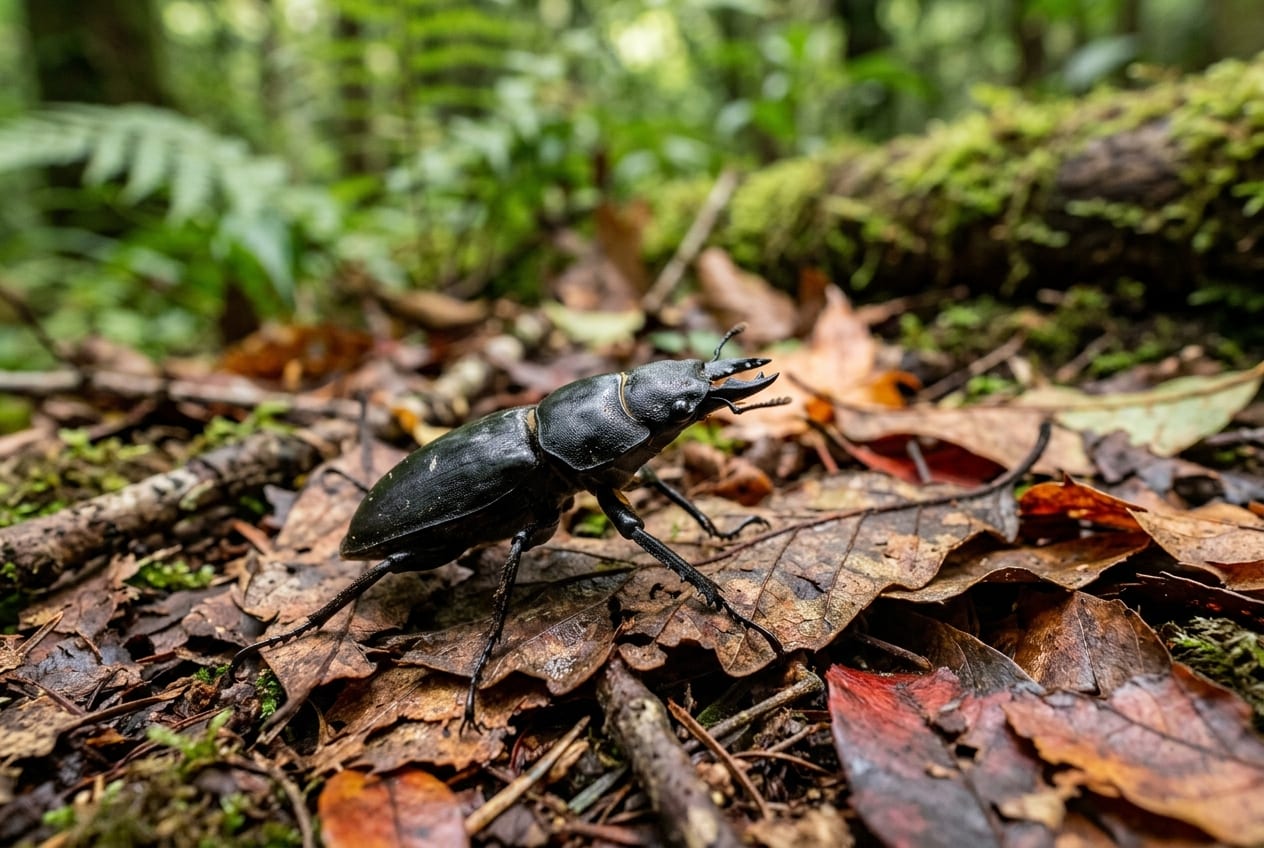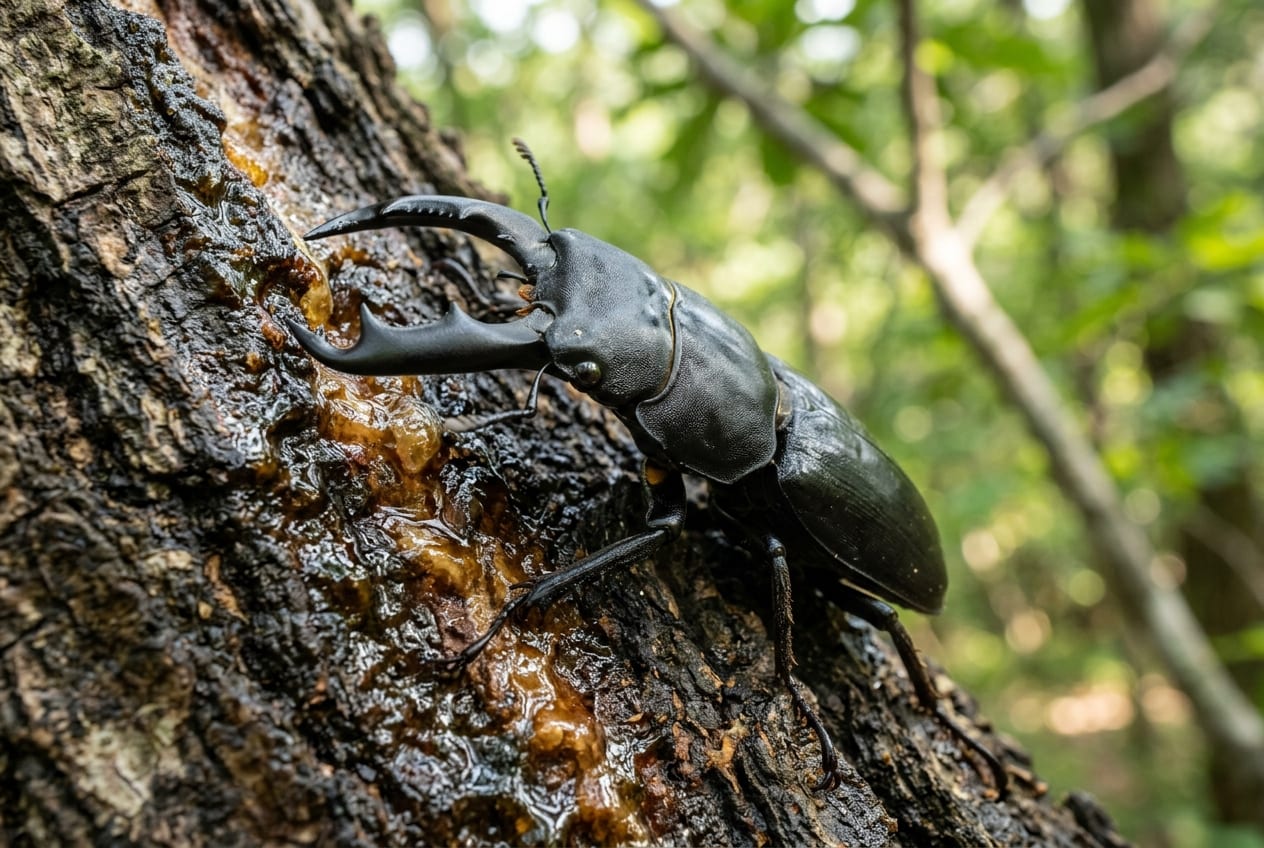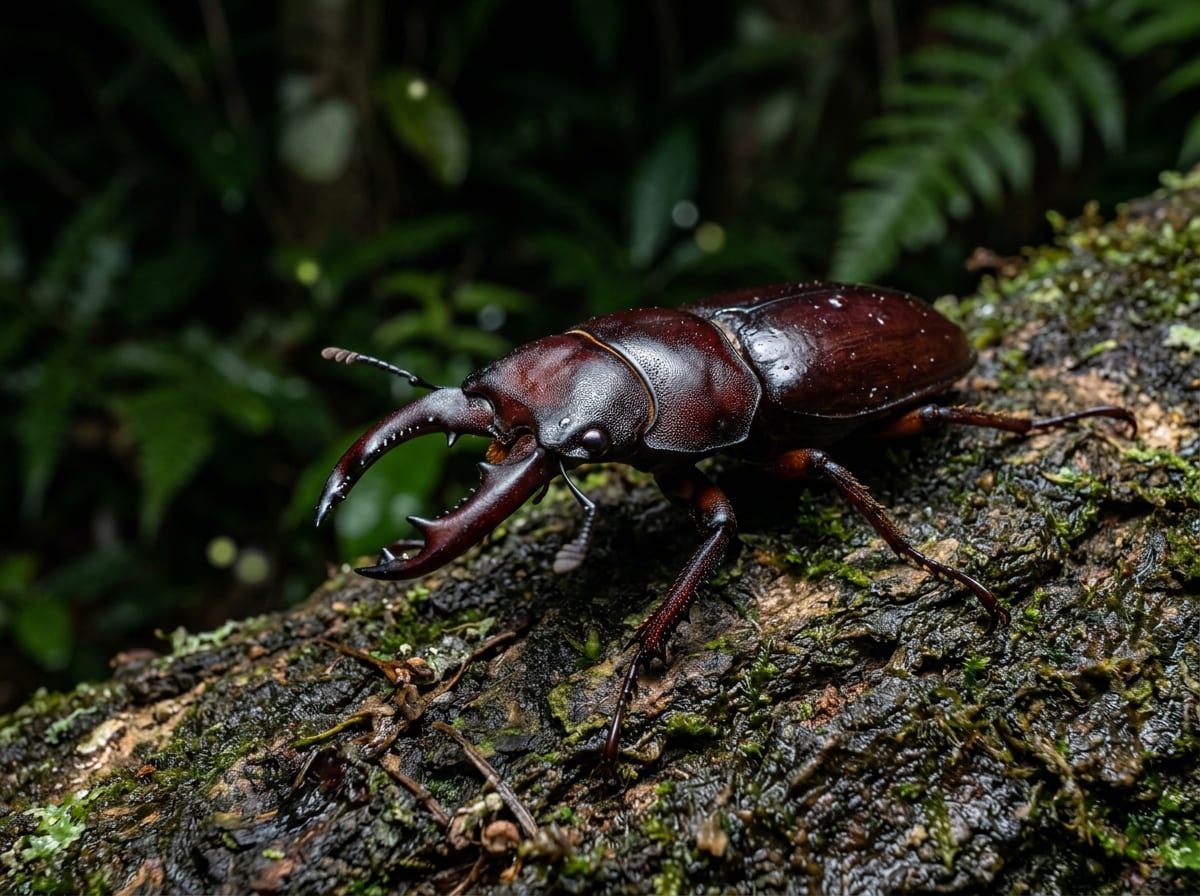
AI-generated image
Yaeyama lesser stag beetle
AdvancedDorcus amamianus yaeyamaensis
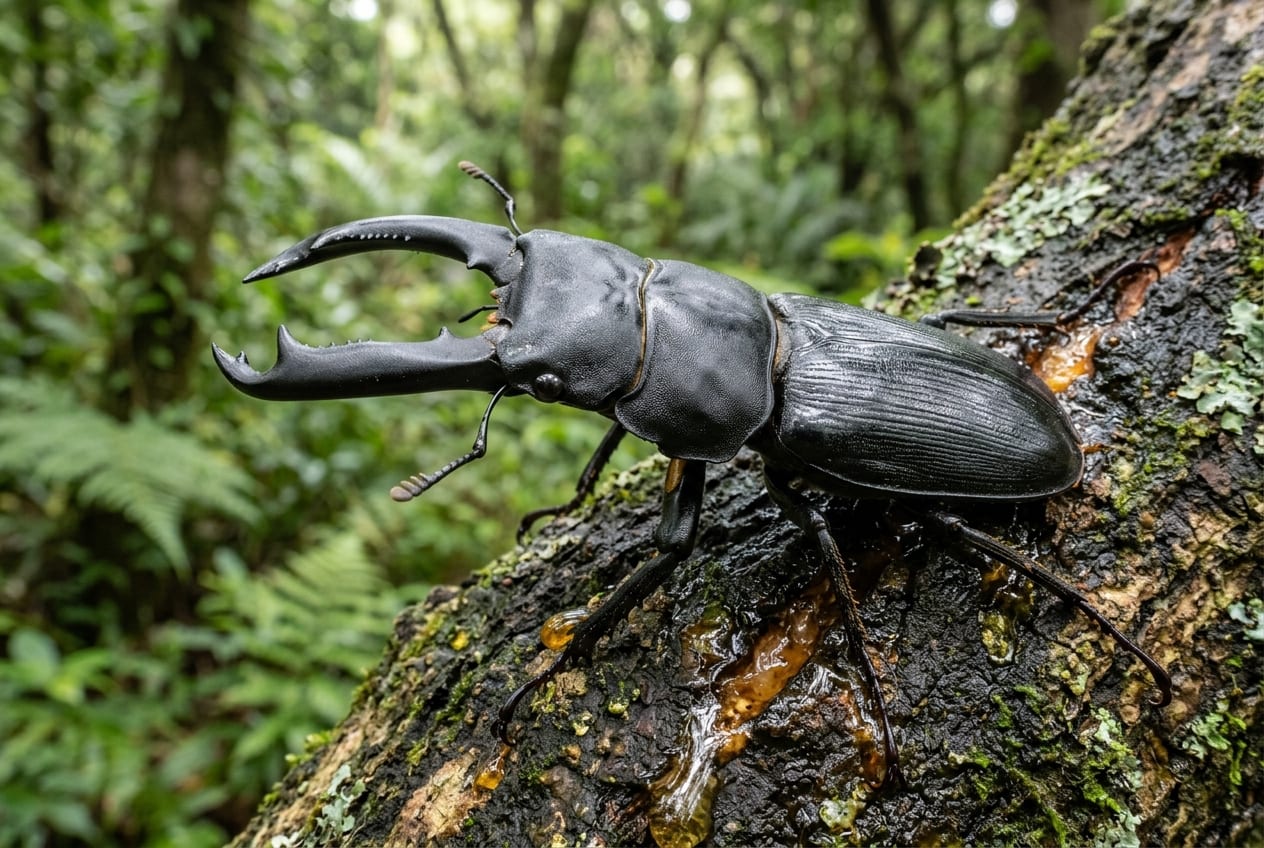
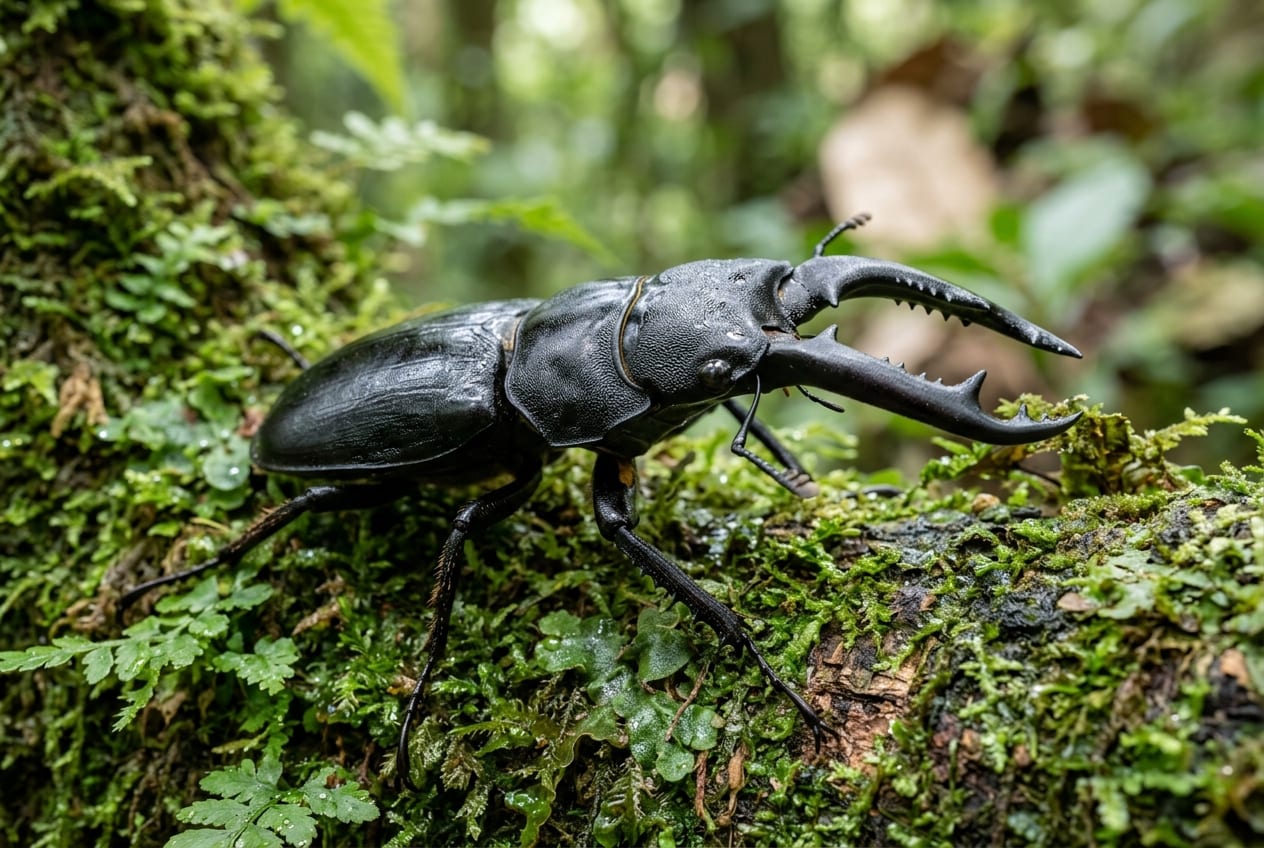
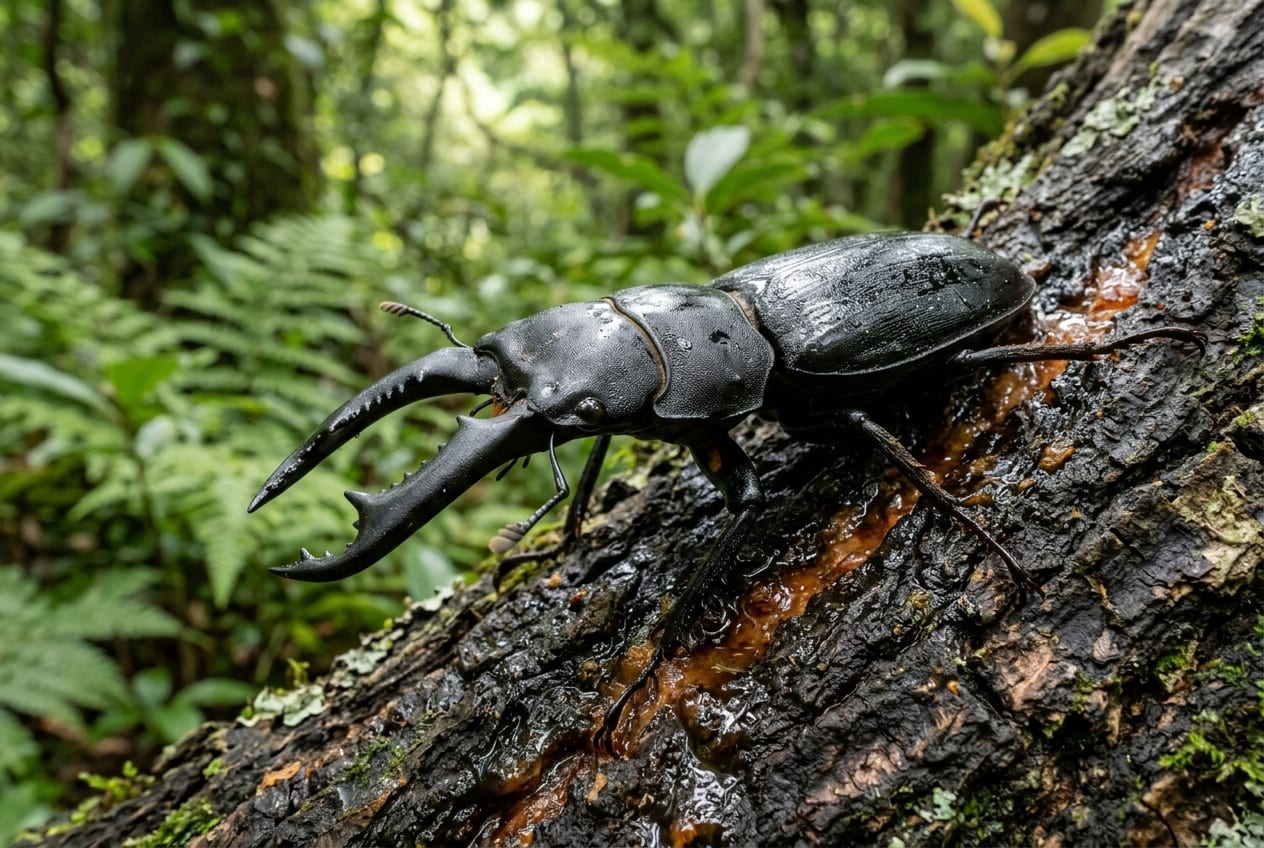
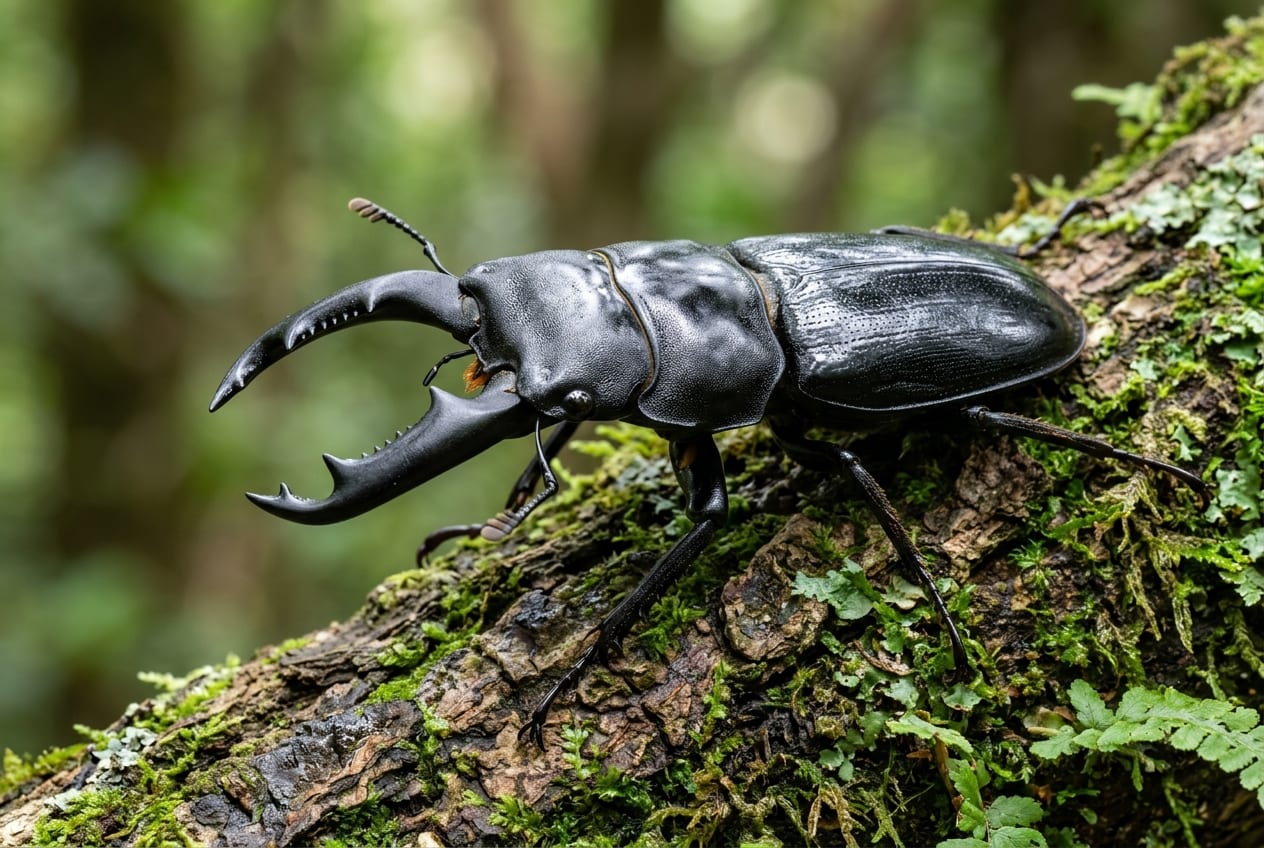
The Iriomote subspecies of Dorcus amamianus, dark reddish brown in colour. Once called the rarest Japanese stag beetle, it is thought from mitochondrial DNA to be the earliest-diverging subspecies of its species.
Difficulty
Advanced
Temperature
20〜28℃ (typical for Insect)
Lifespan
Adults 6 months to 2 years (species as a whole); larval stage about 1 year
Size
Captive records 43.4mm (male) and 35.4mm (female); wild record 38.0mm (male)
Humidity
60〜80%
Diet
Adults take hardwood sap or beetle jelly; larvae eat moist, soft rotten wood
About
Dorcus amamianus yaeyamaensis (Hori, 1991) is the subspecies of D. amamianus found on Iriomote, originally described as Macrodorcas okinawanus yaeyamaensis. D. amamianus has four subspecies across the Amami, Okinawa and Yaeyama islands: the nominate form from Amami-Oshima, kubotai from Tokunoshima, nomurai from northern Okinawa and this one. The first way to tell it from the other forms is locality (Iriomote); it is also dark reddish brown. Despite its Japanese name the species is not close to D. rectus and shares more with D. montivagus, with short, strongly curved mandibles and long legs suited to life in trees. Mitochondrial DNA suggests that this southernmost subspecies split off first, with the others diverging successively to the north. Long called the rarest Japanese stag beetle because so few were collected, it has been recorded more often in recent years. GBIF holds no records. The BE-KUWA 2025 edition gives male records of 43.4mm captive and 38.0mm wild, and a female captive record of 35.4mm. Captive-bred Iriomote stock occasionally appears at specialist shops in Japan.
Source: Wikipedia (CC BY-SA 4.0)
Lifespan of the Yaeyama lesser stag beetle
The Yaeyama lesser stag beetle lives Adults 6 months to 2 years (species as a whole); larval stage about 1 year.
Size of the Yaeyama lesser stag beetle
The Yaeyama lesser stag beetle grows to Captive records 43.4mm (male) and 35.4mm (female); wild record 38.0mm (male).
Basic Info
Origin
Iriomote (Yaeyama Islands), Japan
Lifespan
Adults 6 months to 2 years (species as a whole); larval stage about 1 year
References & Sources
Edited & verified by: BreederDirect editorial team
The taxonomic, regulatory, and husbandry data on this page are compiled and verified against the authoritative primary sources below.
Primary sources
- Wikipedia
- Ministry of the Environment: Nationally rare species list (JA)
- Ministry of the Environment: List of invasive alien species (JA)
- Species+ CITES query (no listing)
- Dorcus rectus - Wikipedia (JA), notes on related species
- BE-KUWA Certified Breeding Records (Mushi-sha, FY2025 edition PDF, JA)
- GBIF: Dorcus amamianus yaeyamaensis (Hori, 1991)
Taxonomy & Authority
Regulations & Conservation Status
Not CITES-listed
Not covered by CITES or the Invasive Alien Species Act and not a nationally rare species (Ministry of the Environment lists, September 2026). As a subspecies confined to Iriomote, never release captives or cross them with other subspecies.
Sources: Ministry of the Environment: Nationally rare species list (JA) / Ministry of the Environment: List of invasive alien species (JA) / Species+ CITES query (no listing)
Regulations may change. Always verify the latest information with the relevant authorities.
Yaeyama lesser stag beetle Listings
Loading latest listingsFind listings for this species