Source: Wikimedia Commons
Tree Nymph Butterfly
IntermediateIdea leuconoe
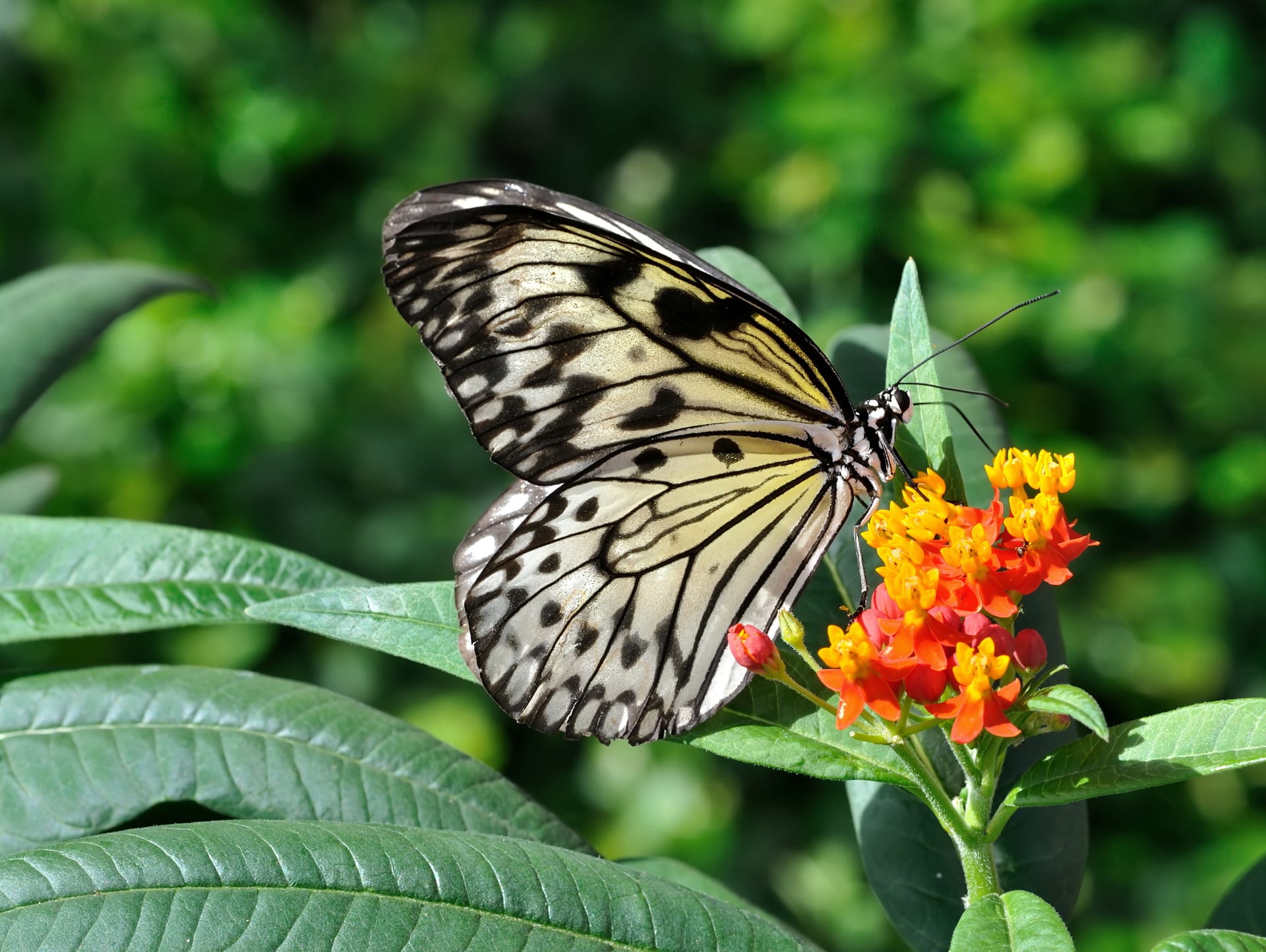
One of Japan's largest butterflies, white with black veins and spots, famous for its golden chrysalis. Completes its life cycle indoors as long as the host plant Parsonsia alboflavescens is available, so it is widely reared in insectariums and schools.
Difficulty
Intermediate
Temperature
26℃
Lifespan
Adults 2-3 months (up to six months in good conditions); egg to adult about 40 days
Size
Wingspan 12-14cm (forewing about 7cm); final-instar larva about 7cm
Humidity
60〜80%
Diet
Larvae eat Parsonsia alboflavescens and Tylophora leaves; adults take nectar
About
Idea leuconoe ranges from Southeast Asia to Taiwan and, in Japan, the Ryukyu Islands south of Kikaijima and Yoron; it is the prefectural butterfly of Okinawa. With a forewing of about 7cm and a wingspan reaching 13cm, its slow, gliding flight on white wings marked with black veins and spots has earned it the nickname 'lady of the south'. Larvae feed on Parsonsia alboflavescens and Tylophora (Apocynaceae), storing alkaloids that make larvae, pupae and adults toxic; the black-and-white pattern is aposematic. The 4-5cm chrysalis gleams gold through structural colour. At Tama Zoological Park, rearing at about 26C gives a larval period of about 20 days and a pupal period of 15-20 days, with the gold brightest for the first 10 days. Adults live 2-3 months, up to six months under good conditions, and breed year-round. Because the life cycle completes in a small space, insectariums and zoos across Japan maintain colonies, and larvae and golden pupae are traded for education and display. Securing the host plant is the prerequisite for keeping.
Source: Wikipedia (CC BY-SA 4.0)
Lifespan of the Tree Nymph Butterfly
The Tree Nymph Butterfly lives Adults 2-3 months (up to six months in good conditions); egg to adult about 40 days.
Size of the Tree Nymph Butterfly
The Tree Nymph Butterfly grows to Wingspan 12-14cm (forewing about 7cm); final-instar larva about 7cm.
Temperature & humidity for the Tree Nymph Butterfly
The ideal temperature for the Tree Nymph Butterfly is 26℃.
Basic Info
Origin
Care Specifications
PeacefulGroupBreeding: Easy
Sources: Tama Zoological Park insectarium news (Idea leuconoe rearing) / Flower Park Kagoshima: Idea leuconoe / Wikipedia (ja): Idea leuconoe
References & Sources
Edited & verified by: BreederDirect editorial team
The taxonomic, regulatory, and husbandry data on this page are compiled and verified against the authoritative primary sources below.
Taxonomy & Authority
Accepted name: Idea leuconoe Erichson, 1834
Authority databases: GBIF
Nomenclature follows global taxonomic authority databases.
Regulations & Conservation Status
Not CITES-listed
Sources: CITES Appendices (species not listed)
Regulations may change. Always verify the latest information with the relevant authorities.
Tree Nymph Butterfly Listings
Loading latest listingsFind listings for this species