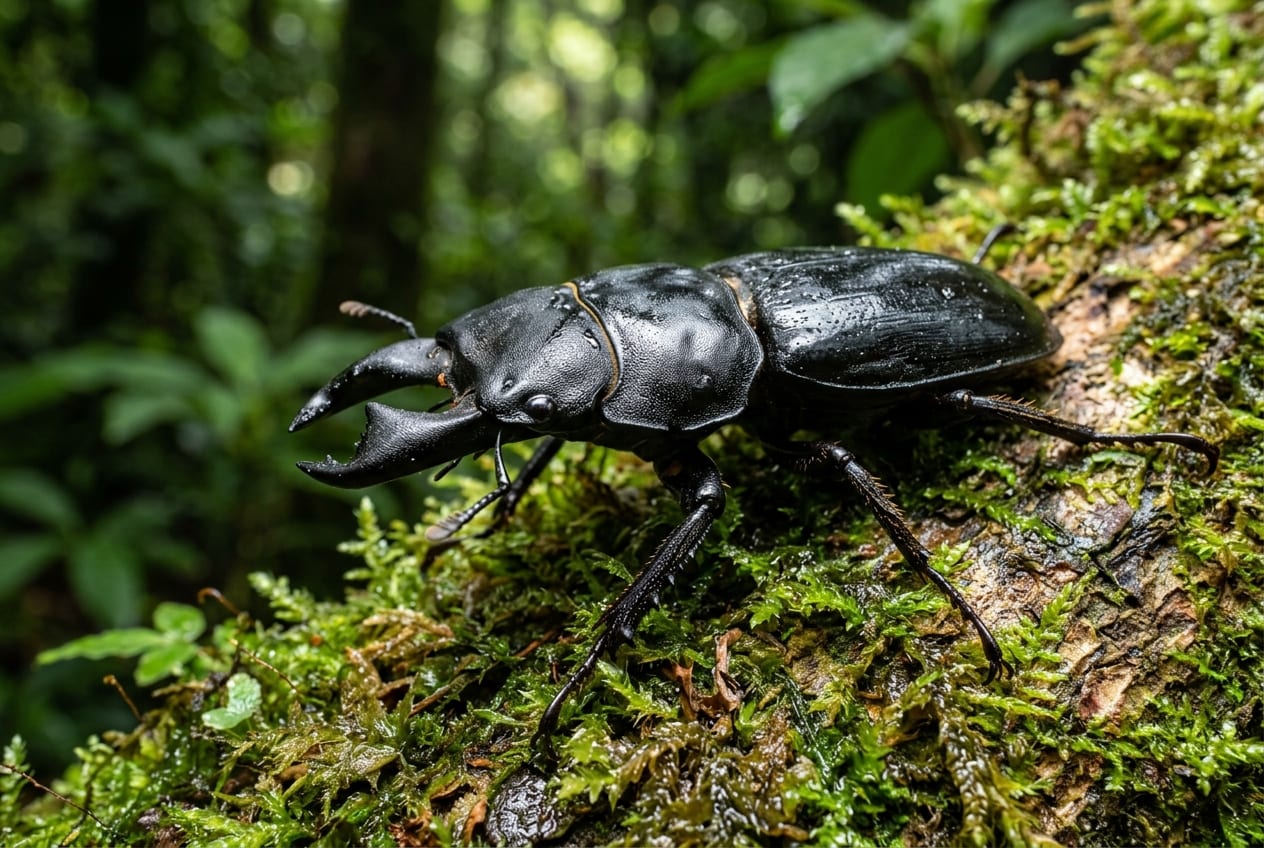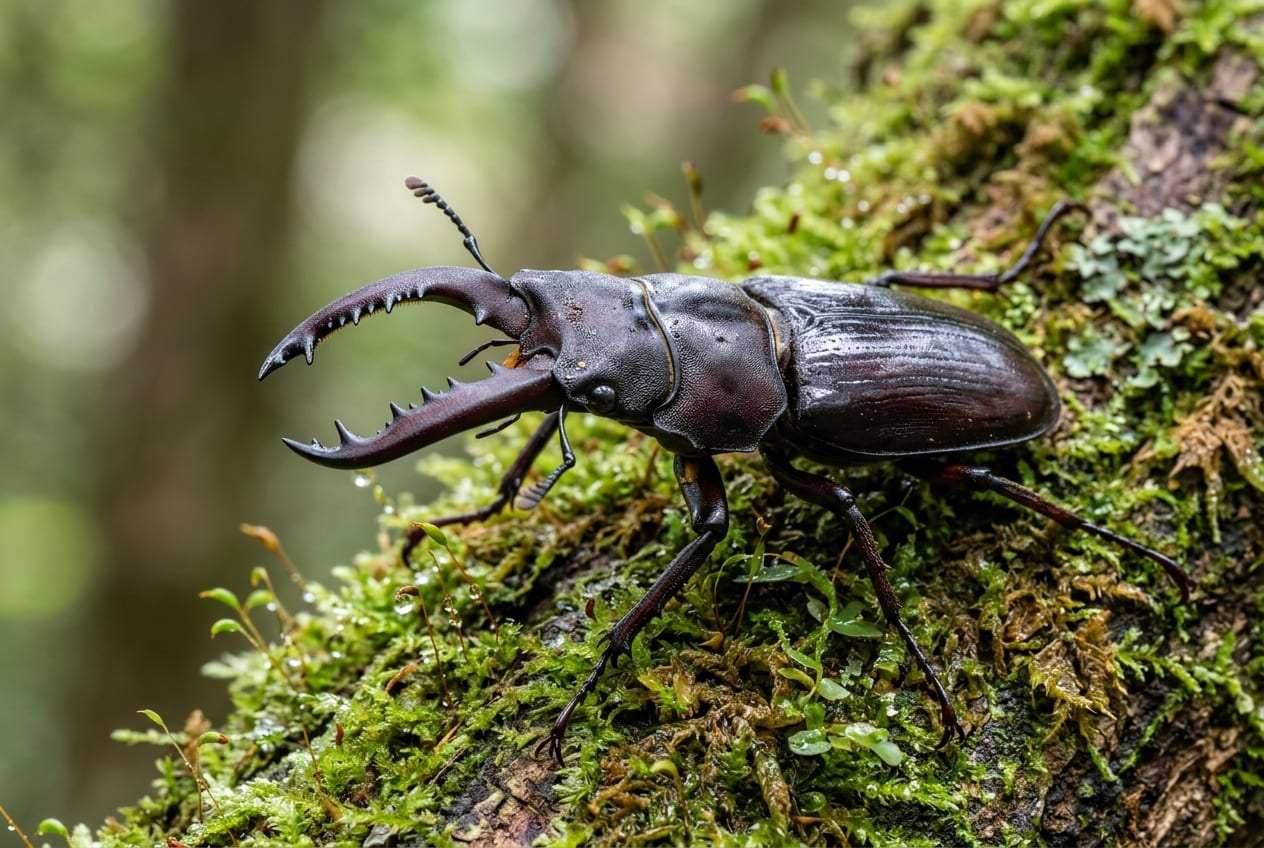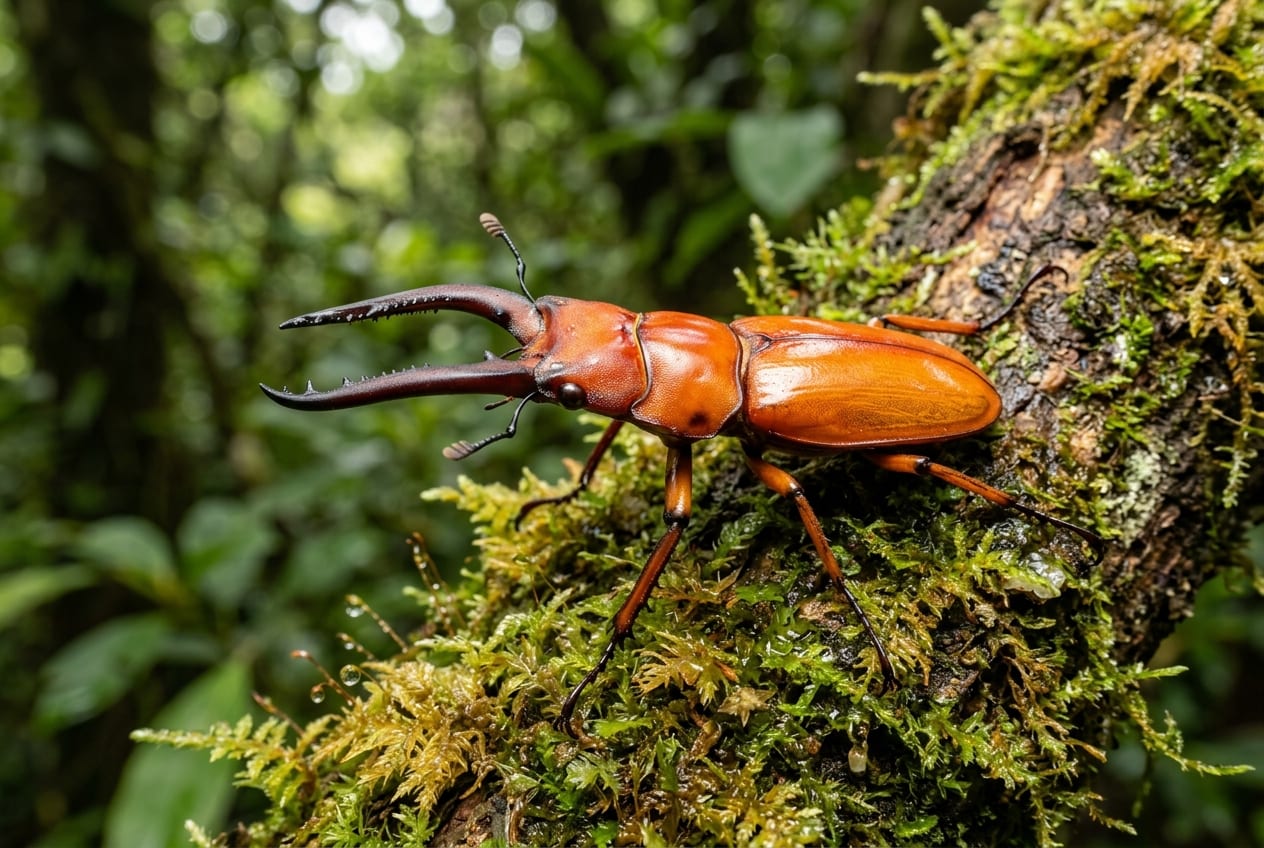
AI-generated image
Tokara Saw Stag Beetle
BeginnerProsopocoilus dissimilis elegans
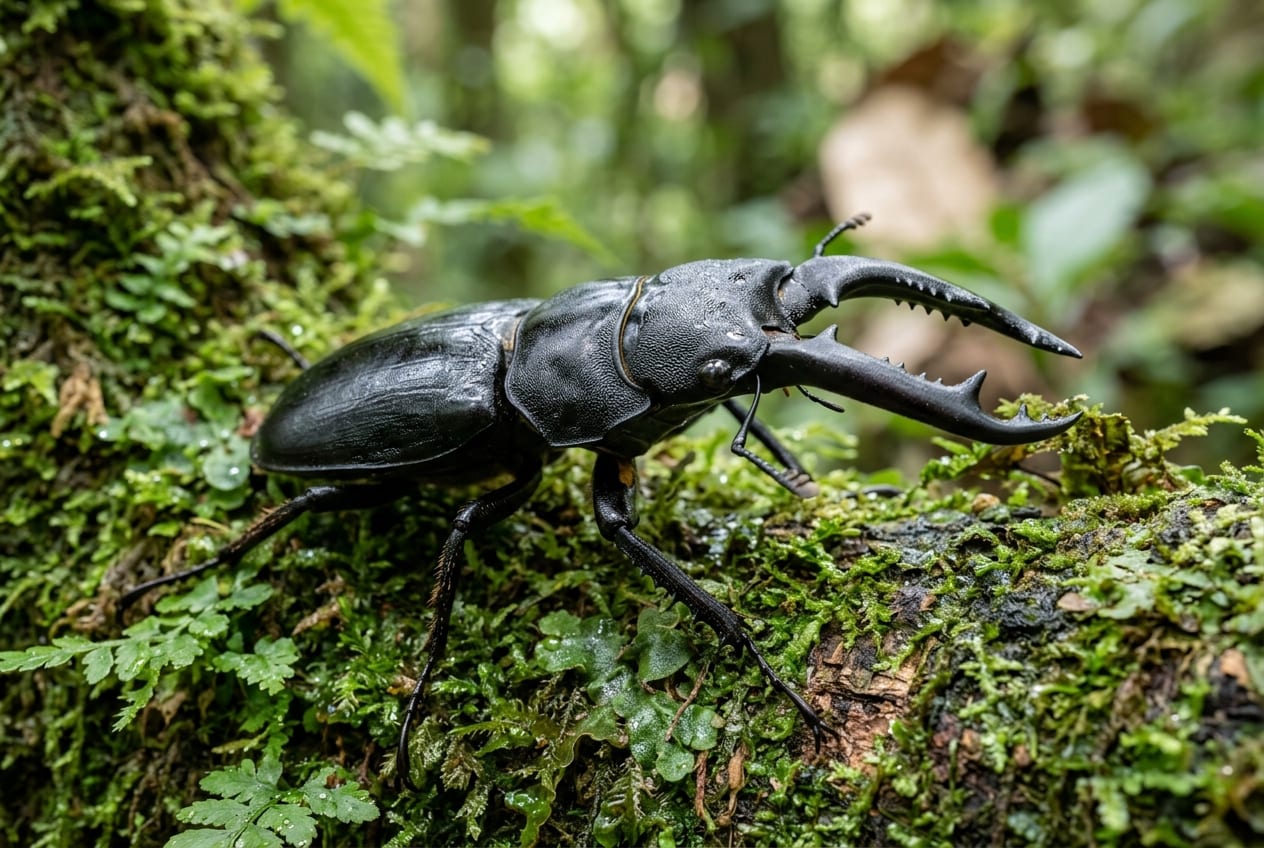
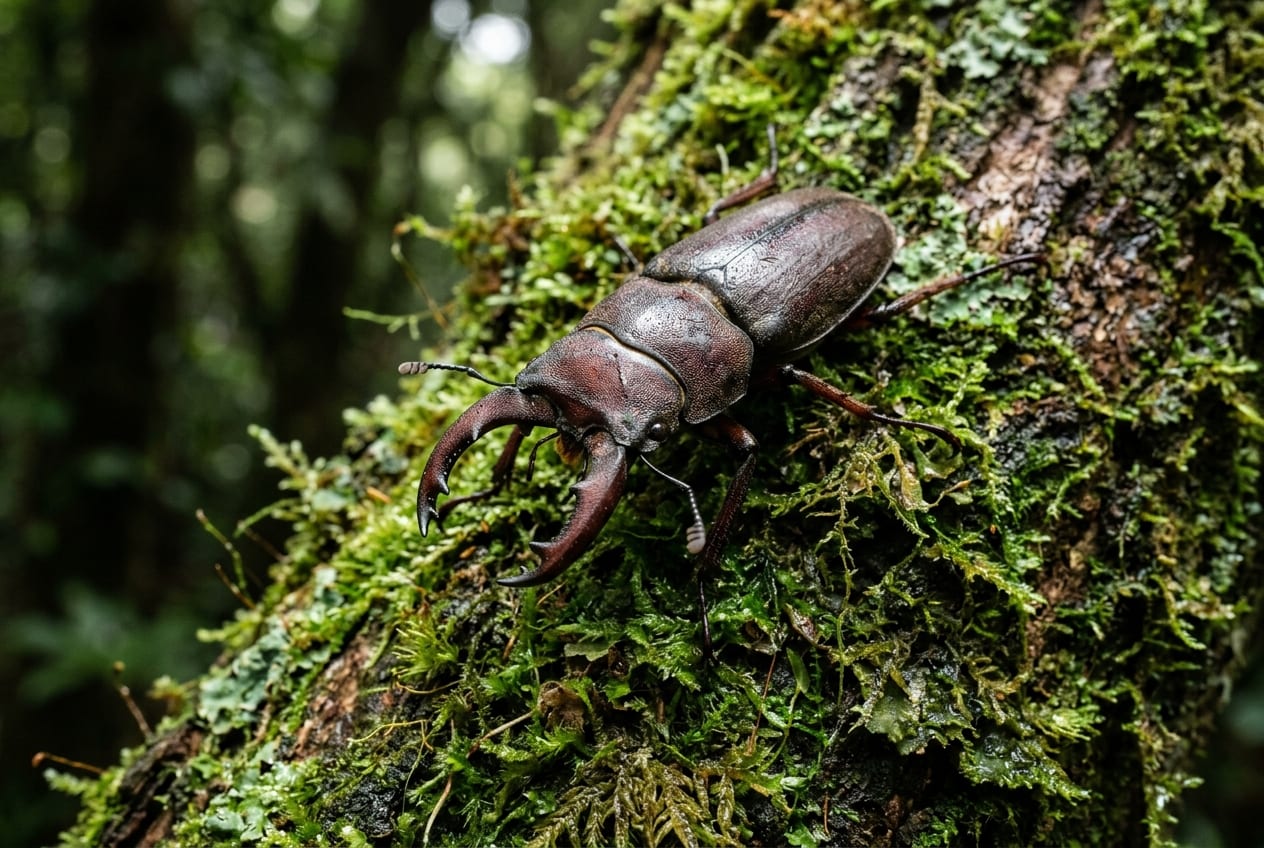
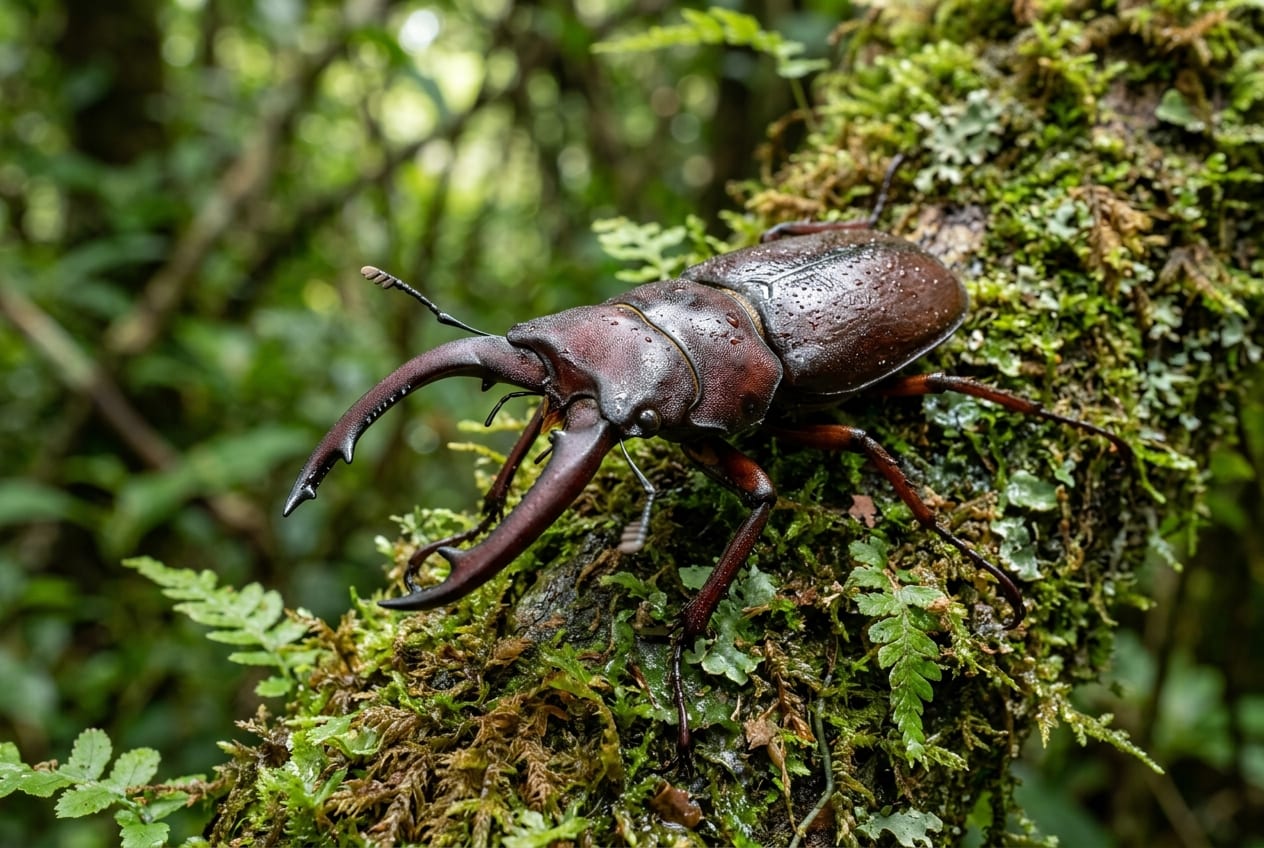
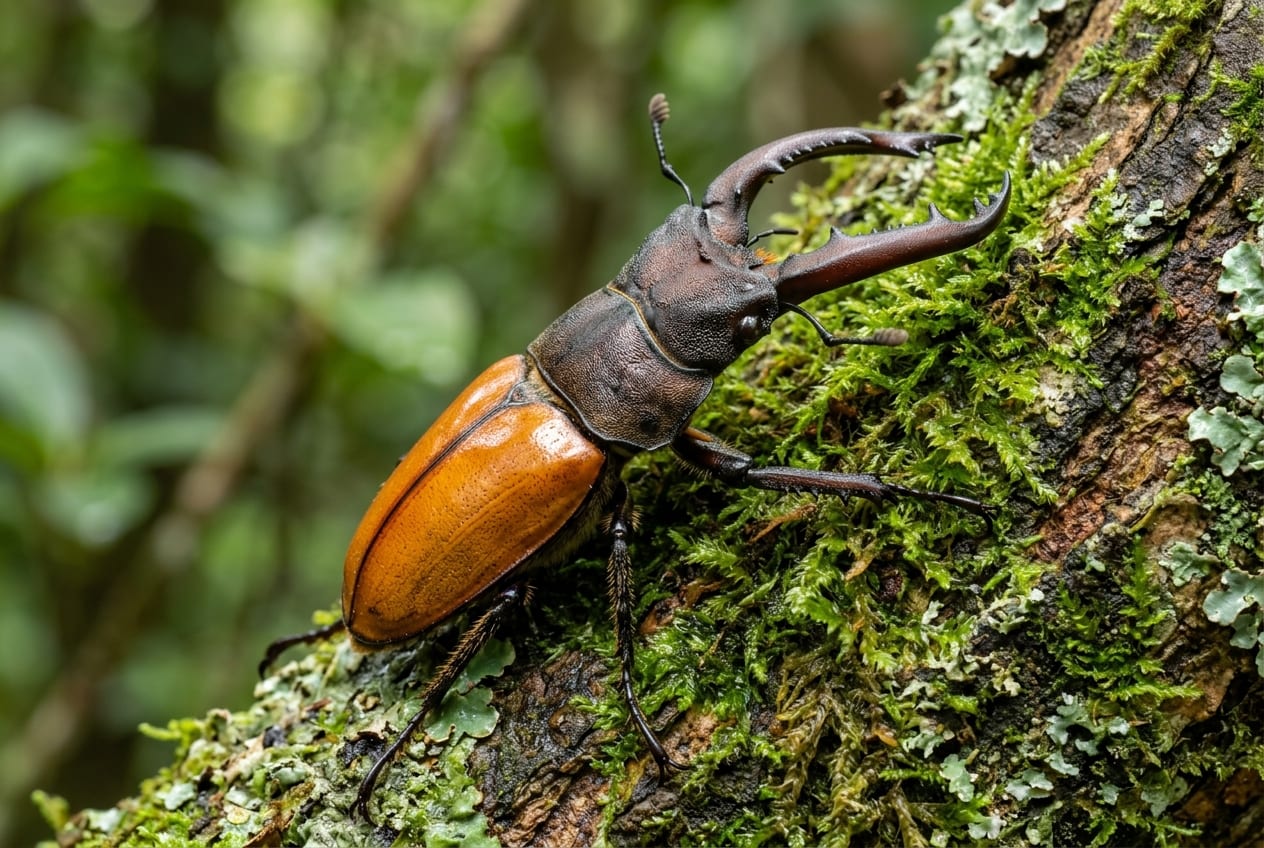
A subspecies of the Amami saw stag confined to the Tokara Islands. Its colour runs from bright orange to black and its body is slightly slimmer than the nominate. Wild beetles are mostly small, but captive-bred ones grow large easily.
Difficulty
Beginner
Temperature
20〜28℃
Lifespan
About a year from the start of feeding, after roughly a year of dormancy following emergence
Size
Males 22.7-76.6 mm (including captive; the wild record is 74.2 mm) / females 24.5-35 mm
Humidity
60〜80%
Diet
Sap of broadleaf trees such as Mallotus, Machilus and Castanopsis; beetle jelly
About
The Tokara saw stag (Prosopocoilus dissimilis elegans) lives on Kuchinoshima, Nakanoshima, Gajajima, Suwanosejima and Akusekijima, and was described in 1958. Males run 22.7-74.2 mm and females 24.5-35 mm. It is slightly slimmer than the nominate subspecies, and its colour ranges from bright orange through dark brown to black. Colour and size vary a little between islands, and the Nakanoshima population is said to grow largest. Wild beetles are mostly small and rarely pass 60 mm, yet they grow large very easily in culture: the BE-KUWA captive record of 76.6 mm is above the 74.2 mm wild record. The flight season is June to August. Males are very aggressive and grab at once where the mainland saw stag merely postures, so watch for females being killed during pairing. Collecting is prohibited in the Tokara Islands.
Source: Wikipedia (CC BY-SA 4.0)
Size of the Tokara Saw Stag Beetle
The Tokara Saw Stag Beetle grows to Males 22.7-76.6 mm (including captive; the wild record is 74.2 mm) / females 24.5-35 mm.
Basic Info
Origin
Japan (Tokara Islands, Kagoshima: Kuchinoshima, Nakanoshima, Gajajima, Suwanosejima and Akusekijima)
Lifespan
About a year from the start of feeding, after roughly a year of dormancy following emergence
Size
Males 22.7-76.6 mm (including captive; the wild record is 74.2 mm) / females 24.5-35 mm
Temperature
20〜28℃
Humidity
Care Specifications
AggressiveSolitaryBreeding: Easy
Sources: Mushinavi - Tokara saw stag (egg-laying, larvae, adult care, difficulty rating, JA) / Prosopocoilus dissimilis - Wikipedia (JA; sizes, ranges and biology of the seven subspecies)
Breeding Records & Localities
Captive record (♂)
76.6 mm
Wild record (♂)
74.2 mm
Record source: BE-KUWA 2025 edition (Tokara saw stag, captive 76.6 mm, 小笠原 准 2005 / wild 74.2 mm, 藤田 宏; projected maximum 81 mm. Smallest records: captive 21.8 mm, 92F 2024; wild 22.7 mm, 生江広明 2005)
Notable localities
Kuchinoshima (Kagoshima)Nakanoshima (Kagoshima)Gajajima (Kagoshima)Suwanosejima (Kagoshima)Akusekijima (Kagoshima)
Regional subspecies
- Prosopocoilus dissimilis elegans — Tokara Islands
Colour and size differ a little between islands, and the Nakanoshima population is said to grow largest. Wild beetles rarely pass 60 mm, yet captive stock grows large readily.
Generation codes
- WD
- Wild-caught
- WF1
- Offspring of a wild-caught female
- F1〜
- Captive generations (same locality)
References & Sources
Edited & verified by: BreederDirect editorial team
The taxonomic, regulatory, and husbandry data on this page are compiled and verified against the authoritative primary sources below.
Primary sources
Taxonomy & Authority
Accepted name: Prosopocoilus dissimilis elegans (Inahara, 1958)
Nomenclature follows global taxonomic authority databases.
Regulations & Conservation Status
Not CITES-listed
Domestic law: Endemic to the Tokara Islands, where local ordinances may restrict the collection of wild fauna and flora. It is not designated a National Endangered Species of Wild Fauna and Flora (confirmed against the Ministry of the Environment list). Stock in trade is mainly captive bred; for wild-caught individuals, always check the collection restrictions that apply at the site.
Sources: CITES Appendix (checklist.cites.org) / Ministry of the Environment, List of National Endangered Species of Wild Fauna and Flora
Regulations may change. Always verify the latest information with the relevant authorities.
Tokara Saw Stag Beetle Listings
Loading latest listingsFind listings for this species