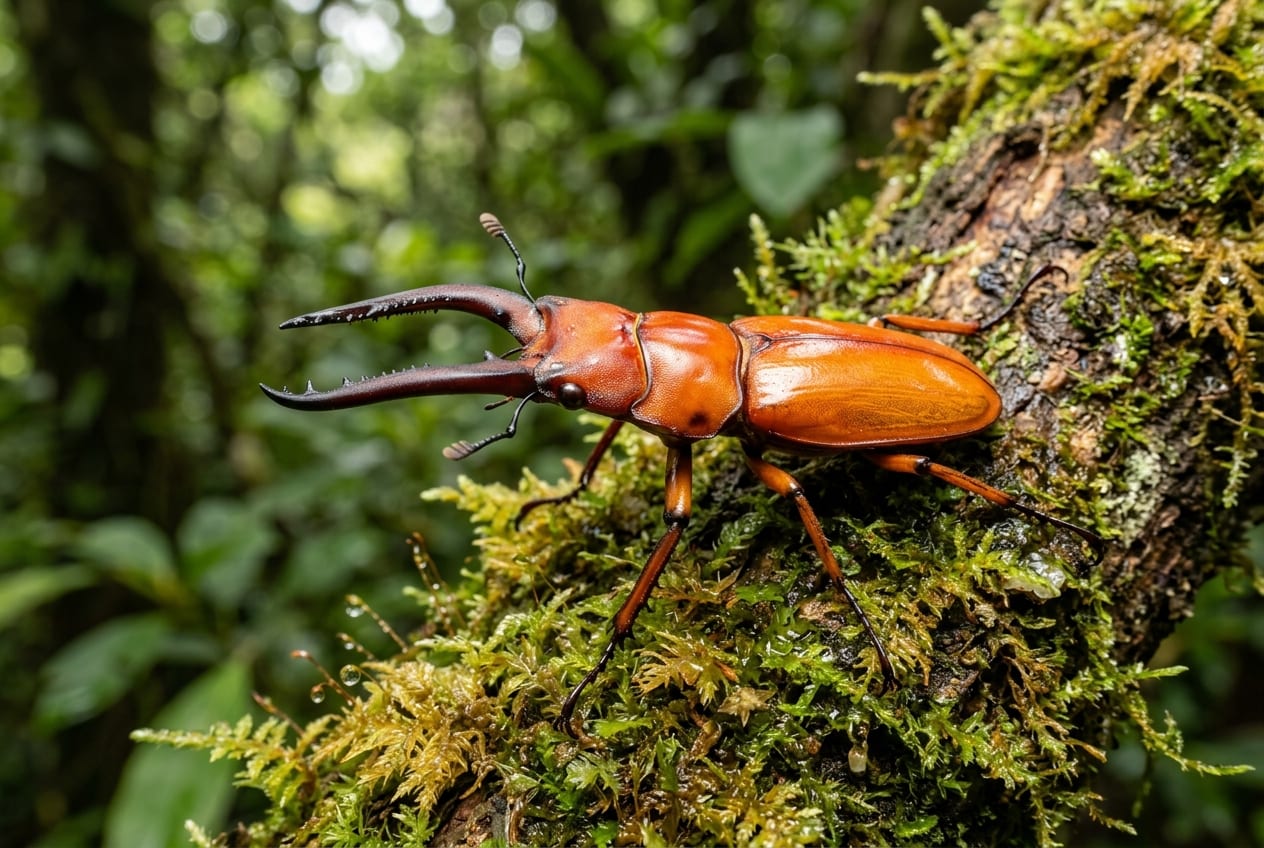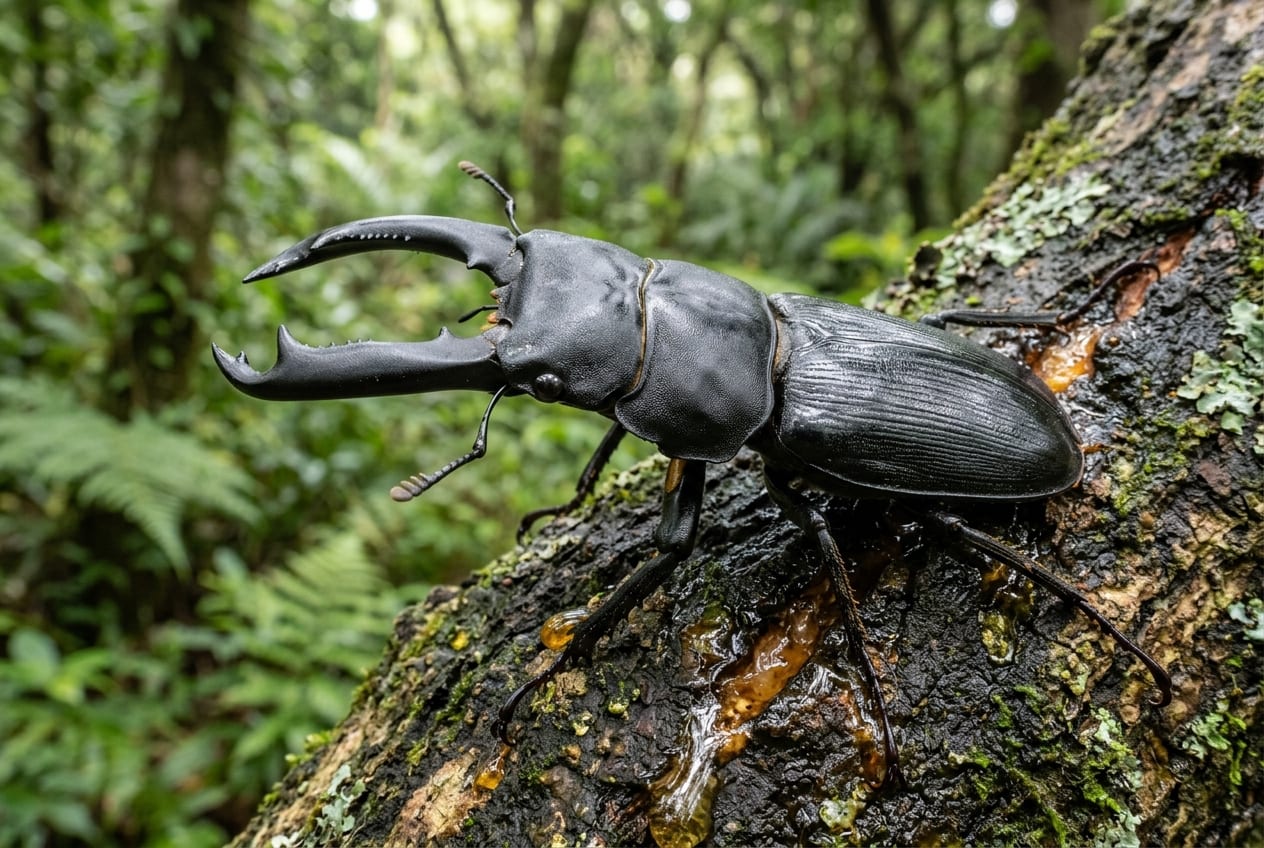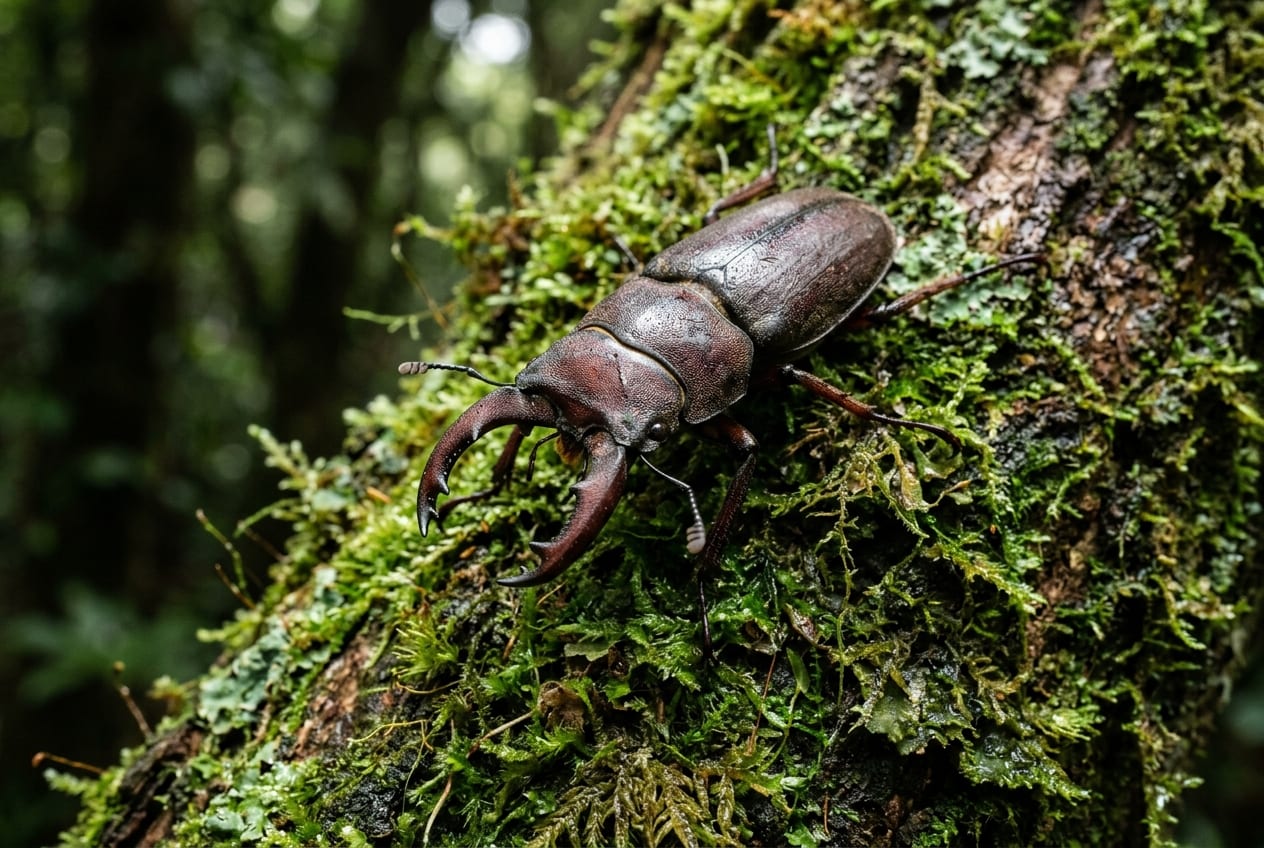
AI-generated image
Kumejima Saw Stag Beetle
IntermediateProsopocoilus dissimilis kumejimaensis
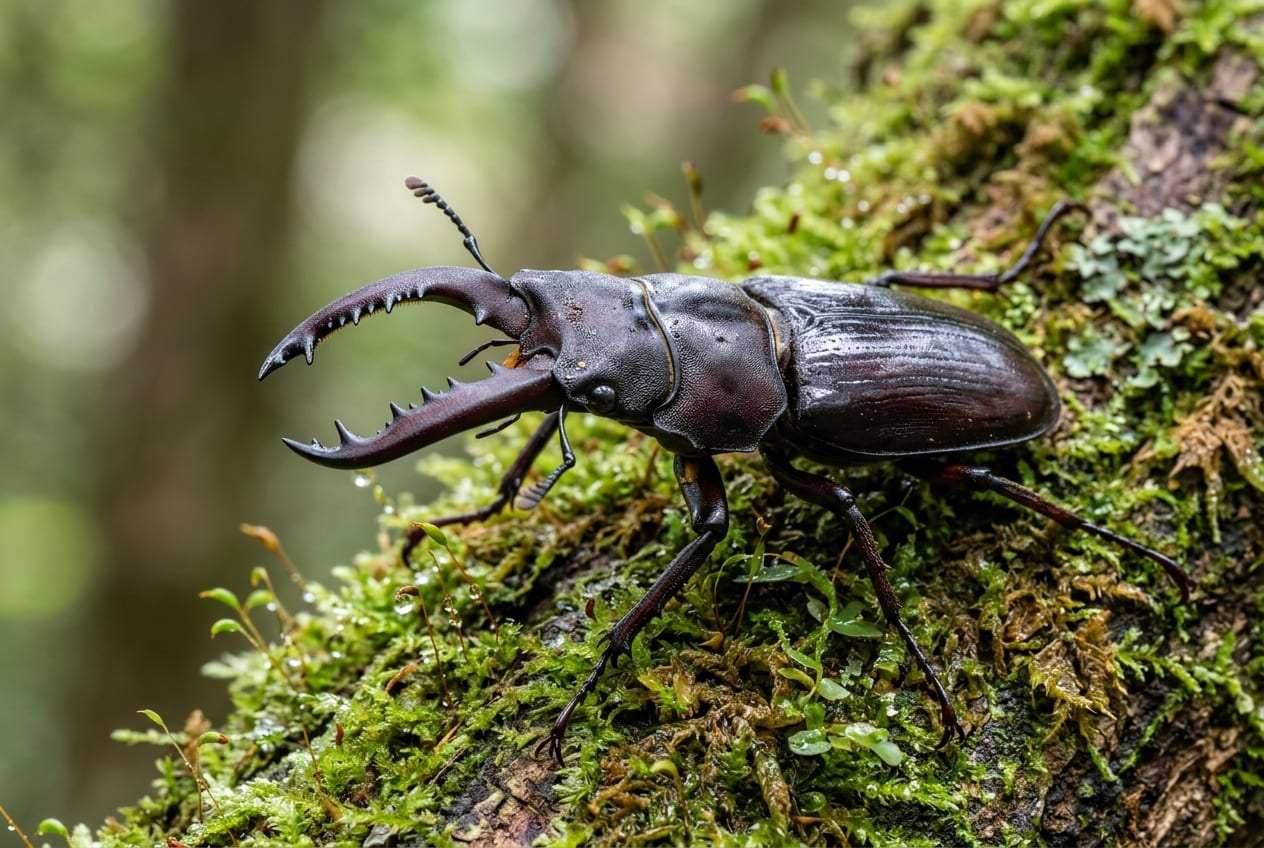
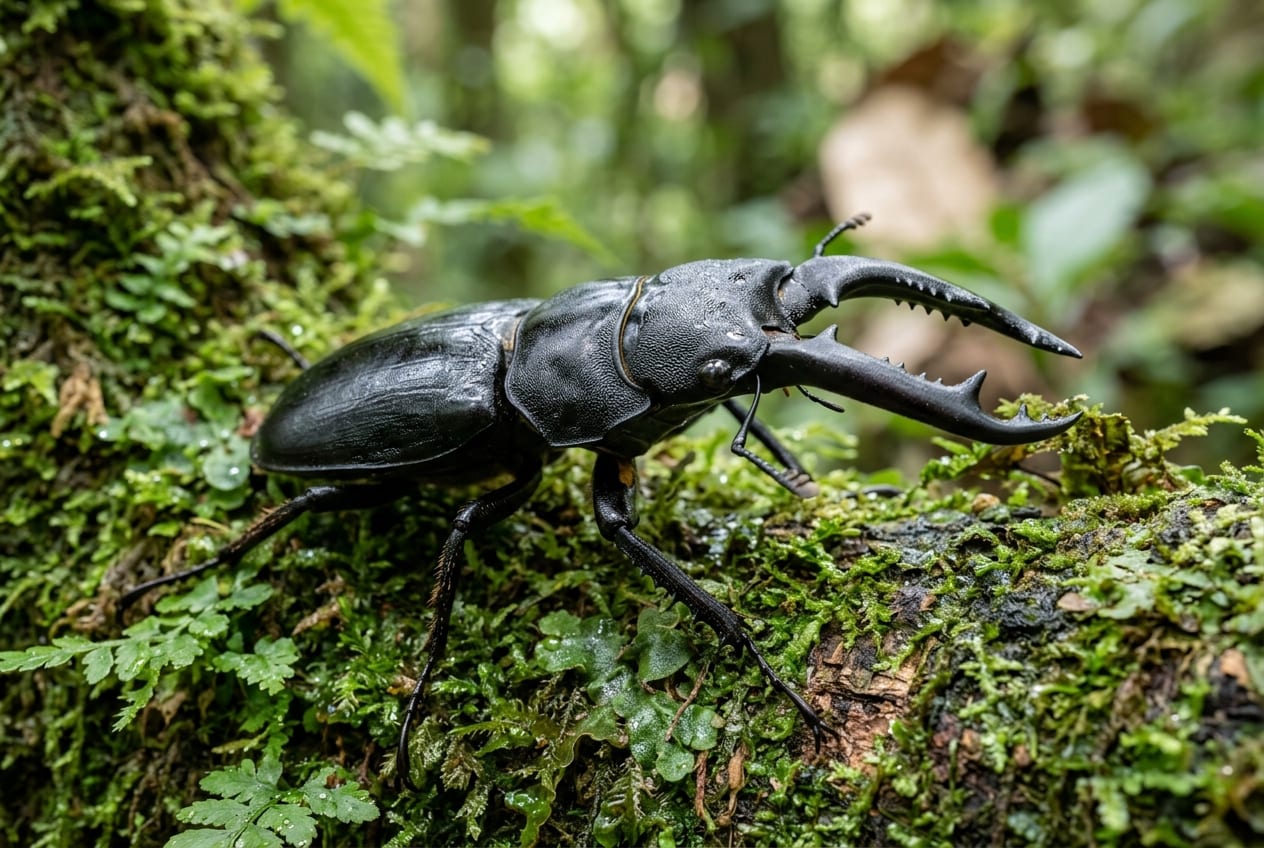
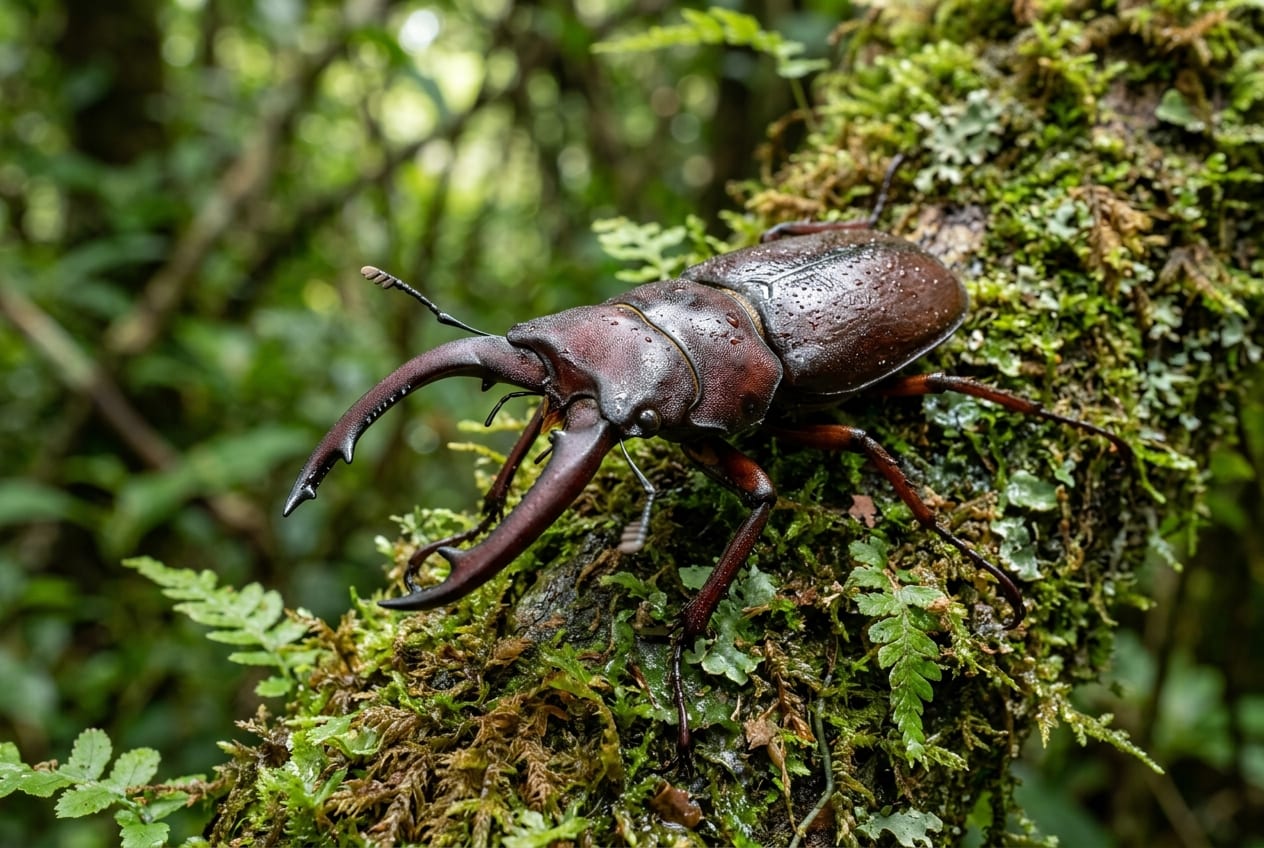
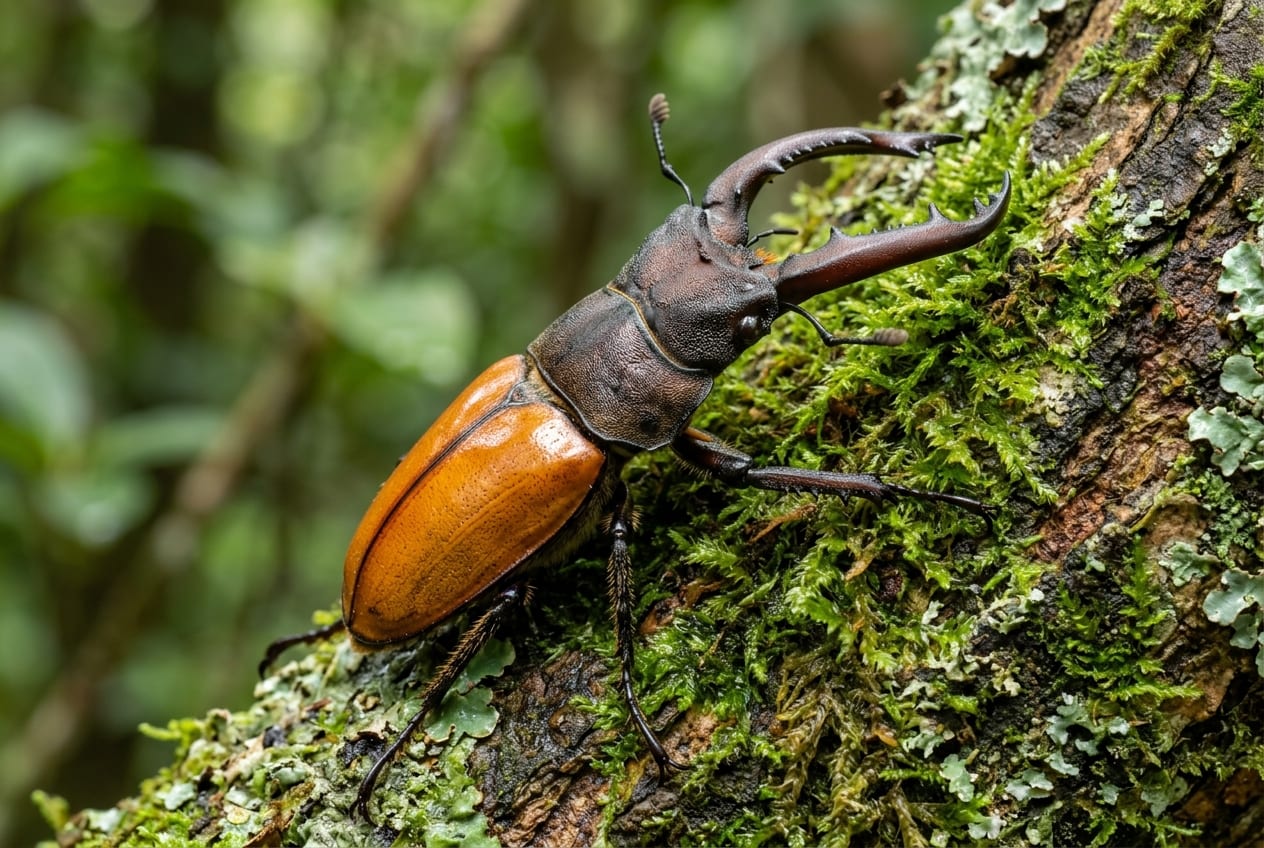
A subspecies of the Amami saw stag found only on Kumejima. It resembles the Okinawa form but its mandibles are shorter, heavier and more strongly curved, and its body is stockier. The colour is dark reddish brown to black.
Difficulty
Intermediate
Temperature
20〜28℃
Lifespan
Adults live two to three months in the wild
Size
Males 25-65.9 mm (including captive; the wild record is 64.4 mm) / females 24.5-31.5 mm
Humidity
60〜80%
Diet
Sap of broadleaf trees such as Mallotus, Machilus and Castanopsis; beetle jelly
About
The Kumejima saw stag (Prosopocoilus dissimilis kumejimaensis) occurs only on Kumejima and was described in 1985. Males run 25-63.7 mm and females 24.5-31.5 mm. It resembles the Okinawa form of the same island group, but its mandibles are shorter, heavier and more strongly curved and its build is stockier; the colour is dark reddish brown to black. The BE-KUWA captive record is 65.9 mm against a wild record of 64.4 mm, small among the subspecies. It lives in broadleaf forest and comes to sap of Mallotus and Castanopsis from mid-June to early September, mainly at night though it often rests high in the shade by day. Keep it like the mainland saw stag, laying in a firmly packed set of black soil or fully fermented fine substrate. Its range is a single island, so never release captive beetles.
Source: Wikipedia (CC BY-SA 4.0)
Size of the Kumejima Saw Stag Beetle
The Kumejima Saw Stag Beetle grows to Males 25-65.9 mm (including captive; the wild record is 64.4 mm) / females 24.5-31.5 mm.
Basic Info
Origin
Japan (Kumejima, Okinawa)
Lifespan
Adults live two to three months in the wild
Size
Males 25-65.9 mm (including captive; the wild record is 64.4 mm) / females 24.5-31.5 mm
Temperature
20〜28℃
Humidity
60〜80%
Diet
Care Specifications
AggressiveSolitaryBreeding: Easy
Sources: Prosopocoilus dissimilis - Wikipedia (JA; sizes, ranges and biology of the seven subspecies) / Mushinavi - Tokara saw stag (egg-laying, larvae, adult care, difficulty rating, JA)
Breeding Records & Localities
Captive record (♂)
65.9 mm
Wild record (♂)
64.4 mm
Record source: BE-KUWA 2025 edition (Kumejima saw stag, captive 65.9 mm, 加藤卓宏 2001 / wild 64.4 mm, 藤本 憲; projected maximum 70 mm. Smallest records: captive 23.4 mm, 松田元気 2022; wild 25.3 mm, 塚本隆士 2017)
Notable localities
Kumejima (Okinawa)
Regional subspecies
- Prosopocoilus dissimilis kumejimaensis — Kumejima
The captive record dates from 2001, the oldest of the seven subspecies; BE-KUWA sets the dream size at 70 mm.
Generation codes
- WD
- Wild-caught
- WF1
- Offspring of a wild-caught female
- F1〜
- Captive generations (same locality)
- CBF1
- Cross-locality captive-bred (reset)
Sources: BE-KUWA Certified Breeding Records (Mushi-sha, FY2025 edition PDF, JA) / Prosopocoilus dissimilis - Wikipedia (JA; sizes, ranges and biology of the seven subspecies)
References & Sources
Edited & verified by: BreederDirect editorial team
The taxonomic, regulatory, and husbandry data on this page are compiled and verified against the authoritative primary sources below.
Taxonomy & Authority
Accepted name: Prosopocoilus dissimilis kumejimaensis Ichikawa et Fujita, 1985
Authority databases: GBIF
Nomenclature follows global taxonomic authority databases.
Regulations & Conservation Status
Not CITES-listed
Sources: CITES Appendix (checklist.cites.org)
Regulations may change. Always verify the latest information with the relevant authorities.
Kumejima Saw Stag Beetle Listings
Loading latest listingsFind listings for this species