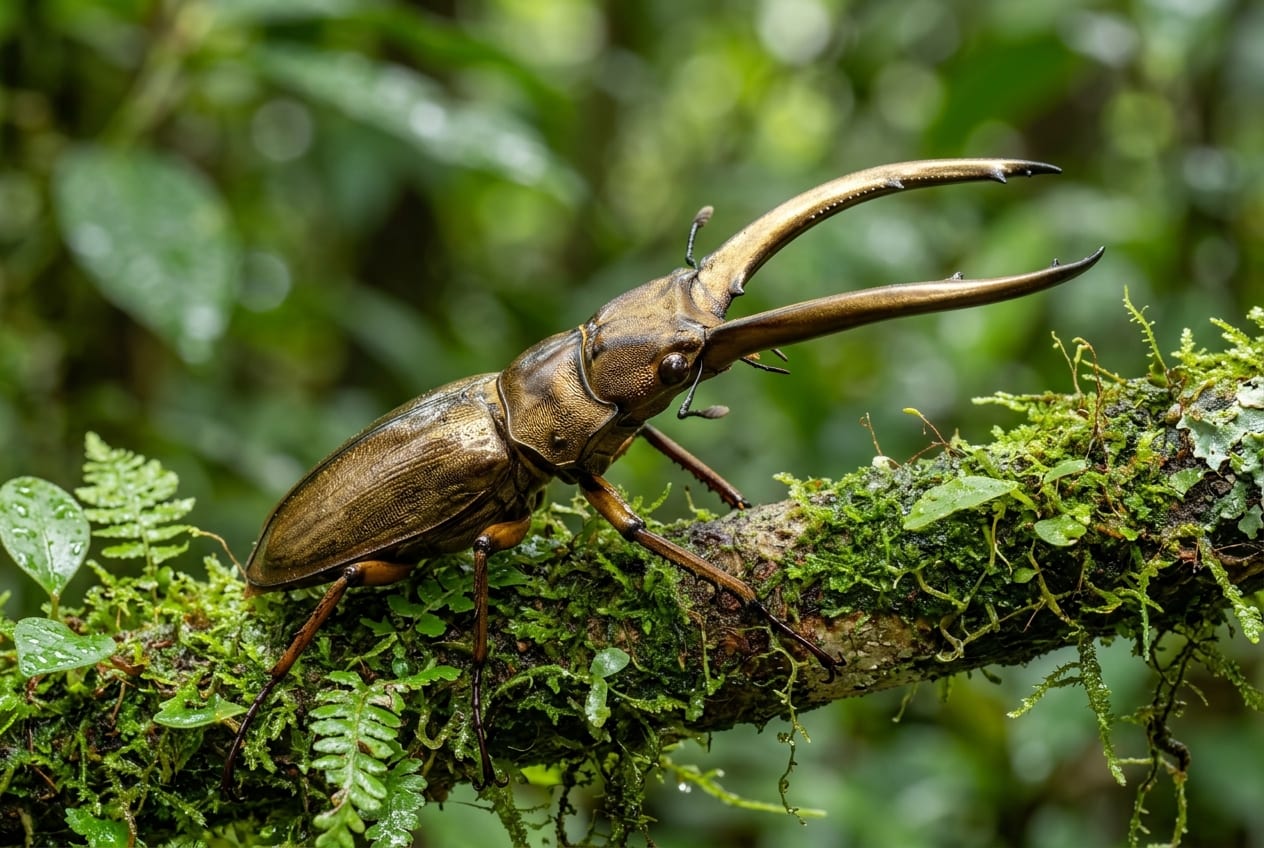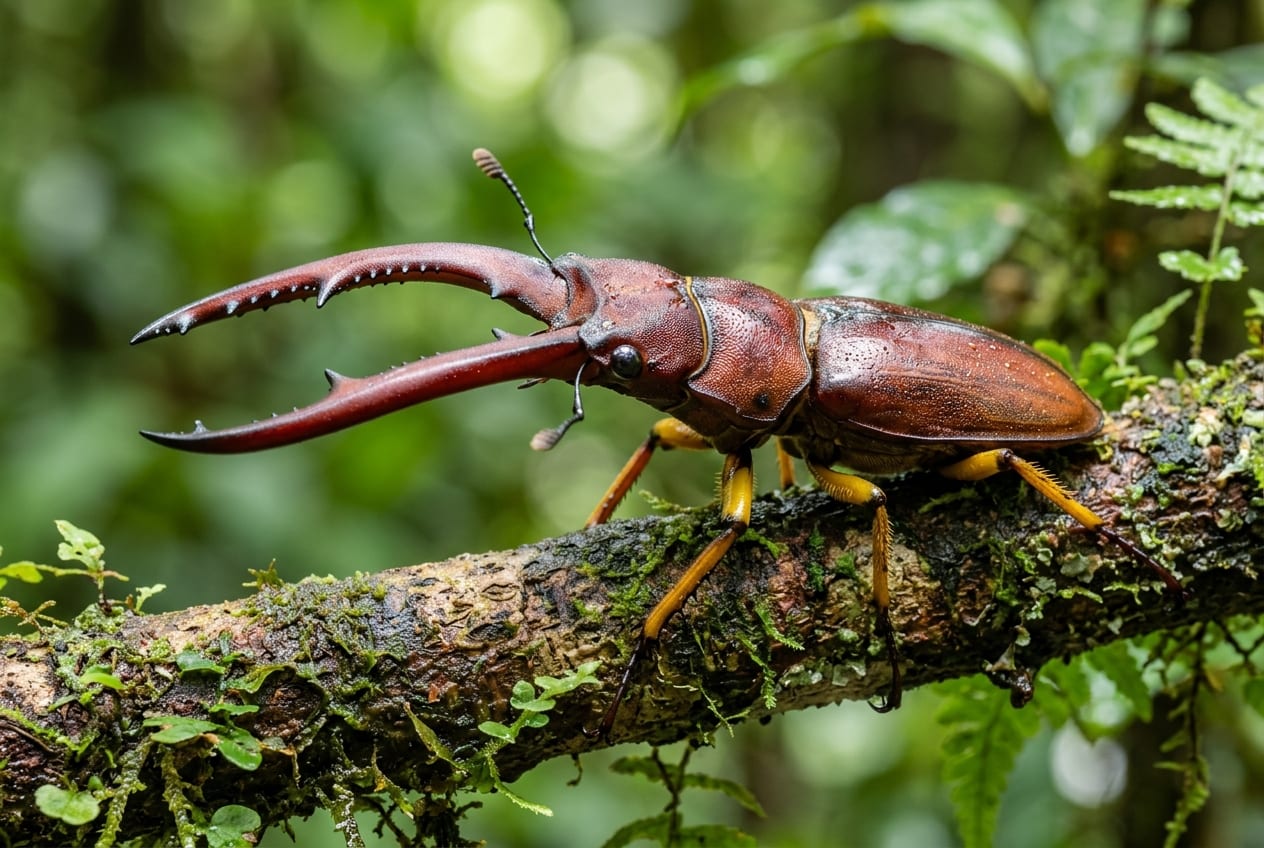
AI-generated image
Tarandus Long-jawed Stag Beetle
IntermediateCyclommatus tarandus
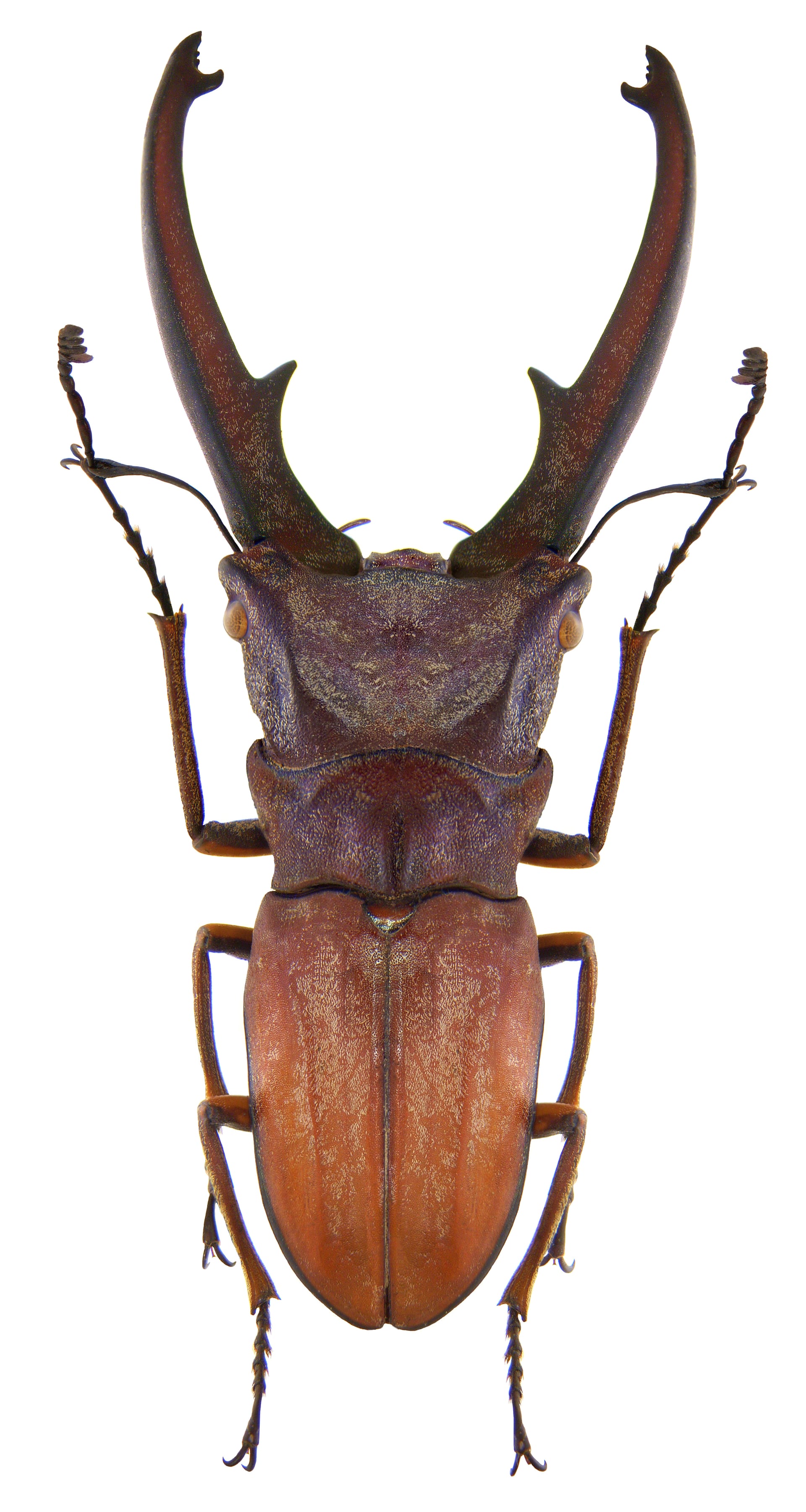
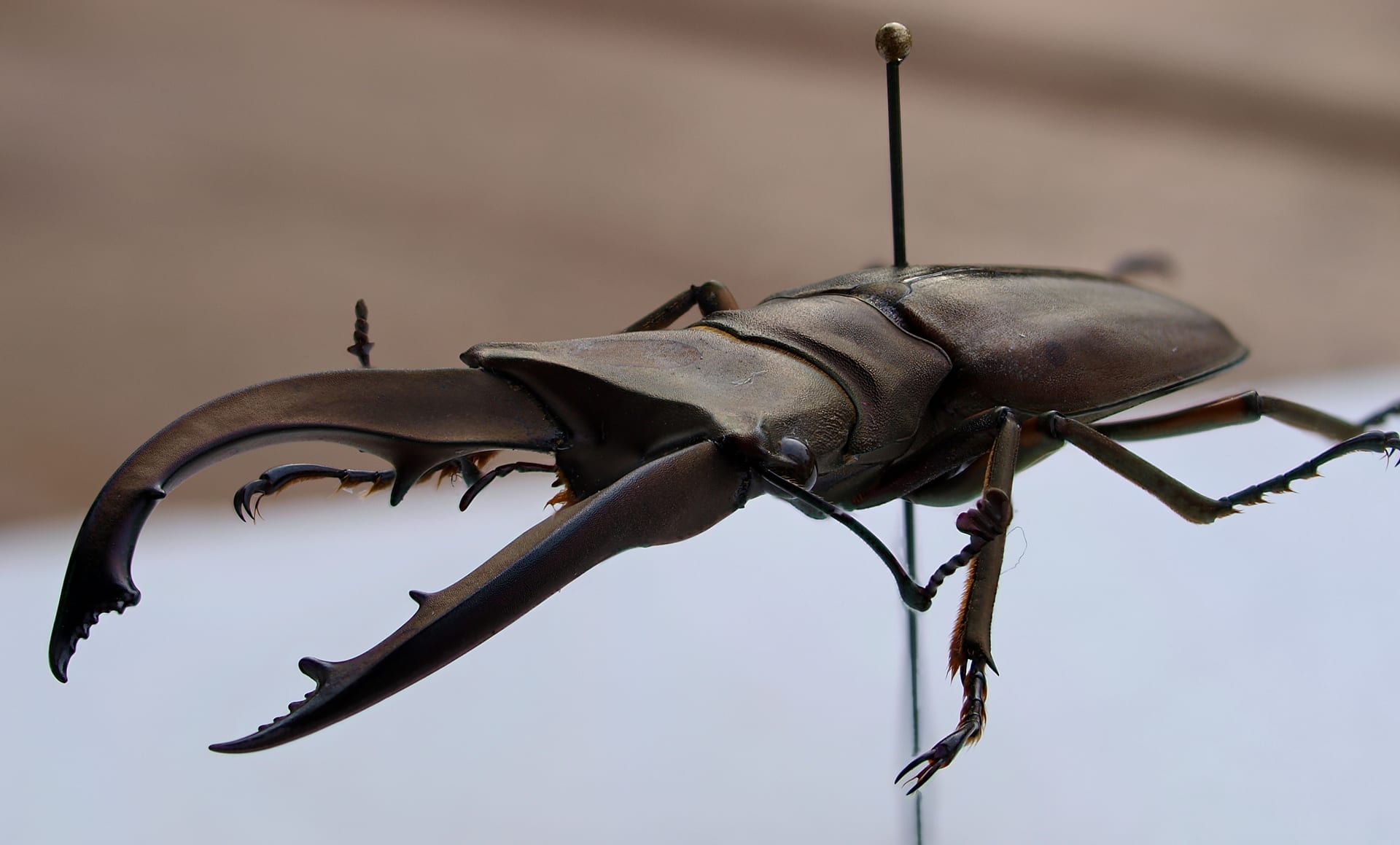
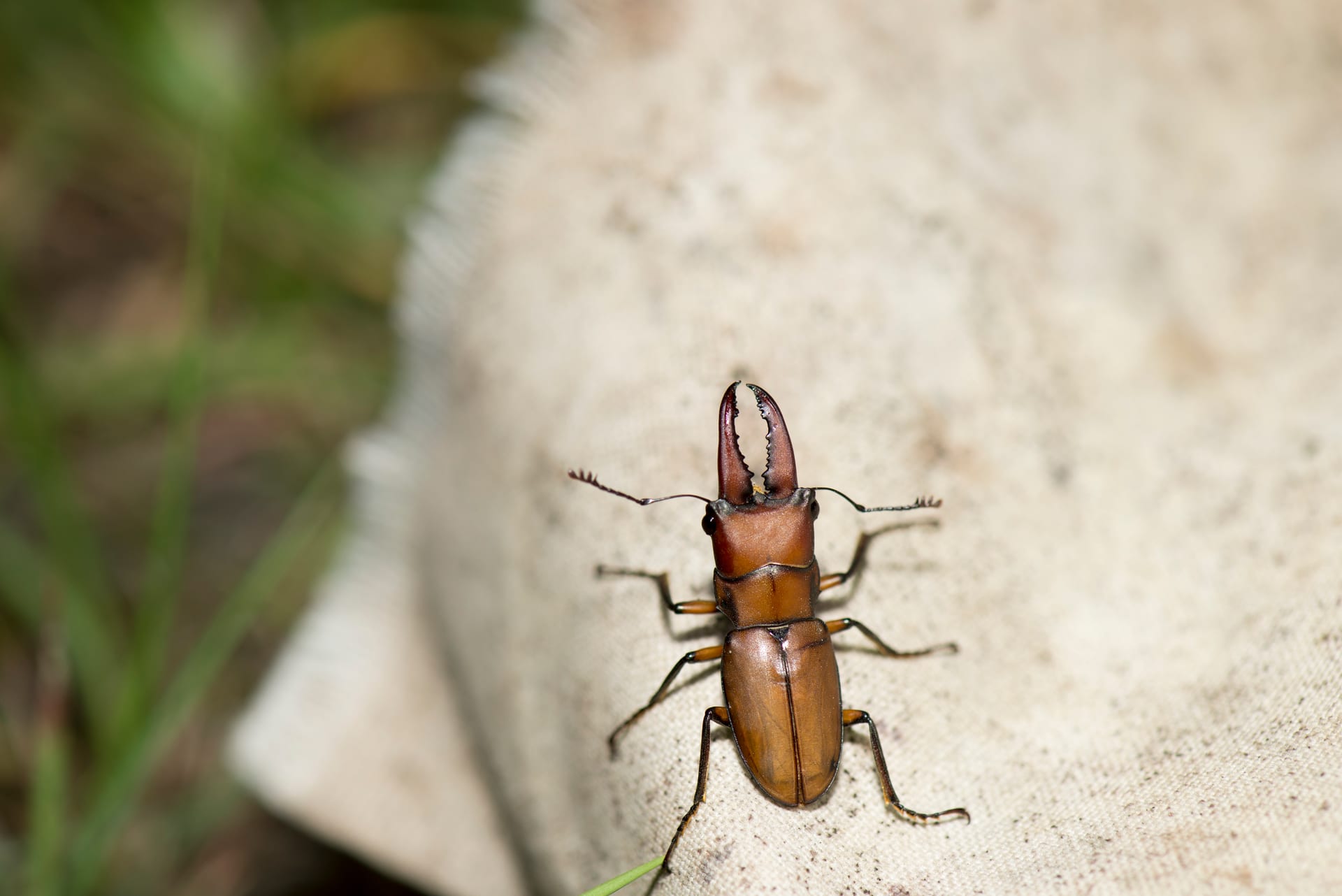
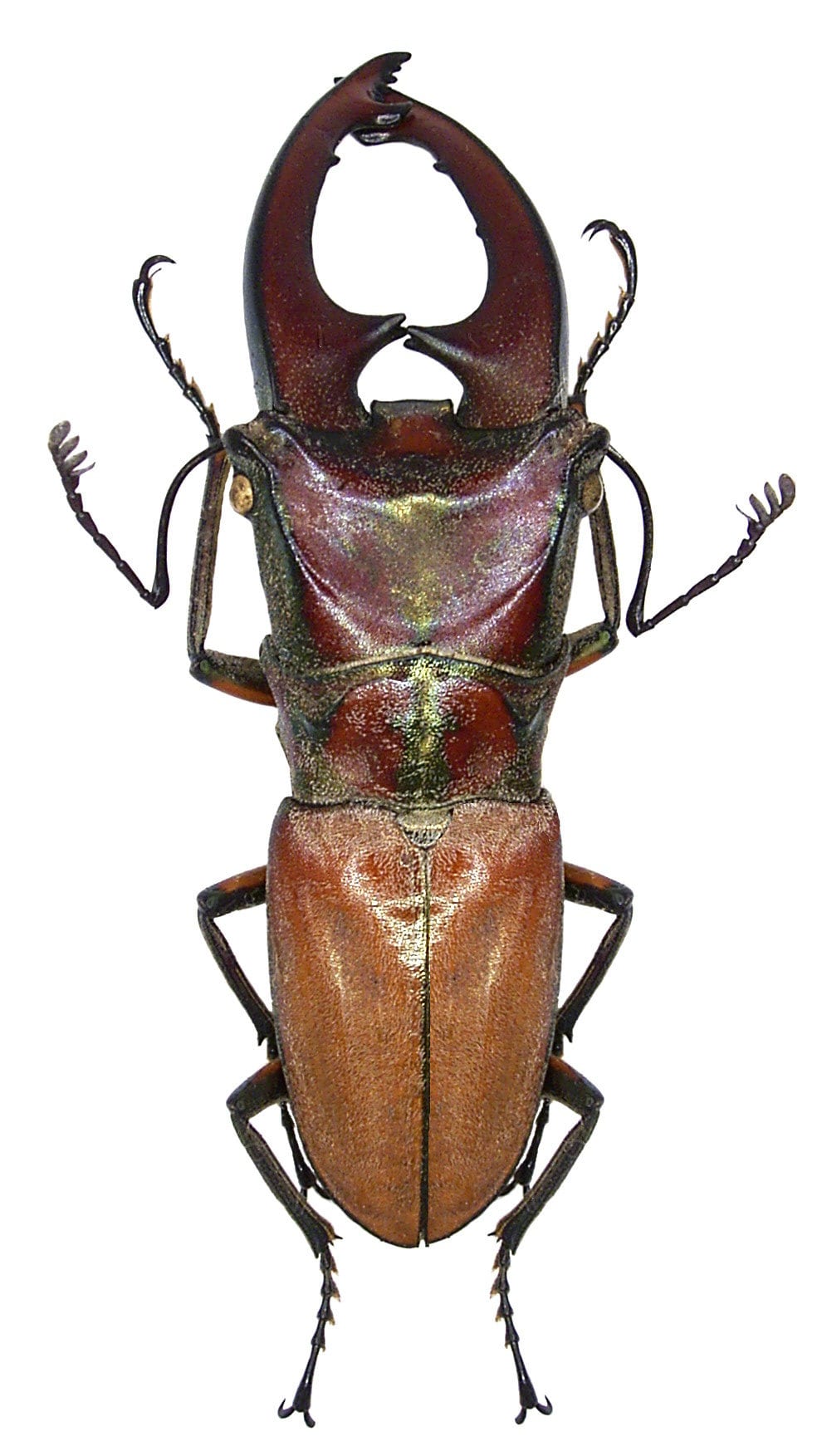
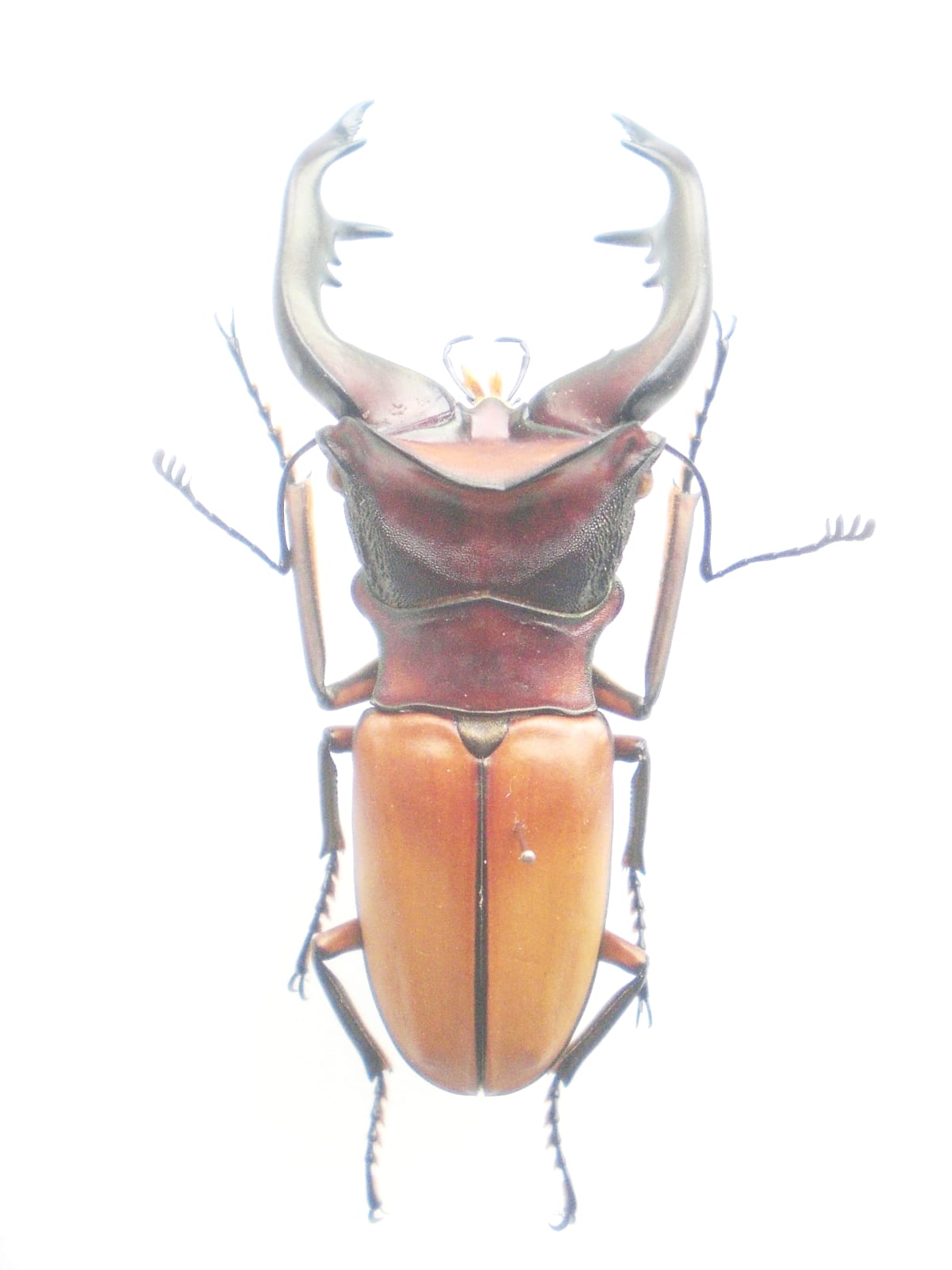
A medium-sized Cyclommatus from Borneo, with a red-brown body, yellow legs and sharp mandibles that curve elegantly from about their midpoint. A new locality found in 2003 made it easy to obtain, but it is sensitive to cold.
Difficulty
Intermediate
Temperature
23〜25℃
Lifespan
Adults 8-10 months
Size
Males 25.6-71 mm (wild record 71.0 mm, captive record 69.7 mm) / females about 25 mm
Humidity
60〜80%
Diet
Beetle jelly (in the wild it gathers at the flowers of herbaceous plants)
About
The tarandus long-jawed stag (Cyclommatus tarandus) is a medium-sized Cyclommatus from Borneo, with a red-brown body, yellow legs and sharp mandibles that curve elegantly from about their midpoint, giving it a different look from the straight-jawed metallifer. Males run 25.6-71 mm and females about 25 mm, with even the largest staying in the high 60s. The most commonly traded stock comes from around Mount Bawang in West Kalimantan, Indonesia, where it lives at 300-350 m in humid conditions with morning and evening temperatures of 21-25 C. It was scarce in trade from the late 1990s to the early 2000s, but a new locality found in 2003 made it easy to obtain. The ideal rearing temperature is about 23-25 C and it must never be kept below 10 C. It will lay in a firmly packed set of moistened fermented substrate, and larvae reared on substrate at 20 C emerge in about six months.
Source: Wikipedia (CC BY-SA 4.0)
Lifespan of the Tarandus Long-jawed Stag Beetle
The Tarandus Long-jawed Stag Beetle lives Adults 8-10 months.
Size of the Tarandus Long-jawed Stag Beetle
The Tarandus Long-jawed Stag Beetle grows to Males 25.6-71 mm (wild record 71.0 mm, captive record 69.7 mm) / females about 25 mm.
Temperature & humidity for the Tarandus Long-jawed Stag Beetle
The ideal temperature for the Tarandus Long-jawed Stag Beetle is 23〜25℃.
Basic Info
Origin
Borneo (around Mount Bawang in West Kalimantan, Indonesia, among other localities)
Care Specifications
Semi-aggressiveSolitaryBreeding: Moderate
Sources: Tsukimushi - Introducing Cyclommatus tarandus (23-25 C, 8-10 month lifespan, maturation, egg-laying) / STAG_BEETLE_JAPAN - Cyclommatus tarandus (Kalimantan) WF1 rearing log (habitat, egg-laying set, larval rearing) / BEETLE SCHOOL - Rearing Cyclommatus (difficulty table, larval period, adult lifespan) / Cyclommatus - Wikipedia (JA; species list, ranges and genus biology)
Breeding Records & Localities
Captive record (♂)
69.7 mm
Wild record (♂)
71 mm
Record source: BE-KUWA 2025 edition (Tarandus, captive 69.7 mm, 関将司 2025 / wild 71.0 mm; projected maximum 77 mm. Smallest record 24.8 mm, 家田眞太郎 2018; literature minimum 25.6 mm)
Notable localities
Mount Bawang, West Kalimantan (Borneo, Indonesia)
The habitat is given as humid country at 300-350 m where mornings and evenings run 21-25 C (BE-KUWA No. 19). Supply became steady after a new locality was found in 2003.
Generation codes
- WD
- Wild-caught
- WF1
- Offspring of a wild-caught female
- F1〜
- Captive generations (same locality)
- CBF1
- Cross-locality captive-bred (reset)
Sources: BE-KUWA Certified Breeding Records (Mushi-sha, FY2025 edition PDF, JA) / STAG_BEETLE_JAPAN - Cyclommatus tarandus (Kalimantan) WF1 rearing log
References & Sources
Edited & verified by: BreederDirect editorial team
The taxonomic, regulatory, and husbandry data on this page are compiled and verified against the authoritative primary sources below.
Primary sources
- Wikipedia
- Ministry of the Environment, Invasive Species Act: "Guidance for Those Importing Live Insects in Scarabaeoidea"
- CITES Appendix (checklist.cites.org)
- Tsukimushi - Introducing Cyclommatus tarandus (23-25 C, 8-10 month lifespan, maturation, egg-laying)
- STAG_BEETLE_JAPAN - Cyclommatus tarandus (Kalimantan) WF1 rearing log (habitat, egg-laying set, larval rearing)
- BEETLE SCHOOL - Rearing Cyclommatus (difficulty table, larval period, adult lifespan)
- BE-KUWA Certified Breeding Records (Mushi-sha, FY2025 edition PDF, JA)
- GBIF
Taxonomy & Authority
Accepted name: Cyclommatus tarandus (Thunberg, 1806)
Synonyms: Cladognathus tarandus
Authority databases: GBIF
Nomenclature follows global taxonomic authority databases.
Regulations & Conservation Status
Not CITES-listed
Plant Protection Act: When importing live specimens of Scarabaeoidea (including rhinoceros beetles, stag beetles, flower beetles, etc.), a species identification certificate issued by the exporting country government agency or equivalent must be attached in accordance with the Invasive Species Act (import ports are limited to Narita, Chubu, Kansai, Fukuoka, and Kagoshima airports). This species itself is not a designated invasive species, and import is possible upon submission of the certificate.
Sources: Ministry of the Environment, Invasive Species Act: "Guidance for Those Importing Live Insects in Scarabaeoidea" / CITES Appendix (checklist.cites.org)
Regulations may change. Always verify the latest information with the relevant authorities.
Tarandus Long-jawed Stag Beetle Listings
Loading latest listingsFind listings for this species