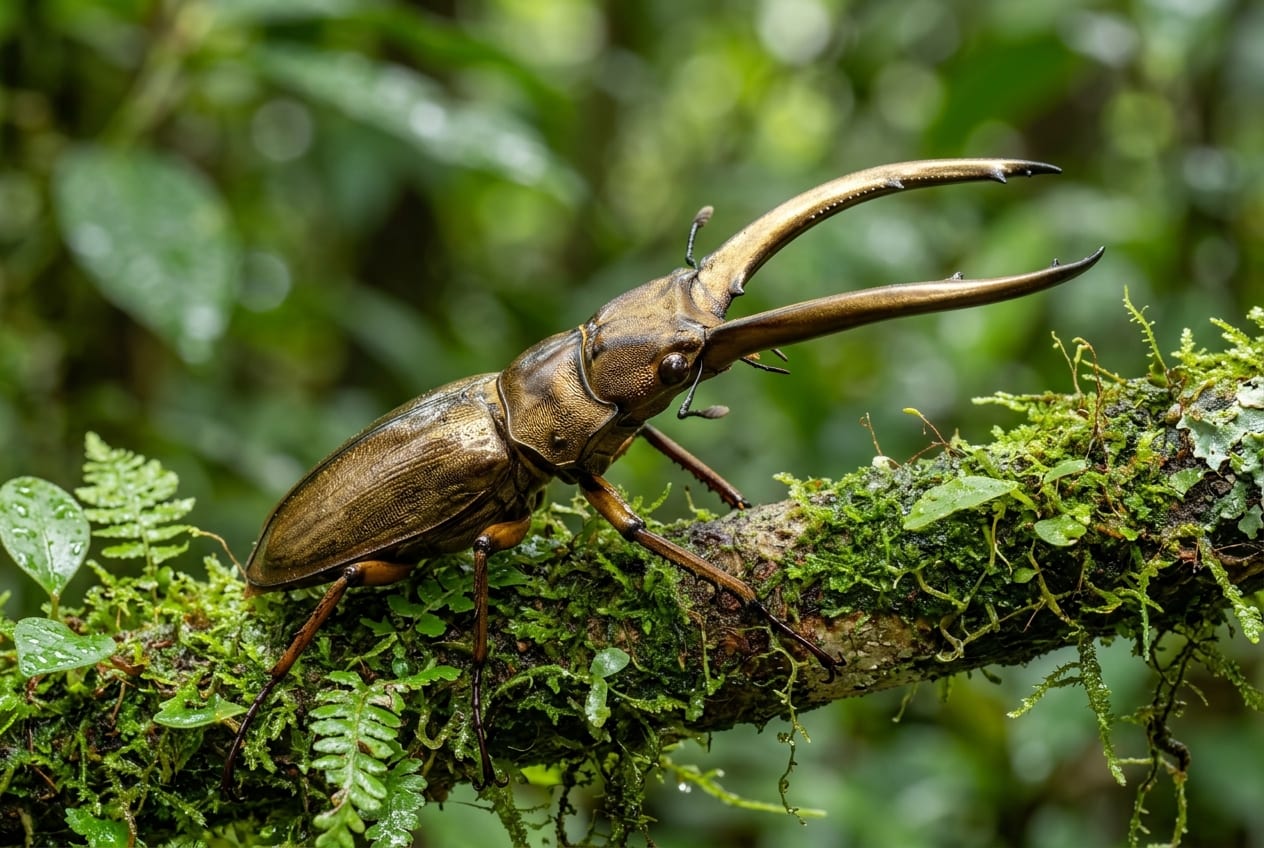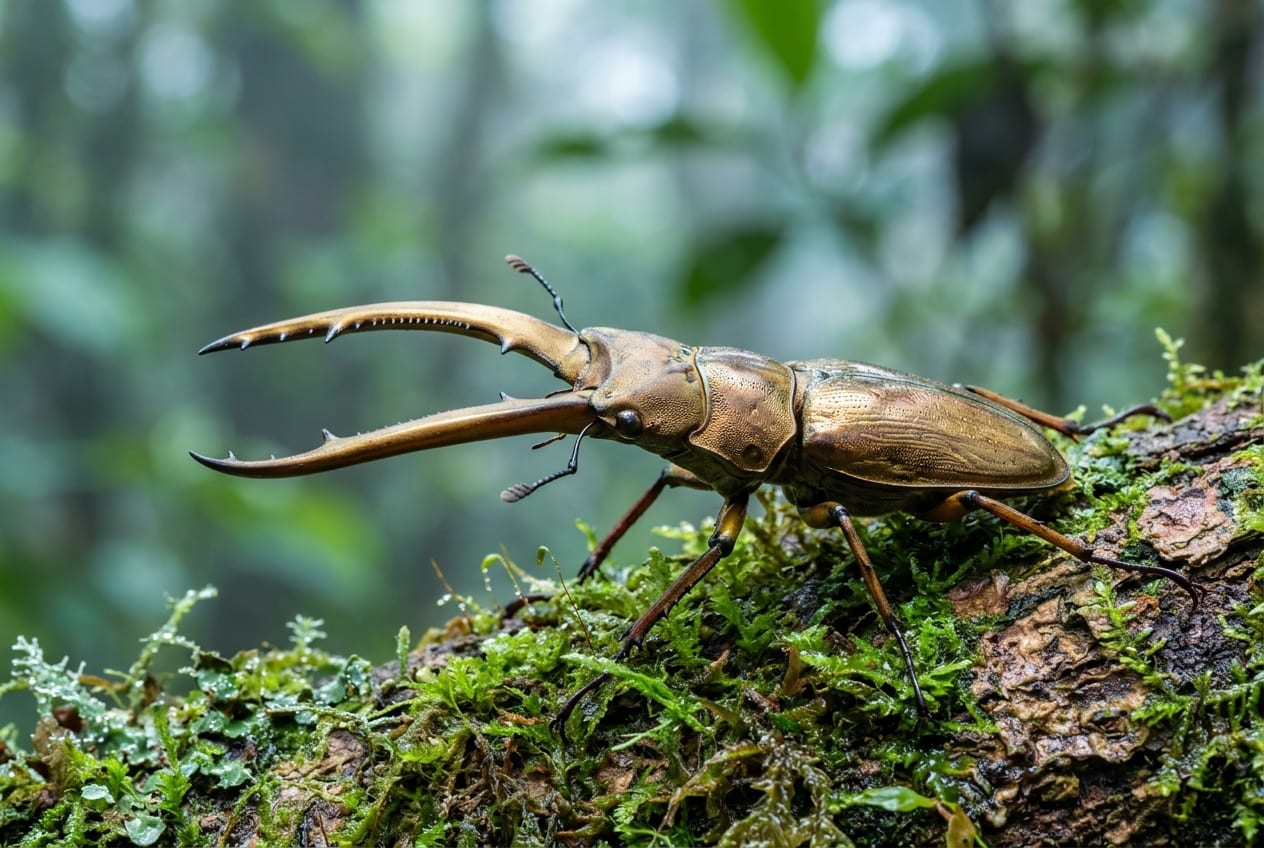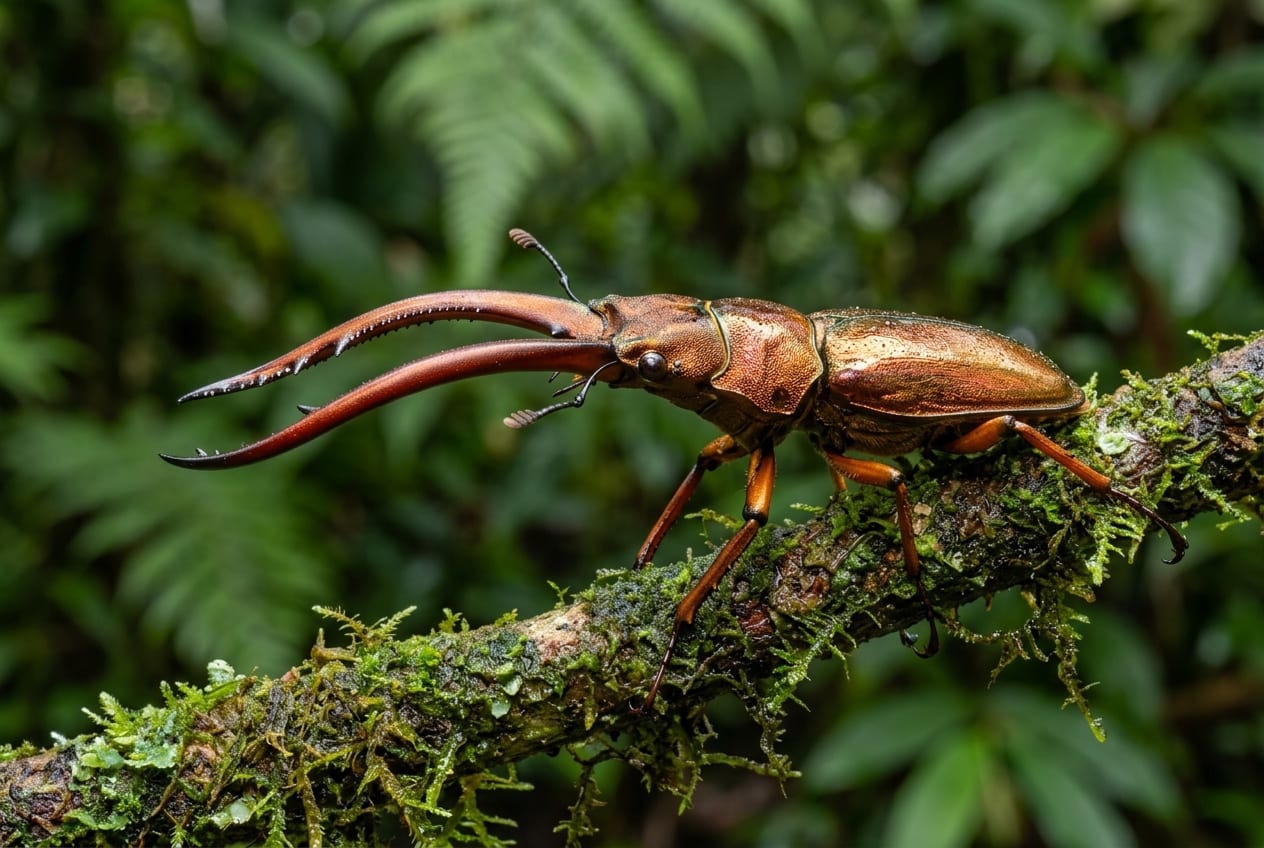
AI-generated image
Lunifer Long-jawed Stag Beetle
IntermediateCyclommatus lunifer
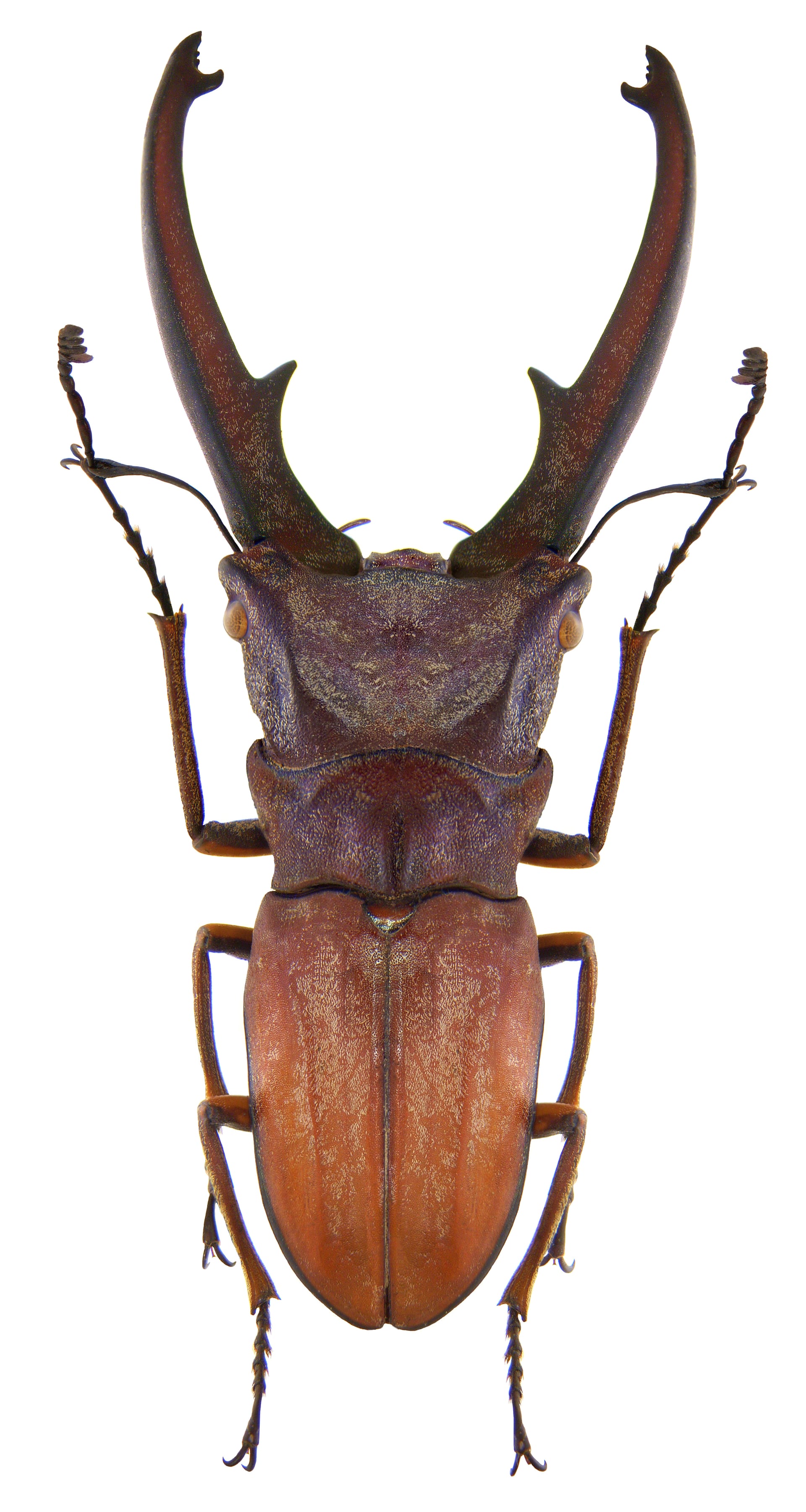
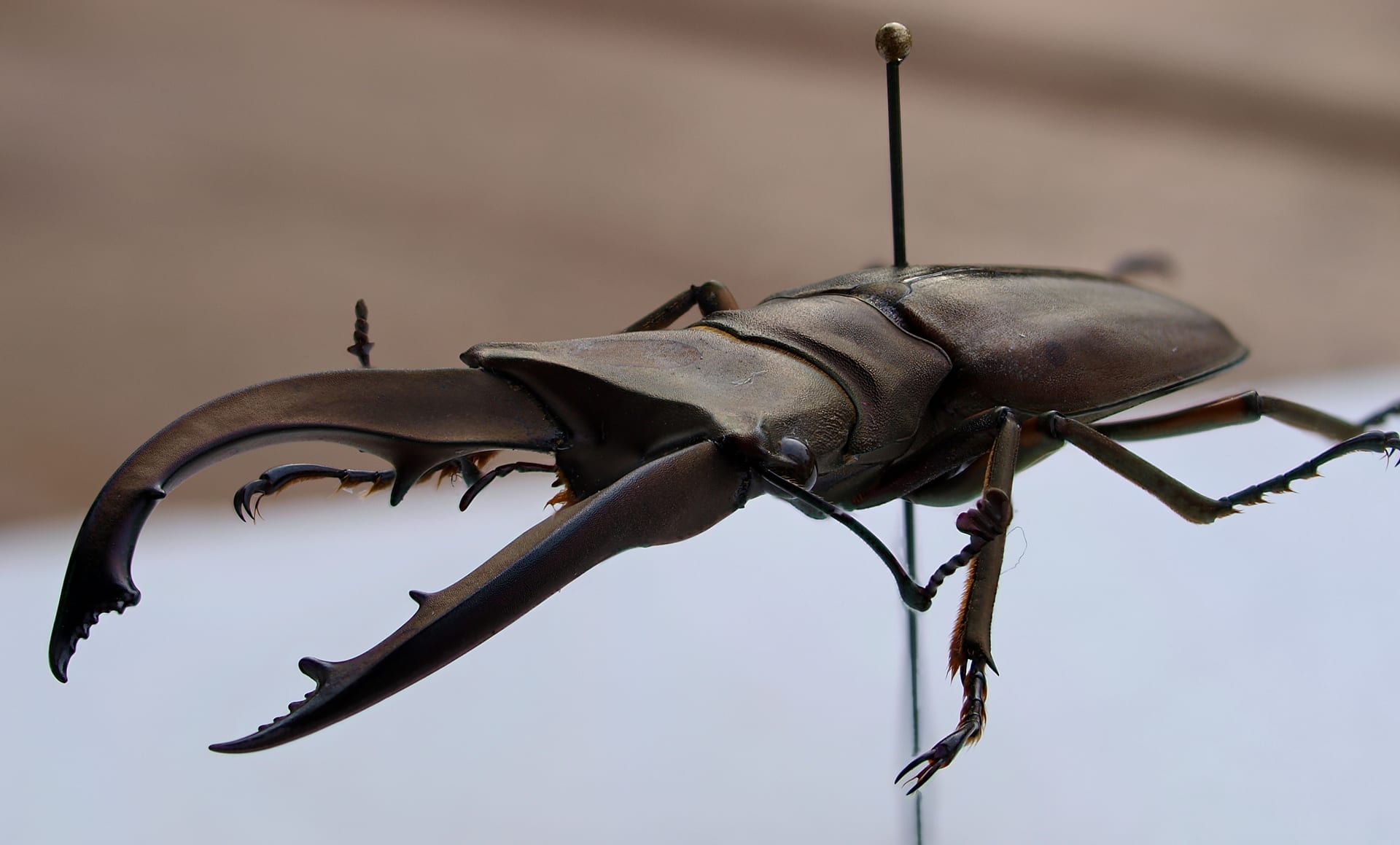
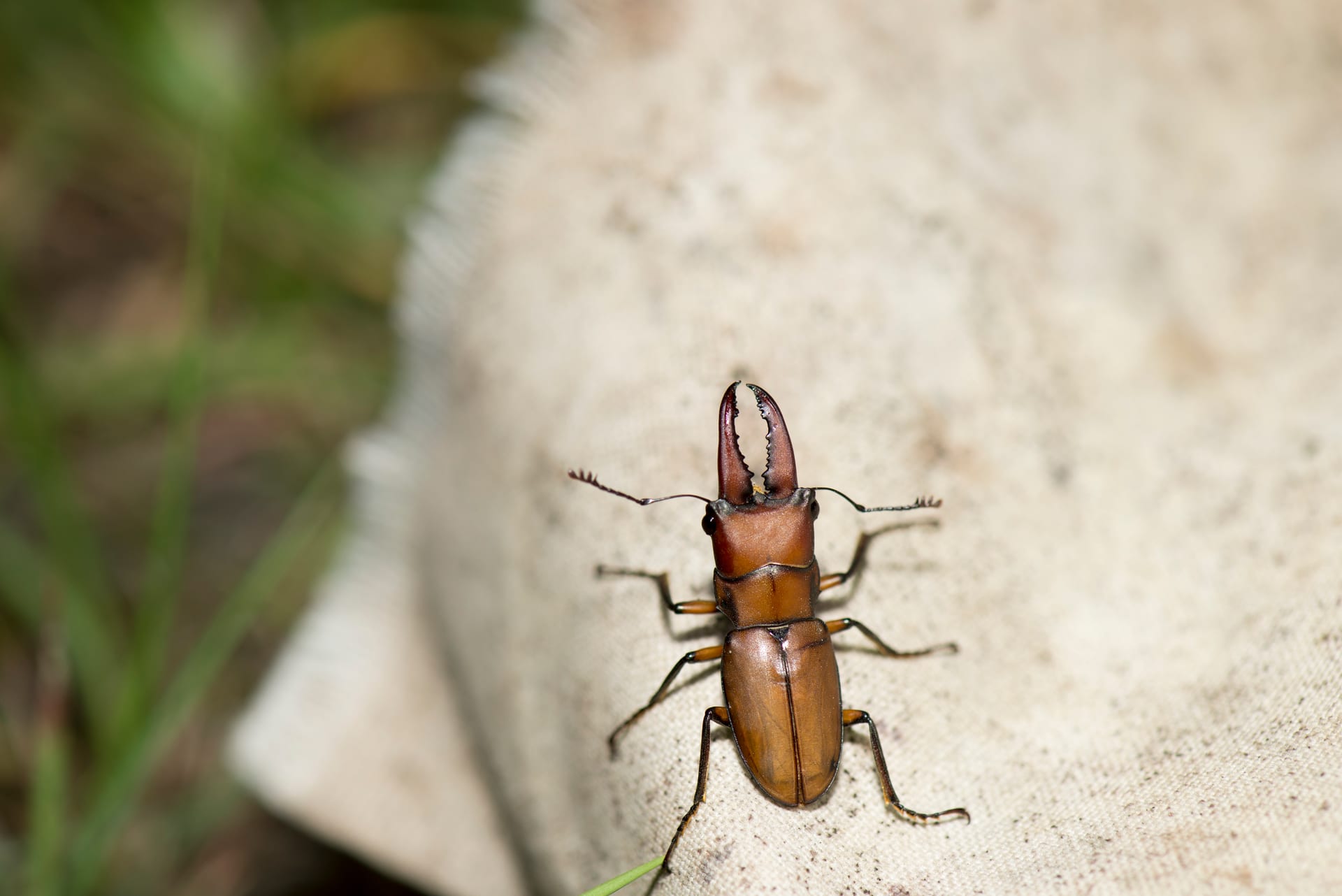
A small Cyclommatus from Borneo, Sumatra and the Malay Peninsula. Its mandibles are long, slender and bowed, and at a captive record of 55.2 mm it sits at the small end of the genus. It suffers in stale, humid air.
Difficulty
Intermediate
Temperature
20〜28℃
Lifespan
Adults 4-6 months (typical for the genus)
Size
Males up to 55.2 mm (captive record; the wild record is 53.3 mm)
Humidity
60〜80%
Diet
Beetle jelly (in the wild it visits flowers of herbaceous plants)
About
The lunifer long-jawed stag (Cyclommatus lunifer) ranges from Borneo, Sumatra and the Malay Peninsula into south-eastern Myanmar, and was described in 1905. The specimen records held by GBIF cluster in Sabah and Pahang in Malaysia and in Indonesia. The BE-KUWA captive record is 55.2 mm against a wild record of 53.3 mm, small for the genus but a sign that captive lines are productive, since breeders have passed the wild figure. Cyclommatus visit flowers of herbaceous plants rather than sap runs, and the males fight over females and feeding sites out on thin twigs and grass stems. Care follows the genus: a firmly packed set combining a soft egg-laying log with fine fermented substrate. Condensation inside the box is fatal, so keep it cool and well ventilated. Larvae do not take to fungus bottles and are reared on fermented substrate.
Source: Wikipedia (CC BY-SA 4.0)
Lifespan of the Lunifer Long-jawed Stag Beetle
The Lunifer Long-jawed Stag Beetle lives Adults 4-6 months (typical for the genus).
Size of the Lunifer Long-jawed Stag Beetle
The Lunifer Long-jawed Stag Beetle grows to Males up to 55.2 mm (captive record; the wild record is 53.3 mm).
Basic Info
Origin
Borneo, Sumatra, the Malay Peninsula and south-eastern Myanmar
Lifespan
Adults 4-6 months (typical for the genus)
Size
Males up to 55.2 mm (captive record; the wild record is 53.3 mm)
Care Specifications
Breeding Records & Localities
Captive record (♂)
55.2 mm
Wild record (♂)
53.3 mm
Record source: BE-KUWA 2025 edition (Lunifer, captive 55.2 mm, JUN 2019 / wild 53.3 mm; projected maximum 56 mm)
Notable localities
Sabah, Borneo (Malaysia)Pahang, Malay Peninsula (Malaysia)Sumatra (Indonesia)
The captive record of 55.2 mm already exceeds the wild record of 53.3 mm, and the projected maximum of 56 mm is close behind, so there is little room left to grow this species larger.
Generation codes
- WD
- Wild-caught
- WF1
- Offspring of a wild-caught female
- F1〜
- Captive generations (same locality)
- CBF1
- Cross-locality captive-bred (reset)
Sources: BE-KUWA Certified Breeding Records (Mushi-sha, FY2025 edition PDF, JA) / Cyclommatus - Wikipedia (JA)
References & Sources
Edited & verified by: BreederDirect editorial team
The taxonomic, regulatory, and husbandry data on this page are compiled and verified against the authoritative primary sources below.
Primary sources
- Wikipedia
- Ministry of the Environment, Invasive Species Act: "Guidance for Those Importing Live Insects in Scarabaeoidea"
- CITES Appendix (checklist.cites.org)
- BEETLE SCHOOL - Rearing Cyclommatus (egg-laying set, larval rearing, larval period, adult lifespan, breeding cautions)
- Ben's Beetle Breeding Pages - Cyclommatus lunifer (distribution)
- BE-KUWA Certified Breeding Records (Mushi-sha, FY2025 edition PDF, JA)
- GBIF
Taxonomy & Authority
Accepted name: Cyclommatus lunifer Boileau, 1905
Authority databases: GBIF
Nomenclature follows global taxonomic authority databases.
Regulations & Conservation Status
Not CITES-listed
Plant Protection Act: When importing live specimens of Scarabaeoidea (including rhinoceros beetles, stag beetles, flower beetles, etc.), a species identification certificate issued by the exporting country government agency or equivalent must be attached in accordance with the Invasive Species Act (import ports are limited to Narita, Chubu, Kansai, Fukuoka, and Kagoshima airports). This species itself is not a designated invasive species, and import is possible upon submission of the certificate.
Sources: Ministry of the Environment, Invasive Species Act: "Guidance for Those Importing Live Insects in Scarabaeoidea" / CITES Appendix (checklist.cites.org)
Regulations may change. Always verify the latest information with the relevant authorities.
Lunifer Long-jawed Stag Beetle Listings
Loading latest listingsFind listings for this species