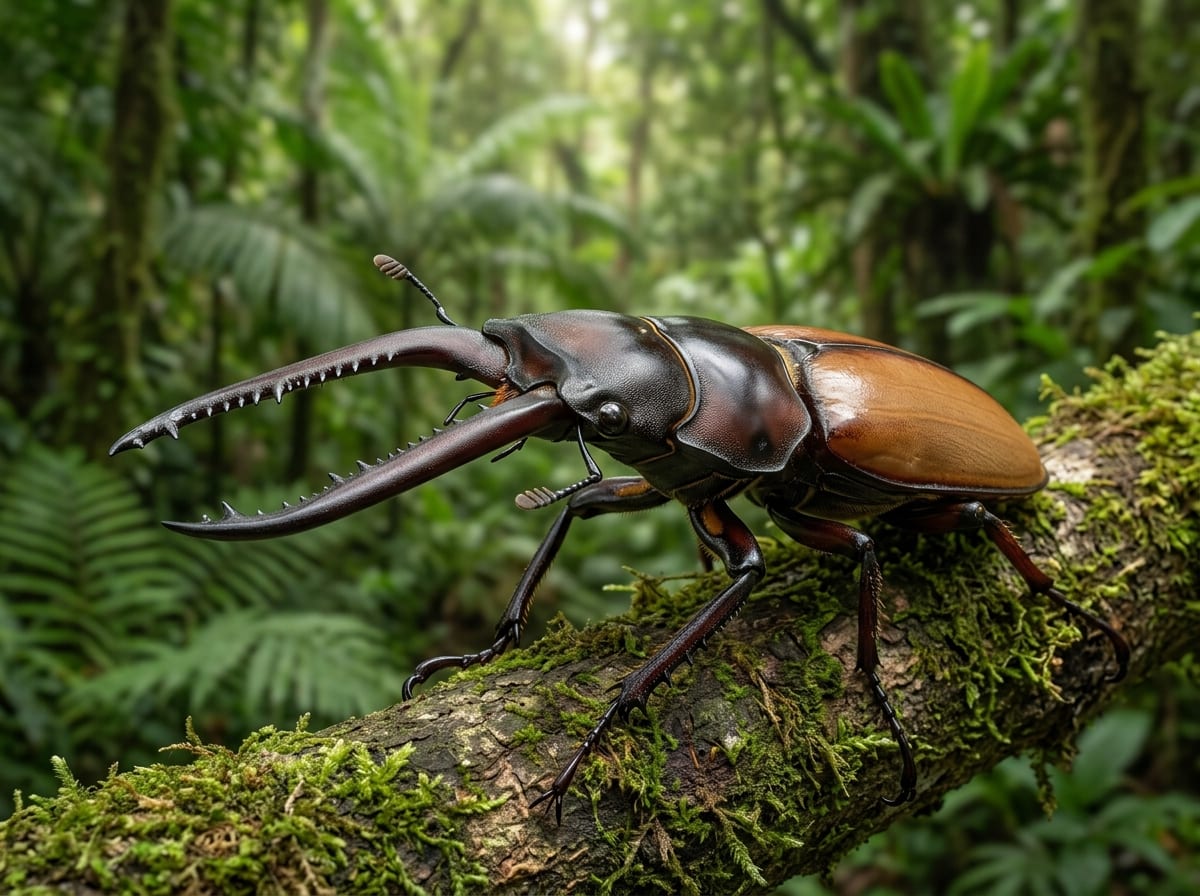
AI-generated image
Intermedia shining stag beetle
AdvancedOdontolabis intermedia
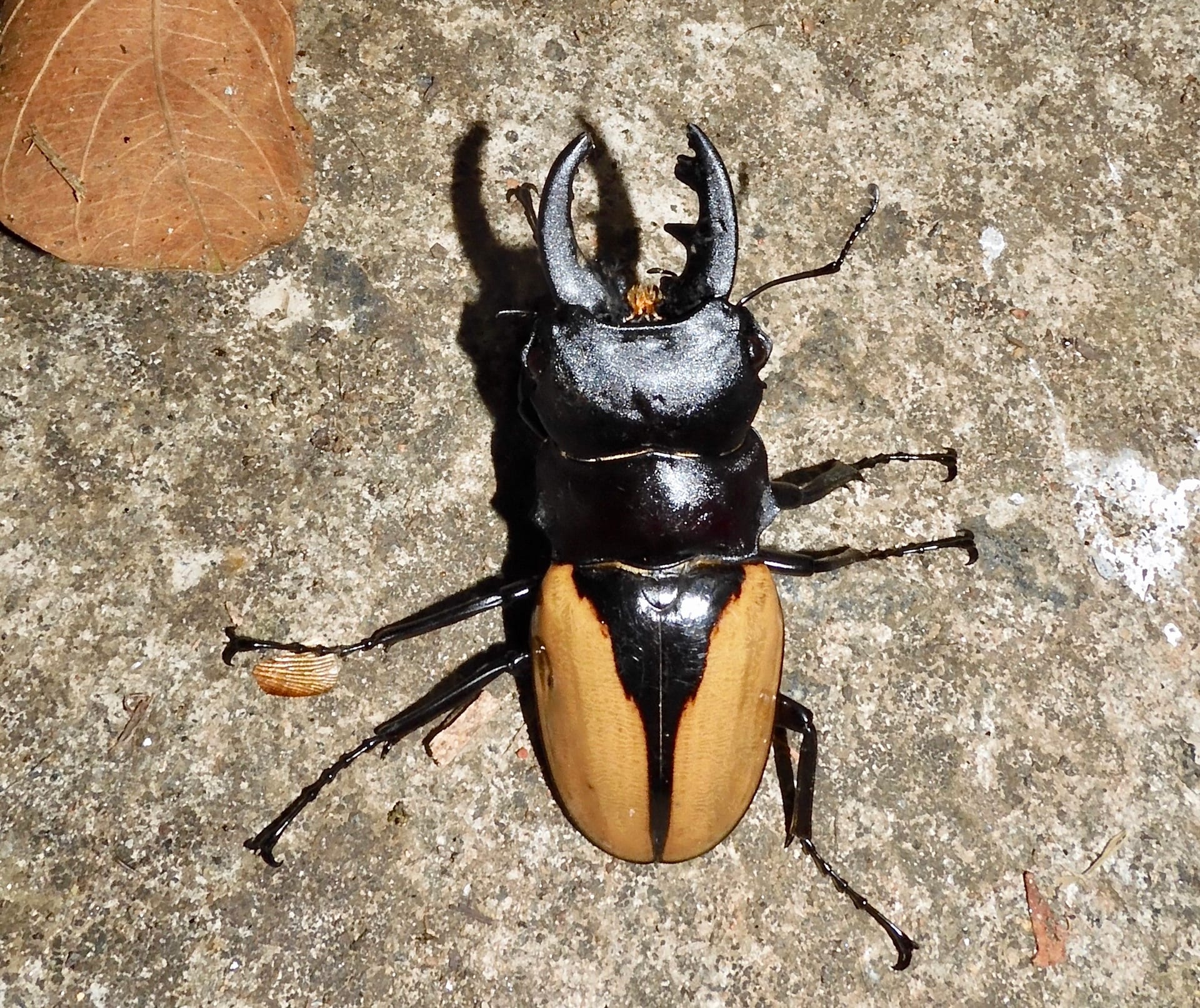
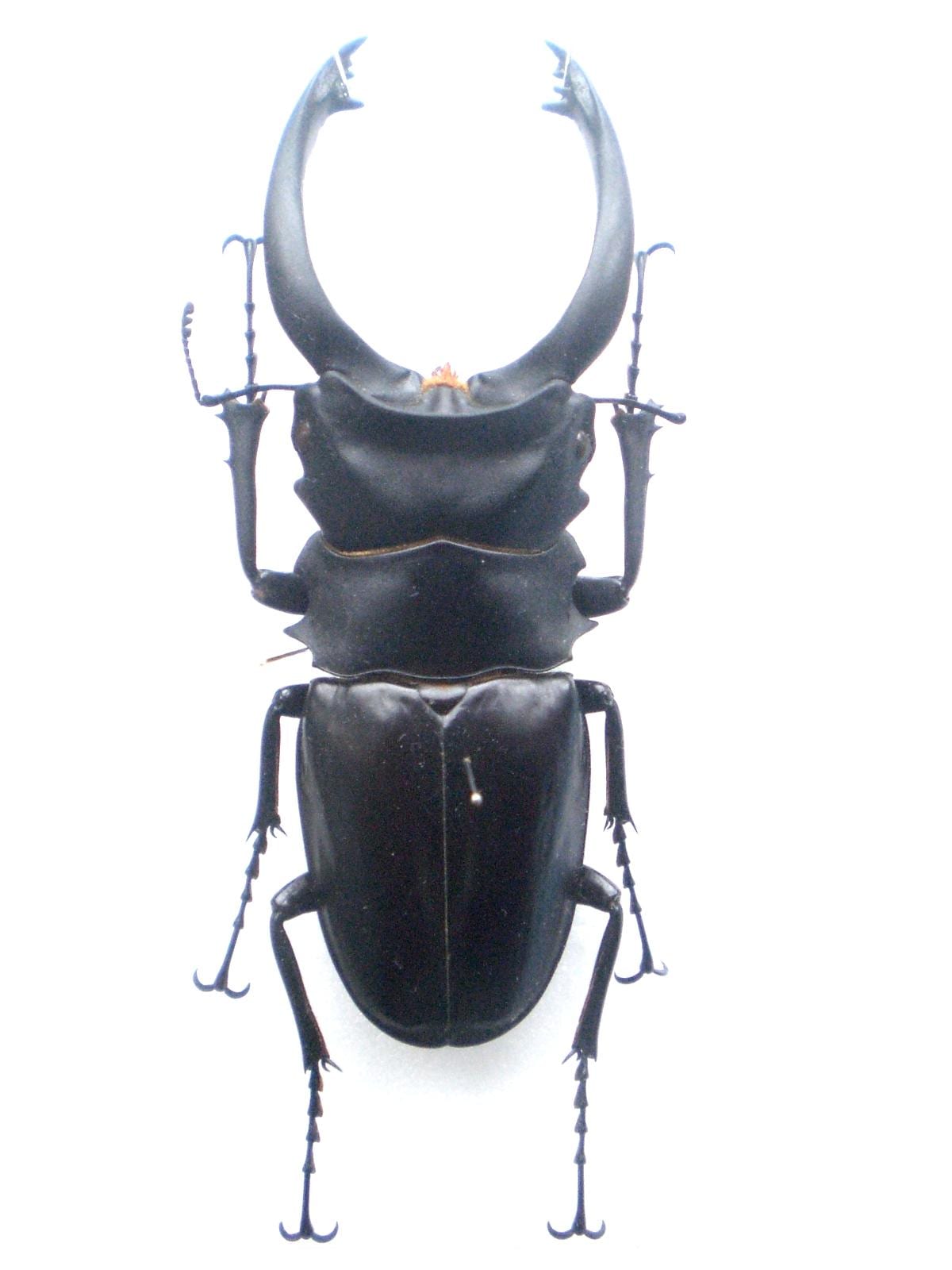
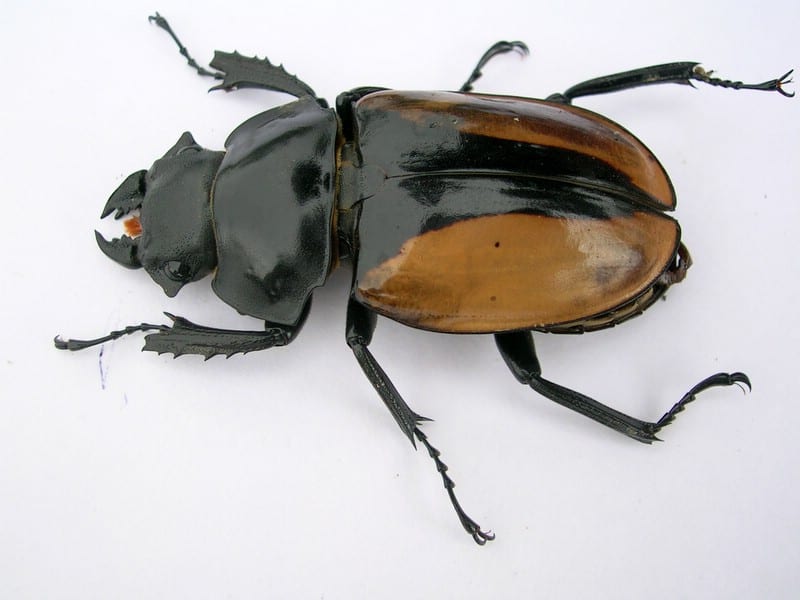
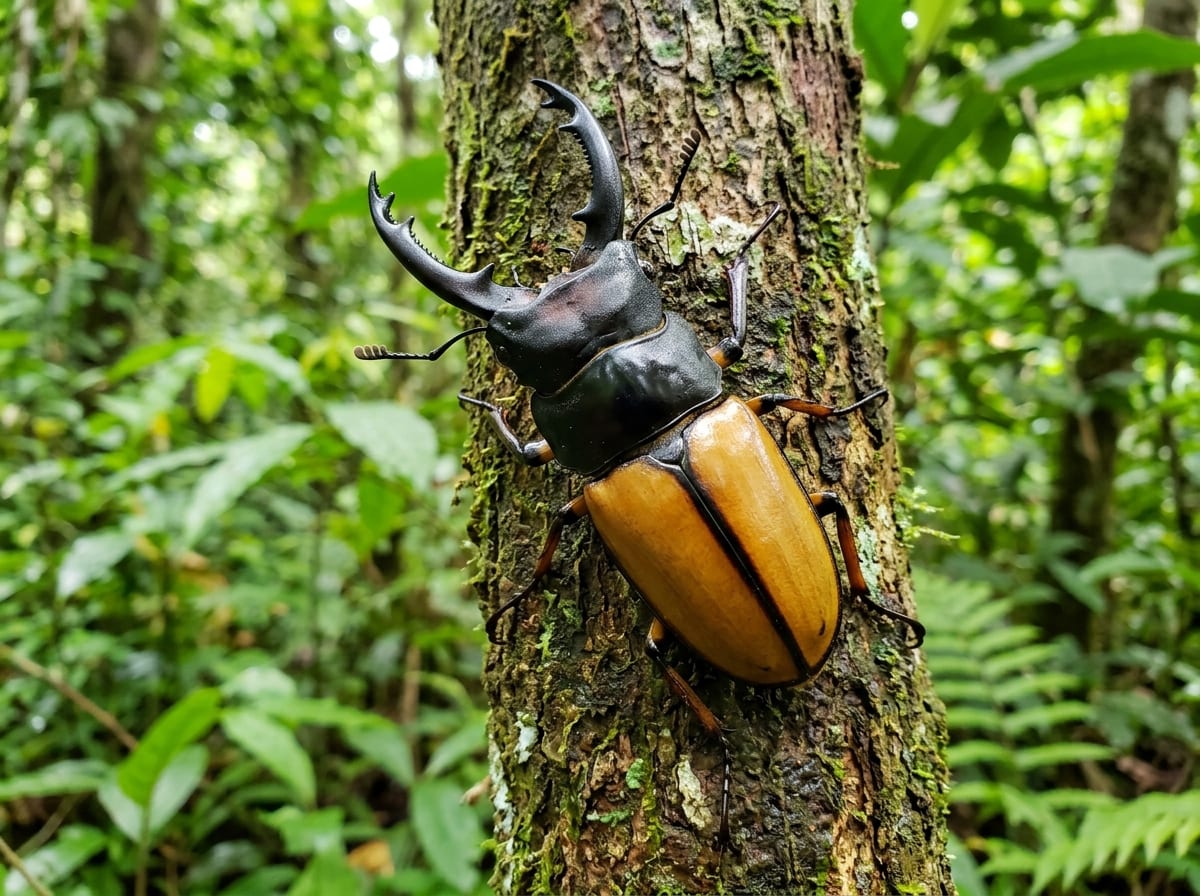
A large, lacquer-glossy shining stag beetle from Palawan and other Philippine islands. In Japan it is usually treated as a subspecies of O. dalmanni, and big males grow a large inner tooth near the mandible base.
Difficulty
Advanced
Temperature
20〜28℃
Lifespan
1.5-2 years to adulthood for males, over a year for females
Size
38-106mm (captive record 106.2mm)
Humidity
60〜80%
Diet
Adults take sap or beetle jelly; larvae eat dark, well-fermented substrate and spent fungus-bottle contents
About
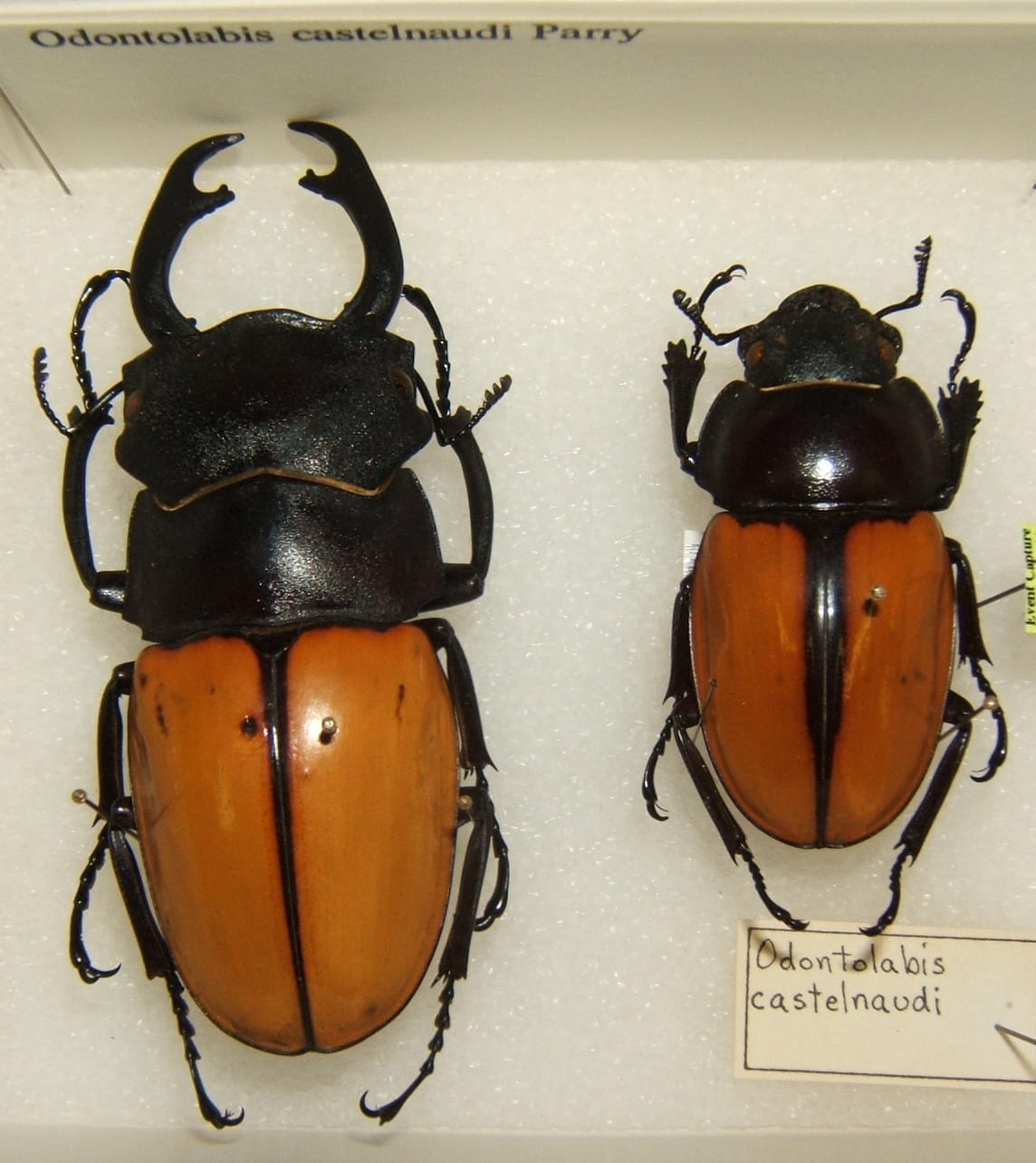
Odontolabis intermedia Neervoort van de Poll, 1889 is a shining stag beetle of Palawan, Negros, Panay, Sibuyan, Cebu and other Philippine islands. Japanese sources usually treat it as O. dalmanni intermedia, but its hairless wing cases and different mandibles lead some to rank it as a species, and GBIF lists it at species rank. It ranges from 38mm in small individuals to 106mm, among the largest of all Odontolabis, and most individuals are medium to large. The whole body has a lacquer-like gloss. It resembles O. alces, also from the Philippines, but is slimmer and lacks the hooked process on the underside of the thorax; large males also develop a big inner tooth near the mandible base as well as at the tip, which O. alces never does, and they move their antennae much less. It is highly combative, and males may kill a female they do not accept. Its looks make it the most imported of the O. dalmanni forms. The BE-KUWA 2025 edition gives 106.2mm captive and 107.0mm wild.
Source: Wikipedia (CC BY-SA 4.0)
Lifespan of the Intermedia shining stag beetle
The Intermedia shining stag beetle lives 1.5-2 years to adulthood for males, over a year for females.
Size of the Intermedia shining stag beetle
The Intermedia shining stag beetle grows to 38-106mm (captive record 106.2mm).
Basic Info
Origin
Philippines (Palawan, Negros, Panay, Sibuyan, Cebu and others)
Lifespan
1.5-2 years to adulthood for males, over a year for females
References & Sources
Edited & verified by: BreederDirect editorial team
The taxonomic, regulatory, and husbandry data on this page are compiled and verified against the authoritative primary sources below.
Primary sources
- Wikipedia
- Plant Protection Station: Importing Scarabaeoidea (JA)
- Plant Protection Station: Importing live insects (JA)
- Ministry of the Environment: List of invasive alien species (JA)
- Species+ CITES query (no listing)
- Odontolabis - Wikipedia (JA), species notes, ecology and rearing
- BE-KUWA Certified Breeding Records (Mushi-sha, FY2025 edition PDF, JA)
- GBIF: Odontolabis intermedia Neervoort Van De Poll, 1889
Taxonomy & Authority
Regulations & Conservation Status
Not CITES-listed
Many live foreign Scarabaeoidea (stag beetles, rhinoceros beetles, flower chafers and relatives) are quarantine pests whose import is banned under Japan's Plant Protection Act, and even importable species require a species-name certificate from a foreign government body under the Invasive Alien Species Act (entry only via designated airports, never by international post). Whether a species may enter must be checked with the Plant Protection Station in advance, so choose domestically bred stock and never release captive beetles.
Sources: Plant Protection Station: Importing Scarabaeoidea (JA) / Plant Protection Station: Importing live insects (JA) / Ministry of the Environment: List of invasive alien species (JA) / Species+ CITES query (no listing)
Regulations may change. Always verify the latest information with the relevant authorities.
Intermedia shining stag beetle Listings
Loading latest listingsFind listings for this species