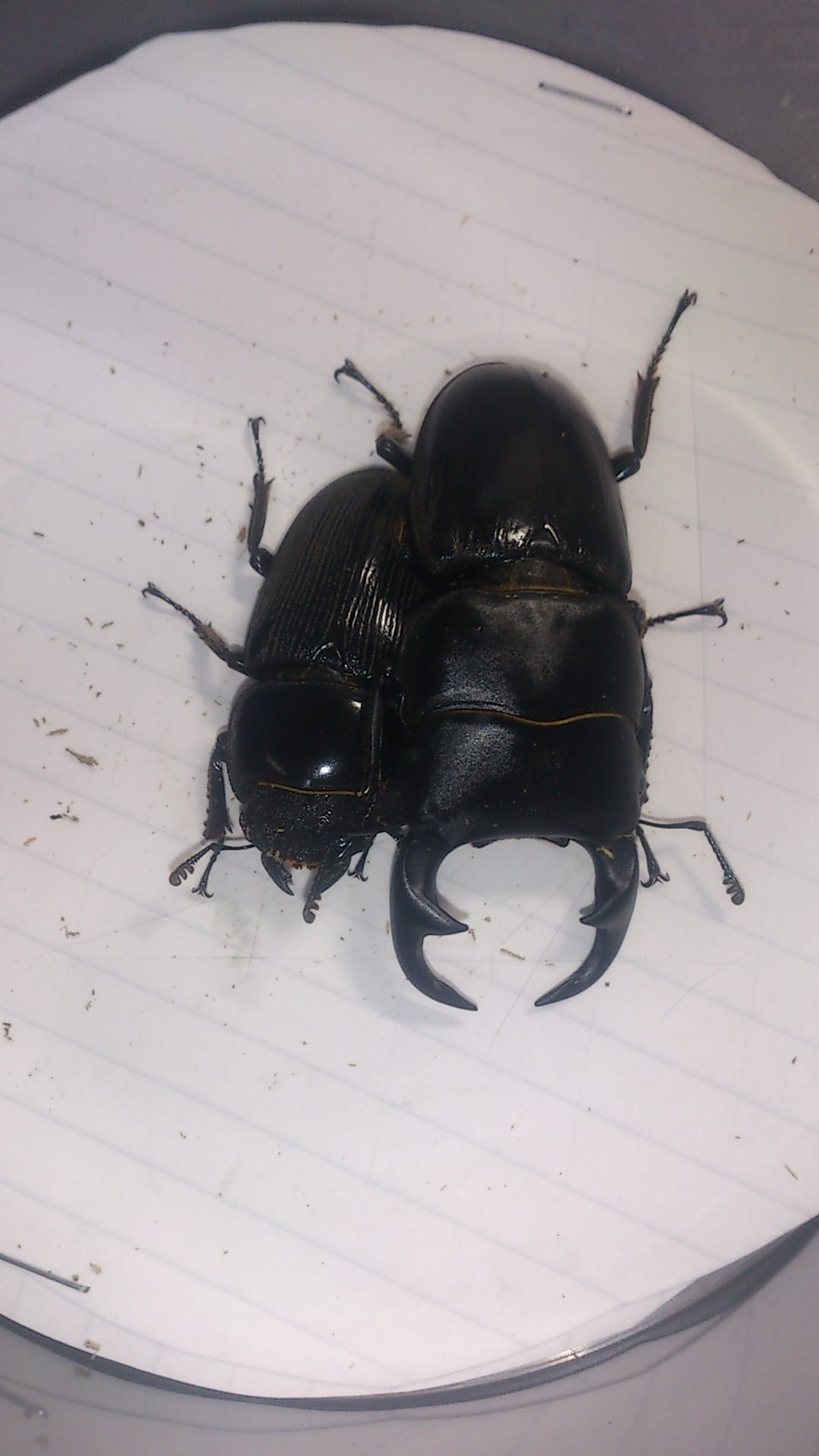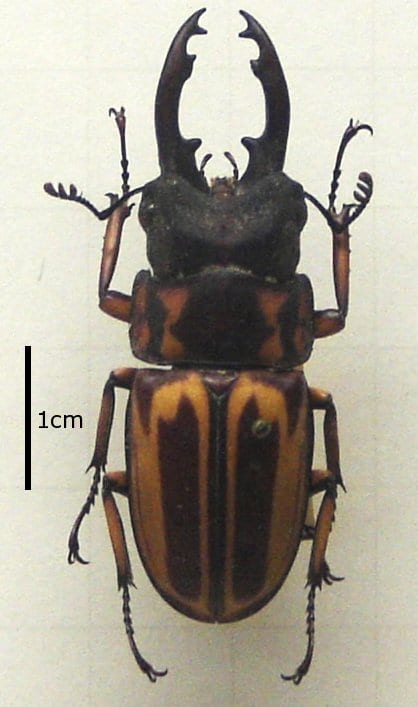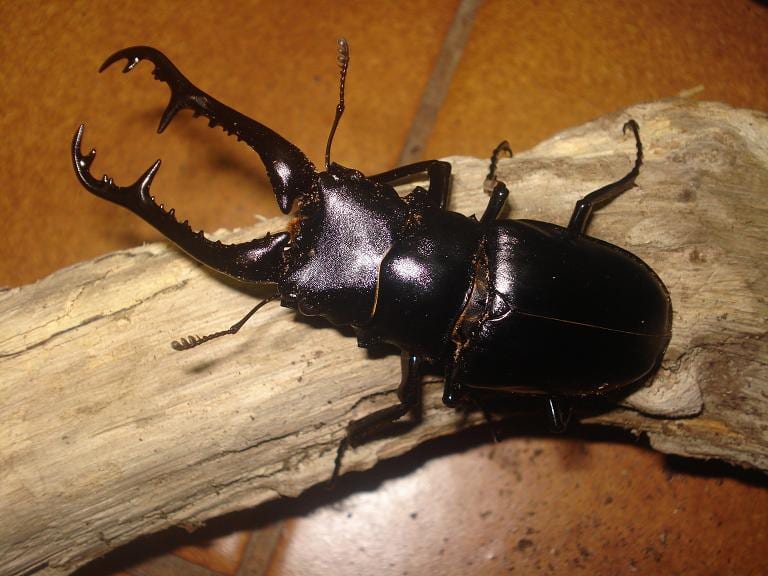
Source: Wikimedia Commons
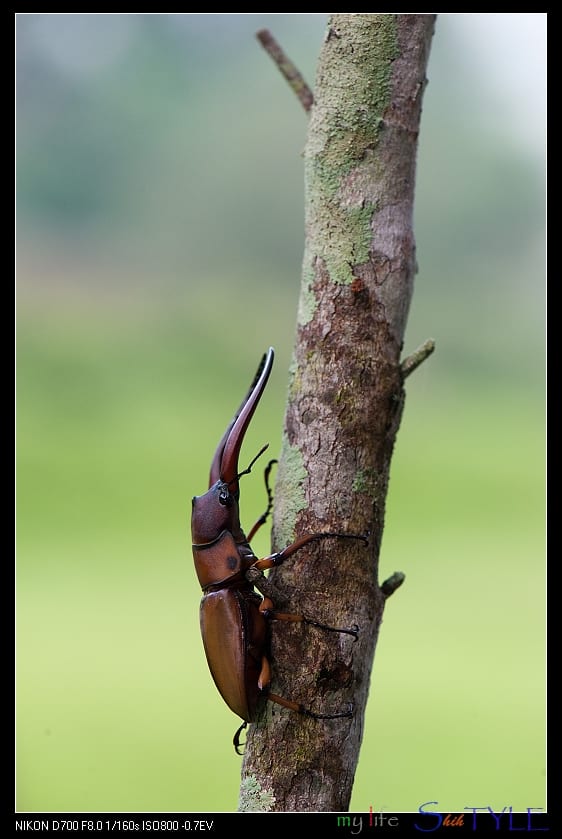
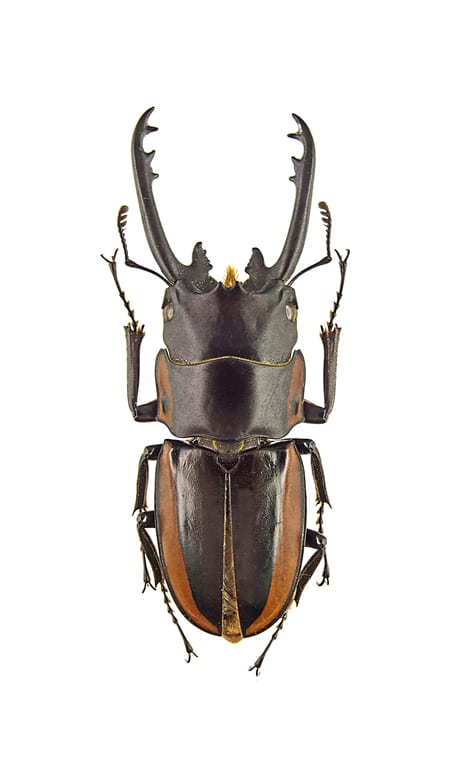
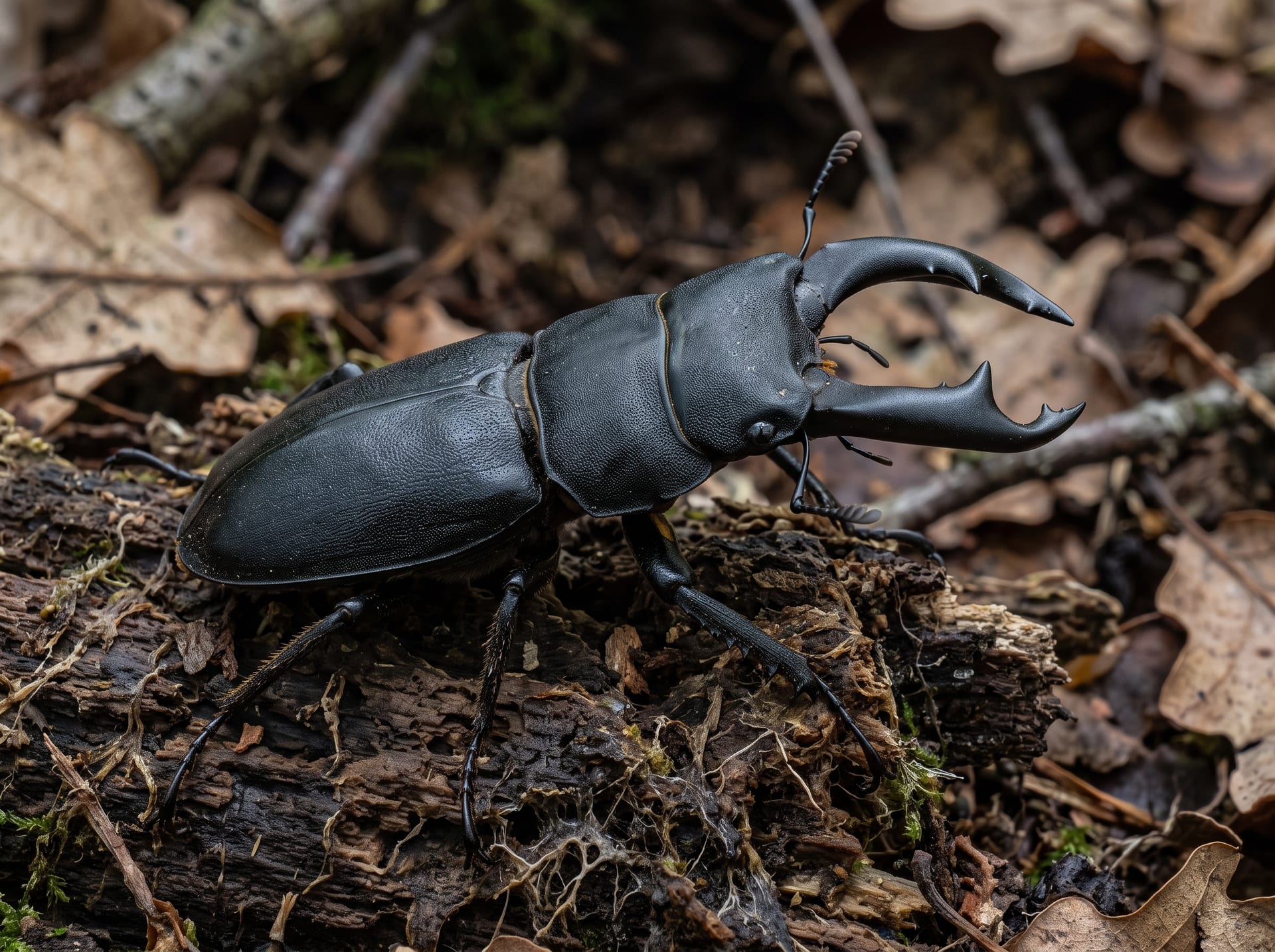
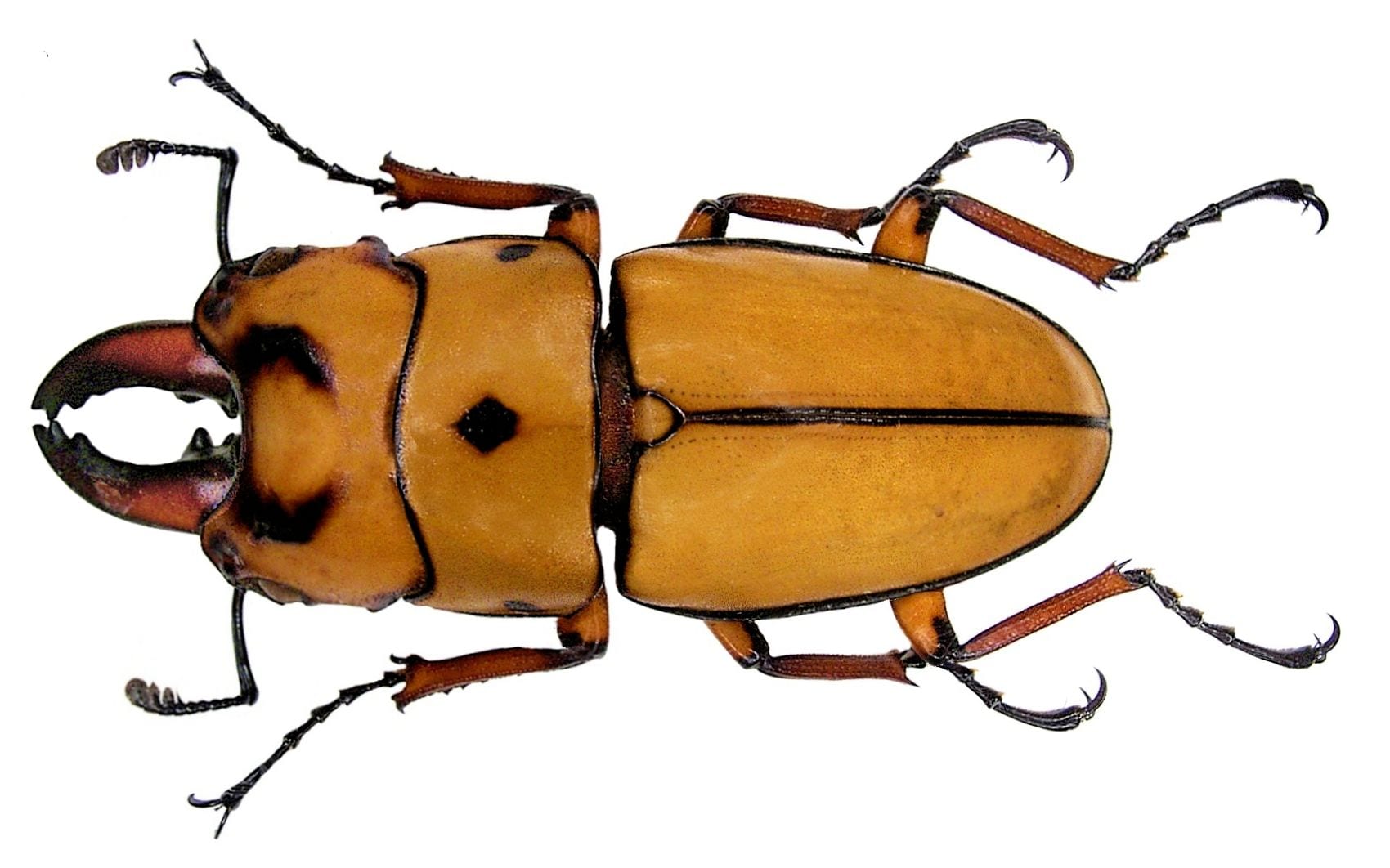
Giraffe Stag Beetle (Flores)
BeginnerProsopocoilus giraffa keisukei
The largest giraffe stag subspecies, from Flores and Lombok. With a captive record of 122mm it is traded as the world's longest stag beetle. Hardy and easy to breed, but the mandibles are powerful.
Difficulty
Beginner
Temperature
18℃
Lifespan
Adults 6-15 months
Size
Males 45-122mm, females 31-56.2mm
Humidity
60〜80%
Diet
Beetle jelly; larvae on fungus bottles or fermented substrate
About
The keisukei subspecies of the giraffe stag beetle (Prosopocoilus giraffa keisukei) comes from Flores and Lombok in Indonesia and is the largest of the nine subspecies. The species ranges from Nepal and Bhutan through India, Indochina, the Malay Peninsula, Indonesia, the Philippines and Timor; its long mandibles, likened to a giraffe's neck, give it its name, and together with Hexarthrius mandibularis it is among the largest stag beetles in the world. Males of the species measure 45-122mm and females 31-56.2mm. Keisukei holds the BE-KUWA 2025 captive record of 122.0mm (2022) and a wild maximum of 121.0mm, and is traded as the world's longest stag beetle. It lives in tropical rainforest; larvae develop in decaying hardwood for 7-14 months, emergence follows pupation in about a month, and adults live 6-15 months. Rearing is easy, with larvae on fungus bottles or fermented substrate. As a general rule for foreign stag beetles, keep above 18C in winter and avoid heat over 30C. The mandibles are powerful and males can crush females, so pair under supervision.
Source: Wikipedia (CC BY-SA 4.0)
Lifespan of the Giraffe Stag Beetle (Flores)
The Giraffe Stag Beetle (Flores) lives Adults 6-15 months.
Size of the Giraffe Stag Beetle (Flores)
The Giraffe Stag Beetle (Flores) grows to Males 45-122mm, females 31-56.2mm.
Temperature & humidity for the Giraffe Stag Beetle (Flores)
The ideal temperature for the Giraffe Stag Beetle (Flores) is 18℃.
Basic Info
Origin
Indonesia (Flores and Lombok islands)
Care Specifications
AggressiveSolitaryBreeding: Easy
Sources: Beetle Farm: basic rearing guide / Beetle Farm: rearing Q&A / Wikipedia (Prosopocoilus giraffa, ja) / Wikipedia (en)
Breeding Records & Localities
Captive record (♂)
122 mm
Wild record (♂)
121 mm
Record source: BE-KUWA 2025 edition (Prosopocoilus giraffa keisukei, captive 122.0 mm, 本間隆行 2022; wild max 121.0 mm)
Notable localities
FloresLombok
Regional subspecies
- Prosopocoilus giraffa keisukei(Largest subspecies) — Flores and Lombok
- Prosopocoilus giraffa giraffa(Nominate subspecies) — Nepal to India, Indochina and the Malay Peninsula
- Prosopocoilus giraffa borobudur — Sumatra, Java, Bali
- Prosopocoilus giraffa daisukei — Negros and Sibuyan
- Prosopocoilus giraffa makatai — Philippines (Mindoro, Luzon)
- Prosopocoilus giraffa nilgiriensis — Southern India
- Prosopocoilus giraffa nishikawai — Sangihe Islands
- Prosopocoilus giraffa nishiyamai — Sulawesi
- Prosopocoilus giraffa timorensis — Timor
References & Sources
Edited & verified by: BreederDirect editorial team
The taxonomic, regulatory, and husbandry data on this page are compiled and verified against the authoritative primary sources below.
Taxonomy & Authority
Accepted name: Prosopocoilus giraffa keisukei Mizunuma & Nagai, 1991
Synonyms: Prosopocoilus girafa keisukei (GBIF spelling)
Authority databases: GBIF
Nomenclature follows global taxonomic authority databases.
Regulations & Conservation Status
Not CITES-listed
Sources: CITES Appendices (species not listed) / MOE Japan: import of Scarabaeoidea beetles
Regulations may change. Always verify the latest information with the relevant authorities.
Giraffe Stag Beetle (Flores) Listings
Loading latest listingsFind listings for this species