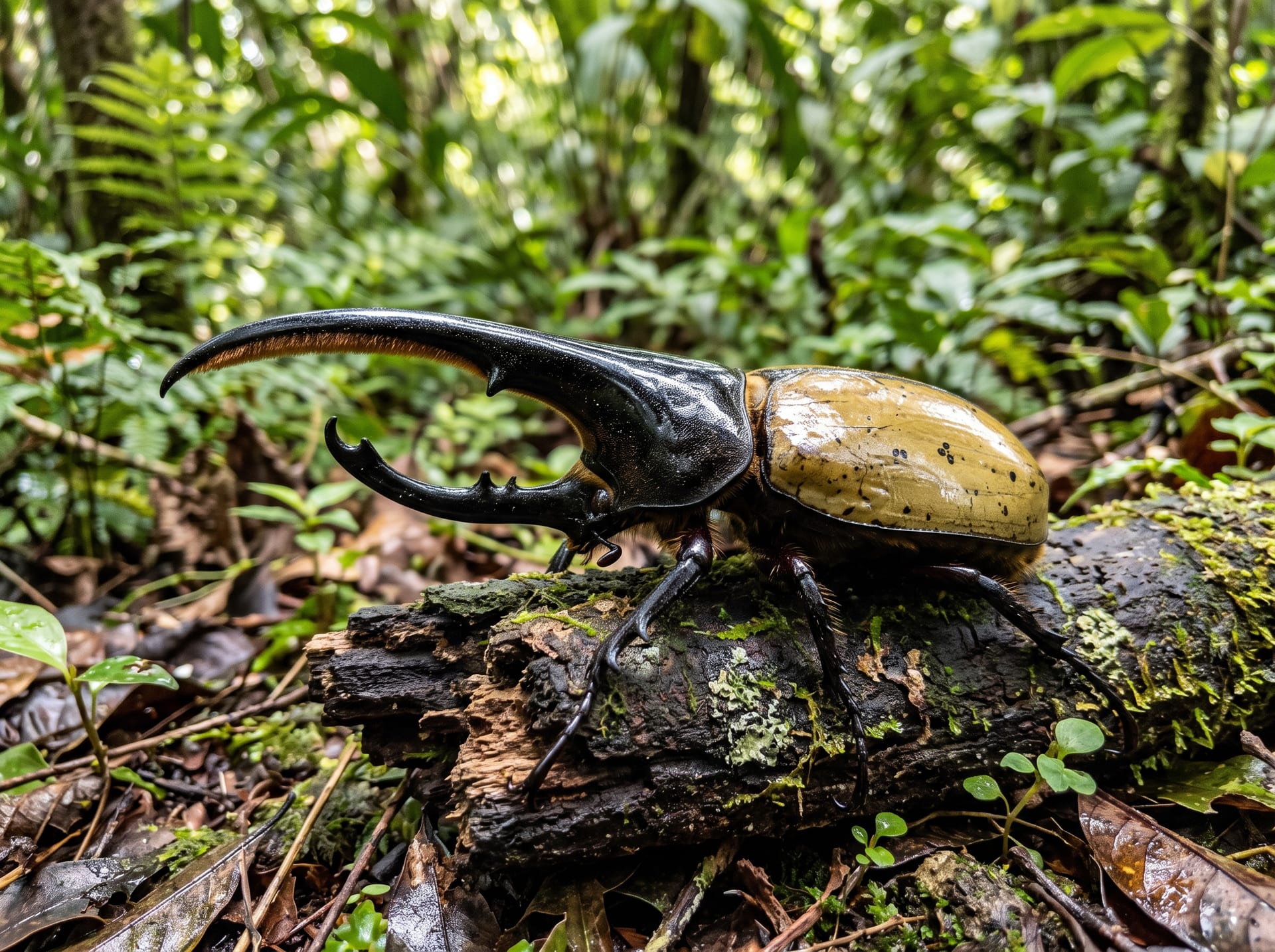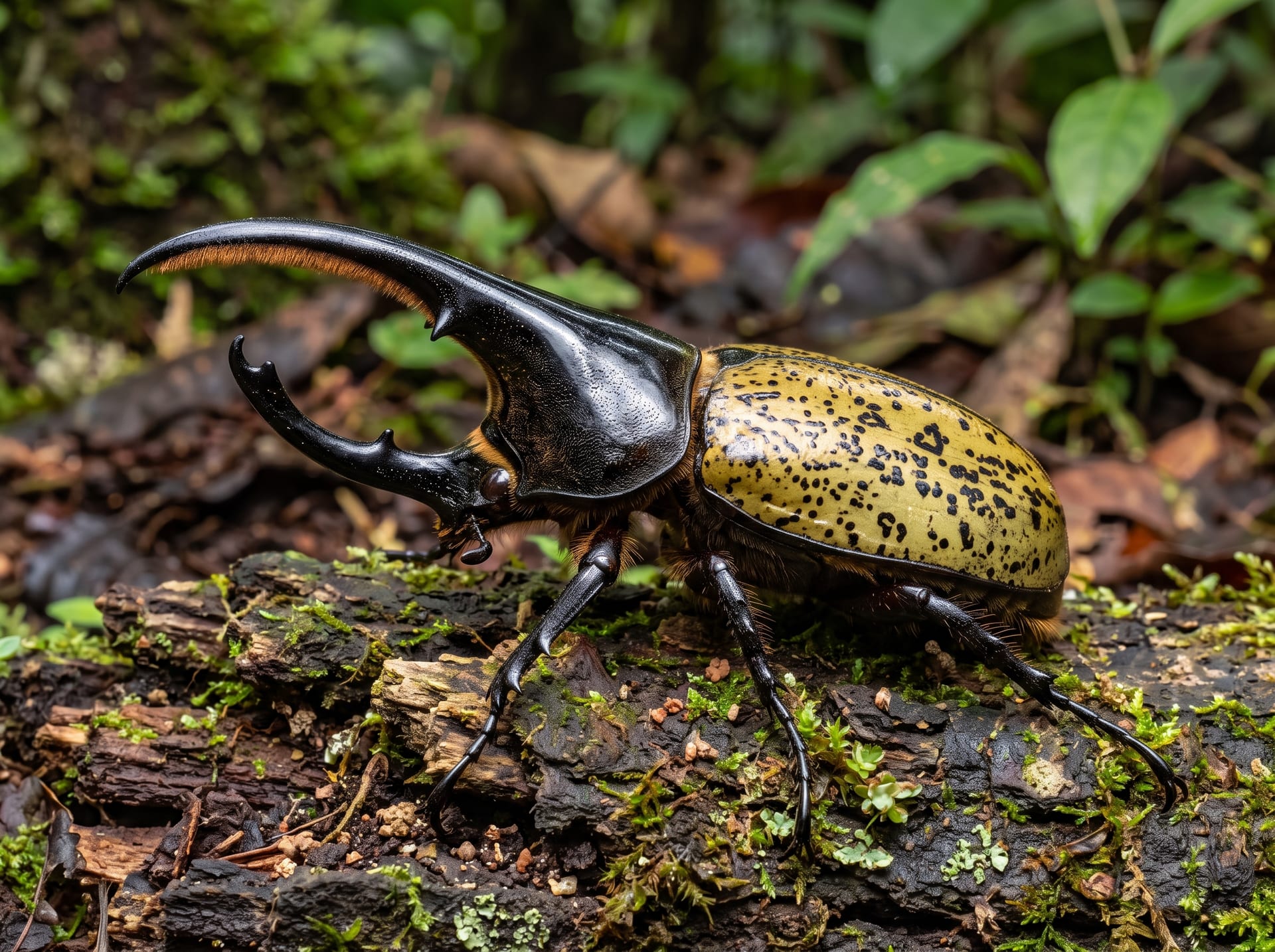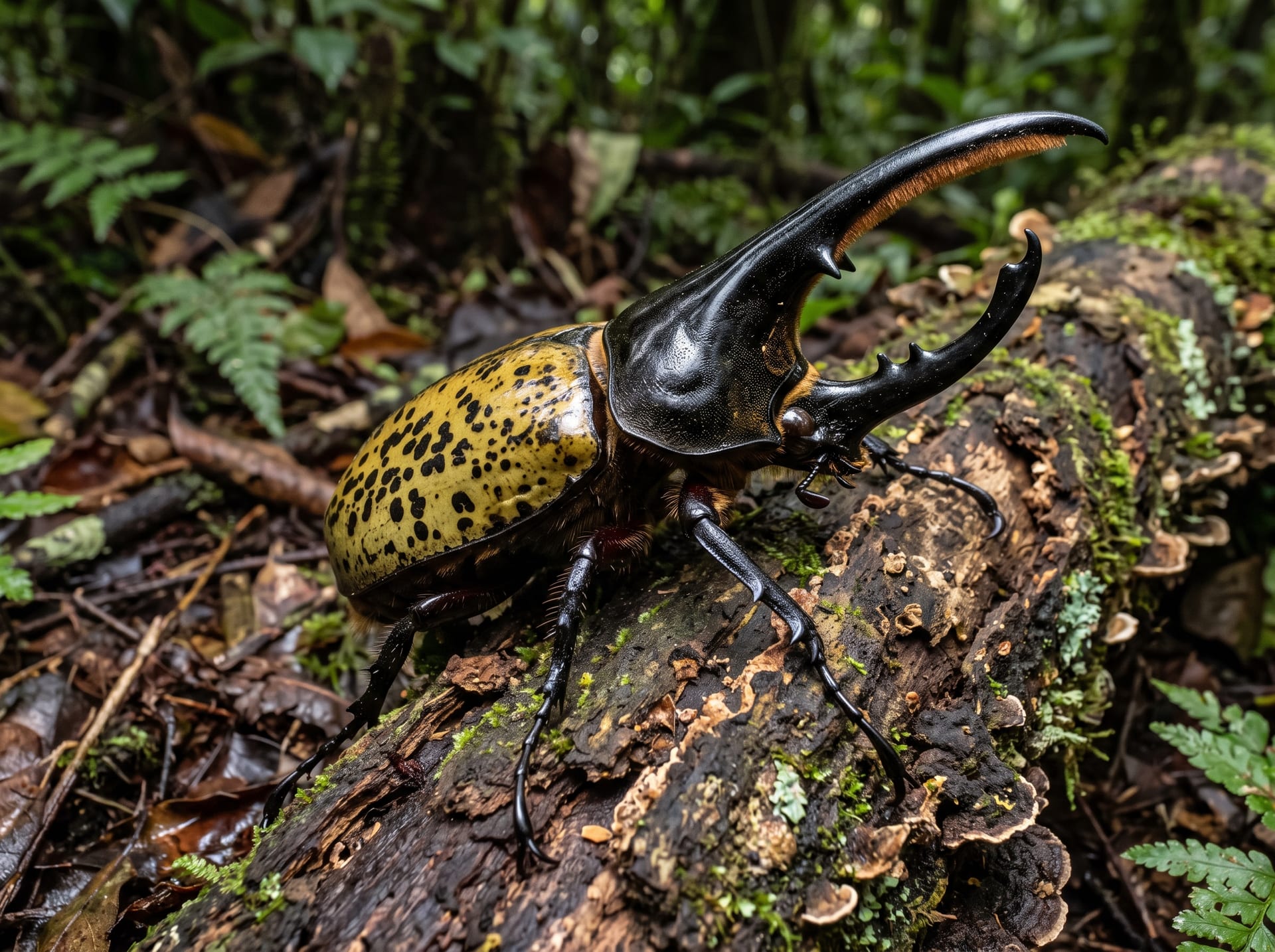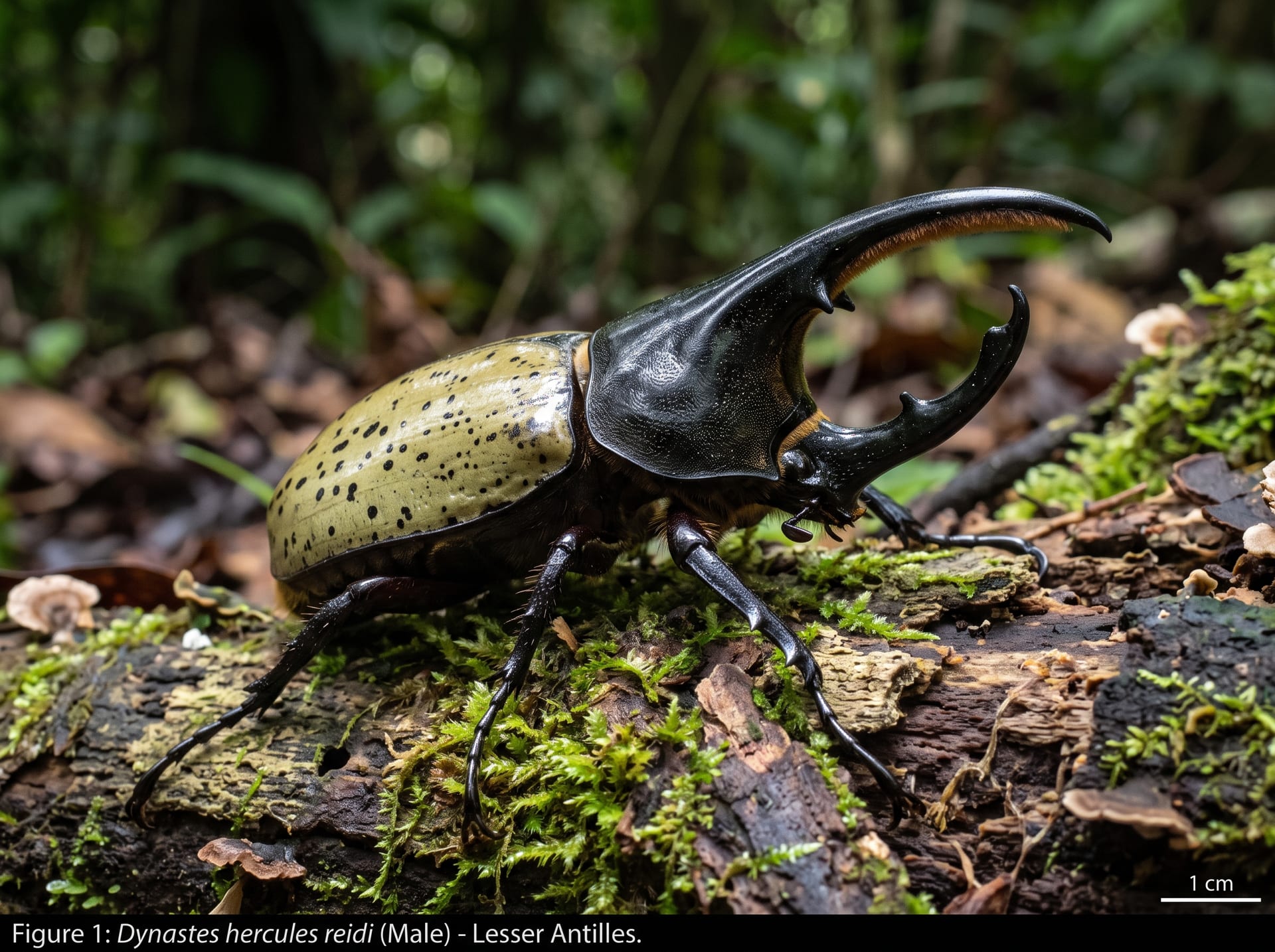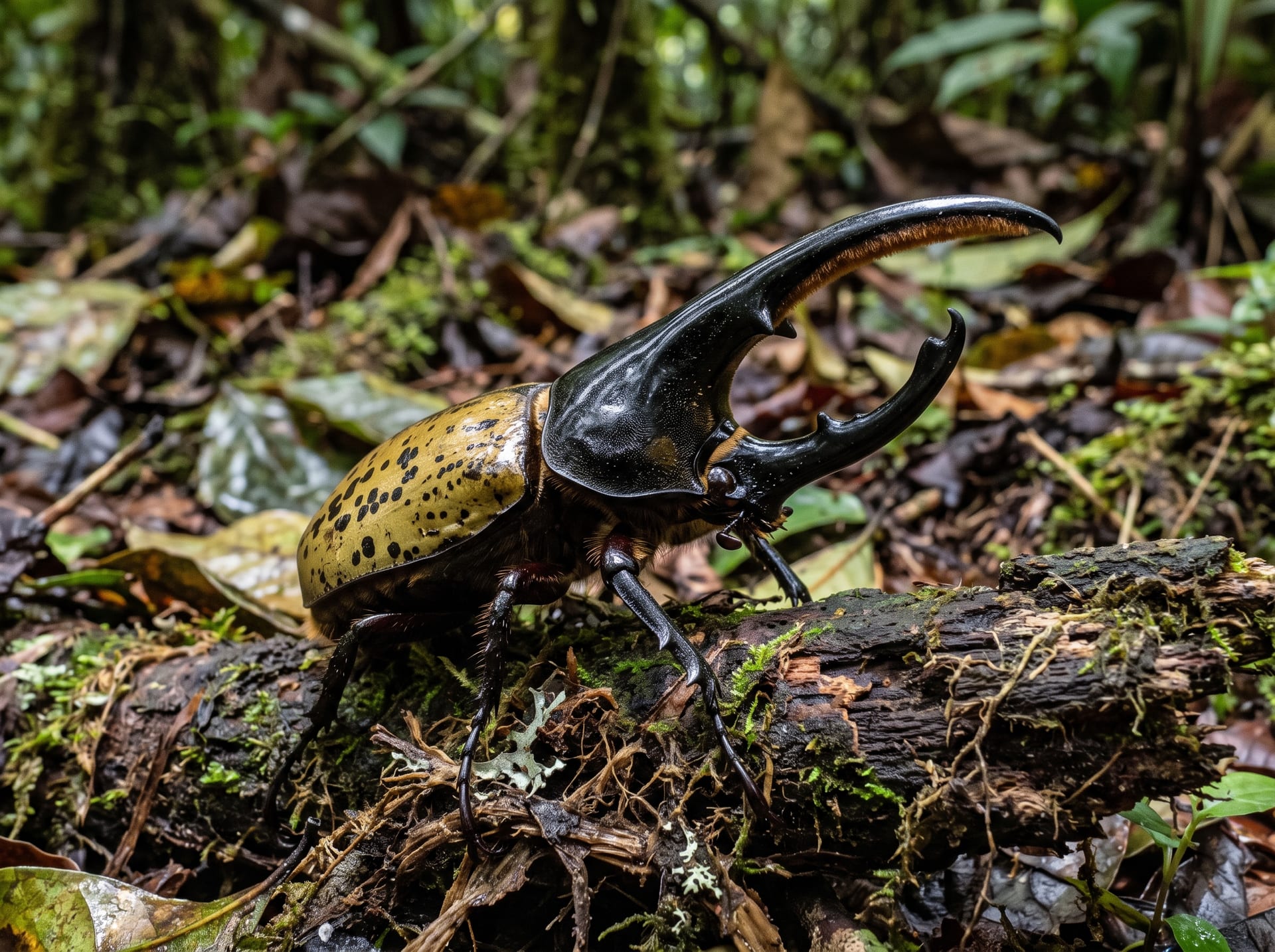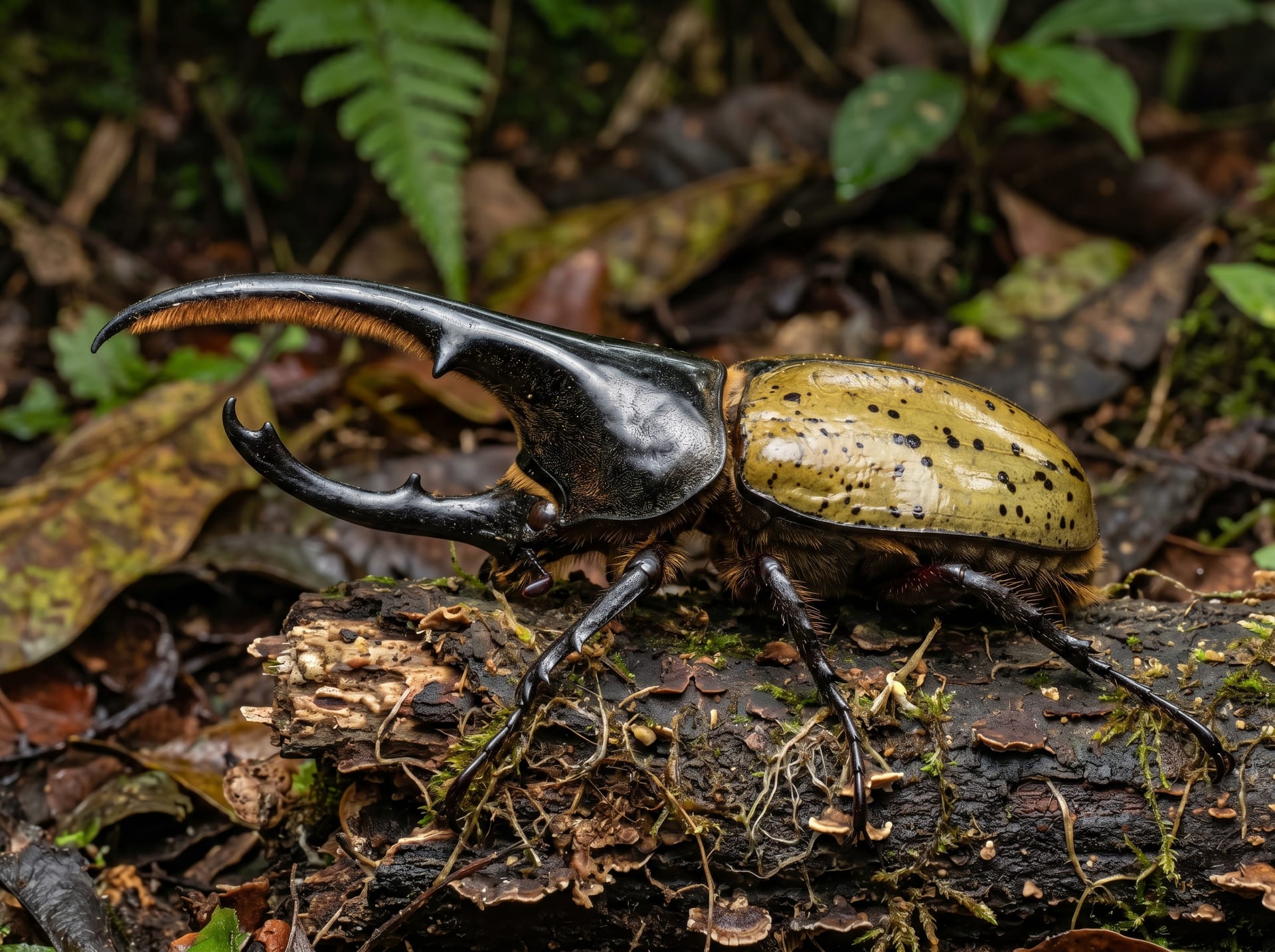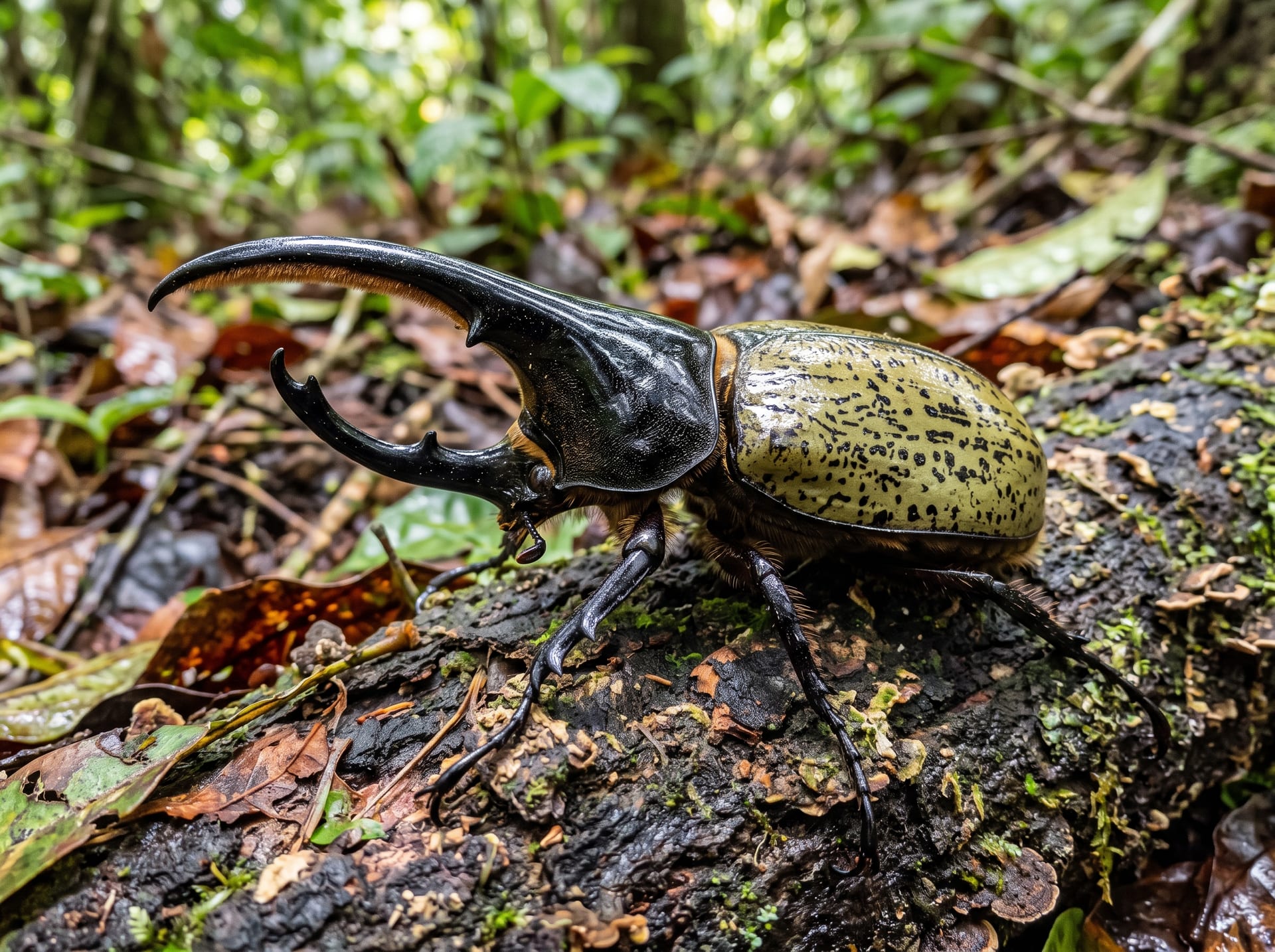
AI-generated image
Hercules Trinidadensis
AdvancedDynastes hercules trinidadensis
An island subspecies from Trinidad and Tobago. The cephalic horn is rather short and thick, the thoracic horn stout and straight, with features intermediate between the nominate form and bleuzeni. Live specimens are very rarely traded.
Difficulty
Advanced
Temperature
20〜26℃
Lifespan
Adults 8-12 months
Size
Males 70-154 mm / females 55-65 mm
Humidity
60〜80%
Diet
Beetle jelly, banana
About
Dynastes hercules trinidadensis lives on Trinidad and Tobago, and similar beetles have been taken on Grenada. Males measure 70-154 mm in total length and females 55-65 mm. The cephalic horn is rather short and thick with a short apical process and one or two slightly pointed basal processes. The thoracic horn is thick at the base and generally straight, with its process placed closer to the base than in the nominate form. Elytra, pronotal punctures and hair are intermediate between the nominate form and bleuzeni, and some researchers merge it with bleuzeni. The female is undescribed. Named after Trinidad. As of 2002 live beetles were almost never imported and even small specimens fetched high prices. Keep at 20-26 C and let females lay in fermented substrate; adults live 8-12 months and larvae take 1-1.5 years (females) or 1.5-2 years (males). The BE-KUWA captive record is 154.4 mm (2013).
Source: Wikipedia (CC BY-SA 4.0)
Lifespan of the Hercules Trinidadensis
The Hercules Trinidadensis lives Adults 8-12 months.
Size of the Hercules Trinidadensis
The Hercules Trinidadensis grows to Males 70-154 mm / females 55-65 mm.
Temperature & humidity for the Hercules Trinidadensis
The ideal temperature for the Hercules Trinidadensis is 20〜26℃.
Basic Info
Origin
Trinidad and Tobago (Trinidad, Tobago; possibly Grenada)
Lifespan
Care Specifications
PeacefulSolitaryBreeding: Moderate
Sources: beetlebreeding.ch - The Breeding/Rearing of Dynastes hercules hercules by Kay / Hercules beetle, Dynastes hercules (subspecies list) - Wikipedia (JA)
Breeding Records & Localities
Captive record (♂)
154.4 mm
Record source: BE-KUWA 2025 edition (Hercules Trinidadensis, captive 154.4 mm, 滝沢元美 2013, total length including horns)
Notable localities
TrinidadTobago
Regional subspecies
- Dynastes hercules trinidadensis — Trinidad and Tobago
Island subspecies of Trinidad; some researchers merge it with bleuzeni. Subspecies status is debated: Ratcliffe (2003) proposed synonymising all subspecies, but BE-KUWA and Ratcliffe's own 2013/2015 works keep the traditional subspecies (ja Wikipedia).
Generation codes
- WD
- Wild-caught
- WF1
- Offspring of a wild-caught female
- F1〜
- Captive generations (same locality)
- CBF1
- Cross-locality captive-bred (reset)
Sources: BE-KUWA Certified Breeding Records (Mushi-sha, FY2025 edition PDF, JA) / Hercules beetle, Dynastes hercules (subspecies list) - Wikipedia (JA)
References & Sources
Edited & verified by: BreederDirect editorial team
The taxonomic, regulatory, and husbandry data on this page are compiled and verified against the authoritative primary sources below.
Primary sources
- Wikipedia
- Ministry of the Environment, Invasive Species Act: "Guidance for Those Importing Live Insects in Scarabaeoidea"
- CITES Appendix (checklist.cites.org)
- beetlebreeding.ch - The Breeding/Rearing of Dynastes hercules hercules by Kay
- BE-KUWA Certified Breeding Records (Mushi-sha, FY2025 edition PDF, JA)
- GBIF
Taxonomy & Authority
Accepted name: Dynastes hercules trinidadensis Chalumeau & Reid, 1995
Authority databases: GBIF
Nomenclature follows global taxonomic authority databases.
Regulations & Conservation Status
Not CITES-listed
Plant Protection Act: When importing live specimens of Scarabaeoidea (including rhinoceros beetles, stag beetles, flower beetles, etc.), a species identification certificate issued by the exporting country government agency or equivalent must be attached in accordance with the Invasive Species Act (import ports are limited to Narita, Chubu, Kansai, Fukuoka, and Kagoshima airports). This species itself is not a designated invasive species, and import is possible upon submission of the certificate.
Sources: Ministry of the Environment, Invasive Species Act: "Guidance for Those Importing Live Insects in Scarabaeoidea" / CITES Appendix (checklist.cites.org)
Regulations may change. Always verify the latest information with the relevant authorities.
Hercules Trinidadensis Listings
Loading latest listingsFind listings for this species