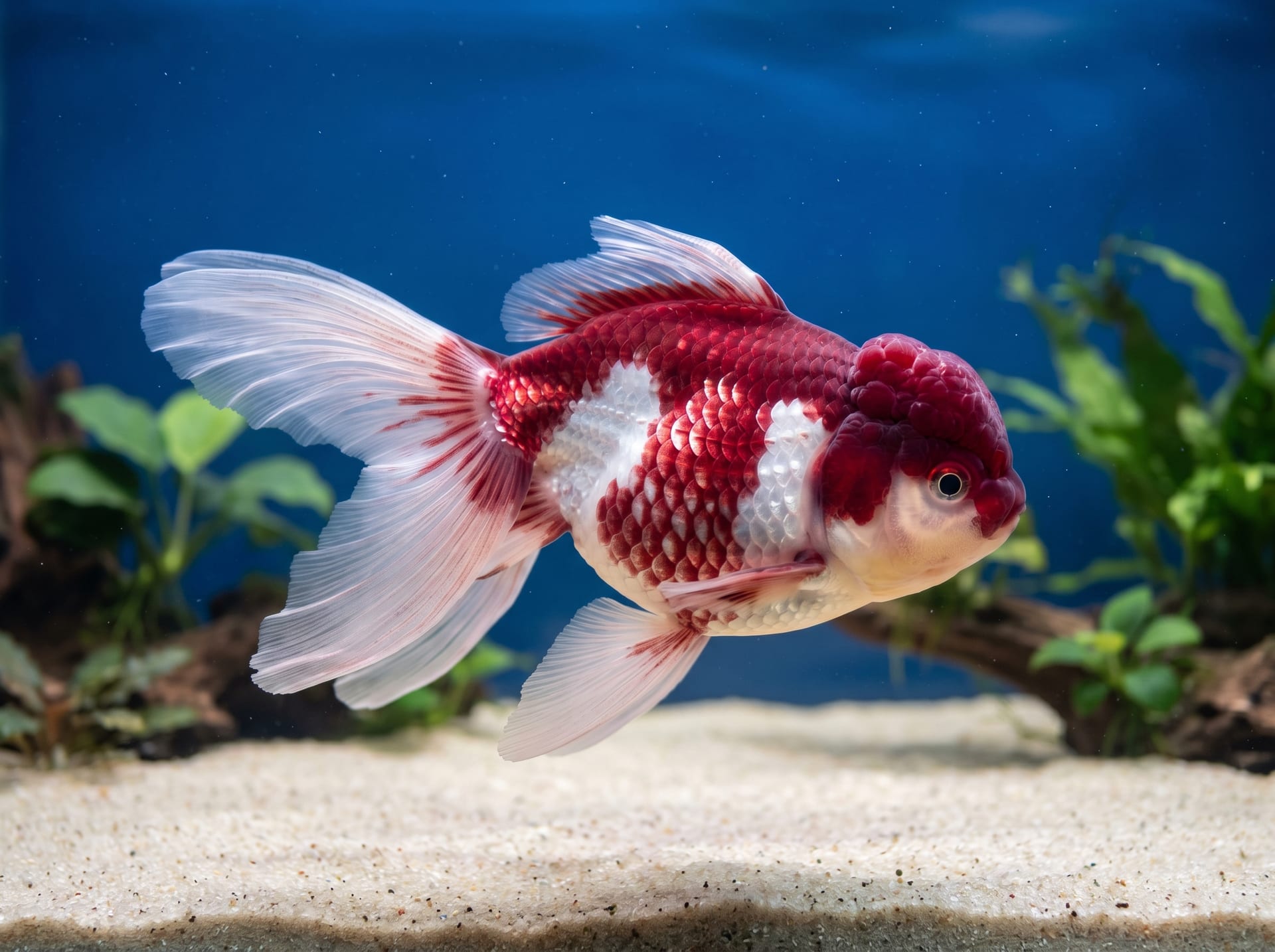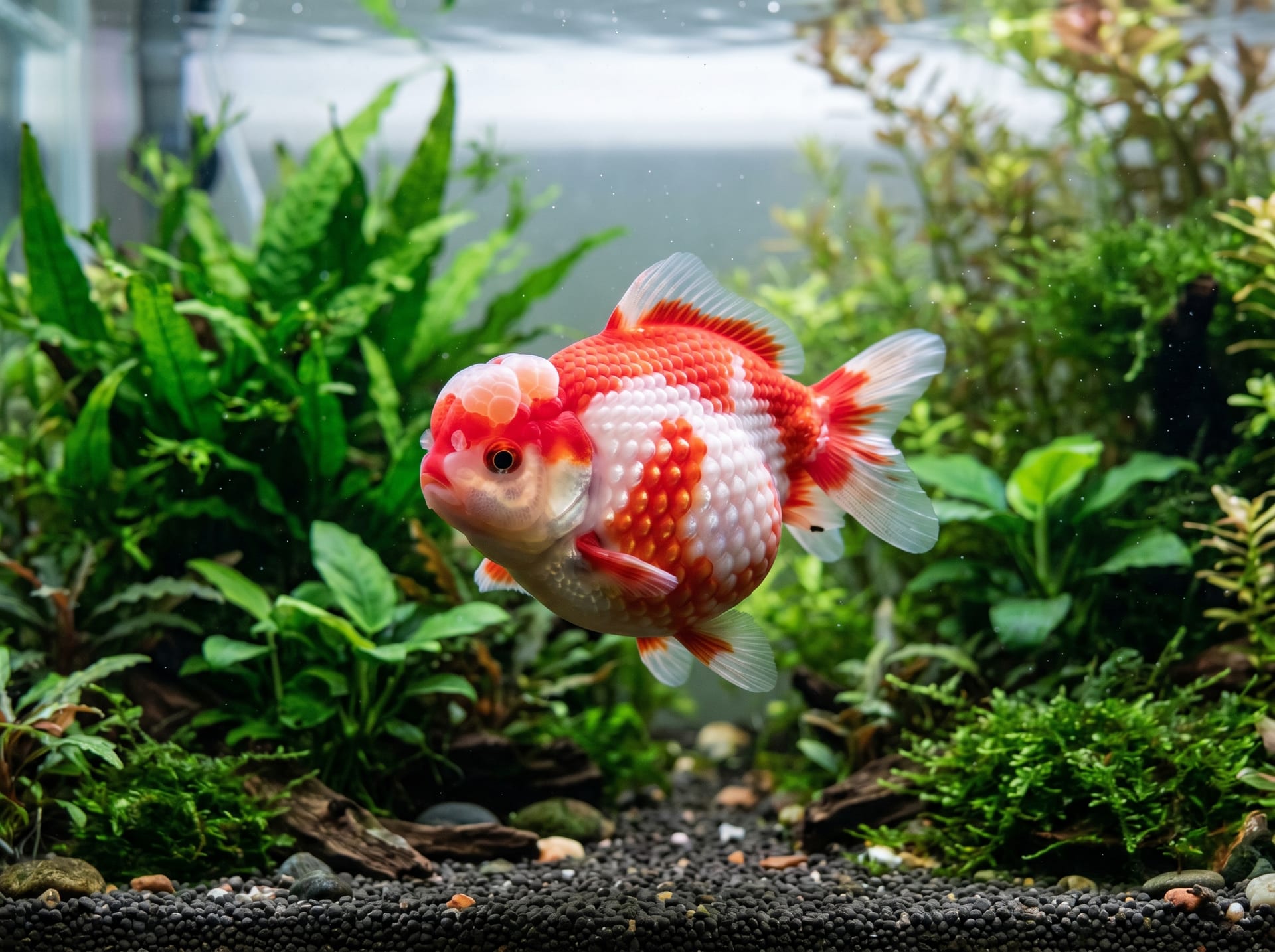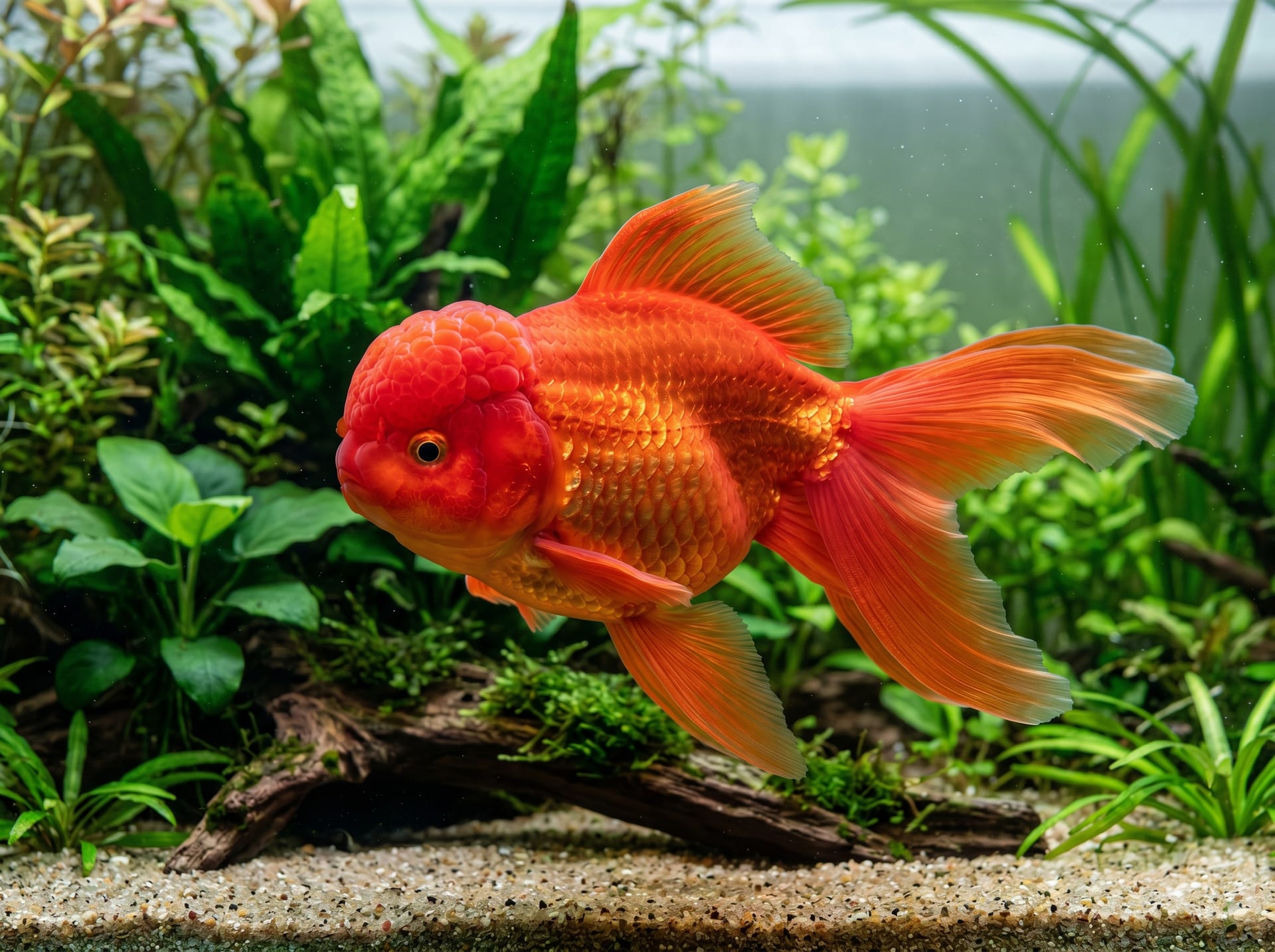
AI-generated image
Giant Oranda
AdvancedCarassius auratus var.
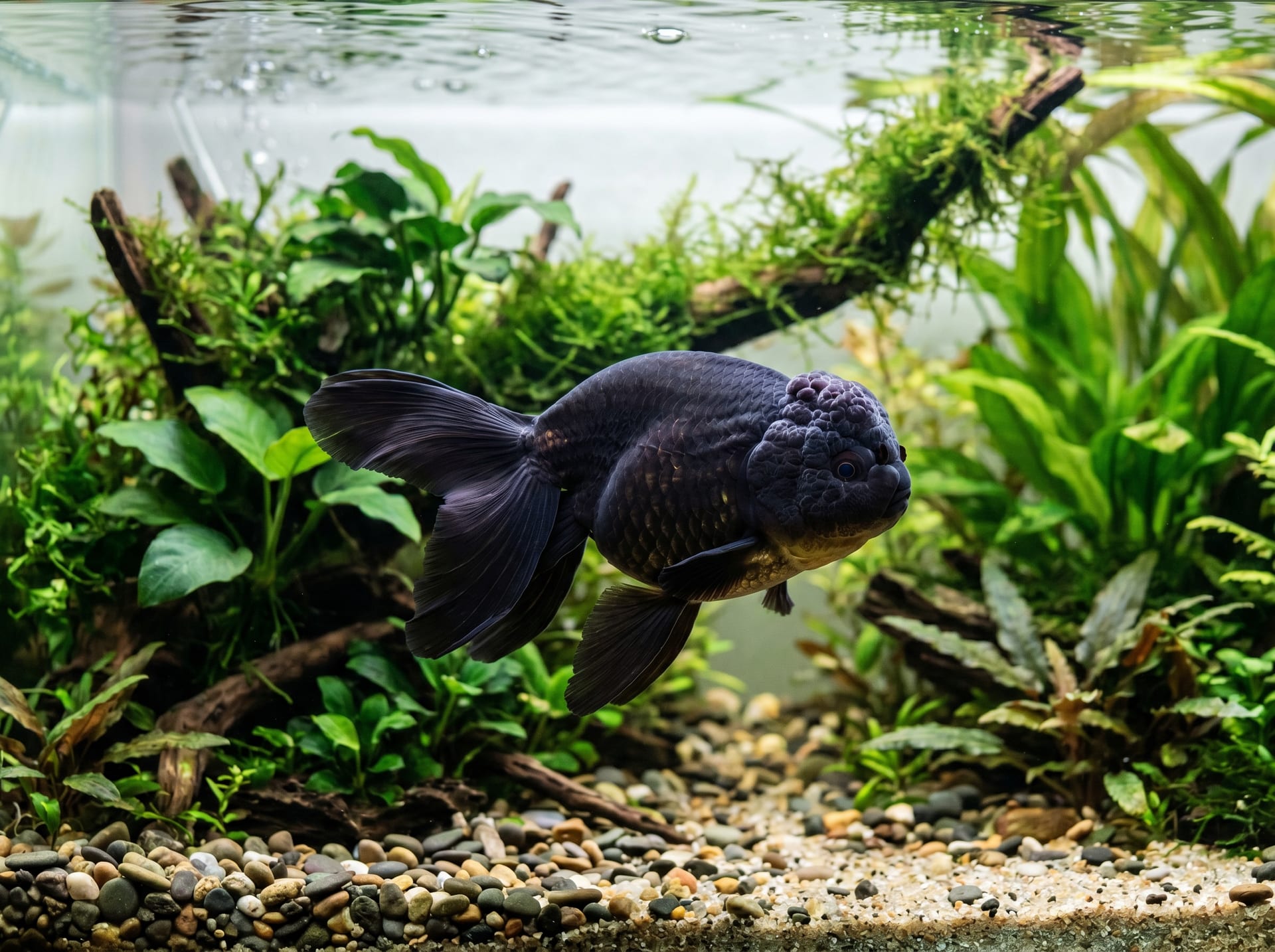
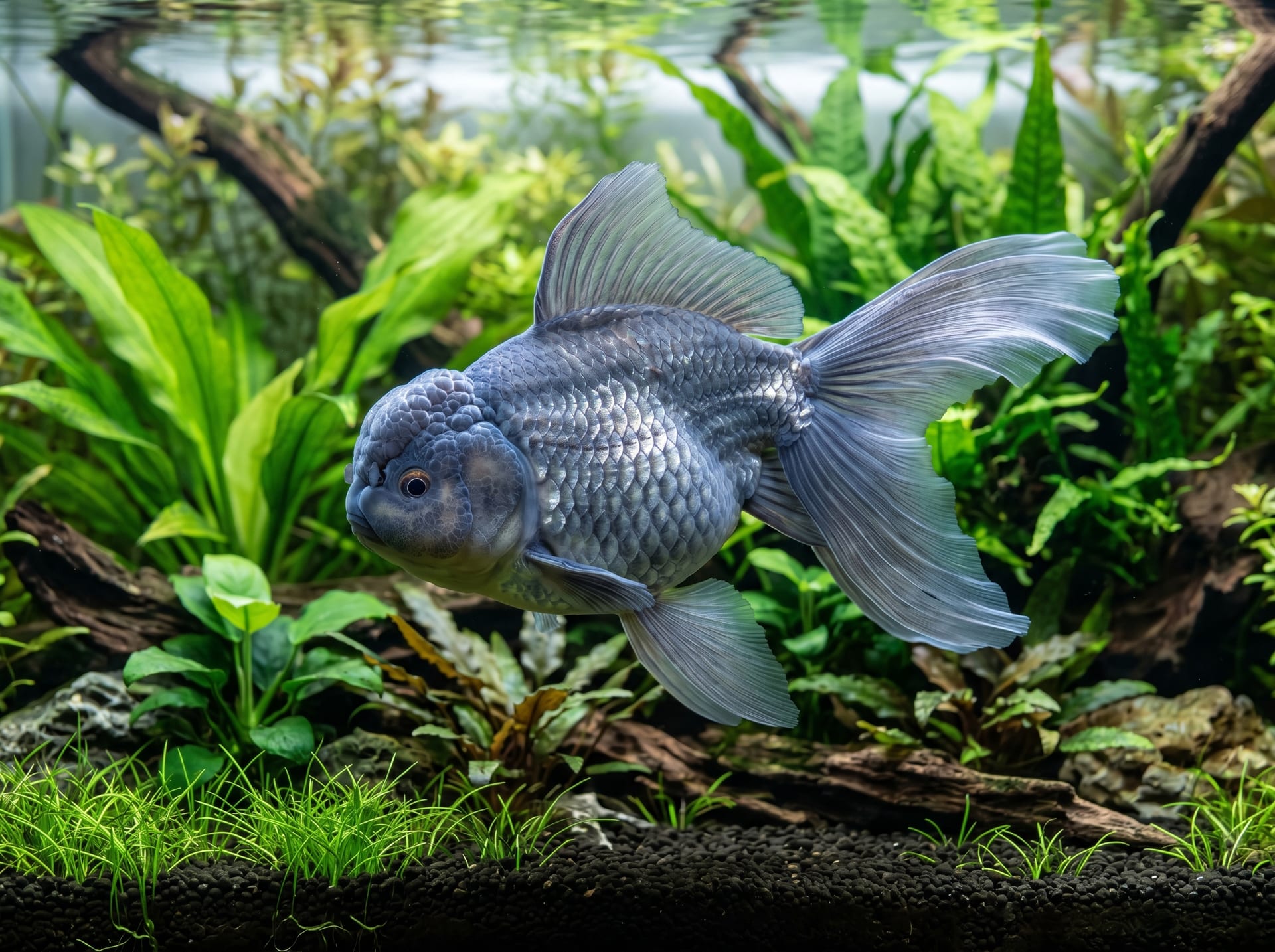
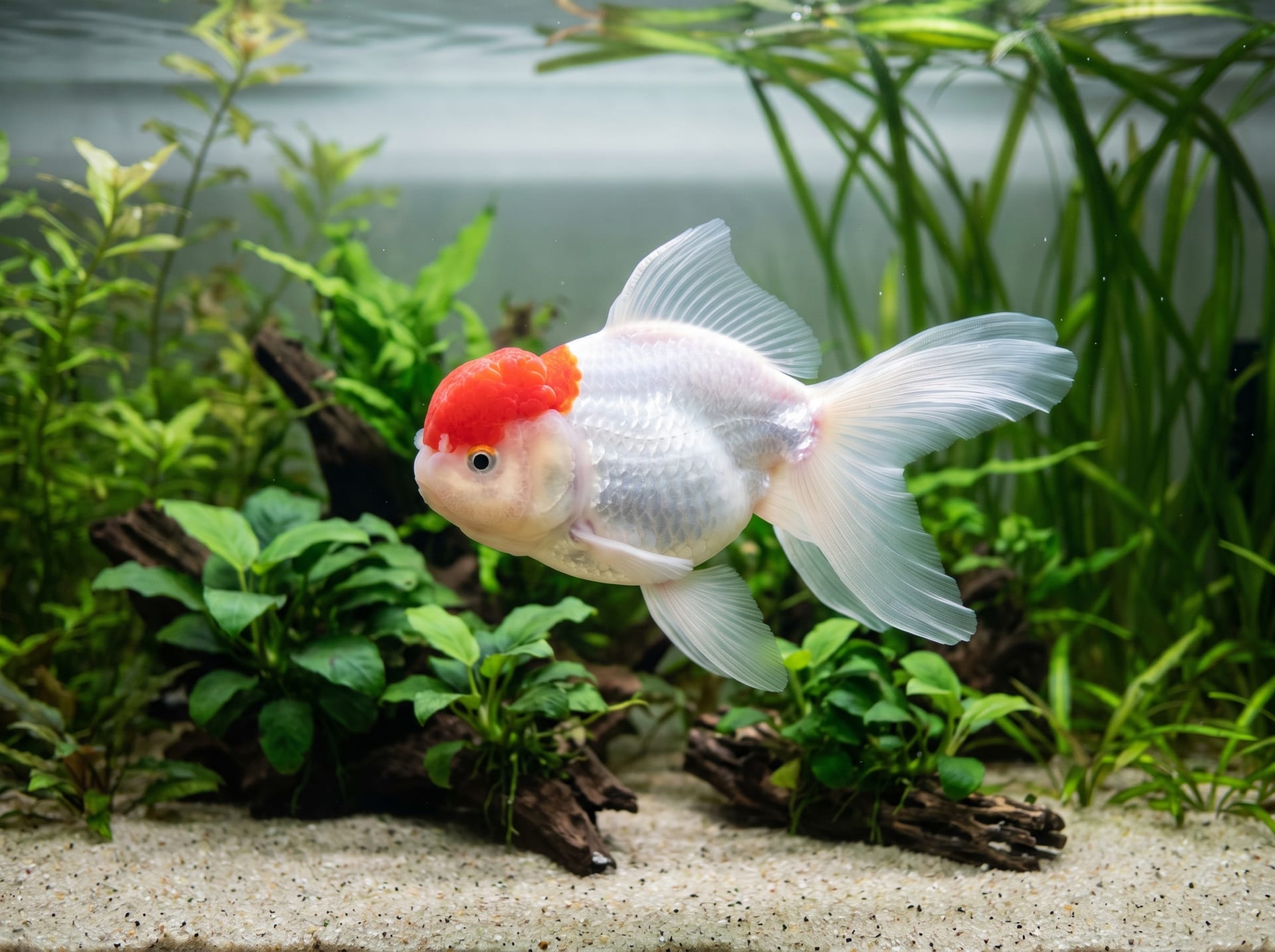
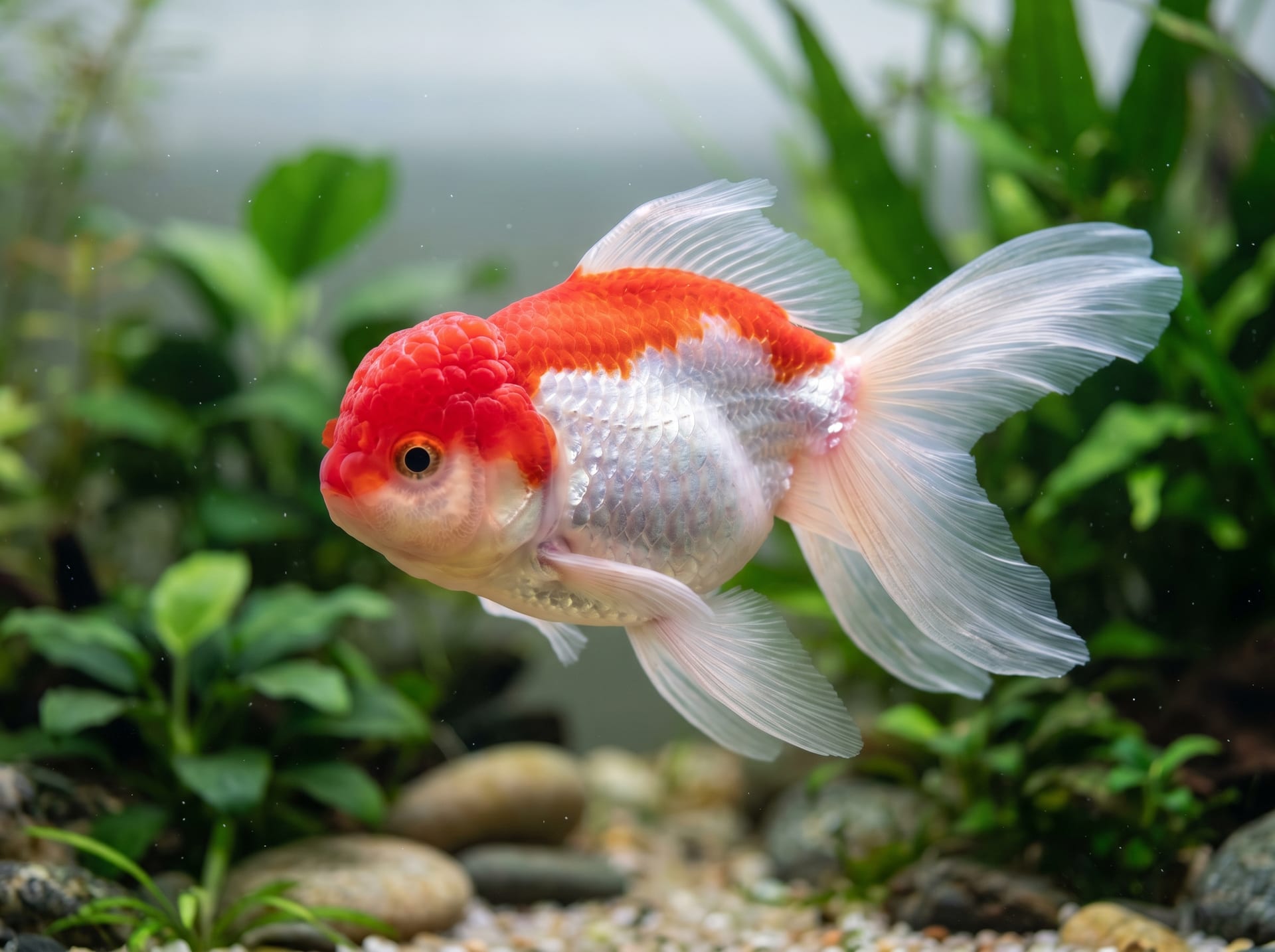
A large oranda with an exceptionally developed, large wen (lion head). Some develop wens so extensive they spread over the entire body, creating an overwhelming presence. Requires a large tank and high-level water management.
Difficulty
Advanced
Temperature
15〜28℃
Lifespan
10-15 years
Size
18-30cm
Diet
Omnivore (pellets, bloodworms, daphnia)
About
The Giant Oranda is a large Oranda with an exceptionally well-developed head wen. In some individuals the wen grows so abundantly that it covers much of the face, giving the fish overwhelming presence; the size and shape of the wen are the focal points of appreciation. Because it grows large, it needs a spacious tank, and maintaining very clean water is essential for healthy wen development. As the wen enlarges it can cover the eyes and narrow the fish's field of view, so careful feeding and a safe layout are important. Keep it in a roomy tank (90 liters or more) with strong filtration, regular water changes, and ample feeding to let it grow. It swims gently and pairs well with similarly calm varieties.
Basic Info
Origin
China
Lifespan
10-15 years
Size
18-30cm
Temperature
15〜28℃
Diet
Omnivore (pellets, bloodworms, daphnia)
Care Guide
Housing
Large tank of 60cm or more required
Temperature
Stabilize at 15-28°C
Wen Care
Consult vet if wen covers eyes
Care Specifications
- pH
- 6–8
- Hardness (GH)
- 5–19 dGH
- Water Temp.
- 18–23℃
PeacefulGroupBreeding: Moderate
Sources: FishBase / Aqueon Goldfish Care Guide
Morphs (Varieties)
金魚品種は体型・尾型・鱗・色の選抜固定(line-bred)。出目・透明鱗(キャリコ)・白子等は単一座。
PolygenicContinuous trait from multiple genes; intensified by selective breeding.
Head growth (wen)
Line-bredEstablished by selective line breeding.
Deep body / dorsal humpFantail (paired caudal)
Sources: Wikipedia - Goldfish (Varieties) / 金魚 - Wikipedia (日本語版・品種)
A curated selection of notable morphs. Inheritance modes are a breeding-planning guide; actual appearance varies with combos.
References & Sources
Edited & verified by: br-choku editorial team
The taxonomic, regulatory, and husbandry data on this page are compiled and verified against the authoritative primary sources below.
Taxonomy & Authority
Accepted name: Carassius auratus var. (Linnaeus, 1758)
Synonyms: Cyprinus auratus Linnaeus, 1758, Carassius auratus auratus (Linnaeus, 1758), Cyprinus thoracatus Valenciennes, 1842, Carassius burgeri Temminck & Schlegel, 1846, Cyprinus chinensis Gronow, 1854
Authority databases: FishBase · GBIF · FishBase: Carassius auratus · GBIF: Carassius auratus
Nomenclature follows global taxonomic authority databases.
Giant Oranda Listings
Loading latest listingsFind listings for this species