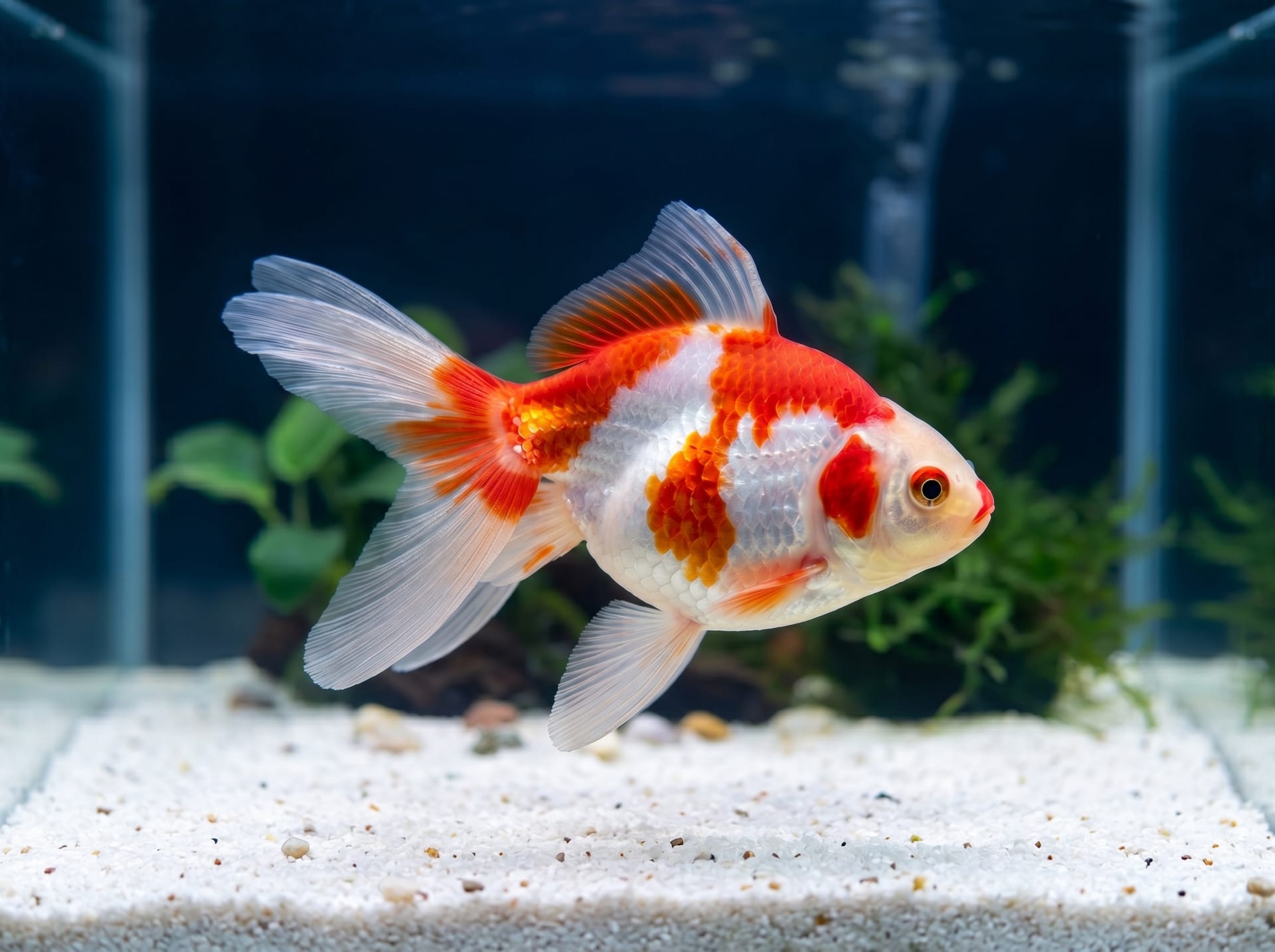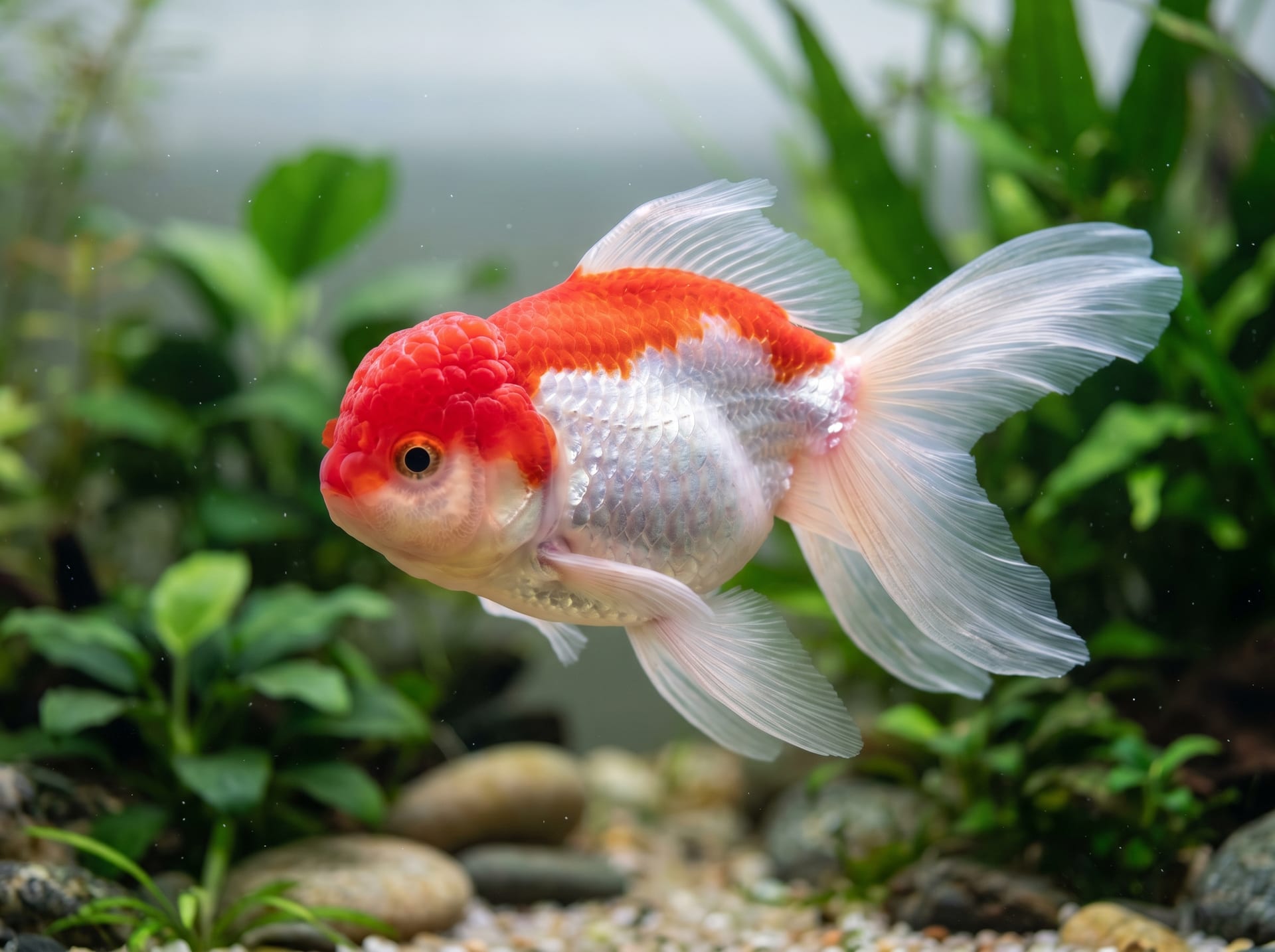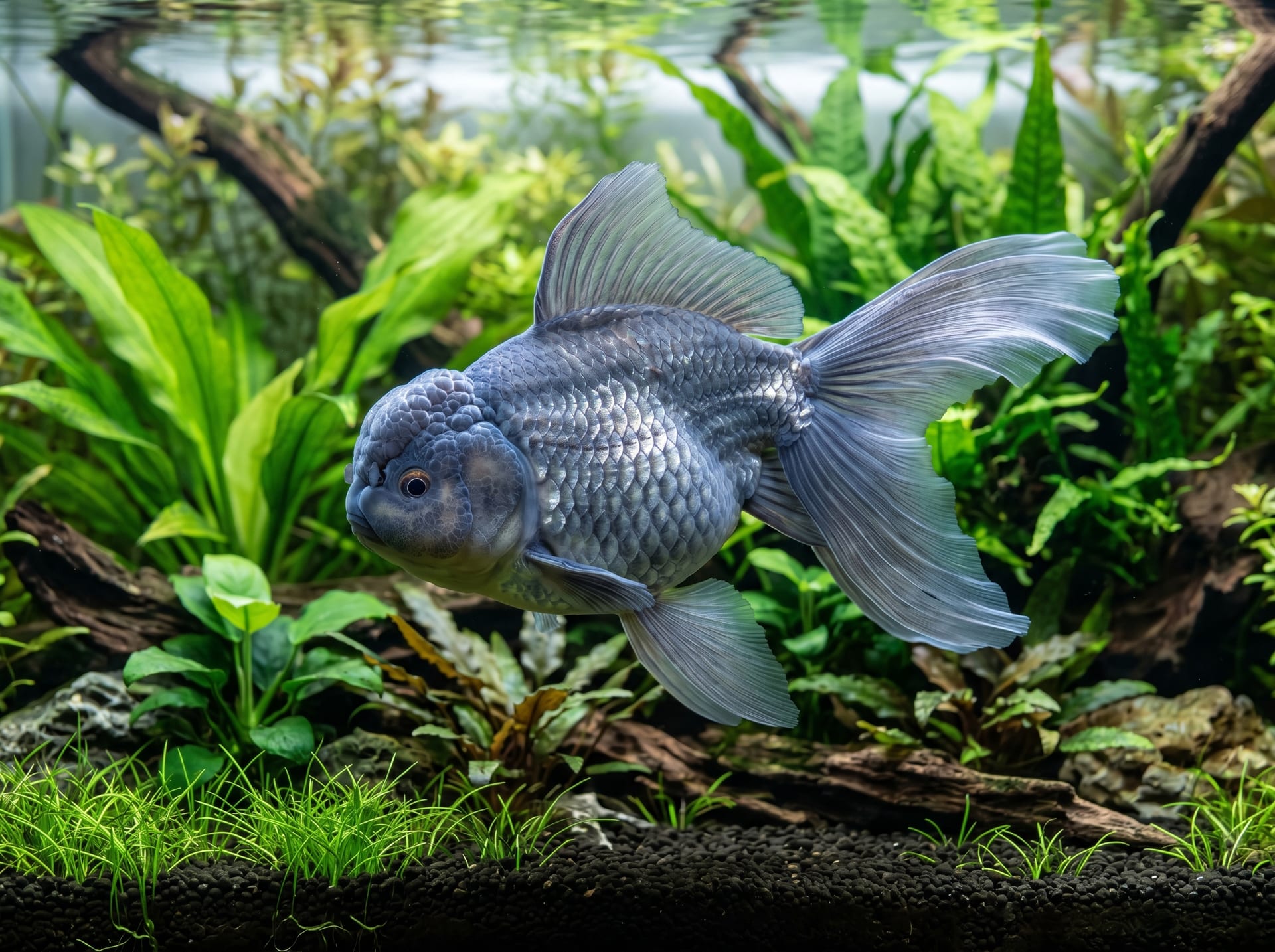
AI-generated image
Blue Oranda
IntermediateCarassius auratus var.
Oranda variety with metallic blue-gray coloration. Wen development combined with unique blue-gray hue creates striking beauty. Gaining attention in shows.
Difficulty
Intermediate
Temperature
15〜28℃
Lifespan
10-15 years
Size
15-25cm
Diet
Goldfish pellets, bloodworms, vegetable food
About
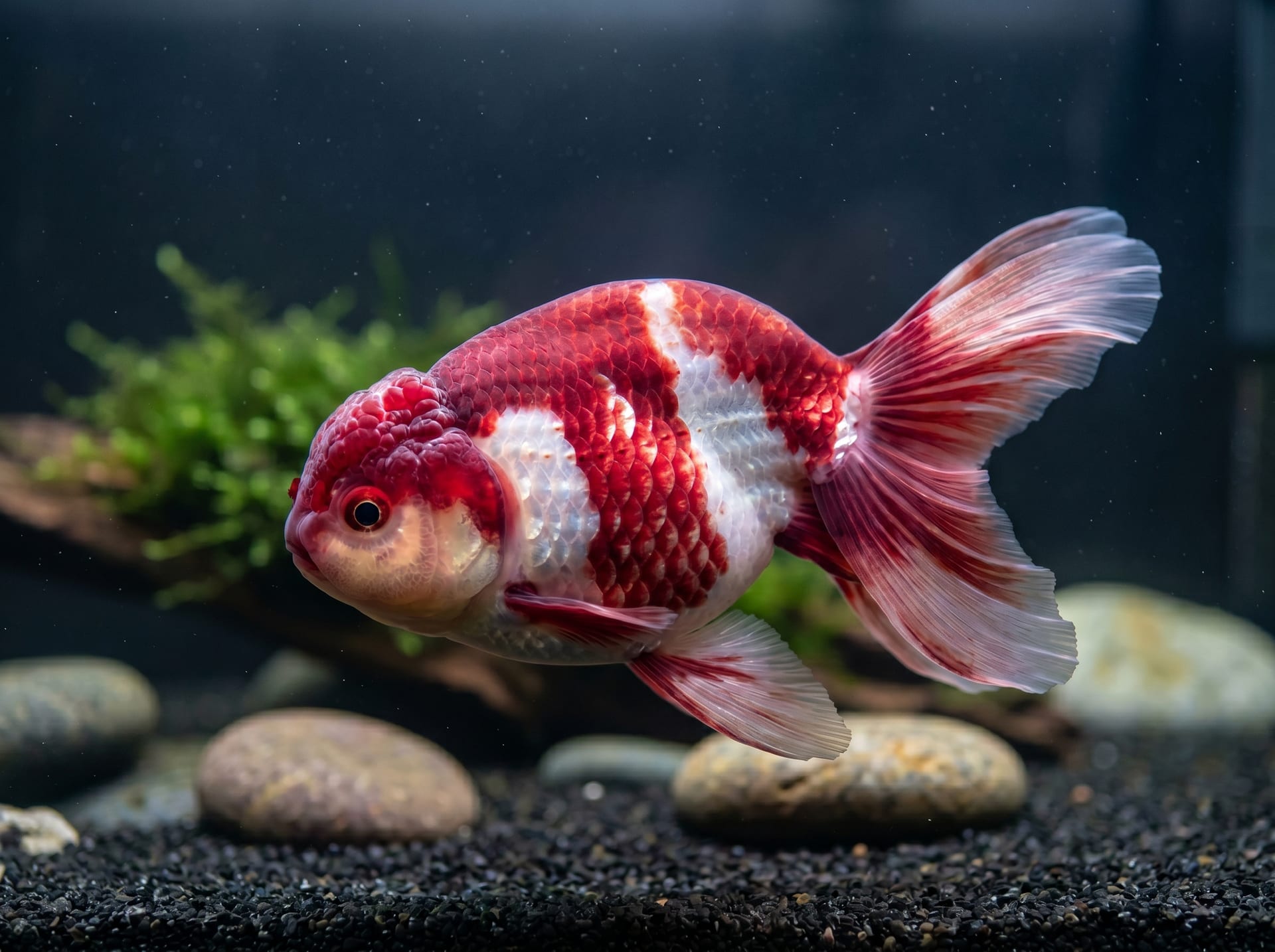
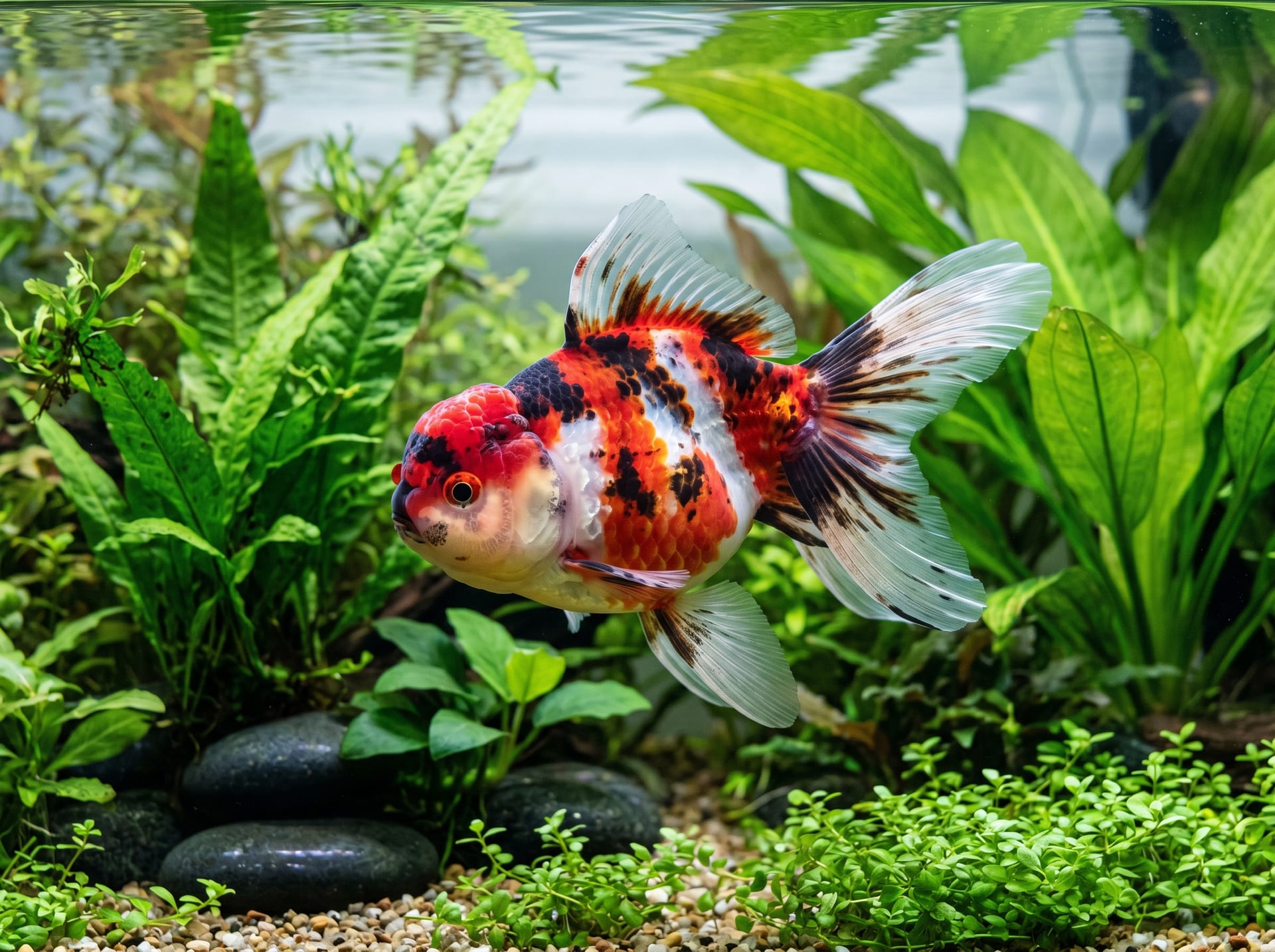
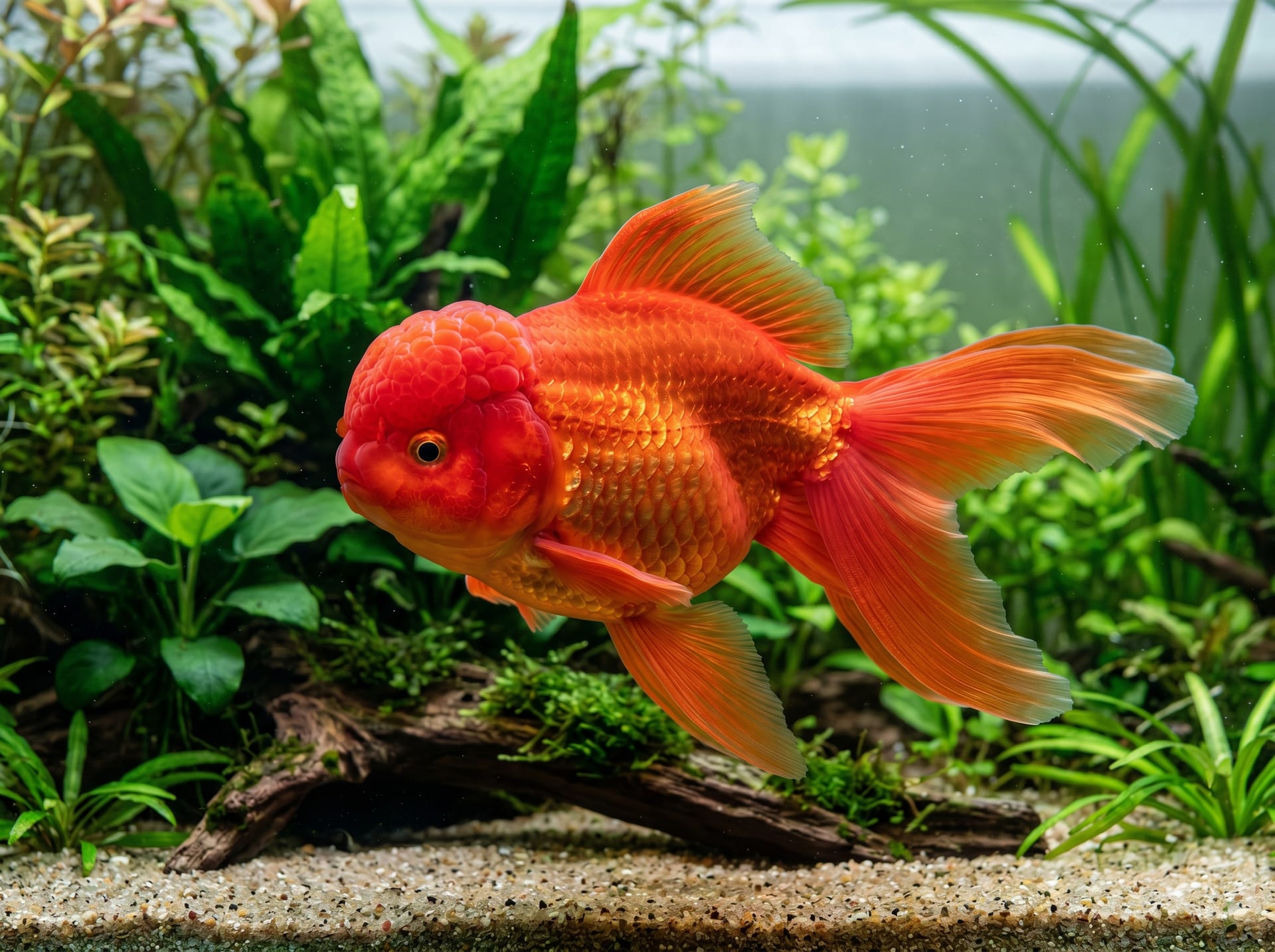
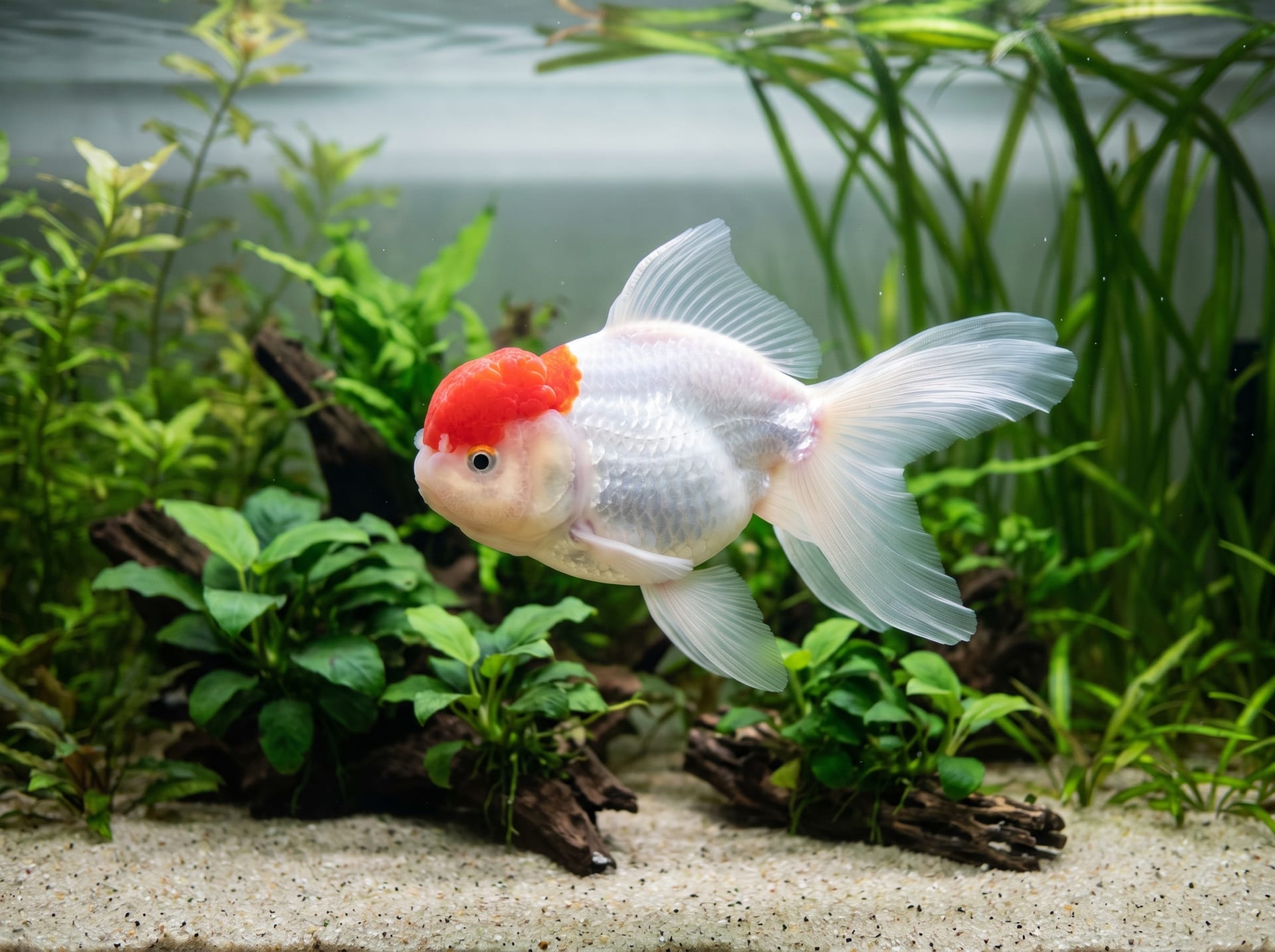
The Blue Oranda is an Oranda—developing the characteristic head wen—displaying a bluish, metallic coloration. "Blue" in goldfish refers to a calm, muted silver-grey to blue-grey tone, which combines with the well-developed wen to give the fish a subtle, refined beauty. Blue coloration is difficult to fix and varies widely between individuals, so fish that hold a deep, steady blue are prized and draw attention at shows. The body follows the rounded Oranda form with long tail fins, and the fish swims slowly. Clean water is important for healthy wen growth, and the wen's grooves should be kept free of debris. Keep it in a tank of 60 liters or more with strong filtration and regular water changes. As a slow swimmer, it pairs best with other gently swimming fancy varieties.
Lifespan of the Blue Oranda
The Blue Oranda lives 10-15 years.
Size of the Blue Oranda
The Blue Oranda grows to 15-25cm.
Basic Info
Origin
China
Lifespan
10-15 years
Size
15-25cm
Temperature
15〜28℃
Diet
Goldfish pellets, bloodworms, vegetable food
Care Guide
Care Specifications
- pH
- 6–8
- Hardness (GH)
- 5–19 dGH
- Water Temp.
- 18–23℃
PeacefulGroupBreeding: Moderate
Sources: FishBase / Aqueon Goldfish Care Guide
Morphs (Varieties)
Goldfish varieties are line-bred for body shape, tail type, scale type, and coloration. Traits such as protruding eyes, transparent scales (calico), and albinism are single-locus traits.
PolygenicContinuous trait from multiple genes; intensified by selective breeding.
Head growth (wen)
Line-bredEstablished by selective line breeding.
Deep body / dorsal humpFantail (paired caudal)Blue coloration
Sources: Wikipedia - Goldfish (Varieties) / Goldfish — Wikipedia (Japanese edition, varieties)
A curated selection of notable morphs. Inheritance modes are a breeding-planning guide; actual appearance varies with combos.
References & Sources
Edited & verified by: BreederDirect editorial team
The taxonomic, regulatory, and husbandry data on this page are compiled and verified against the authoritative primary sources below.
Taxonomy & Authority
Accepted name: Carassius auratus var. (Linnaeus, 1758)
Synonyms: Cyprinus auratus Linnaeus, 1758, Carassius auratus auratus (Linnaeus, 1758), Cyprinus thoracatus Valenciennes, 1842, Carassius burgeri Temminck & Schlegel, 1846, Cyprinus chinensis Gronow, 1854
Authority databases: FishBase · GBIF · FishBase: Carassius auratus · GBIF: Carassius auratus
Nomenclature follows global taxonomic authority databases.
Blue Oranda Listings
Loading latest listingsFind listings for this species