Source: Wikimedia Commons
Oulophyllia
IntermediateOulophyllia crispa
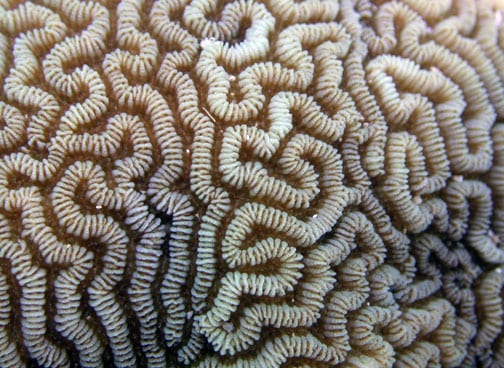
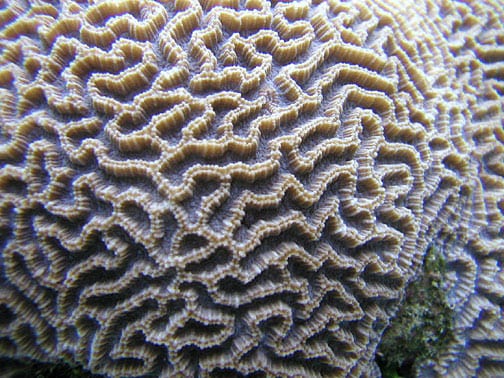
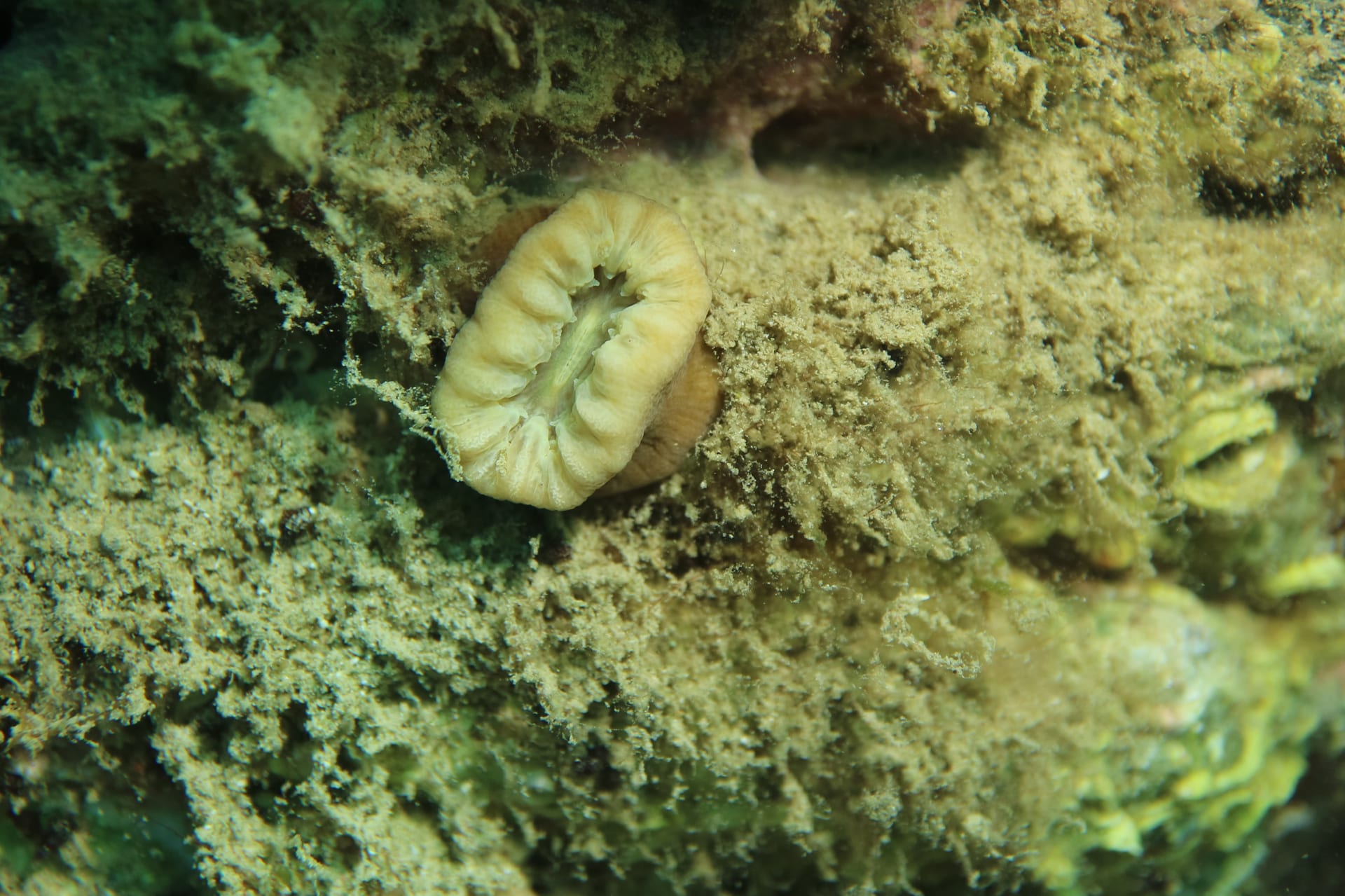
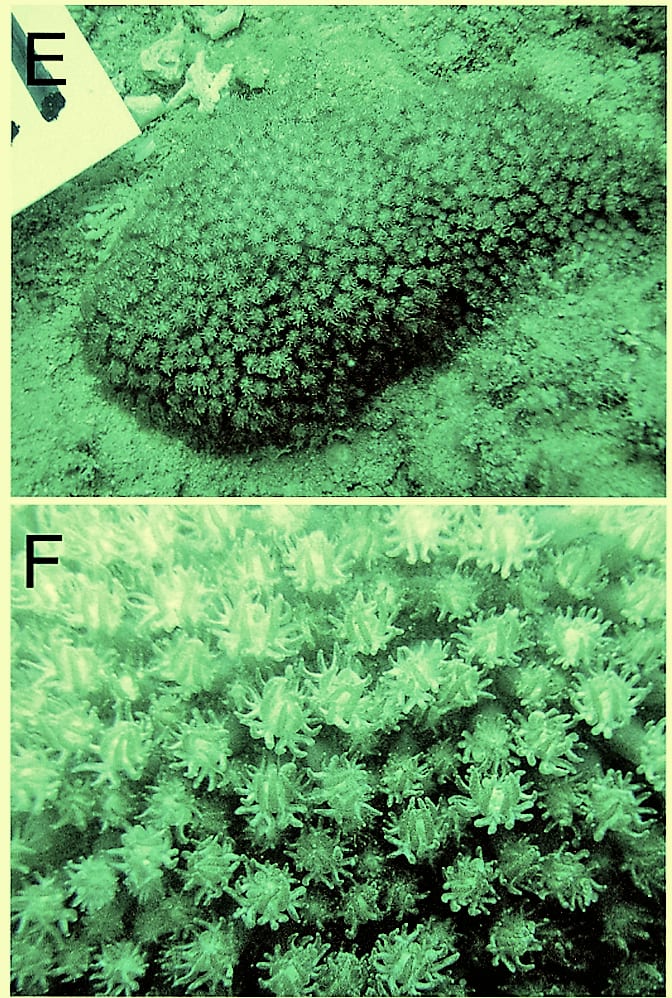
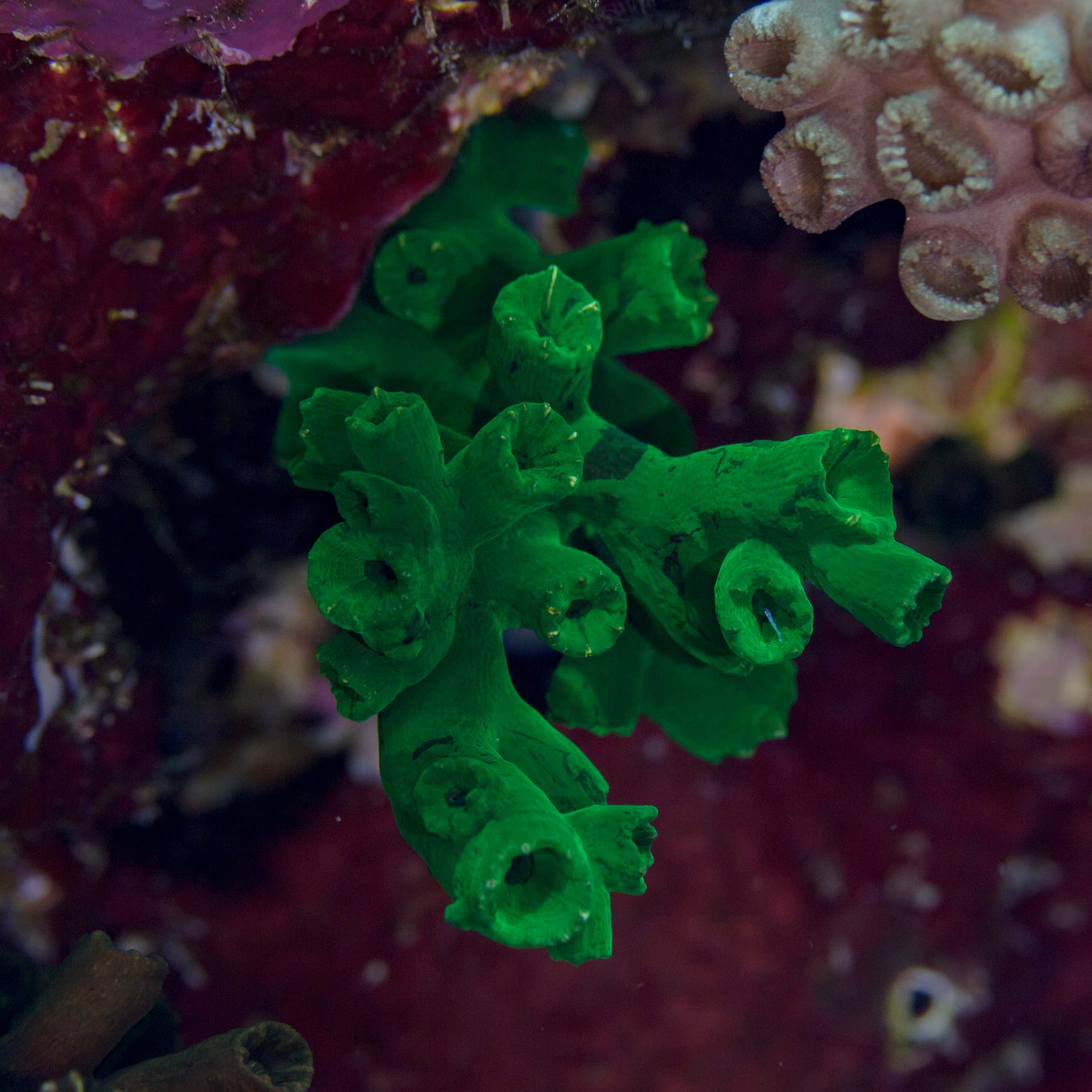
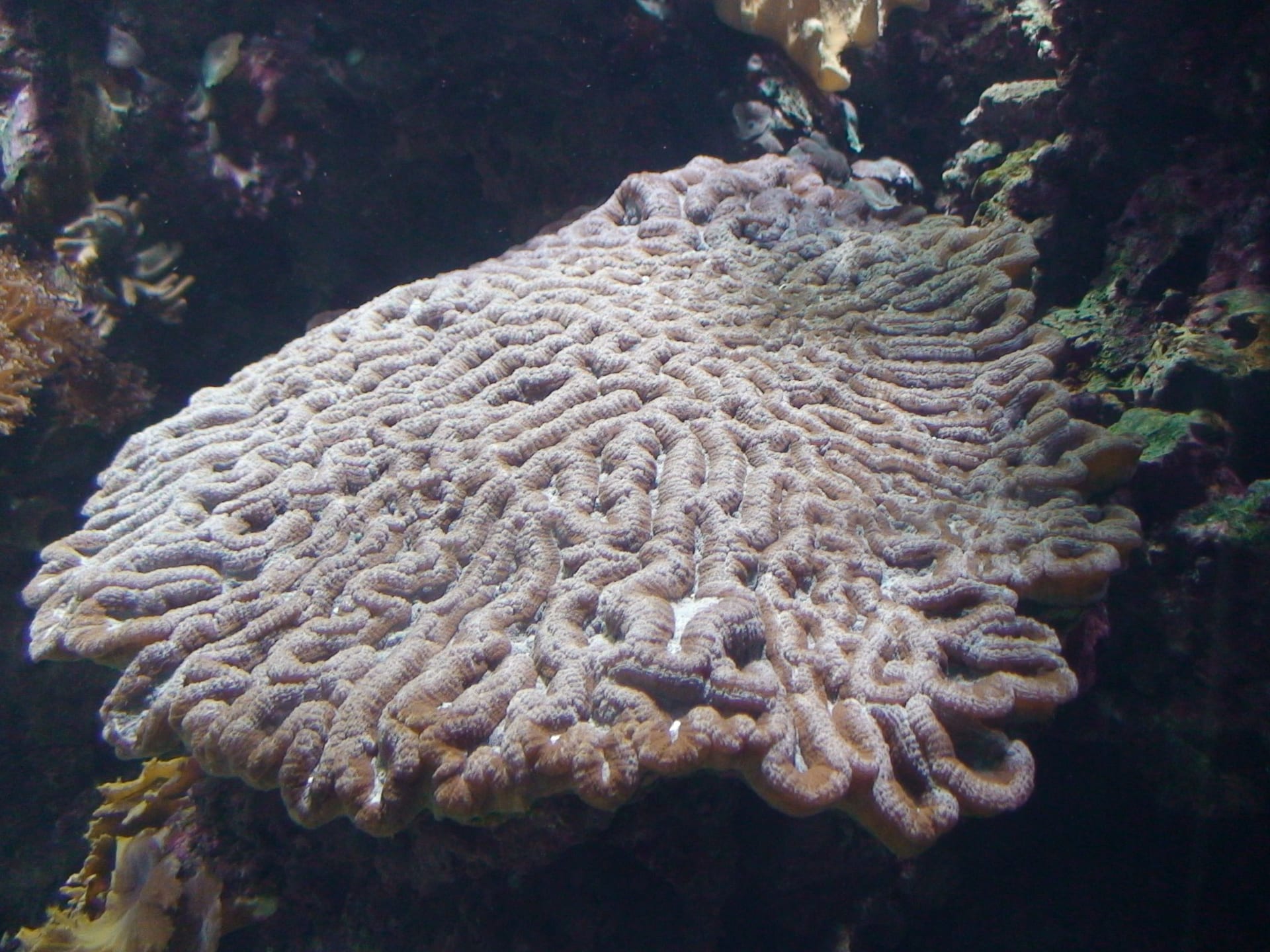
A merulinid reef coral whose skeleton alternates broad valleys with sharp-edged ridges. Called the intermediate valley coral in English, it opens its large fleshy polyps only at night, and the tentacle tips are white.
Difficulty
Intermediate
Temperature
24〜27℃
Size
Colonies over 1 m across, but seldom more than 20 cm in the Red Sea
Diet
Mainly nutrition from symbiotic zooxanthellae, supplemented with meaty coral foods given to the large polyps at night.
About
Oulophyllia crispa, the intermediate valley coral, is a reef-building merulinid coral of the tropical western and central Indo-Pacific. Colonies form hemispherical domes, stacks or plates more than a metre across, although in the Red Sea they seldom exceed 20 cm. The corallites lie in broad meandering valleys separated by acute-edged ridges, and the septa are thin, evenly spaced and slope uniformly to the central columella. The polyps expand only at night; they are large and fleshy with white-tipped tentacles. Colonies are brown, grey or green, sometimes with contrasting oral discs. Its range is wide but it is generally uncommon and appears to be decreasing, and the IUCN assessed it as Endangered in 2024. As a scleractinian it is on CITES Appendix II.
Source: Wikipedia (CC BY-SA 4.0)
Size of the Oulophyllia
The Oulophyllia grows to Colonies over 1 m across, but seldom more than 20 cm in the Red Sea.
Temperature & humidity for the Oulophyllia
The ideal temperature for the Oulophyllia is 24〜27℃.
Basic Info
Origin
Red Sea, Gulf of Aden and East Africa to Australia, Japan, the East China Sea and the island groups of the western Pacific
Size
Colonies over 1 m across, but seldom more than 20 cm in the Red Sea
Temperature
24〜27℃
Diet
Care Specifications
- Carbonate (KH)
- 8–12 dKH
- Water Temp.
- 24–27℃
- Specific Gravity
- 1.023–1.025
- Salinity
- 33–35 ppt
- Calcium (Ca)
- 380–450 ppm
- Magnesium (Mg)
- 1200–1400 ppm
LPSLight: Medium (PAR 50-150)Flow: MediumPlacement: Middle
Sources: LiveAquaria / AlgaeBarn: Calcium Supplementation / WoRMS (World Register of Marine Species)
References & Sources
Edited & verified by: BreederDirect editorial team
The taxonomic, regulatory, and husbandry data on this page are compiled and verified against the authoritative primary sources below.
Taxonomy & Authority
Accepted name: Oulophyllia crispa Lamarck, 1816
Synonyms: Maeandrina crispa (Lamarck, 1816), Coeloria gigantea Yabe & Sugiyama, 1935
Authority databases: WoRMS
Nomenclature follows global taxonomic authority databases.
Regulations & Conservation Status
CITES Appendix IIIUCN EN · Endangered
Sources: CITES Appendix II (Scleractinia spp. listed as an order) / IUCN Red List
Regulations may change. Always verify the latest information with the relevant authorities.
Oulophyllia Listings
Loading latest listingsFind listings for this species