Source: Wikimedia Commons
Hydnophora Rigida
IntermediateHydnophora rigida
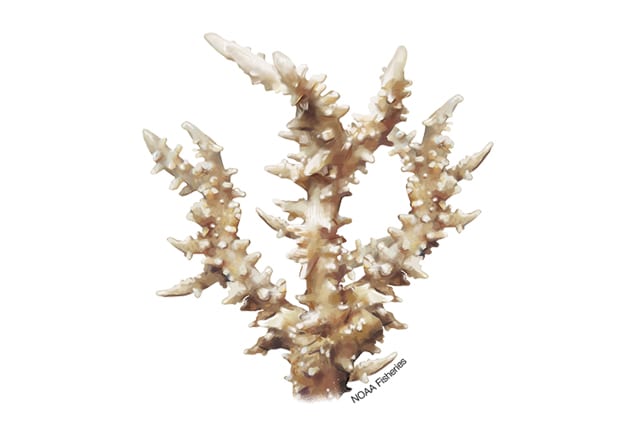
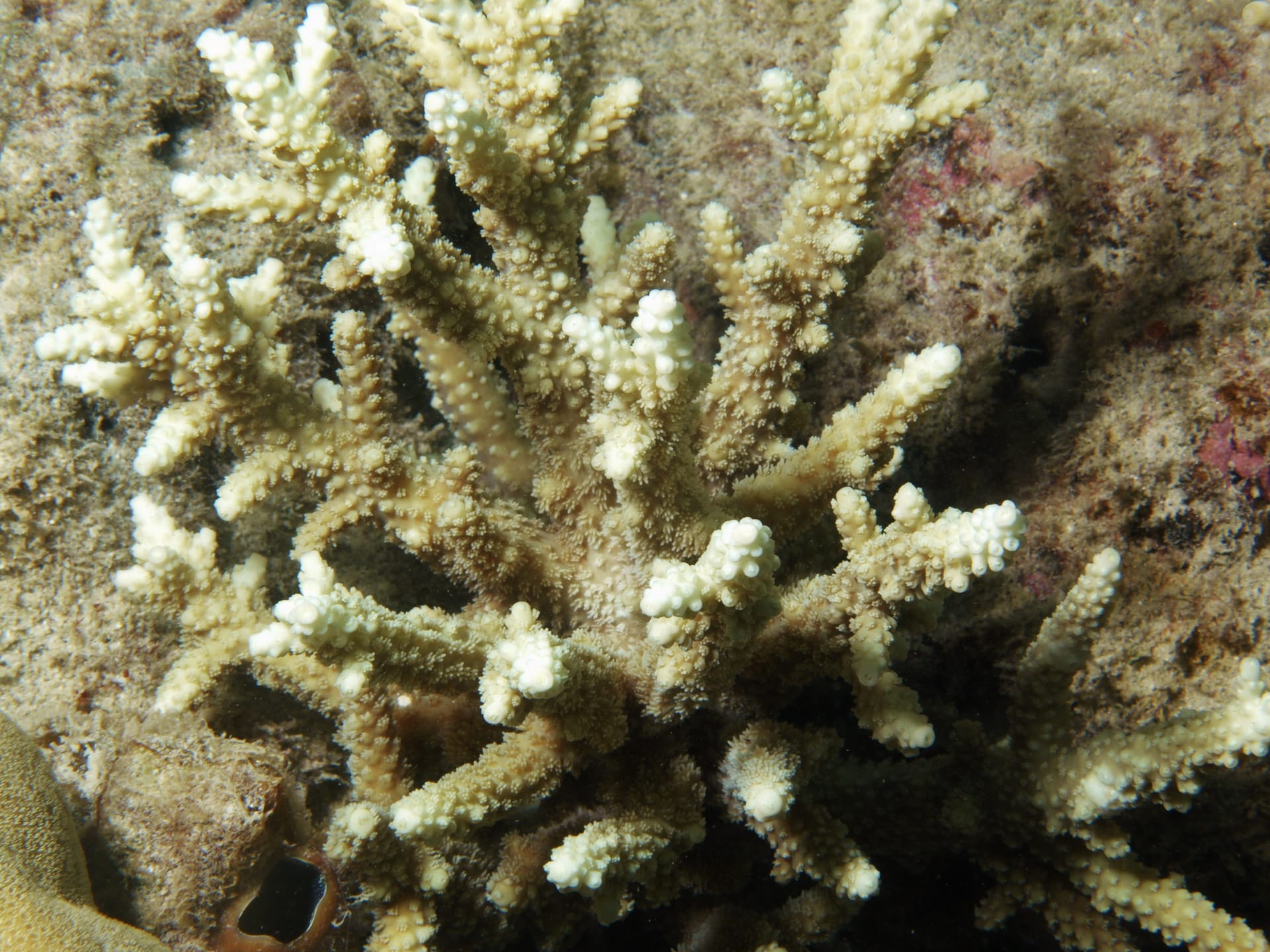
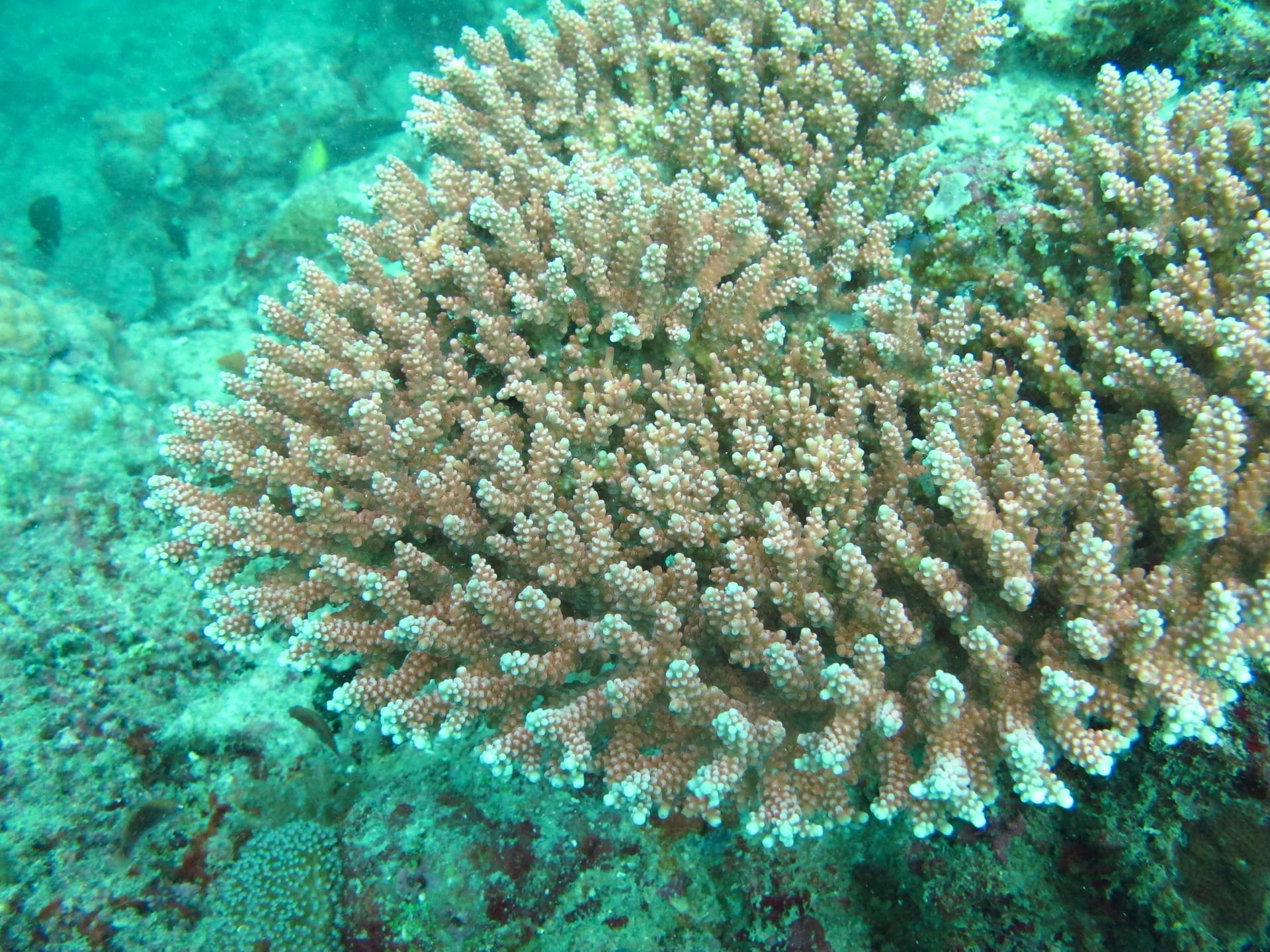
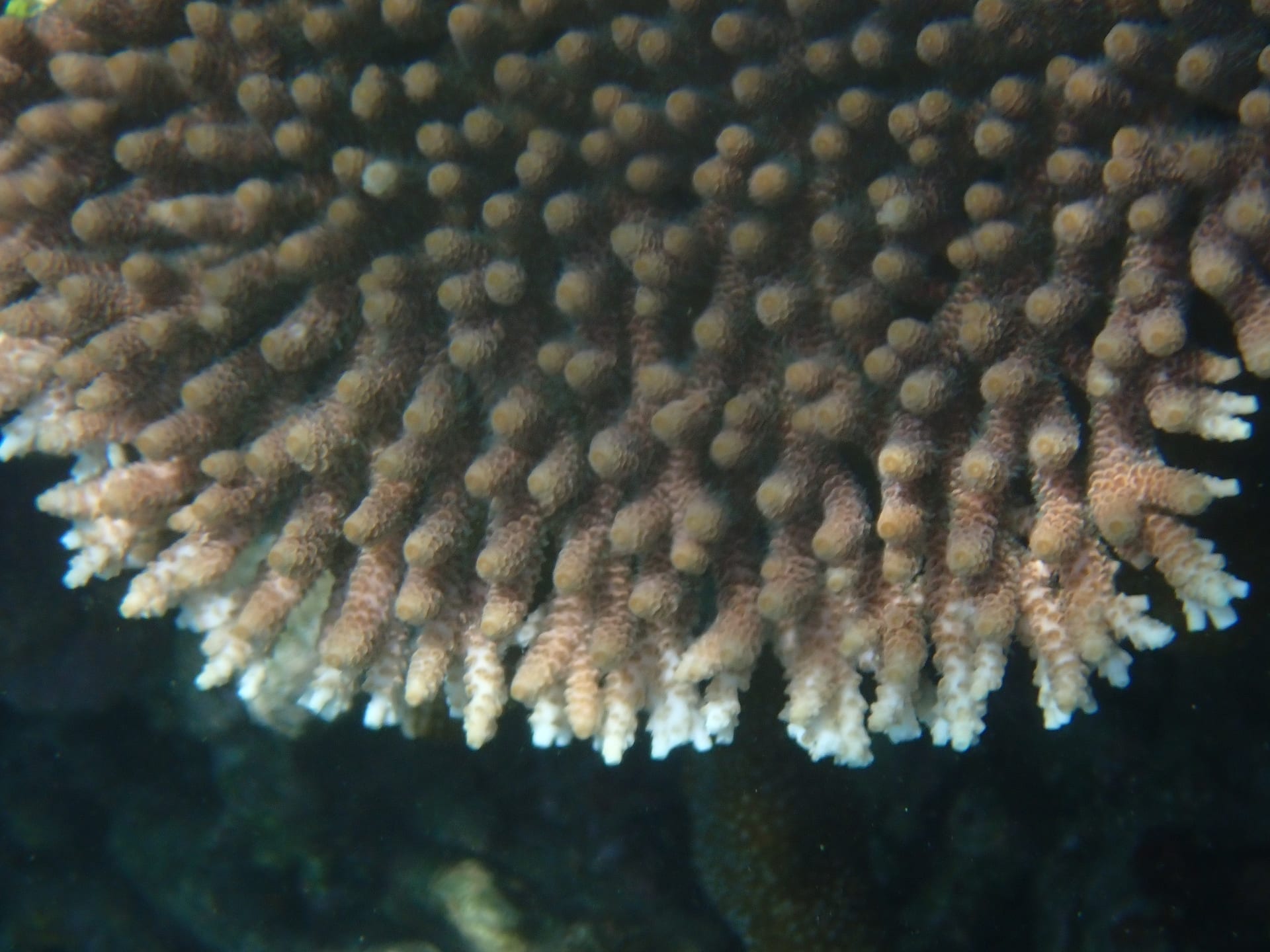
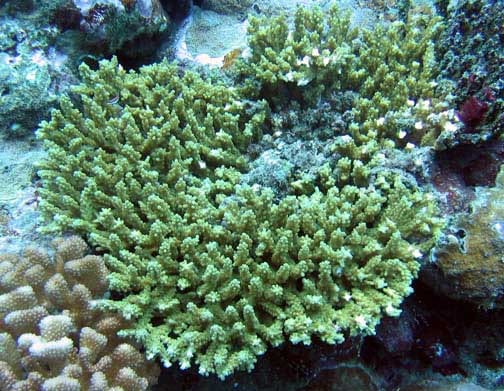
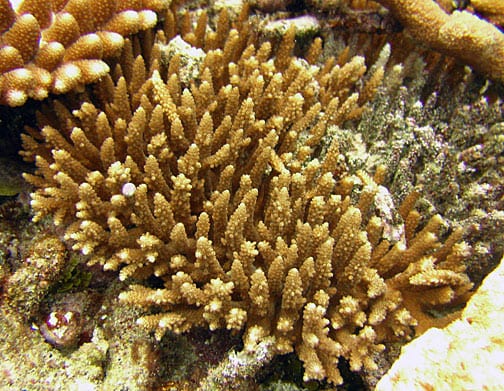
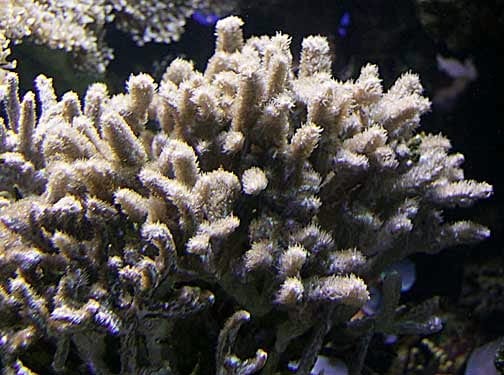
A bushy merulinid with irregular, usually flattened branches. Monticules formed where the walls of adjacent corallites fuse run together into ridges down the sides of the branches, giving the surface a warty look. Colour is cream or green.
Difficulty
Intermediate
Temperature
24〜26℃
Size
Branches 7-12 mm thick
Diet
Mainly nutrition from its zooxanthellae. It extends tentacles at night, so powdered or liquid coral foods offered after lights-out are taken.
About
Hydnophora rigida is a reef-building merulinid found on shallow reefs from the Indian Ocean to the western Pacific. Colonies consist of irregular, usually flattened branches, sometimes with an encrusting base. Main branches are 7-12 mm thick, and the monticules formed where the walls of adjacent corallites fuse run together into ridges down the branch sides. Colour is cream or green, and some colonies fluoresce green. It favours lagoons and sheltered reef slopes at depths of 1-30 m and can form extensive single-species stands. It is a simultaneous hermaphrodite and a broadcast spawner; in Western Australia it spawns after the November full moon and appears to run several gametogenic cycles a year. Tentacles are extended mainly at night. As a scleractinian it is listed on CITES Appendix II.
Source: Wikipedia (CC BY-SA 4.0)
Size of the Hydnophora Rigida
The Hydnophora Rigida grows to Branches 7-12 mm thick.
Temperature & humidity for the Hydnophora Rigida
The ideal temperature for the Hydnophora Rigida is 24〜26℃.
Basic Info
Origin
Shallow reefs of the Indian and western Pacific Oceans, from East Africa and Madagascar to Indonesia, the Philippines, the Great Barrier Reef, Fiji, Samoa and the Solomon Islands
Size
Branches 7-12 mm thick
Temperature
24〜26℃
Diet
Care Specifications
- Carbonate (KH)
- 8–12 dKH
- Water Temp.
- 24–26℃
- Specific Gravity
- 1.023–1.025
- Salinity
- 33–35 ppt
- Calcium (Ca)
- 380–440 ppm
- Magnesium (Mg)
- 1300–1400 ppm
SPSLight: Medium (PAR 50-150)Flow: MediumPlacement: Middle
Sources: Corals of the World (Hydnophora rigida) / AlgaeBarn: A Quick Guide to LPS and SPS / LiveAquaria (Smooth Encrusting Montipora Coral/飼育値の参考)
References & Sources
Edited & verified by: BreederDirect editorial team
The taxonomic, regulatory, and husbandry data on this page are compiled and verified against the authoritative primary sources below.
Taxonomy & Authority
Accepted name: Hydnophora rigida (Dana, 1846)
Authority databases: WoRMS
Nomenclature follows global taxonomic authority databases.
Regulations & Conservation Status
CITES Appendix IIIUCN LC · Least Concern
Sources: CITES Appendix II (Scleractinia spp. listed as an order) / IUCN Red List (via SeaLifeBase)
Regulations may change. Always verify the latest information with the relevant authorities.
Hydnophora Rigida Listings
Loading latest listingsFind listings for this species