Source: Wikimedia Commons
Anacropora
AdvancedAnacropora spp.
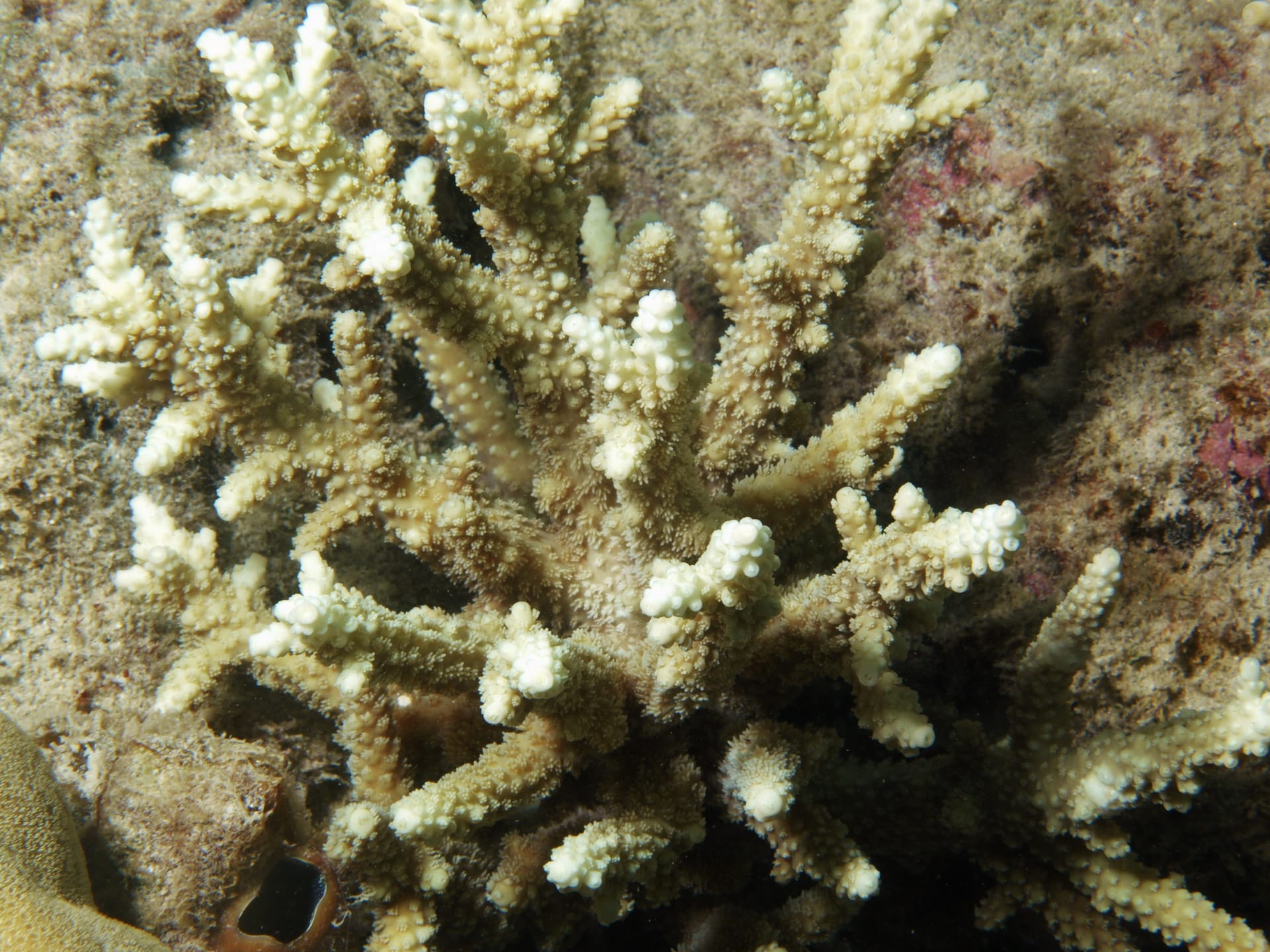
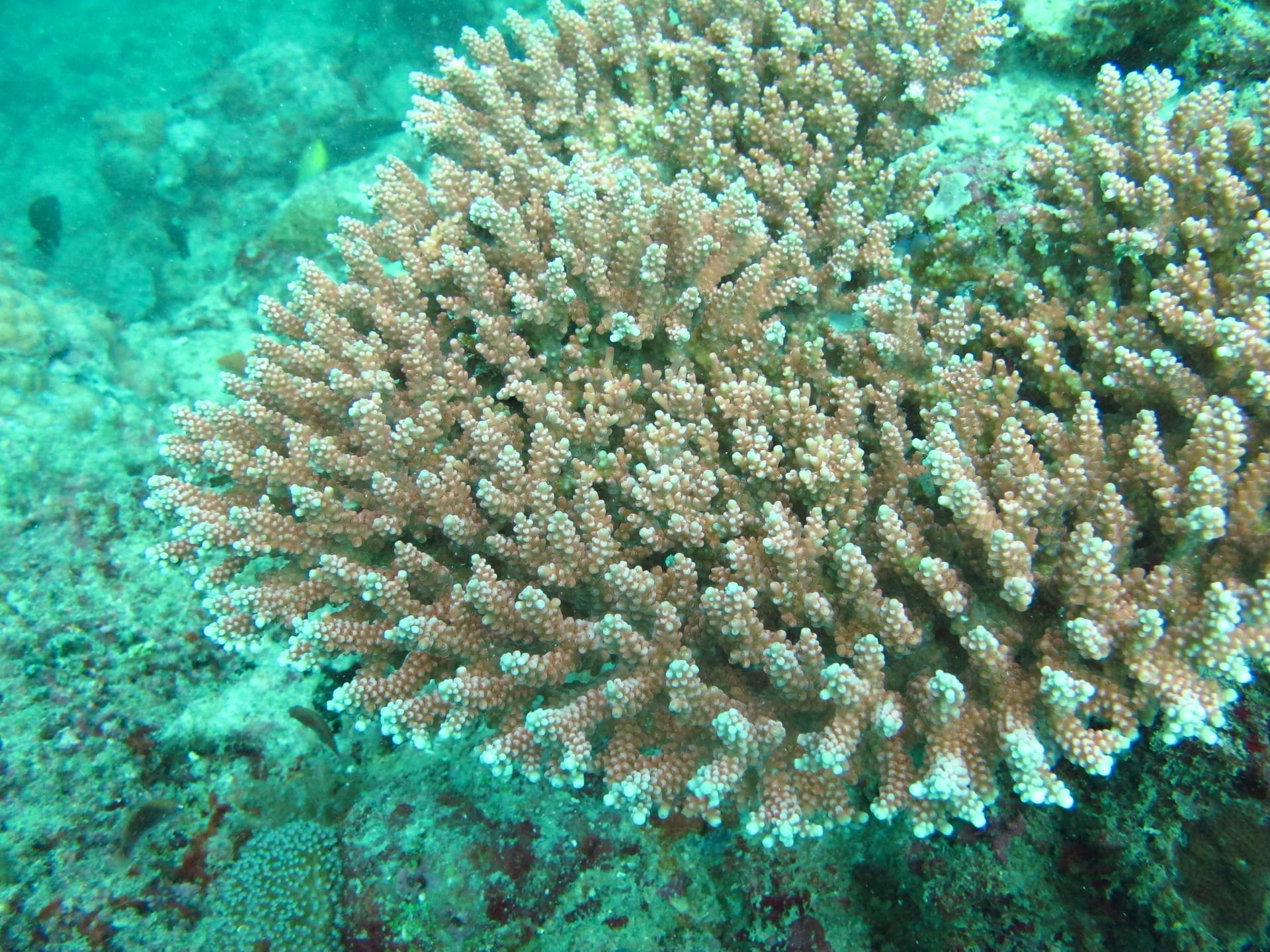
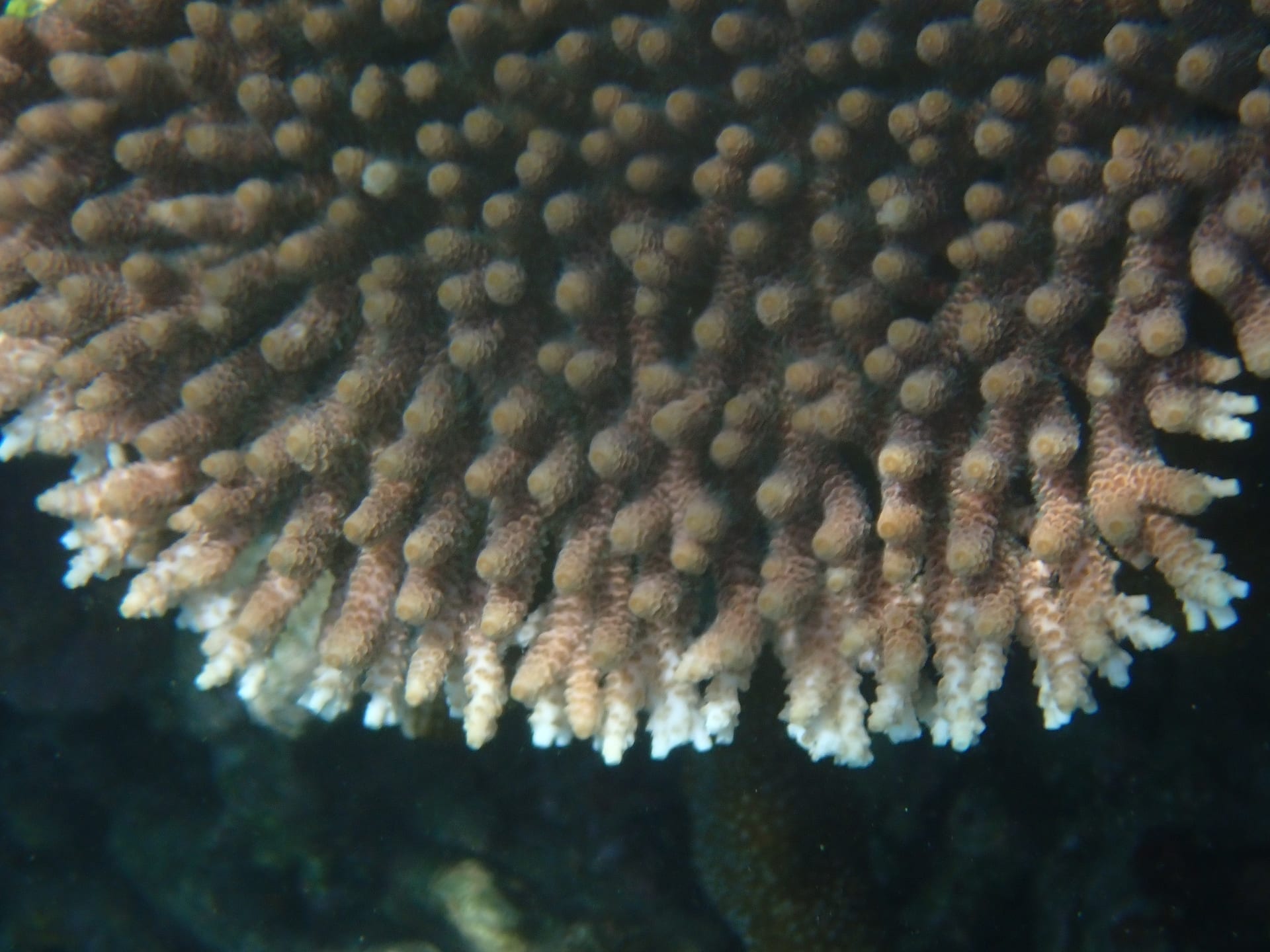
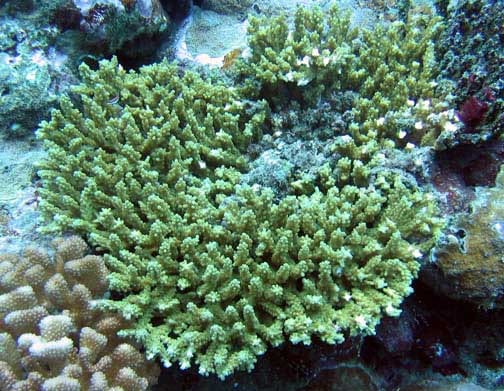
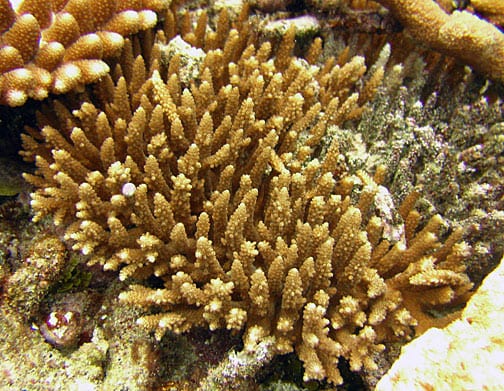
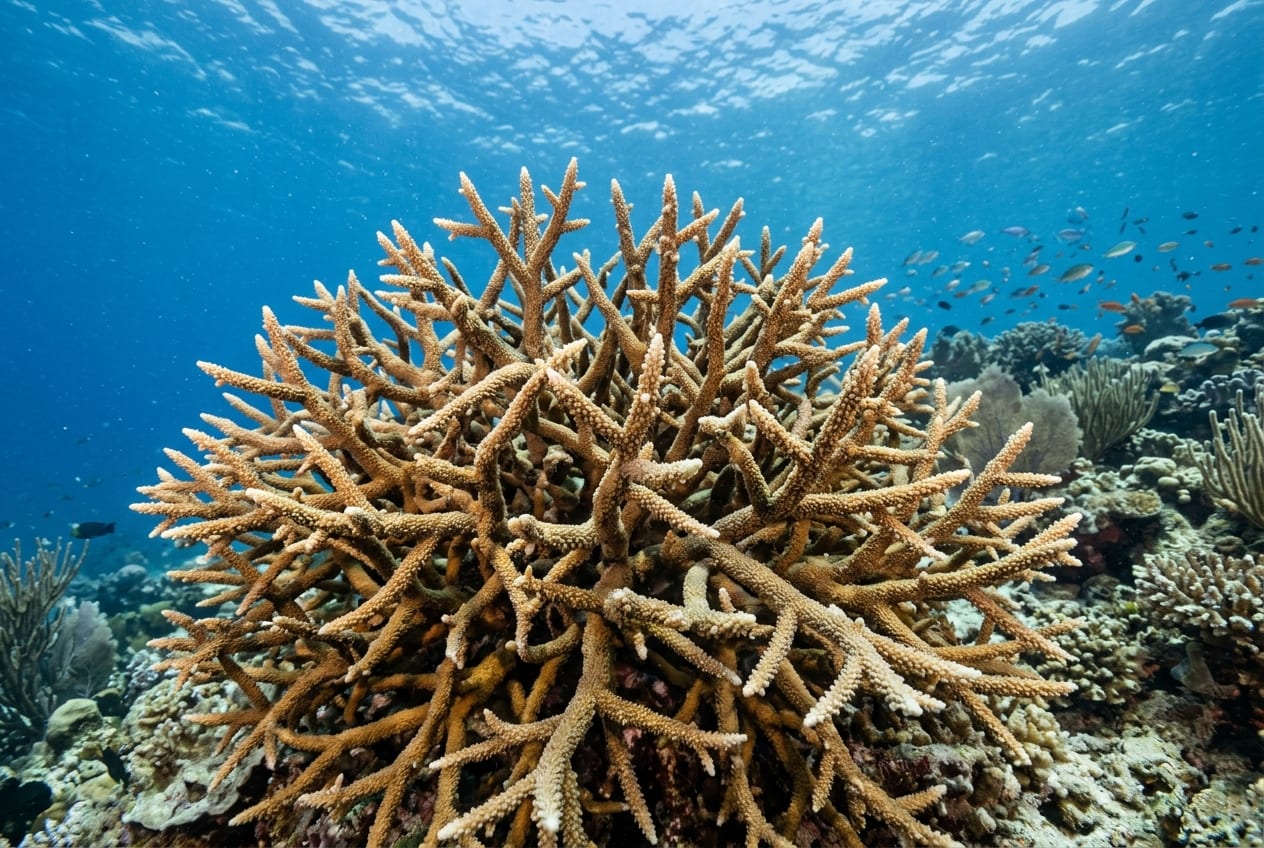
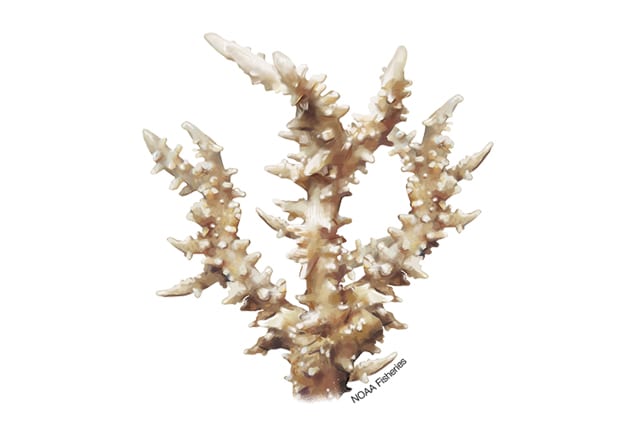
An acroporid reef-building coral that, unlike Acropora, has no axial corallite at the branch tips. The evenly spaced branches are under 10 mm thick, tapered and blunt-tipped, pale brown with white tips.
Difficulty
Advanced
Temperature
24〜26℃
Size
Branches under 10 mm thick
Diet
Mainly nutrition from its zooxanthellae, supplemented with powdered or liquid coral foods and phytoplankton.
About
Anacropora is a genus of reef-building acroporid corals erected by Ridley in 1884. It is closely related to Acropora in the same family but is clearly separated by the absence of an axial corallite at the branch tips. The branches are evenly spaced, under 10 mm thick, tapered and blunt-tipped; the corallites have slightly prominent lower lips and the coenosteum is smooth. Colour is pale brown, usually with white branch tips. It grows in shallow turbid reef environments and on deep soft substrates, and is sometimes found on exposed upper reef slopes; the genus is uncommon throughout its range. In the aquarium it needs strong light, strong flow and stable alkalinity and calcium as Acropora does, but the slender branches snap easily and must be handled with care. As a scleractinian it is listed on CITES Appendix II.
Source: WoRMS
Size of the Anacropora
The Anacropora grows to Branches under 10 mm thick.
Temperature & humidity for the Anacropora
The ideal temperature for the Anacropora is 24〜26℃.
Basic Info
Origin
Indo-West Pacific, in shallow turbid reef environments and on deep soft substrates, sometimes also on exposed upper reef slopes.
Size
Branches under 10 mm thick
Temperature
24〜26℃
Diet
Care Specifications
- Carbonate (KH)
- 8–12 dKH
- Water Temp.
- 24–26℃
- Specific Gravity
- 1.023–1.025
- Salinity
- 33–35 ppt
- Calcium (Ca)
- 380–440 ppm
- Magnesium (Mg)
- 1300–1400 ppm
SPSLight: High (PAR>150)Flow: HighPlacement: Top
Sources: Corals of the World (Anacropora forbesi) / AlgaeBarn: A Quick Guide to LPS and SPS / WoRMS (World Register of Marine Species)
References & Sources
Edited & verified by: BreederDirect editorial team
The taxonomic, regulatory, and husbandry data on this page are compiled and verified against the authoritative primary sources below.
Taxonomy & Authority
Accepted name: Anacropora spp. Ridley, 1884
Authority databases: WoRMS
Nomenclature follows global taxonomic authority databases.
Regulations & Conservation Status
CITES Appendix II
Sources: CITES Appendix II (Scleractinia spp. listed as an order)
Regulations may change. Always verify the latest information with the relevant authorities.
Anacropora Listings
Loading latest listingsFind listings for this species