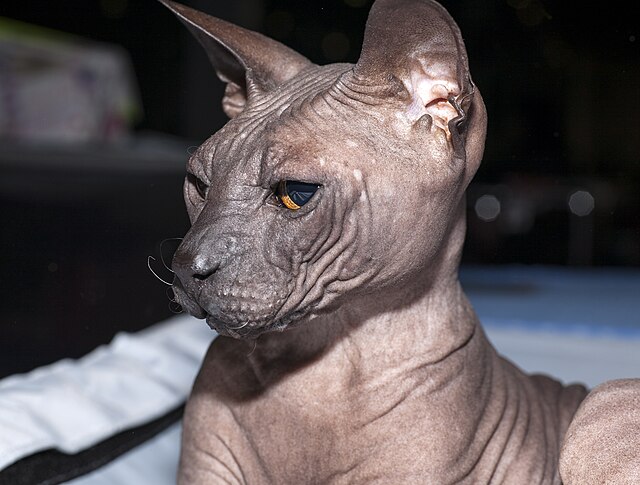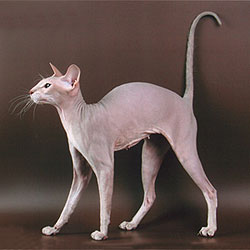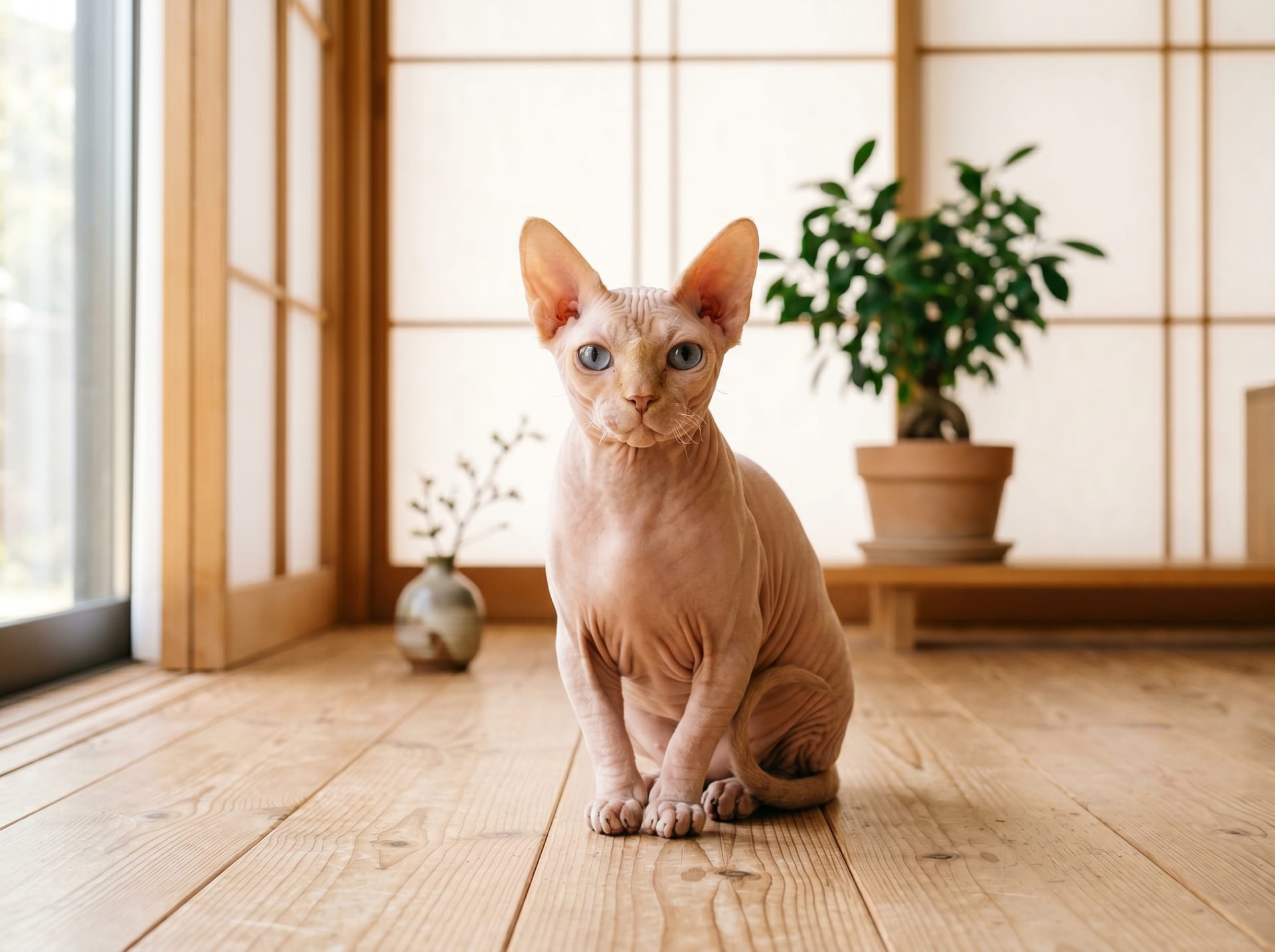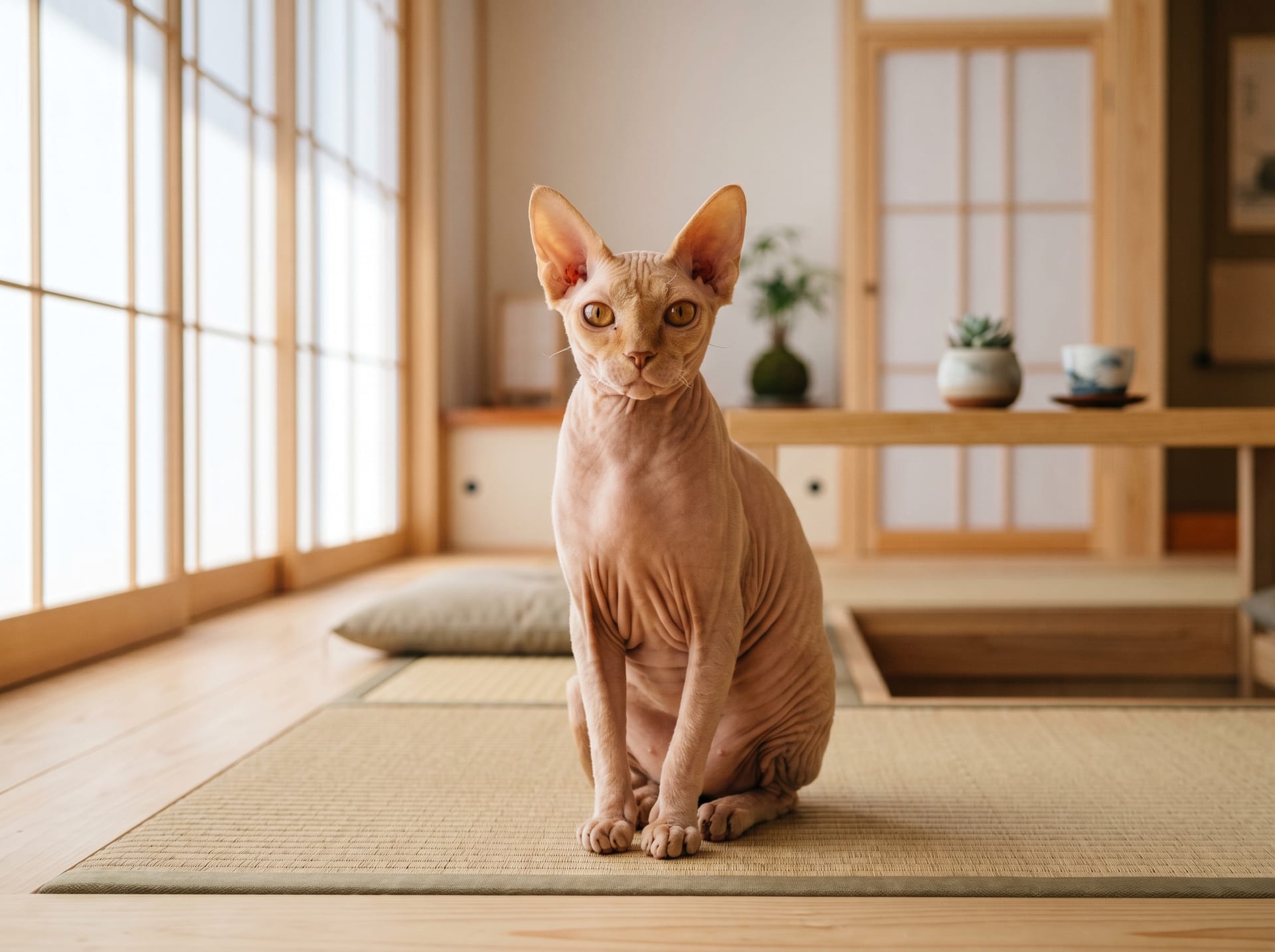
AI-generated image
Sphynx
AdvancedNearly hairless breed with wrinkled skin and large ears. Extremely affectionate; warm to the touch.
Difficulty
Advanced
Temperature
18〜28℃
Lifespan
12-15 years
Size
Weight 3-6kg
Diet
High-calorie complete food. Needs extra energy for body temperature regulation.
About
The Sphynx cat also known as the Canadian Sphynx, is a breed of cat known for its lack of fur. Hairlessness in cats is a naturally occurring genetic mutation, and the Sphynx was developed through selective breeding of these animals, starting in the 1960s.
Source: Wikipedia (CC BY-SA 4.0)
Lifespan of the Sphynx
The Sphynx lives 12-15 years.
Size of the Sphynx
The Sphynx grows to Weight 3-6kg.
Basic Info
Origin
Canada
Lifespan
12-15 years
Size
Weight 3-6kg
Temperature
18〜28℃
Diet
High-calorie complete food. Needs extra energy for body temperature regulation.
Care Guide
Temperament
Extremely affectionate. Always wants to be near people; loves laps.
References & Sources
Edited & verified by: BreederDirect editorial team
The taxonomic, regulatory, and husbandry data on this page are compiled and verified against the authoritative primary sources below.
Primary sources
Taxonomy & Authority
Accepted name: Linnaeus, 1758
Synonyms: Felis silvestris catus
Authority databases: GBIF · GBIF: Felis catus · TICA breed profiles · CFA breed profiles
Nomenclature follows global taxonomic authority databases.
Sphynx Listings
Loading latest listingsFind listings for this species