Complete Guide to Keeping Cats in Rental Housing | Property Contracts, Restoration Measures, and Preventing Neighbor Disputes
Explains how to care for cats in pet-friendly rental properties. Covers everything from contract confirmation items to restoration measures for scratching damage and odors, strategies to prevent neighbor disputes such as noise, and even cat walk installation suitable for rentals—a comprehensive guide to practical knowledge for preventing troubles at move-out.
Key Takeaways
Explains how to care for cats in pet-friendly rental properties. Covers everything from contract confirmation items to restoration measures for scratching damage and odors, strategies to prevent neighbor disputes such as noise, and even cat walk installation suitable for rentals—a comprehensive guide to practical knowledge for preventing troubles at move-out.
When you want to keep a cat in a rental home, the first obstacle you face is the scarcity of pet-friendly properties. In Japan's rental market, pet-prohibited properties still make up the majority, but as demand grows, more properties are allowing pet ownership. With the right knowledge and preparation beforehand, you can live comfortably and without trouble with a cat in a rental home. This article provides a systematic explanation covering everything from finding a property to restoration measures at move-out and consideration for neighbors.
Pitfalls When Searching for Pet-Friendly Properties and Contract Confirmation Items
Filtering for "pet-friendly" when searching for properties is a first step, but the definition of "pet-friendly" varies greatly depending on the property. Categories such as "both dogs and cats allowed," "small dogs only," "cats only," and "small animals in cages only" have different conditions, so you must confirm these details in advance to avoid later troubles.
Another point requiring careful attention is the description "pet consultation available." This does not mean permission is confirmed; whether it is allowed or not is decided through negotiation with the landlord. When inquiring, be honest about the cat's breed, number, and whether it has been neutered or spayed, and if permission is granted, make sure to have it documented in writing. Agreements made only verbally can easily develop into troubles at move-out, such as the landlord claiming "I never heard anything like that," so it is important to have it specified in the contract's special terms.
The following items must be confirmed at contract time.
| Confirmation Item | Checkpoint |
|---|---|
| Pet Security Deposit/Key Money | An additional 1–2 months' worth beyond the normal deposit is common |
| Limit on Number of Pets | Negotiate in advance considering future multi-cat households |
| Special Terms for Restoration | Confirm in writing the scope of repair responsibility for scratching and odor |
| Range of Prohibited Matters | Whether balcony access and free-roaming in hallways are permitted |
Preventing High Additional Bills at Move-Out through Restoration Measures
The damage from cats that most commonly causes problems is scratching on walls, pillars, and door frames, as well as odors and stains from urine. These are considered "wear and tear beyond normal use" and repairs are charged to the tenant. Since additional repair bills beyond the security deposit sometimes occur, preventive measures from the time of move-in are essential.
Preventing Scratching Damage
On walls where cats tend to scratch (wall corners, bases of pillars, door frames), apply transparent scratch-prevention sheets or corner guards beforehand. At the same time, distribute multiple scratching toys throughout the room to make scratching posts more appealing than the walls—this is a behavioral approach. The key is to try multiple types such as cardboard and sisal rope materials early on and find which one your cat prefers.
Odor Control and Dirt Prevention Management
Thoroughly clean your cat's litter box daily, and use odor-absorbing sand and odor-elimination spray to prevent odor buildup. Protect your flooring with water-resistant rugs or interlocking mats to prevent waste from seeping into the flooring material. Since specialized cleaning (ozone treatment, high-pressure washing) requested at move-out can cost tens of thousands of yen, daily odor management is the most cost-effective measure in the long term.
Move-In Records as Your Best Insurance
Recording the condition of your entire room in photos and videos on your move-in date is extremely important for preventing troubles at move-out. Key recording points are as follows.
- Take photos with the date included, comprehensively covering each room, water areas, walls, and flooring
- Be sure to photograph close-ups of any scratches, dirt, or discoloration that existed before move-in
- Back up your record data in multiple locations such as cloud storage
If you can prove that damage existed before move-in, you have a strong basis for countering unreasonable additional charges at move-out.
Preventing Neighbor Disputes: Noise and Odor Measures
In apartment buildings, the three most common neighbor disputes related to cat ownership are crying sounds, footsteps, and odors. Knowing the cause and countermeasures for each in advance can greatly reduce the risk of disputes after move-in.
Dealing with Crying Sounds (Night Crying)
Cats that have not been neutered or spayed will cry loudly for long periods during heat. This is the biggest source of noise complaints in apartment buildings. Early neutering or spaying is the most fundamental and effective countermeasure and also has health benefits for the cat. If night crying persists even after surgery, it may be a sign of stress or illness, so consult your veterinarian.
Footstep and Vibration Control
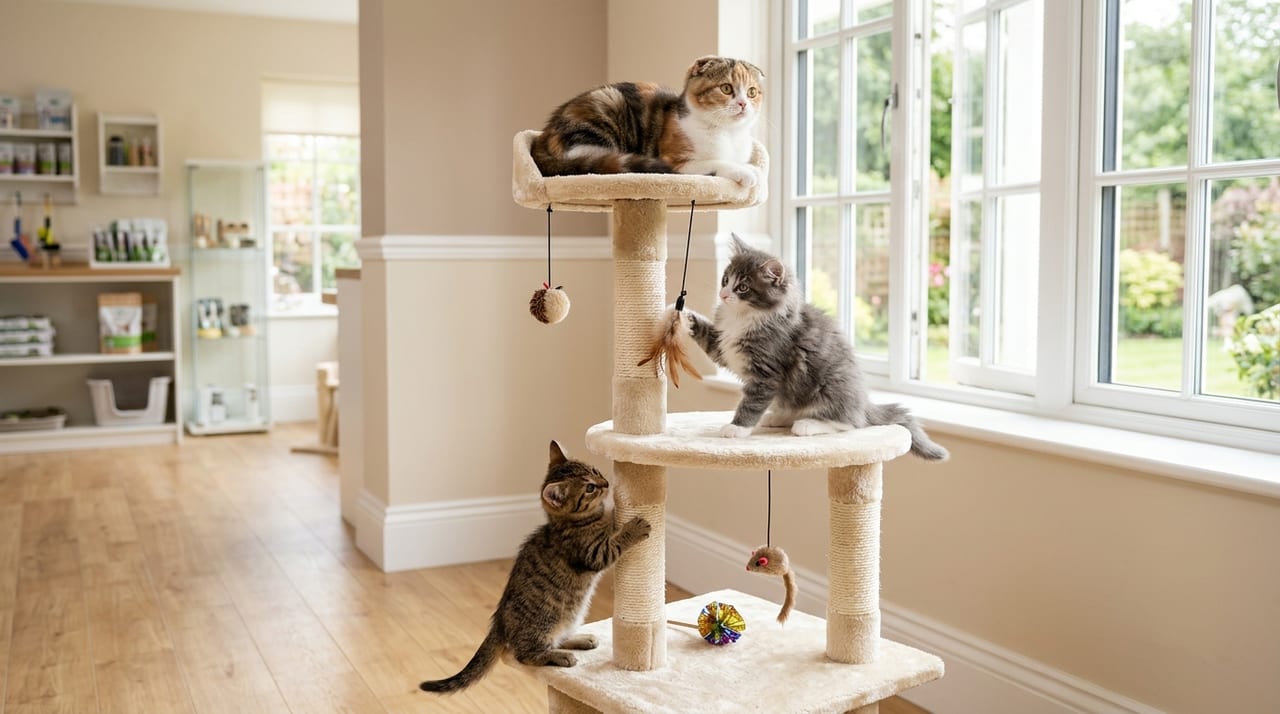
The sound of cats running around travels easily to the floor below, and activity during nighttime hours is especially prone to complaints. Basic measures include laying interlocking mats on flooring and installing vibration-dampening pads under cat towers. Installing multiple cat towers to distribute exercise space can reduce concentrated jumping impact on one spot.
Odor Control
When cat odors leak through hallways or ventilation openings, complaints may come from other residents using shared spaces. Keep an air purifier running constantly in the room where the cat stays, and use odor-elimination filters around ventilation openings. As a basic consideration, avoid placing the litter box near the front door or ventilation openings.
Creating a Cat-Friendly Space Even in Rental Housing
Even with the constraints of rental housing, you can create a comfortable space that satisfies your cat's natural behaviors while allowing for restoration at move-out.
Ensuring Vertical Space
Cats prefer high places, and vertical movement helps satisfy their exercise needs and reduce stress. Cat towers can be freely set up in rental housing, but if you want to create a more elaborate cat walk, you can use Diawall (a tension rod system using 2×4 lumber and specialized jacks) to install shelves and platforms without drilling holes in walls. Rental-compatible tension-type wall shelves are also sold by various manufacturers, so choose according to your room's size and number of cats.
Escape Prevention and Window Area Setup
Ensure your cat has space to enjoy the view from the window while reinforcing screens to prevent escape. By installing reinforcement nets and auxiliary locks with non-marking clips or suction cups, restoration at move-out is also easy. "Cat pass-through prevention gates" to prevent escape from the front door are also widely available in rental-compatible tension types.
Securing Safe Spots for Your Cat
Cats become stressed without a place to be alone. Place a cat bed in a closet corner or in gaps between furniture—securing at least one spot in your room where your cat can voluntarily hide away is important.
Maintaining Long-Term Relationships with Landlords, Management Companies, and Neighbors
The most important thing in keeping cats in rental housing is maintaining trust with your landlord and management company over time. If you inform them from move-in that "you are keeping a cat" and "you are continuously working on noise and odor measures," it becomes easier to respond sincerely if a complaint does arise.
Greeting neighbors is also an effective approach. By showing a stance of "I have a cat. Please let me know if anything bothers you," you can build a relationship where issues are resolved between the parties involved rather than complaints going directly to the management company.
There are many things to confirm before moving to a pet-friendly property or starting to care for a cat, but by carefully preparing each step, you can realize a comfortable rental life for both your cat and yourself. Using the measures introduced in this article as a reference, please do try starting in a way that works for you.