Complete Guide to Raising Sphynx Cats | Special Care and Personality of Hairless Cats | ブリちょく
Cats| ✍️ BreederDirect Editorial
Complete Guide to Raising Sphynx Cats | Special Care and Personality of Hairless Cats
A detailed explanation of how to raise Sphynx cats, whose unique hairless appearance is their charm. We thoroughly introduce skin care due to their hairlessness, body temperature maintenance, cold-weather measures, the necessity of regular bathing, oil management, and the characteristics of their affectionate personality.
Key Takeaways
A detailed explanation of how to raise Sphynx cats, whose unique hairless appearance is their charm. We thoroughly introduce skin care due to their hairlessness, body temperature maintenance, cold-weather measures, the necessity of regular bathing, oil management, and the characteristics of their affectionate personality.
What Are Sphynx Cats?
✍️
BreederDirect Editorial
The BreederDirect editorial team specializes in care information for animals, covering veterinary care and breeding to deliver beginner-friendly guides.
Find Cats on BreederDirect
Buy directly from verified breeders
Browse Related Listings
Find Cats listings related to this article on BreederDirect. Buy directly from verified breeders.
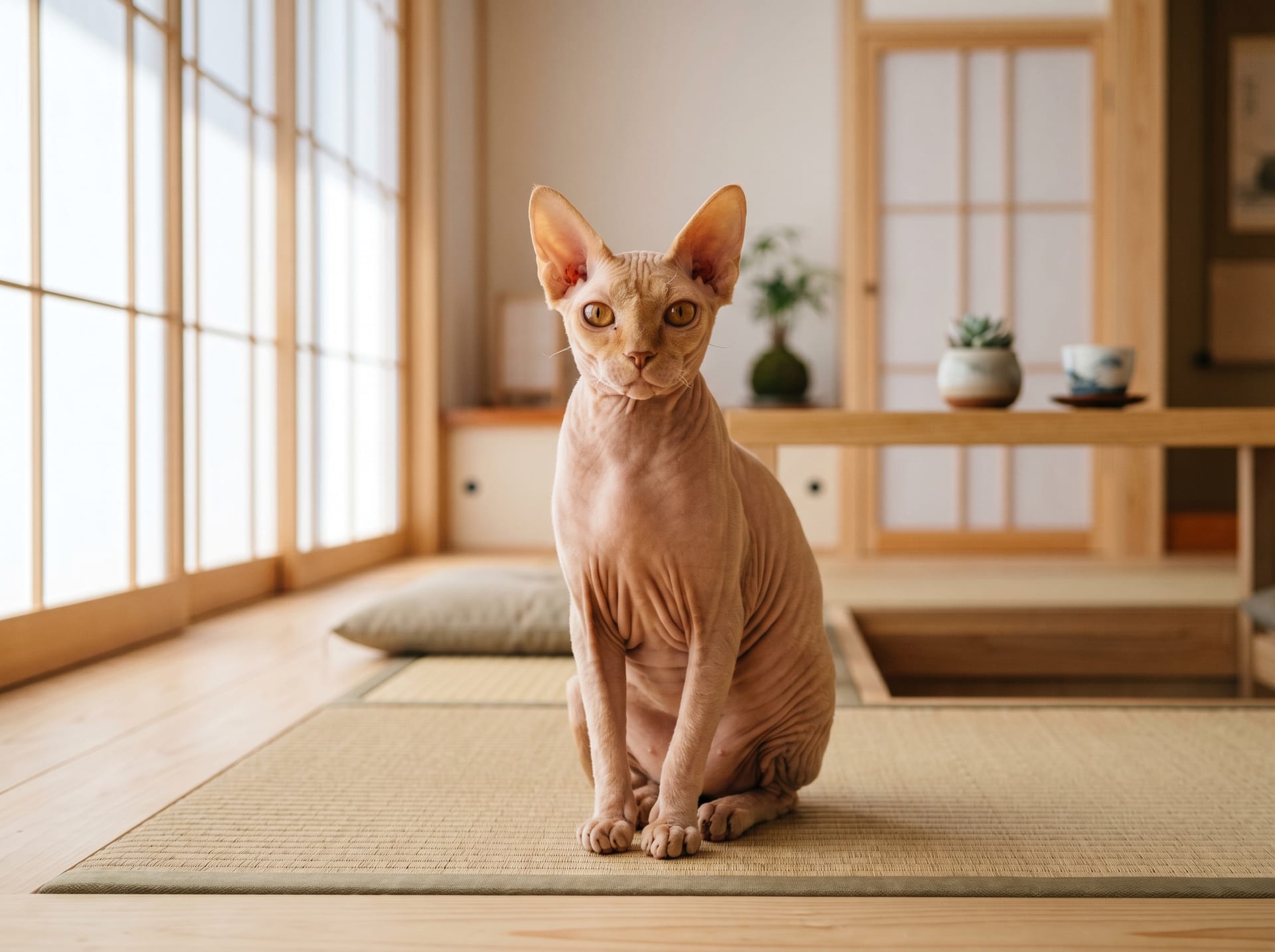
The Sphynx is a breed created by crossing a naturally occurring hairless cat mutation discovered in Ontario, Canada in 1966 with the Devon Rex from the Netherlands. Contrary to their unconventional appearance, they are a captivating breed often called "dogs in cat form" due to their extremely affectionate and friendly nature. They are truly charming cats.
Basic Information
- Weight: Males 4–5 kg, females 3–4 kg
- Lifespan: 9–15 years
- Coat: Hairless (technically, very fine fuzz densely covers the entire body)
- Colors: All patterns and colors exist (even without fur, patterns appear on the skin)
Physical Characteristics
- Hairless warm skin that feels "like touching human skin"
- Large ears, prominent cheekbones, and wrinkled skin
- Soft peach-like skin texture
- Muscular, well-proportioned body
Personality Traits
Sphynx cats are especially sociable and active among cat breeds.
Strong attachment to people: Love to sit on their owner's lap. Many dislike being alone
High energy levels: Extremely active and playful. Get along well with other cats and dogs
Vocal: Frequently meow and attempt to "converse"
Highly curious: Want to explore every corner of the house
Good adaptability: Generally get along well with small children and other pets
Because Sphynx cats get lonely easily, leaving them alone for long periods is not ideal. Multi-cat households (living with another cat or dog) provide an ideal environment for Sphynx cats.
Skin Care (Most Critical)
The most distinctive aspect of Sphynx cat care is skin care. While normal cats have fur that absorbs and disperses sebaceous secretions, Sphynx cats have no fur, so sebum accumulates directly on the skin.
Regular Bathing
Sphynx cats require bathing 1–2 times per week. This is a significant difference from typical cat care.
Bathing Steps
1. Wet the entire body with warm water at 38–39°C
2. Apply diluted cat-specific or gentle baby shampoo to the entire body
3. Rinse thoroughly (shampoo residue causes skin problems)
4. Pat dry with a soft towel and dry with a blow dryer on low setting (always check temperature with your hand)
Bathing Tips
It is important to acclimate kittens to bathing from a young age. Start with shallow, lukewarm water and use treats to teach them that "bathing = good thing." Attempting to bathe an adult cat for the first time can cause significant stress.
Ear Cleaning
Because Sphynx cats lack ear fur, earwax accumulates easily. Once or twice a week, gently wipe the ears with a pet ear cleaner. Consult a veterinarian if the inside of the ears is blackened or if the cat appears to be scratching.
Oil Between the Claws
Sphynx cats tend to accumulate sebum between their claws, so about twice monthly, gently wipe between the claws with cotton slightly moistened with olive oil or a specialized cleaner.
Eye Care
Many individuals produce excessive eye discharge. Daily, gently wipe around the eyes with slightly dampened cotton.
Body Temperature Management (Cold Weather Protection)
Because Sphynx cats lack fur, they have difficulty regulating body temperature and are extremely sensitive to cold.
Appropriate Room Temperature
Summer: Approximately 26–28°C (adjust air conditioning so it doesn't get too cold)
Winter: Maintain 22–25°C (use radiant floor heating or heaters)
Avoid sudden temperature changes (fluctuations of 10°C or more)
Cold Weather Gear
Cat clothing and bodysuits: Pet stores sell Sphynx-specific sizes. Wear during winter outings and bedtime
Pet blankets: Sphynx cats naturally wrap themselves up for warmth
Heating pads (cat-specific, low temperature setting): Use as an alternative to sunbathing
Encourage winter activity: Cats tend to move less in cold weather, so actively play with them indoors
Sunbathing and UV Protection
Because Sphynx cats lack fur, their skin receives direct UV radiation. Short sunbathing is healthy, but prolonged direct sunlight carries risks of sunburn and dermatitis.
Window sunbathing should be limited to 1–2 hours
Avoid leaving them in direct sunlight for extended periods
Take special care during outdoor time (consider pet sunscreen if taking your Sphynx outside)
Diet and Nutrition
Sphynx cats have a high metabolic rate and consume large amounts of energy to maintain body temperature.
Caloric needs: 10–15% more calories than same-weight furred cats
Choose high-quality cat food centered on animal protein
While they are not prone to obesity, constantly monitor weight and body condition
Feeding frequency: Adult cats should eat 2–3 times daily
Common Health Issues
Sphynx cats have genetic health concerns to monitor.
Condition
Characteristics
Prevention
Hypertrophic Cardiomyopathy (HCM)
A genetic heart disease common in Sphynx cats. Early detection is crucial
Cardiac ultrasound annually or twice yearly
Dermatitis and Eczema
Result from sebum accumulation and excessive dirt
Regular bathing and clean environment
Hyperpigmentation
Skin discoloration from sunburn
Avoid prolonged direct sunlight
Nail Bed Inflammation
Sebum accumulation at the nail root causes inflammation
Regular cleaning around the nails
About HCM (Hypertrophic Cardiomyopathy): Sphynx cats have a high genetic risk for HCM. We strongly recommend regular cardiac ultrasound screening 1–2 times yearly before symptoms appear. When obtaining a Sphynx from a breeder, it is important to confirm that the parents have tested negative for HCM.
Summary
Sphynx cats are wonderful companion cats with extremely affectionate and friendly personalities—the complete opposite of their "odd appearance." However, they require more care than typical cats: bathing 1–2 times per week plus care for ears, claws, and eyes; and medical attention including body temperature management and regular cardiac check-ups. If you "want to own a cat but desire a different experience than typical cats" or "want a cat that bonds like a dog," this is a captivating breed you should definitely know about.