Cat End-of-Life & Hospice Care Guide | Pain Management, Home Nursing & Euthanasia Decision Criteria
A practical guide to end-of-life care that maintains quality of life for cats with limited time remaining. Covers pain signal recognition, home environment preparation, euthanasia decision criteria using QOL scales (HHHHHMM score), and grief support after loss—a comprehensive practical guide.
Key Takeaways
A practical guide to end-of-life care that maintains quality of life for cats with limited time remaining. Covers pain signal recognition, home environment preparation, euthanasia decision criteria using QOL scales (HHHHHMM score), and grief support after loss—a comprehensive practical guide.
Parting is inevitable when living with a cat. While the average lifespan of cats kept indoors has now reached 15–18 years, it remains shorter than a human's. When a beloved cat ages or receives a diagnosis of serious illness, owners face the question: how can we make the remaining time meaningful? End-of-life care (hospice care / palliative care) is an approach centered not on cure, but on "pain reduction and maintaining quality of life (QOL)."
✍️
BreederDirect Editorial
The BreederDirect editorial team specializes in care information for animals, covering veterinary care and breeding to deliver beginner-friendly guides.
Find Cats on BreederDirect
Buy directly from verified breeders
Browse Related Listings
Find Cats listings related to this article on BreederDirect. Buy directly from verified breeders.
"Terminal care," "hospice care," and "palliative care" are often confused, but they have different nuances. Palliative care is medical and living-environment care aimed at "reducing pain and discomfort" regardless of disease progression stage, and can be done alongside treatment. Terminal care and hospice care refer to care specialized in "spending the final time peacefully," undertaken when aggressive curative treatment is stopped and remaining life is limited.
Both require close coordination with a veterinarian. By communicating to your primary care veterinarian that you wish to "prioritize pain management over aggressive treatment," you can smoothly transition the treatment plan.
Reading the Signs of Pain
Because cats instinctively hide weakness, they often appear "normal" outwardly even when experiencing severe pain. The following signs are important indicators of pain and discomfort.
Behavioral changes: Avoiding previously preferred locations (lap, sofa, etc.), decreased appetite or shorter eating times, reduction in regular grooming or conversely excessive grooming (licking painful areas)
Posture and movement: Remaining still with a rounded-back posture (shrimp-like position), avoiding jumping, hesitation when rising, changes in stepping or weight distribution during walking
Facial expression: The "Feline Grimace Scale" evaluates pain levels across five items: ear position, eye opening, mouth tension, whisker position, and head position. A "stiffened face" with ears directed backward, eyes narrowed to half-open, and mouth tension is studied as a sign of pain
If you notice these signs, report them to your veterinarian first and make proper pain management—such as analgesics, non-steroidal anti-inflammatory drugs (NSAIDs), or opioid analgesics—your top priority.
End-of-Life Care at Home: Setting Up the Environment
When an end-of-life cat can spend time at home, creating an environment that maximizes comfort is important.
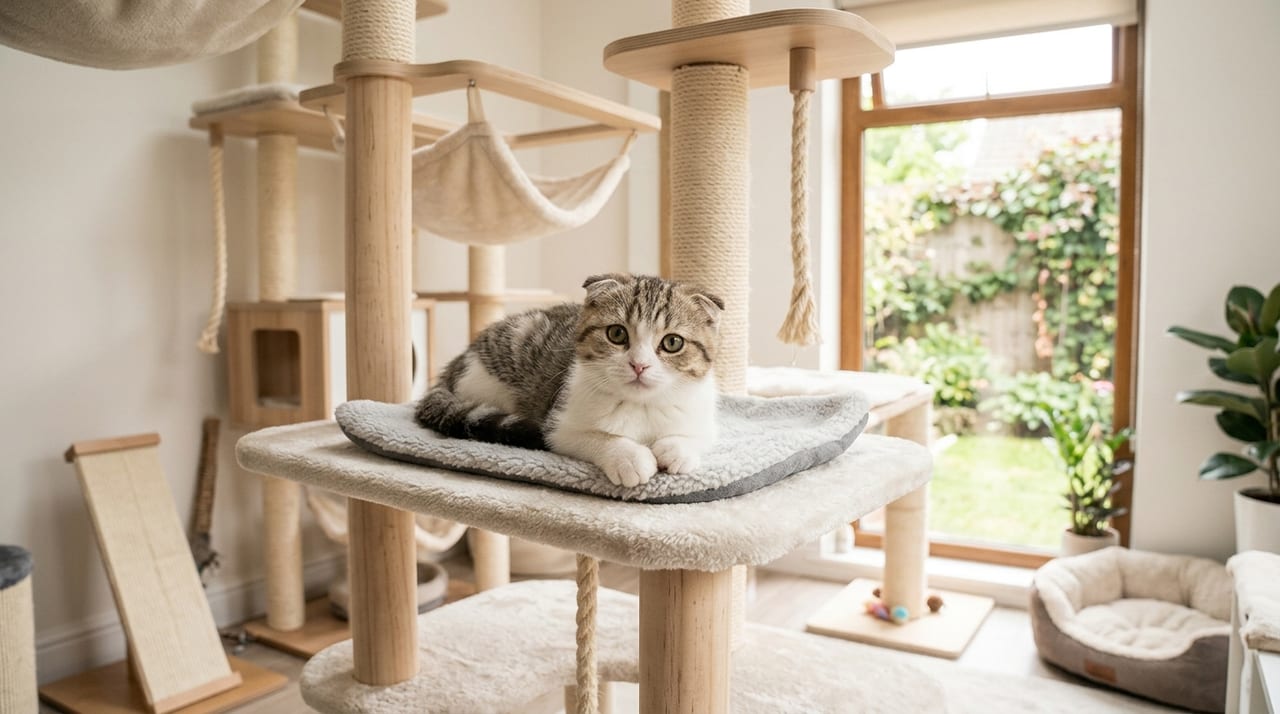
Ensuring safe resting areas: Limit access to high cat towers or areas with steps, and provide multiple soft beds or blankets in low positions. Since temperature regulation becomes difficult, offer both warm and cool places to choose from
Improving access to food and water: If arthritis or muscle weakness is present, placing food bowls on a slightly elevated stand makes eating easier. Using a water fountain (flowing-water type) for drinking helps increase water intake. If your cat becomes too weak to eat on its own, ask your veterinarian to teach you how to feed warmed food using a syringe in small amounts
Litter box placement: Cats in the end-of-life stage of kidney disease or diabetes often experience increased urination. Place multiple litter boxes near areas where the cat frequently stays, with low entrances for easy access
Decision Criteria for "Euthanasia (Humane Euthanasia)"
One of the most difficult decisions in end-of-life care is choosing euthanasia (in veterinary terms, "humane euthanasia"). While in Japan there is ethical debate around "animal euthanasia," ending suffering when pain continues with no hope of recovery is increasingly recognized as a form of compassion.
As a guideline for this decision, the "HHHHHMM Scale" proposed by Dr. Alice Villalobos is widely used. The following seven items are evaluated on 10 points each.
Hurt (pain)
Hunger (appetite)
Hydration (fluid intake)
Hygiene (cleanliness)
Happiness (emotional well-being)
Mobility (ability to move)
More good days than bad (are there more good days than bad days)
A total score of 35 points or above indicates that quality of life is being maintained.
You do not need to shoulder the decision about euthanasia alone. It is important to consult with your primary veterinarian, family, and trusted animal care professionals, and to view it as "a choice to alleviate your cat's suffering."
Grief Care After Loss
Grief following the loss of a cat profoundly affects the owner's mind and body. Pet loss is recognized as a formal grief experience, and it often follows a similar grief process to losing a human (denial, anger, bargaining, depression, acceptance).
The following methods are considered helpful in managing grief.
Organizing photos and albums
Keeping a journal or diary
Holding a memorial ceremony
Consulting with a veterinarian or pet loss counselor
Participating in online or community pet loss support groups
There is no right answer to the question "should I get another cat right away?" Allowing yourself to grieve fully and taking the next step only when you feel ready provides the foundation for building a healthy relationship with a new cat.