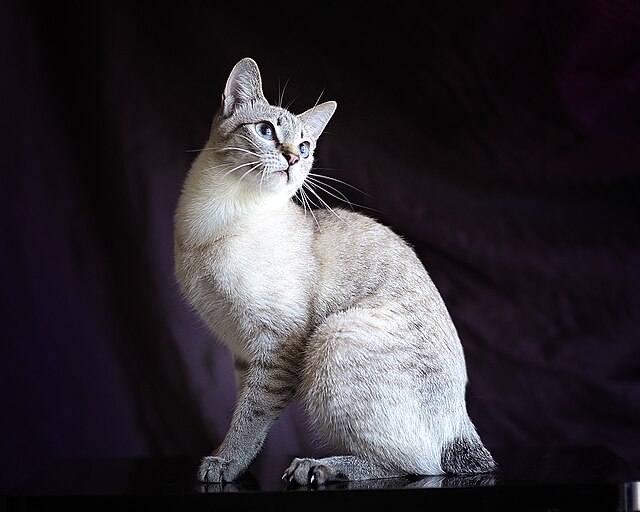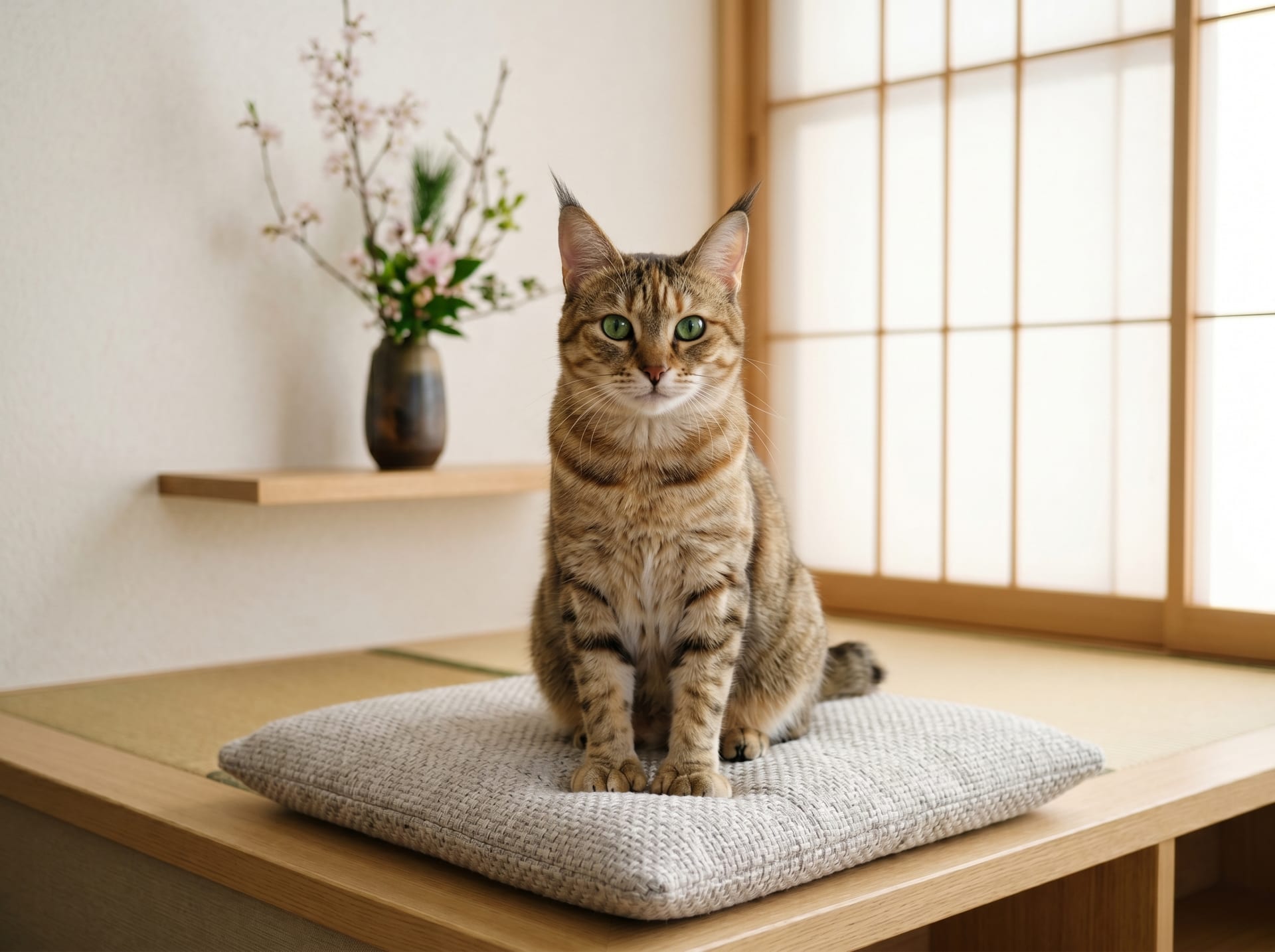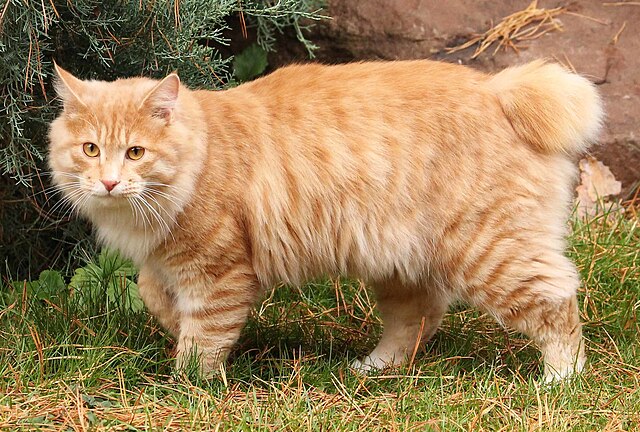
Source: Wikimedia Commons
Kurilian Bobtail
IntermediateNatural breed from the Kuril Islands. Pom-pom-like short tail and muscular build. Excellent hunter, not afraid of water.
Difficulty
Intermediate
Temperature
18〜28℃
Lifespan
15-20 years
Size
Weight 3.5-7kg
Diet
Cat food (complete nutrition)
About
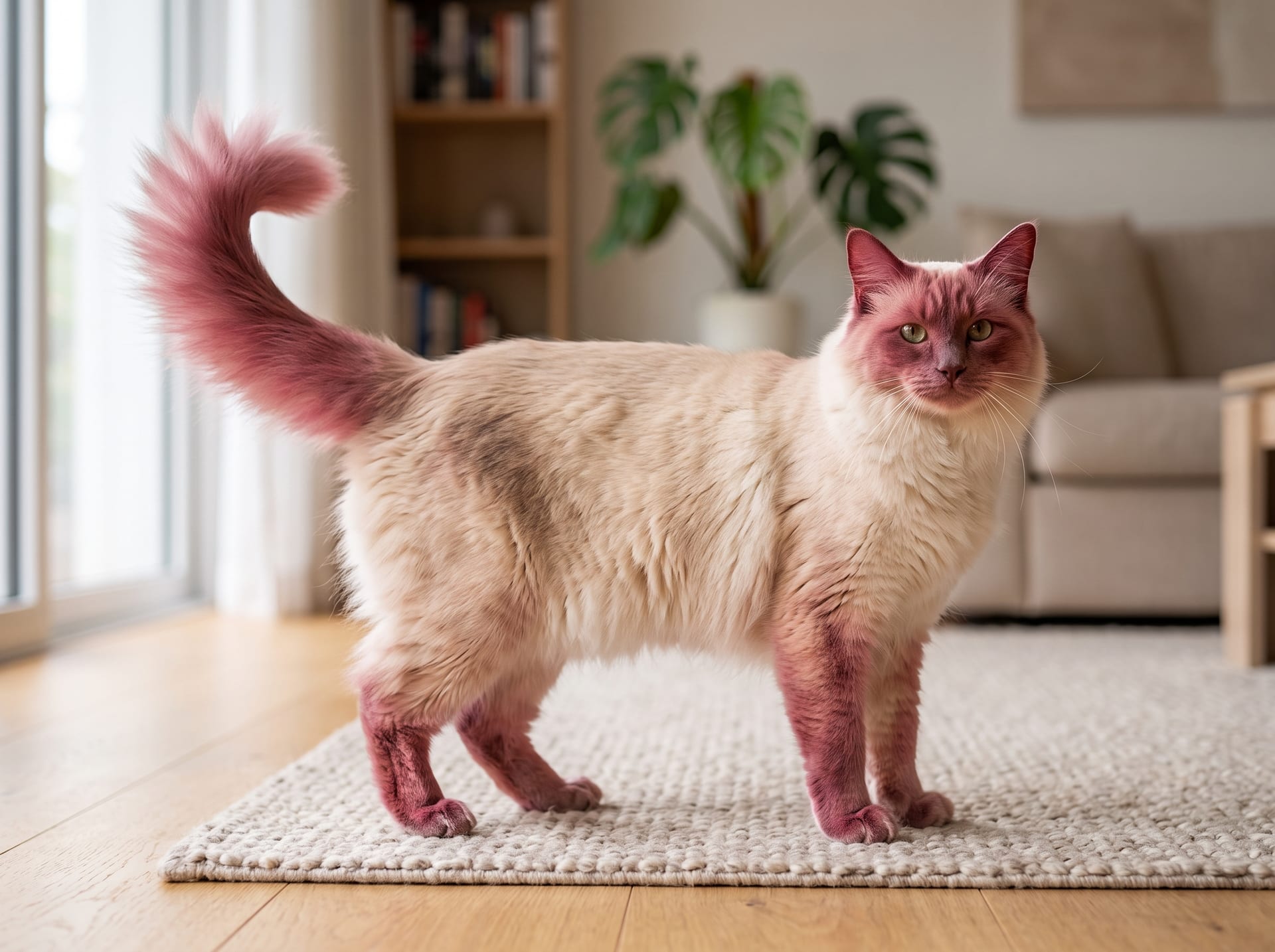
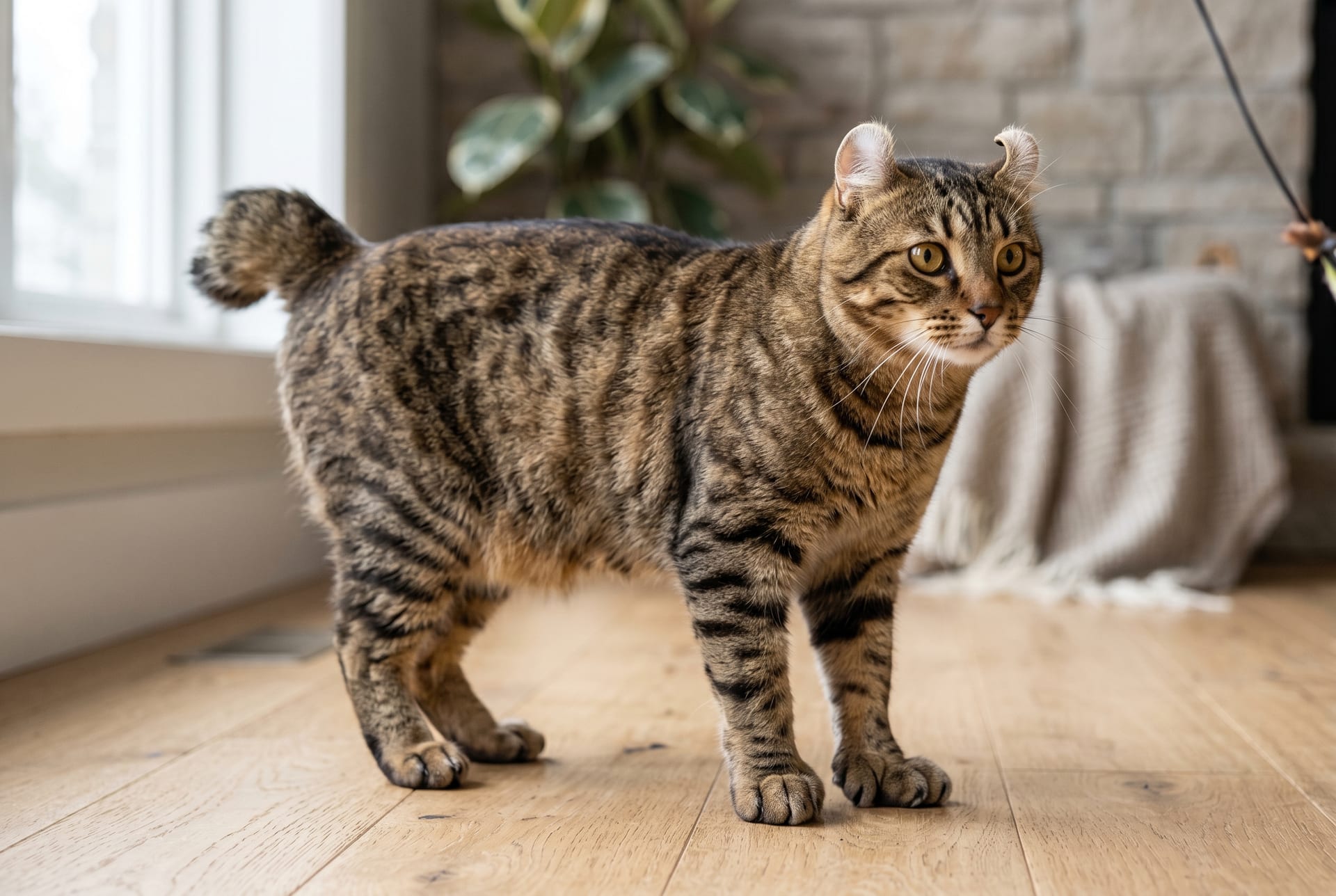
The Kurilian Bobtail is a cat breed originating from the Kuril Islands, as well as Sakhalin Island and the Kamchatka peninsula of Russia. Short- or long-haired, it has a semi-cobby body type and a distinct short, fluffy tail. The back is slightly arched with hind legs longer than the front, similar to those of the Manx. The breed is also called the Kuril Islands Bobtail, Kuril Bobtail and Curilsk Bobtail, and may be referred to without "Bobtail". It is sometimes also spelt Kurilean.
Source: Wikipedia (CC BY-SA 4.0)
Lifespan of the Kurilian Bobtail
The Kurilian Bobtail lives 15-20 years.
Size of the Kurilian Bobtail
The Kurilian Bobtail grows to Weight 3.5-7kg.
Basic Info
Origin
Kuril Islands (Russia)
Lifespan
15-20 years
Size
Weight 3.5-7kg
Temperature
18〜28℃
Diet
Cat food (complete nutrition)
Care Guide
References & Sources
Edited & verified by: BreederDirect editorial team
The taxonomic, regulatory, and husbandry data on this page are compiled and verified against the authoritative primary sources below.
Primary sources
Taxonomy & Authority
Accepted name: Linnaeus, 1758
Synonyms: Felis silvestris catus
Authority databases: GBIF · GBIF: Felis catus · TICA breed profiles
Nomenclature follows global taxonomic authority databases.
Kurilian Bobtail Listings
Loading latest listingsFind listings for this species