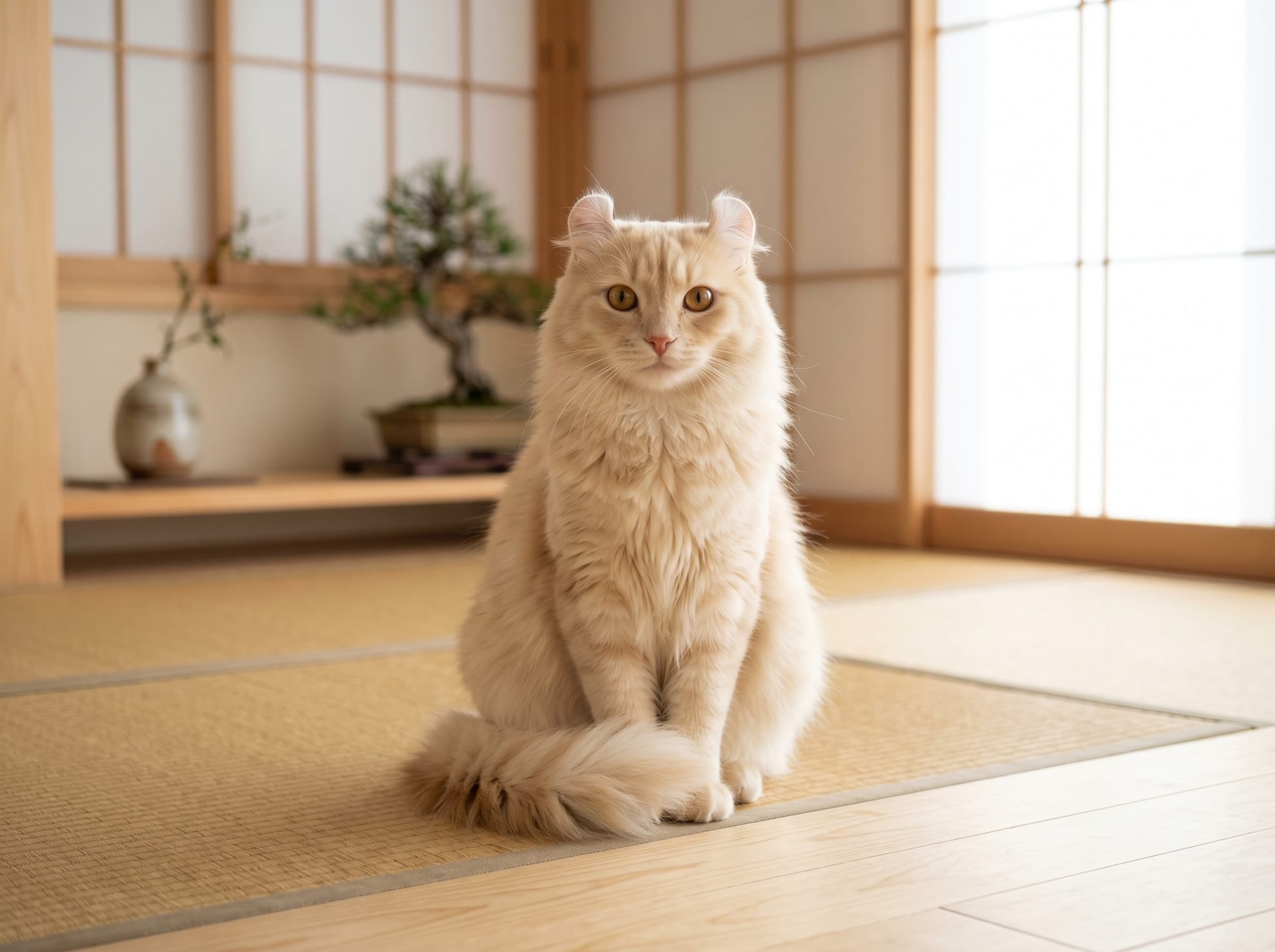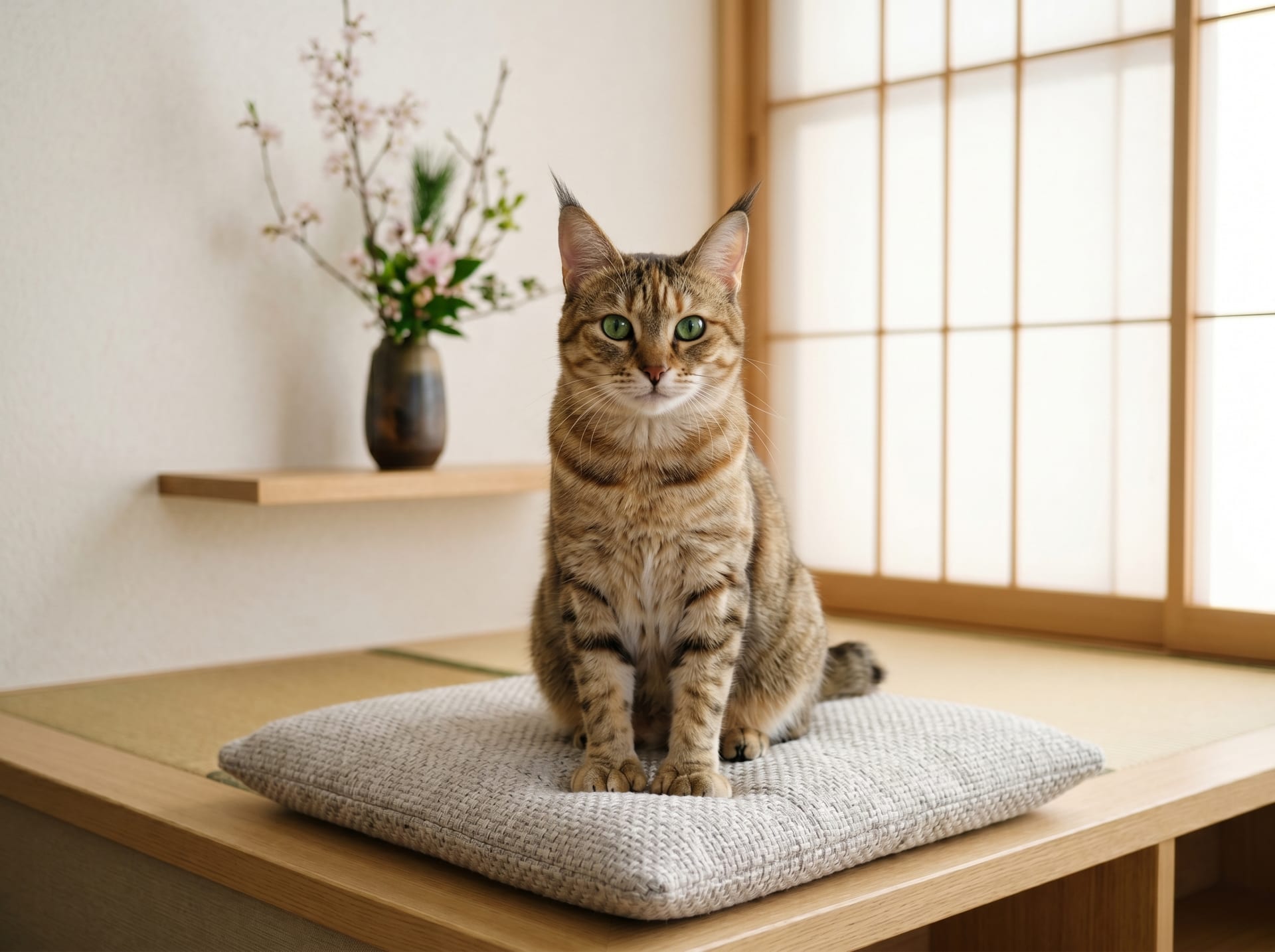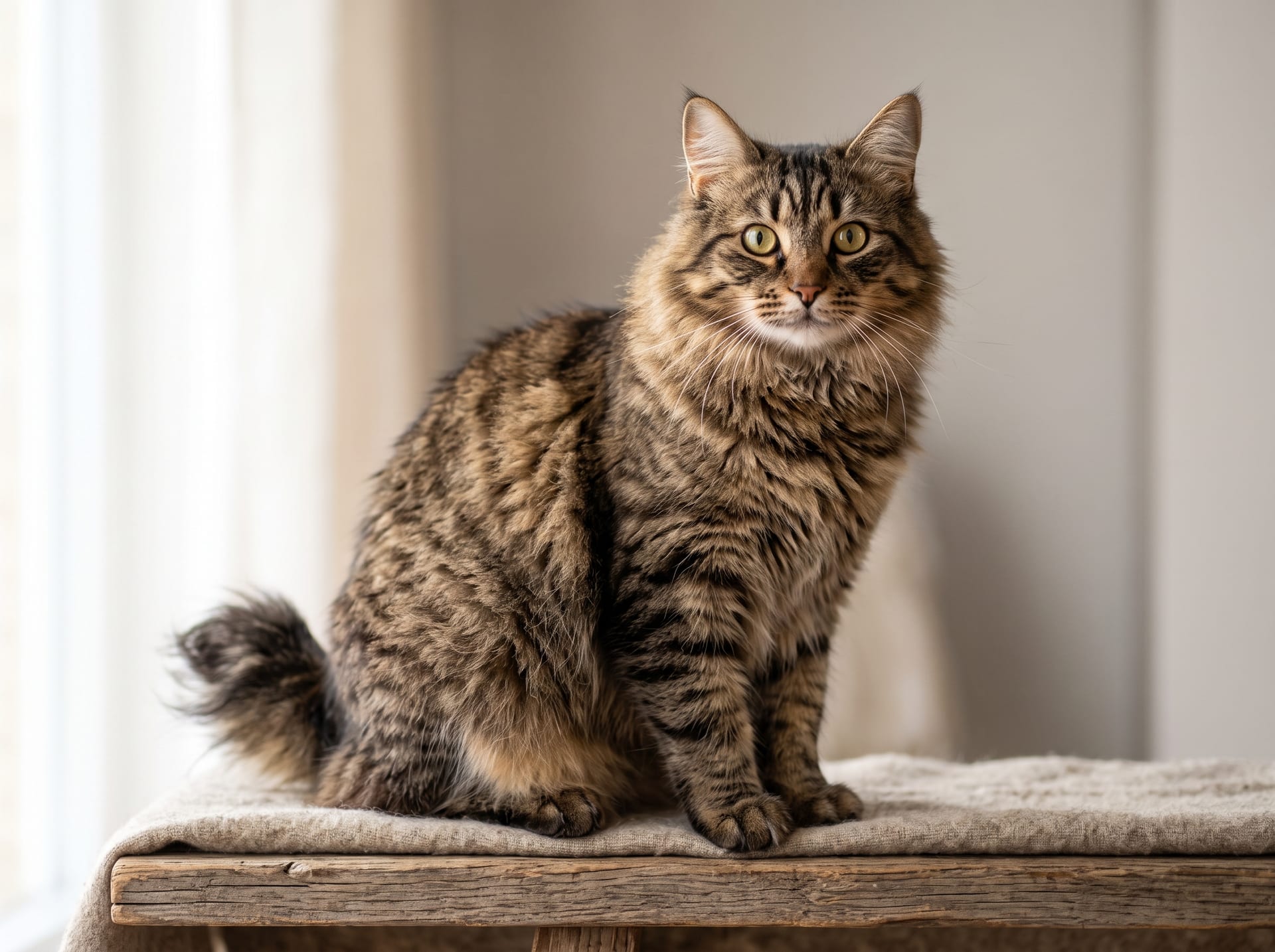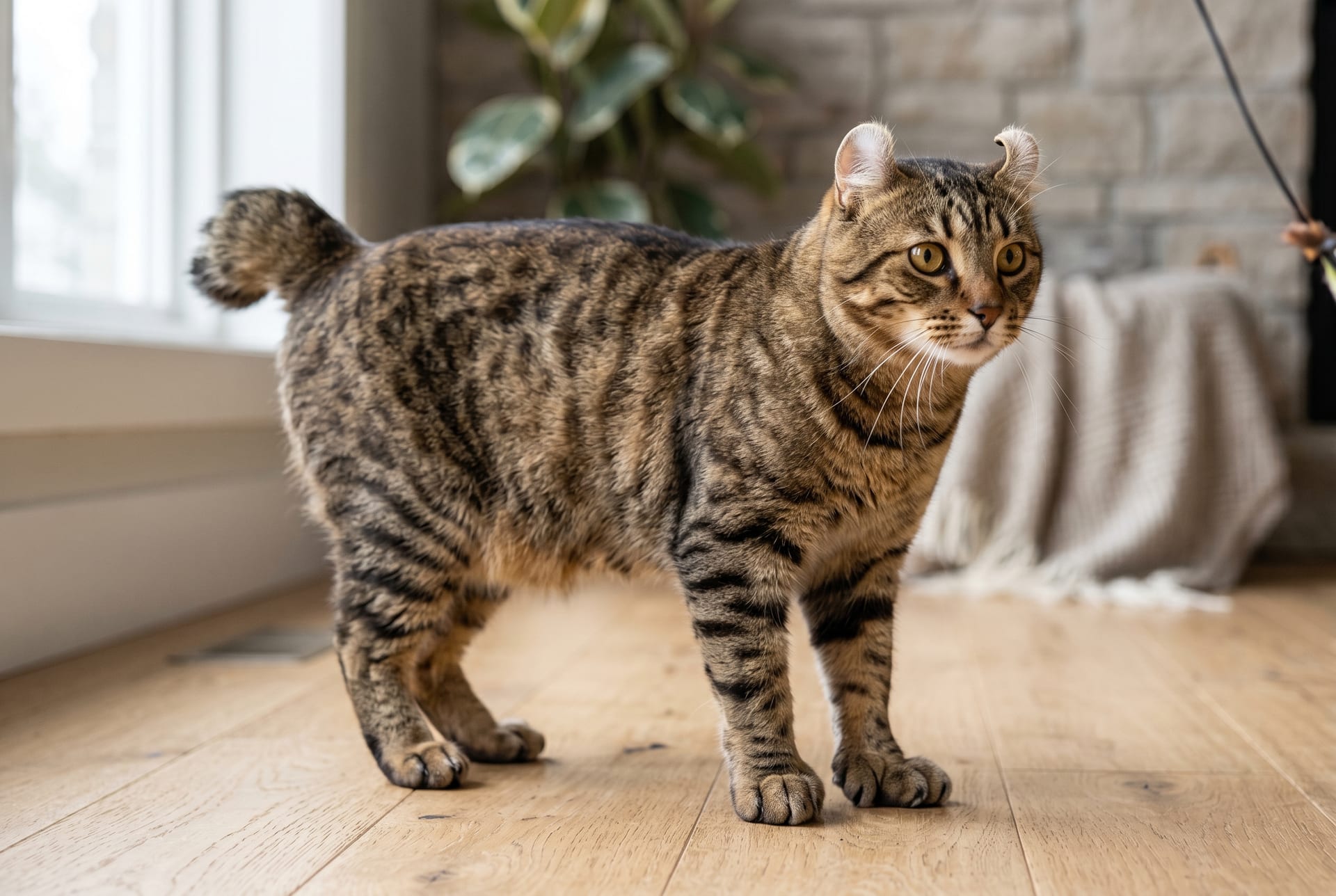
AI-generated image
Highlander
IntermediateLarge cat with curled ears and short tail. Muscular and wild-looking but very friendly and playful.
Difficulty
Intermediate
Temperature
18〜28℃
Lifespan
10-15 years
Size
Weight 4.5-11kg
Diet
Cat food (complete nutrition)
About
The Highlander is a hybrid designer breed developed in the United States in the early 2000s from crossings of Desert Lynx and Jungle Curl cats. It is characterized by its curled ears and a naturally short bobbed tail, along with a large, muscular, wildcat-like appearance. Both short-haired and long-haired varieties exist, often with striking spotted or striped coat patterns. Despite their wild look, Highlanders are highly sociable, playful, and gentle, earning a reputation for a lifelong kitten-like personality. They get along well with children and other pets. The breed is recognized by TICA as a preliminary new breed.
Lifespan of the Highlander
The Highlander lives 10-15 years.
Size of the Highlander
The Highlander grows to Weight 4.5-11kg.
Basic Info
Origin
United States
Lifespan
10-15 years
Size
Weight 4.5-11kg
Temperature
18〜28℃
Diet
Cat food (complete nutrition)
Care Guide
References & Sources
Edited & verified by: BreederDirect editorial team
The taxonomic, regulatory, and husbandry data on this page are compiled and verified against the authoritative primary sources below.
Primary sources
Taxonomy & Authority
Accepted name: Linnaeus, 1758
Synonyms: Felis silvestris catus
Authority databases: GBIF · GBIF: Felis catus · TICA breed profiles
Nomenclature follows global taxonomic authority databases.
Highlander Listings
Loading latest listingsFind listings for this species