Complete Kitten Training Guide | Toilet Training, Scratching, and Socialization
A comprehensive guide to training your kitten during the 2–4 month period. Learn successful toilet training methods, how to teach scratching areas, ways to curb biting and scratching habits, and what to introduce during the critical socialization window.
Key Takeaways
A comprehensive guide to training your kitten during the 2–4 month period. Learn successful toilet training methods, how to teach scratching areas, ways to curb biting and scratching habits, and what to introduce during the critical socialization window.
When you bring a kitten home, it's important to start training as early as possible. While cats don't learn commands like dogs do, they have the ability to develop household routines and rules. The key isn't to "train through punishment" but to "create an environment where good behavior is the natural choice." Approach training with patience, respect your kitten's pace, and make it fun.
Toilet Training | Environment Makes 90% of the Difference
Cats naturally have an instinct to eliminate on sand, so learning to use a litter box itself isn't difficult. However, if the environment isn't set up properly, they may choose to go elsewhere.
Litter Box Setup Rules
- Number guideline: The general rule is one box per cat plus one extra. For one kitten, prepare at least 2 boxes.
- Location: Place in a quiet, calm area away from food and water dishes.
- Litter types: Options range from mineral-based, wood, paper, to silica gel. Mineral-based (bentonite) is often preferred, especially as a starting point.
- Cleanliness: Ideally, remove clumps after each use. Replace all litter completely once or twice weekly.
Cats will refuse a dirty litter box. Remember: "Litter box mishaps mean either the litter doesn't suit them or the box isn't clean enough."
Training Steps
- Gently place the kitten in the litter box and softly guide their front paws to scratch the litter.
- Take them to the box after meals, right after waking from naps, and after playtime (these are peak elimination moments).
- Immediately praise with your voice or reward with a treat when they succeed.
- Use enzymatic pet cleaner to thoroughly remove odor from accidents (lingering scent encourages repeated use of the same spot).
- Never punish accidents. Fear of punishment can suppress elimination behavior entirely.
Scratching Training | Provide the Right Outlet
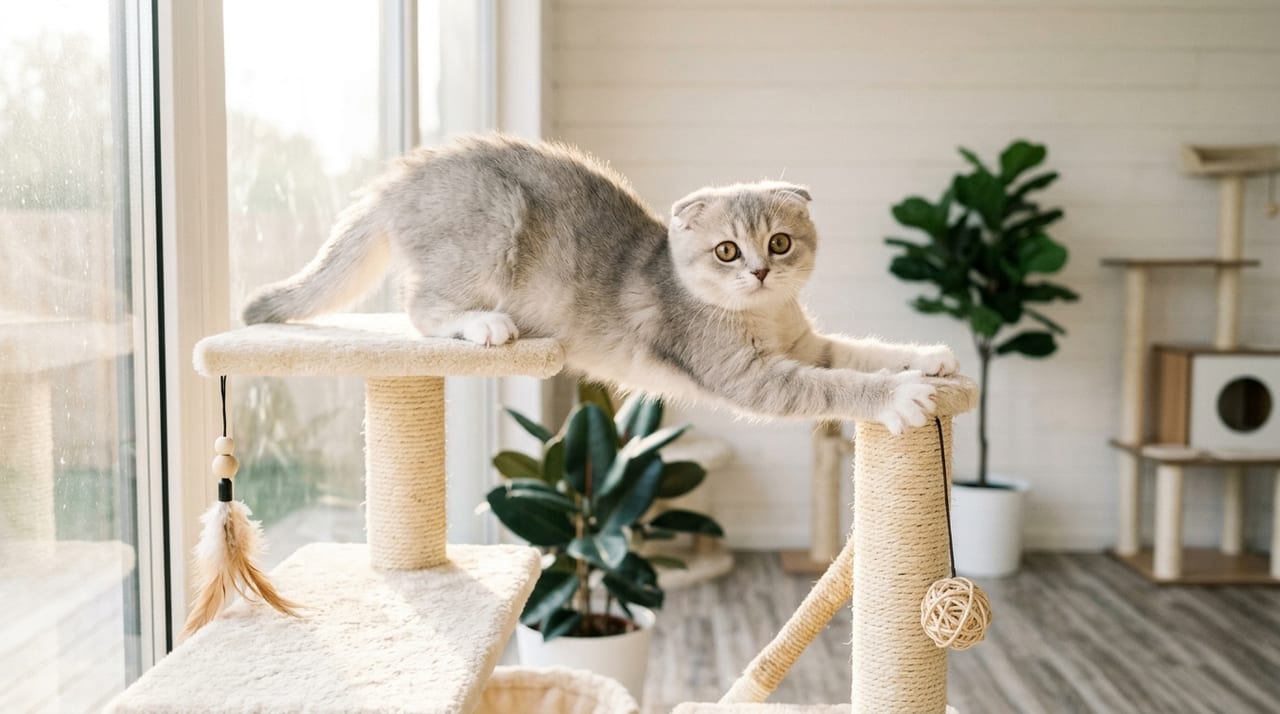
Cats scratch to shed old nail sheaths, keep claws sharp, relieve stress, and mark territory. The right approach isn't to stop them from scratching—it's to guide them to appropriate scratching surfaces.
Choosing and Placing Scratching Posts
- Try multiple types: Vertical (post-style) scratchers are popular for stretching. Many cats also enjoy horizontal (flat) or cardboard designs.
- Location is key: Place them along their frequent paths, near furniture they like, or by sleeping spots—anywhere they'd naturally want to scratch.
- Height and stability: Most cats dislike wobbly scratchers. Choose sturdy, weighted options.
Protecting Furniture
Until scratching post habits are established, cover furniture you want to protect with aluminum foil or double-sided tape—most cats dislike the texture and naturally avoid these spots. Additionally, trimming nails monthly or bimonthly greatly reduces scratching damage. Getting kittens used to nail trims early makes them more cooperative as adults.
Addressing Biting and Scratching | Teaching Play Rules
Biting and scratching are natural play behaviors for kittens. However, if they learn to treat human hands and feet as toys, these habits will persist into adulthood. Teaching boundaries early is essential.
Establishing Proper Play Habits
- Never play with bare hands or feet: Always use wand toys or rod-style toys instead.
- Stop immediately if bitten: Make a sharp "ow!" sound, freeze your hand, and end playtime. This teaches "biting ends the fun," not punishment.
- Provide alternative toys: Keep kick toys (long plush toys) and chewable rope toys available to satisfy the urge to bite.
- Ensure adequate exercise: Intense biting often means excess energy. Play multiple times daily with wand toys to provide proper outlets.
Socialization | Building Confidence Through Positive Exposure
The 2–7 week period is called the "critical socialization window," and experiences during this time shape personality for life. Even if adopting at 8–12 weeks from a breeder or rescue, socialization continues throughout their adjustment to the new home.
What to Introduce
- Different people: Expose them to men, women, children, and people wearing glasses, hats, or facial hair.
- Household sounds: TVs, washing machines, vacuums, doorbells, thunder, fireworks. Start at low volume and gradually increase.
- Carrier bag: Leave it out regularly with bedding and treats inside so it becomes a safe space. Introducing it only at vet visits creates fear associations.
- Handling: Get them accustomed to being touched on the ears, mouth, paws, nails, and teeth—this makes grooming and vet exams much easier.
Socialization isn't about forcing exposure; instead, reward with praise and treats when your kitten naturally approaches new experiences.
Teaching Name Recognition and Recall
Learning their name is crucial training that also helps ensure safety in emergencies.
- Always say their name when offering meals, playtime, or treats.
- When they approach after hearing their name, praise enthusiastically or give a small treat.
- Build the association: "hearing my name means something good happens."
- Never use their name during scolding or unpleasant situations. Pairing the name with negative experiences makes them avoid you when called.
Short names (1–2 syllables) are easier for cats to recognize and remember. Using multiple nicknames causes confusion, so stick to a single name initially.
Summary | Training Builds Trust and Bonds
The most important aspect of kitten training is not to punish and forbid, but to create an environment where good behavior is easy and to reward it when it happens. Cats can learn the connection between their actions and outcomes. Each success—using the litter box, scratching appropriately, responding to their name—deepens the bond of trust between you and your kitten.
If you hit a training challenge or want to find a kitten with an ideal personality and early socialization, consulting with a breeder is helpful. BreederDirect lets you directly purchase kittens from feline specialists and review their socialization background and temperament in advance. Through a secure marketplace and direct breeder communication, we help you find the perfect kitten for your home. Browse our cat listings to find your ideal match.