Source: Wikimedia Commons
Zebra Dove
BeginnerGeopelia striata
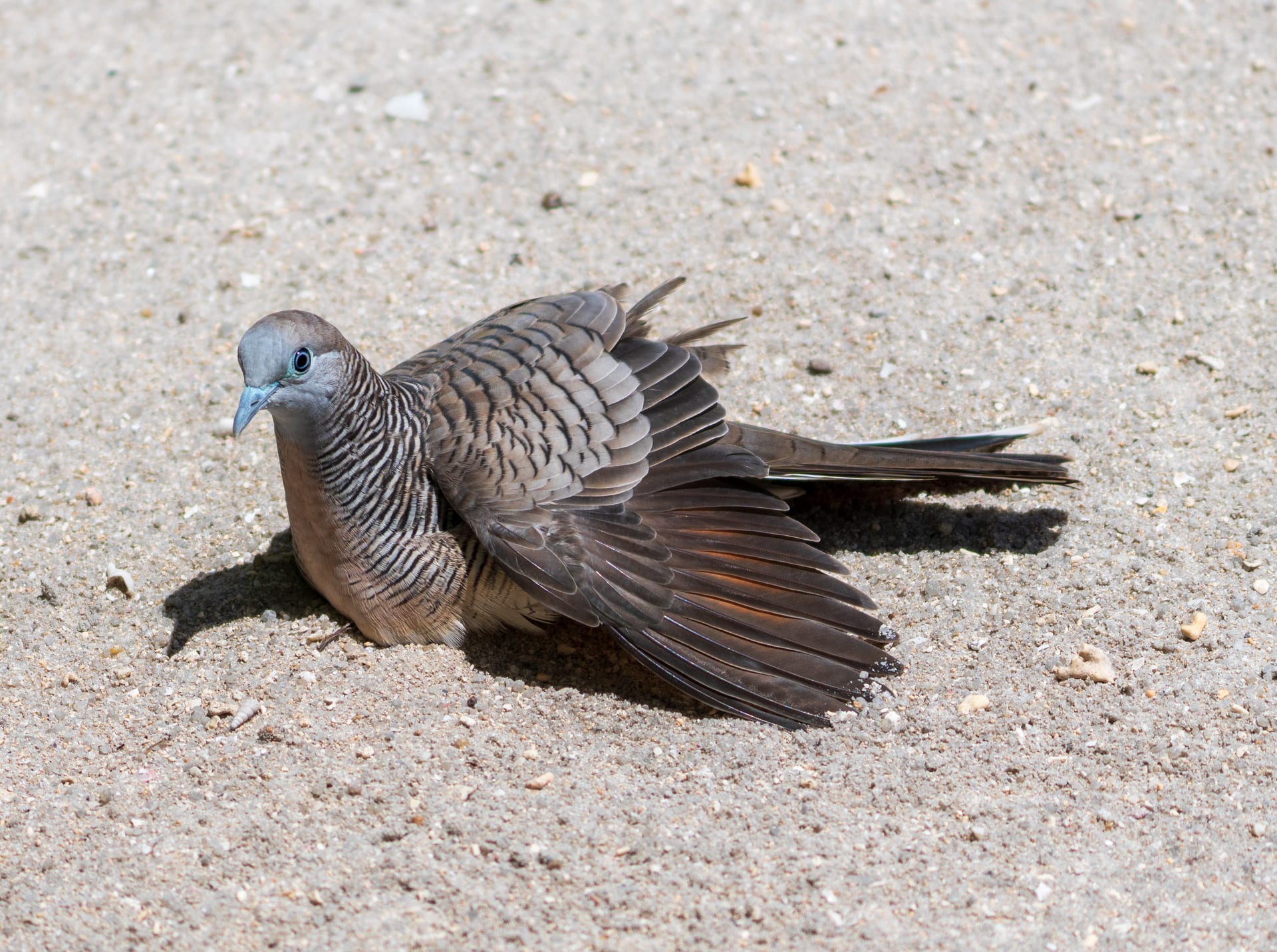
A small dove 20-23 cm long with fine barring along the flanks. Native to Southeast Asia, it is prized for its soft staccato cooing, and cooing competitions are held in Thailand and Indonesia.
Difficulty
Beginner
Temperature
15〜30℃
Lifespan
10-15 years
Size
20-23cm (wingspan 24-26cm)
Humidity
40〜60%
Diet
Small grains (millets, canary seed), greens, a calcium source and clean drinking water
About
The zebra dove (Geopelia striata), also known as the barred ground dove or barred dove, is a small dove native to Southeast Asia. It is 20-23 cm long with a wingspan of 24-26 cm and shows fine barring along the flanks. The peaceful dove of Australia and New Guinea and the barred dove of eastern Indonesia were until recently classified as subspecies of the zebra dove, so those names were often applied to the whole species; they are now treated separately. The dove is found in central Thailand, Laos, Borneo and Sulawesi, and has been introduced to Hawaii (1922), Tahiti (1950), New Caledonia, the Seychelles, the Chagos Archipelago (1960), Mauritius (before 1768), Reunion and Saint Helena, becoming one of the most abundant birds in places such as Hawaii and the Seychelles. It is known for pleasant, soft, staccato cooing calls, and in Thailand and Indonesia it is a popular pet with cooing competitions held to find the bird with the best voice. It is called perkutut in Indonesia, merbuk in Malaysia, and in the Philippines kurokutok, an onomatopoeia of its call. On choosing a nest site the female settles there and makes guttural sounds to attract a male to help build the nest.
Source: Wikipedia (CC BY-SA 4.0)
Lifespan of the Zebra Dove
The Zebra Dove lives 10-15 years.
Size of the Zebra Dove
The Zebra Dove grows to 20-23cm (wingspan 24-26cm).
Basic Info
Origin
Southeast Asia (central Thailand, Laos, Borneo, Sulawesi and beyond), introduced to Hawaii, Tahiti, the Seychelles and elsewhere
Lifespan
10-15 years
Care Specifications
PeacefulPair
Sources: Wikipedia - Zebra dove
References & Sources
Edited & verified by: BreederDirect editorial team
The taxonomic, regulatory, and husbandry data on this page are compiled and verified against the authoritative primary sources below.
Taxonomy & Authority
Accepted name: Geopelia striata (Linnaeus, 1766)
Synonyms: Columba striata
Authority databases: GBIF
Nomenclature follows global taxonomic authority databases.
Regulations & Conservation Status
Not CITES-listedIUCN LC · Least Concern
Geopelia striata. It is not listed in the CITES Appendices and does not appear in the Japanese schedule of designated dangerous animals. It has established itself where introduced, in Hawaii and the Seychelles among others, so it must not be released or abandoned.
Sources: CITES Appendices (species not listed) / IUCN Red List / Cabinet Order under the Act on Welfare and Management of Animals, appended table (designated dangerous animals)
Regulations may change. Always verify the latest information with the relevant authorities.
Zebra Dove Listings
Loading latest listingsFind listings for this species