Complete Guide to Keeping Zebra Finches and Diamond Doves | Breeding and Flock Raising of Small Birds
Explains how to care for small finches and doves such as Zebra Finches and Diamond Doves. Covers raising methods for pairs and flocks, nestbox installation and egg management, why their quiet calls make them suitable for apartments, and detailed introduction to color mutation varieties.
Key Takeaways
Explains how to care for small finches and doves such as Zebra Finches and Diamond Doves. Covers raising methods for pairs and flocks, nestbox installation and egg management, why their quiet calls make them suitable for apartments, and detailed introduction to color mutation varieties.
Related Species
The Appeal of Zebra Finches and Diamond Doves
Zebra Finches and Diamond Doves are especially popular as small birds with high sound insulation that are easy to keep even in apartments and collective housing. Both require relatively simple breeding equipment, and even beginners can enjoy breeding these species.
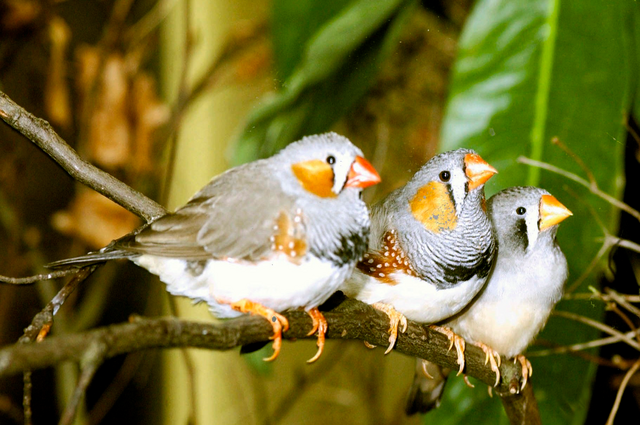
Zebra Finch (Taeniopygia guttata) is a small finch native to Australia and Indonesia, with a body length of just 10–11 cm. Males are characterized by orange cheek patches and striped patterns, and they are among the most widely kept small birds in the world. Through selective breeding, numerous color variations have emerged including White, Pied, Cream, Penguin (without chest markings), and Silver, making them highly collectable birds.
Diamond Dove (Geopelia cuneata) is a dove native to Australia and among the smallest members of the pigeon family, with a total length of about 19 cm. Their call is a low, gentle "coo…coo…" sound that is unlikely to generate complaints even in apartments. The bright red eyering around their eyes is endearing, and their temperament is extremely gentle. They have a habit of walking around on the ground, and simply watching them is soothing.
Housing and Environment Setup
The basic equipment for Zebra Finches is as follows:
- Cage: Width of 45–60 cm or more (60 cm width recommended for pairs, 90 cm or more for flock raising)
- Perches: Natural wood with a diameter of about 8–12 mm. Placing multiple branches with non-uniform diameters at different heights distributes stress on the feet
- Nestbox: If breeding is desired, install a wooden nestbox approximately 10 cm wide × 10 cm deep × 15 cm tall. Remove if breeding suppression is desired
- Temperature: Maintain 20–28°C. In winter, keep minimum temperature above 15°C using heat lamps or heating panels
Diamond Doves, being pigeons, walk around on the ground frequently.
- Cage: Ideally 60 cm or more in width with a large floor area (floor space prioritized over height)
- Nest platform: Use a shallow nestbox or commercially available pigeon nesting pan. Place small twigs, dried grass, and jute twine as nesting material, and they will build their own nest
- Bedding: A floor covered in sand is appropriate. Pigeons enjoy sand baths and consuming grit
- UVB lighting: For indoor raising, 8–10 hours daily of UVB exposure is effective for skeletal formation and immune maintenance
For both species, making complete cage cleaning about once a month a routine and cleaning the bottom tray 2–3 times per week is fundamental to maintaining health.
Diet and Nutrition Management
The staple diet for Zebra Finches is mixed grains. Commercially available finch seed mix (a blend of canary seed, millet, Italian millet, and sorghum) is convenient and provides good nutritional balance. During breeding and chick-rearing periods, adding small amounts of boiled egg or commercial egg food helps ensure stable chick growth. For vitamin and mineral supplementation, provide small daily amounts of green vegetables such as komatsuna, bok choy, and radish leaves. Cuttlebone (calcium from oyster shells) should be constantly available so brooding females can freely consume it.
The staple diet for Diamond Doves is small-grain seeds. A mixture of sorghum, millet, and Italian millet, with a small amount of small hemp seeds (fat supplementation) added is appropriate. Grit (mineral sand) should be constantly available to aid digestion. They also enjoy green vegetables, though they consume smaller amounts.
For both species, the most important thing is to provide fresh water and change it daily. Using a shallow water bath container that doubles as a water dish helps maintain feather cleanliness as well.
Breeding Management and Precautions
Zebra Finch breeding is relatively straightforward. Placing a pair in the same cage and installing a nestbox almost invariably results in natural egg-laying. One clutch is 4–8 eggs, with approximately 14 days to hatching and a further 18–21 days to fledging. After fledging, chicks are primarily fed by parents for 2–3 weeks. They have vigorous breeding ability, producing multiple clutches per year, so periodically removing nestboxes is essential to prevent overbreeding. Excessive breeding causes females' physical exhaustion.
Diamond Dove breeding occurs when the pair bond is stable; the pair will carry small twigs and grass to the nest platform and build a small nest. One clutch consists of 2 eggs, and both male and female take turns incubating. Hatching occurs in approximately 13 days, and both parents provide dedicated chick-rearing. An important precaution is that moving during incubation or frequent cage relocation causes incubation abandonment. Fix the cage in a quiet location with minimal vibration, and avoid disturbing the birds as much as possible during incubation.
For flock raising where multiple pairs breed in the same space, using a spacious cage and placing more nestboxes or nest platforms than the number of pairs reduces territorial disputes.
Calls and Suitability for Apartment Living
The calls of Zebra Finches are relatively small, high-pitched sounds such as "tetete-tuh" and "pip-pip," and they rarely generate complaints as noise. Compared to parrots, the volume is one-fifth or less. Diamond Doves are even quieter, with their low "coo…" calls barely audible through walls.
In pet-friendly apartments, both species can generally be kept without problems. However, issues other than noise (feather allergies, scattered feathers) may occur, so installing an air purifier and regular ventilation are essential.
Summary: A Deep and Rewarding Life with Small Birds
Zebra Finches and Diamond Doves check all three boxes—small size, quiet calls, and breedability—making them recommended even for beginners. On the other hand, breeding management, temperature control, and nutritional balance require appropriate knowledge and continuous observation. Especially when acquiring birds directly from a breeder, confirming the individual's health status and the breeding environment of the parent birds provides peace of mind. Individuals acquired from breeders with extensive experience and careful management typically have lower disease risk and better socialization.
Even though small, these characterful birds provide a rich experience where daily observation becomes something to look forward to.