Source: Wikimedia Commons
Northern Cardinal
IntermediateCardinalis cardinalis
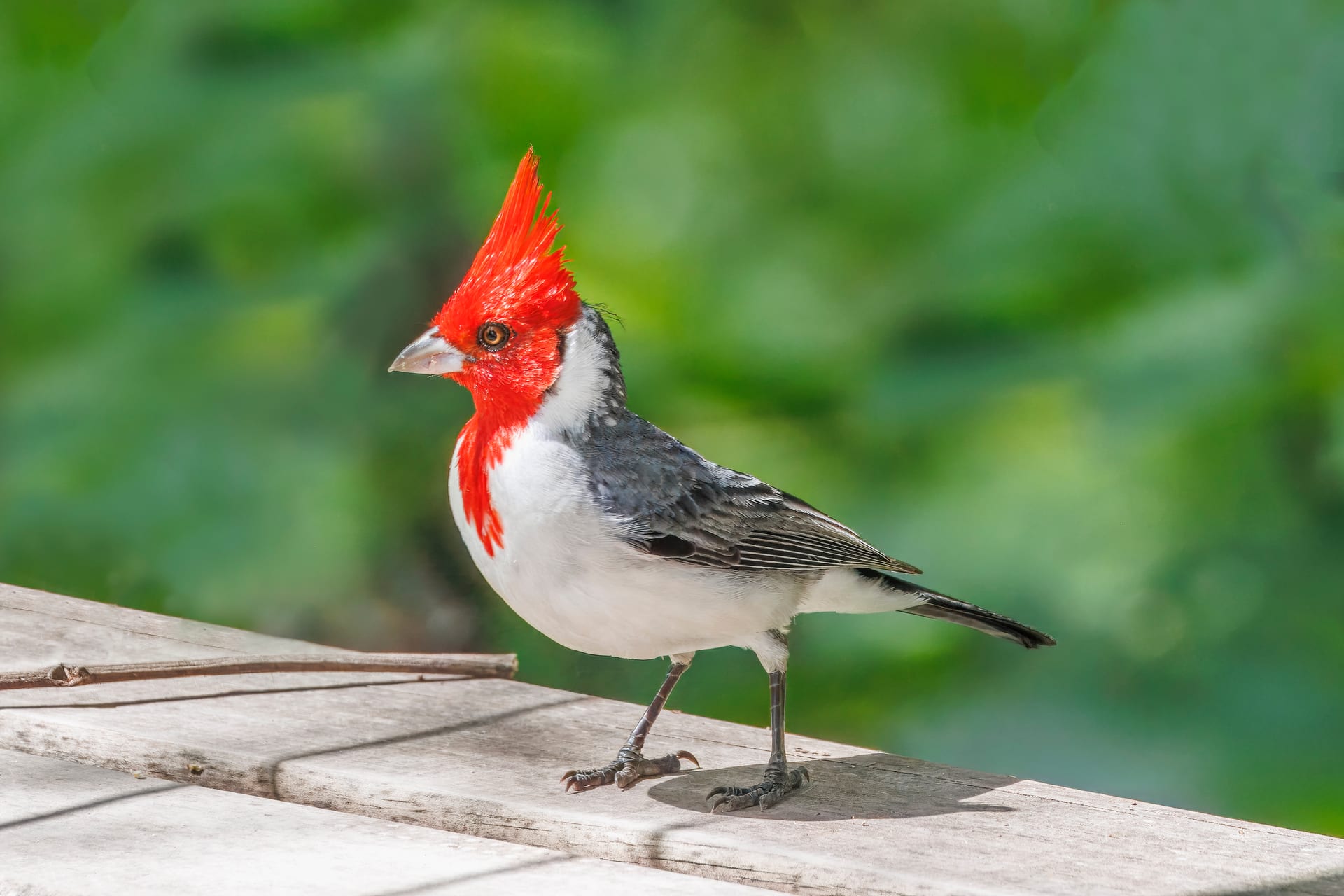
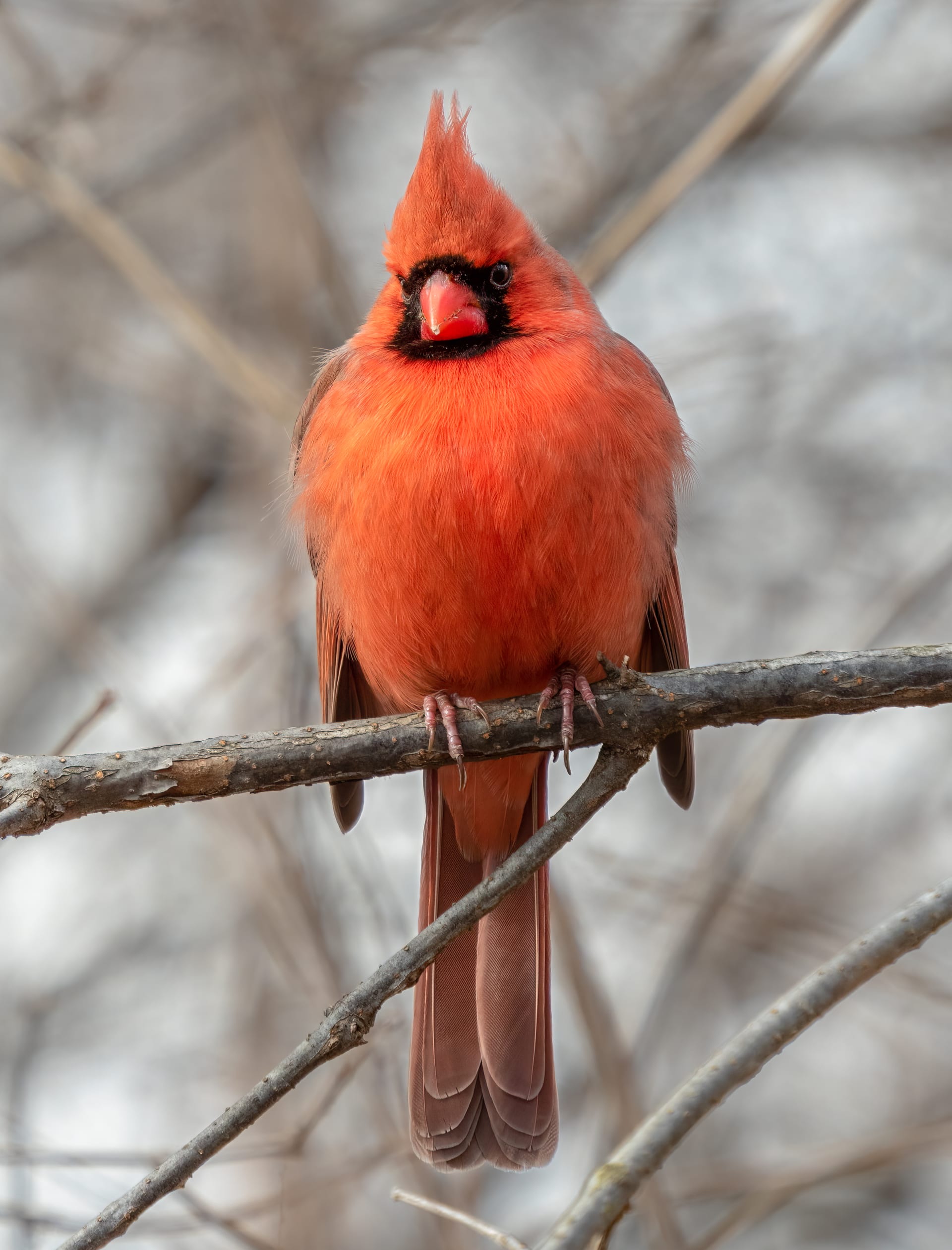
A perching songbird 21 to 23 cm long: the male is glossy red with a black facial mask and a raised crest, while the female is reddish-olive with a grey mask around the bill. It is one of the signature songbirds of eastern North America.
Difficulty
Intermediate
Temperature
15〜30℃
Lifespan
10-15 years
Size
21-23cm
Humidity
40〜60%
Diet
Mixed seed, fruit, insects and greens
About
The northern cardinal (Cardinalis cardinalis) ranges from south-eastern Canada through the eastern United States and south through Mexico, Belize and Guatemala. It has also been introduced to Bermuda and to all the major Hawaiian islands, where it has been established since 1929. The sexes differ: the male is a vibrant glossy red with a black facial mask and a larger crest, while the female is reddish-olive with a grey mask around the bill. Juveniles have greyish-black bills and do not gain the orange-red bill until they acquire adult plumage in the autumn. It lives in woodland, gardens, shrubland and wetland. Mainly granivorous, it also takes insects and fruit, and the male marks his territory by song. In courtship the male passes seed to the female beak-to-beak. Clutches hold three or four eggs and two to four are raised each year. It was once prized as a pet, but its sale in the United States was banned by the Migratory Bird Treaty Act of 1918.
Source: Wikipedia (CC BY-SA 4.0)
Lifespan of the Northern Cardinal
The Northern Cardinal lives 10-15 years.
Size of the Northern Cardinal
The Northern Cardinal grows to 21-23cm.
It is 21 to 23 cm long, weighs about 50 g and carries a crest.
Basic Info
Origin
South-eastern Canada, the eastern United States, Mexico, Belize and Guatemala
Lifespan
10-15 years
Size
21-23cm
Care Specifications
Semi-aggressivePairBreeding: Moderate
Sources: Wikipedia - Northern cardinal (size, sexual dimorphism, range, introductions, habitat, diet, breeding, trade restriction) / Japanese Wikipedia - Shojo-kokanchо (about 21 cm, about 50 g, morphology) / IOC World Bird List v15.2 (scientific name, authority, English name, range)
References & Sources
Edited & verified by: BreederDirect editorial team
The taxonomic, regulatory, and husbandry data on this page are compiled and verified against the authoritative primary sources below.
Primary sources
- Wikipedia
- CITES Appendices (Cardinalidae not listed)
- Annex to Council Regulation (EC) No 338/97 as amended by Commission Regulation (EU) 2026/1383 (post-CoP20)
- Ministry of the Environment, Japan - List of Invasive Alien Species designated under the IAS Act (birds)
- IUCN Red List
- Japanese Wikipedia - Shojo-kokanchо (about 21 cm, about 50 g, morphology)
- IOC World Bird List v15.2 (scientific name, authority, English name, range)
- GBIF
Taxonomy & Authority
Accepted name: Cardinalis cardinalis (Linnaeus, 1758)
Synonyms: Loxia cardinalis
Authority databases: GBIF
Nomenclature follows global taxonomic authority databases.
Regulations & Conservation Status
Not CITES-listedIUCN LC · Least Concern
Cardinalis cardinalis belongs to the family Cardinalidae and appears in none of the CITES Appendices. It is not designated an Invasive Alien Species in Japan. In its native United States, however, its sale is prohibited under the Migratory Bird Treaty Act of 1918. The IUCN assesses it as Least Concern.
Sources: CITES Appendices (Cardinalidae not listed) / Annex to Council Regulation (EC) No 338/97 as amended by Commission Regulation (EU) 2026/1383 (post-CoP20) / Ministry of the Environment, Japan - List of Invasive Alien Species designated under the IAS Act (birds) / IUCN Red List
Regulations may change. Always verify the latest information with the relevant authorities.
Northern Cardinal Listings
Loading latest listingsFind listings for this species