Differences Between Neon Tetras and Cardinal Tetras | Comprehensive Comparison of Lifespan, Cost, and Care Difficulty
A comprehensive comparison of neon tetras and cardinal tetras. Learn how to tell them apart by their red line patterns, their lifespans (2–3 years vs. 3–5 years), costs, care difficulty, and compatibility with tankmates—so you can decide which is right for you.
Key Takeaways
A comprehensive comparison of neon tetras and cardinal tetras. Learn how to tell them apart by their red line patterns, their lifespans (2–3 years vs. 3–5 years), costs, care difficulty, and compatibility with tankmates—so you can decide which is right for you.
Related Species
Neon Tetras vs. Cardinal Tetras: What's the Difference? Basic Profiles
"Neon Tetra" and "Cardinal Tetra" have long been beloved beginner tropical fish. Both are small characin fish with striking blue-and-red contrast, and they're staple offerings at any aquarium shop. Yet many beginners find them virtually indistinguishable at first glance.
In reality, they differ in appearance, care difficulty, lifespan, and price. This article provides a thorough comparison to help you choose the perfect species for your aquarium.
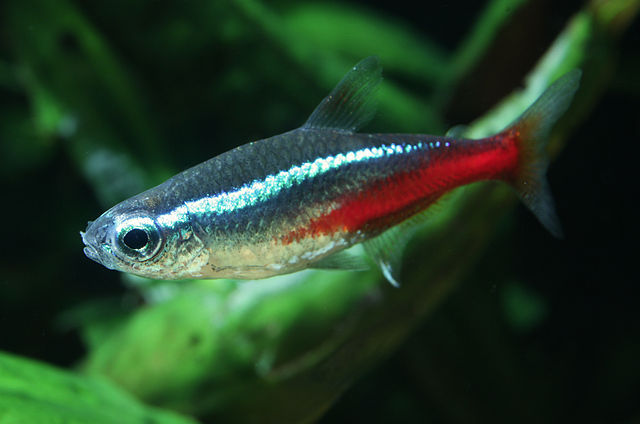
Neon Tetra (Paracheirodon innesi) Native to the upper Amazon River region of Peru in South America. Growing to about 2.5–3 cm in length, this iconic tropical fish has been in the hobby since the 1950s. Hardy and adaptable to a wide range of water conditions, it's beloved worldwide as an ideal beginner fish.
Cardinal Tetra (Paracheirodon axelrodi) Also from South America, native to the Rio Negro region of Colombia and Brazil. Slightly larger at 3.5–4 cm, it bears a striking resemblance to the neon tetra but boasts more vibrant coloration and a longer lifespan. It enjoys a devoted following among collectors.
Visual Differences Explained in Detail
If you struggle to tell them apart, here's how to distinguish them reliably.
Quick Identification Guide
| Identification Point | Neon Tetra | Cardinal Tetra |
|---|---|---|
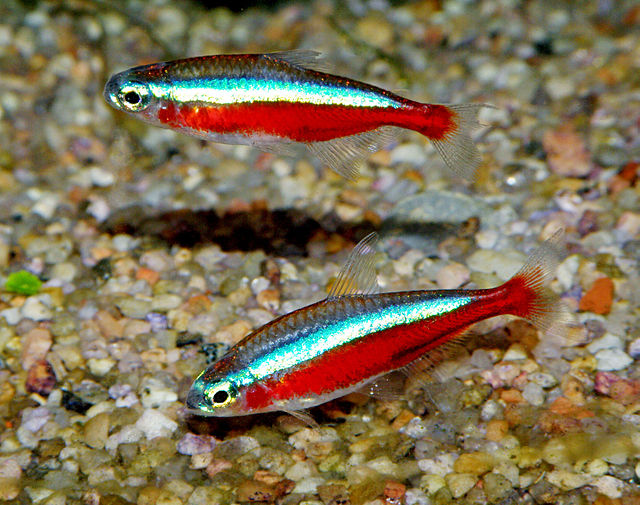
| Red line extent | Rear half only (lower belly to tail) | Head behind eye to tail (entire body) |
| Body length | About 2.5–3 cm | About 3.5–4 cm |
| Color intensity | Pale and delicate | Deep and vibrant |
| Origin | Peru (upper Amazon) | Colombia & Brazil (Rio Negro) |
| Scientific name | Paracheirodon innesi | Paracheirodon axelrodi |
| Reference price | 50–100 yen per fish | 100–200 yen per fish |
The Red Line Range: The Definitive Difference
The most reliable way to tell them apart is the extent of the red line (red coloration) along the body.
- Neon Tetra: The red line appears only on the rear half (lower belly to tail). The blue line runs along the back from head to tail.
- Cardinal Tetra: The red line runs from just behind the head all the way to the tail fin, covering the entire body. The blue line is equally vibrant. Cardinals have a noticeably wider red area overall.
When side-by-side, the difference is obvious, but a single fish can be tricky to identify. A useful rule of thumb: if red covers more than half the body, it's likely a cardinal.
Build and Color Intensity
Cardinal tetras are noticeably larger than neon tetras and display richer, more saturated colors overall. Many aquarists note that cardinals have more "presence" in a tank and shine as featured fish in mixed communities. Neon tetras have a delicate, compact charm and pair well in smaller tanks or alongside other species for good visual balance.
Care Difficulty and Water Quality Differences
Water Condition Tolerance
| Parameter | Neon Tetra | Cardinal Tetra |
|---|---|---|
| Care difficulty | ★☆☆☆☆ (beginner-friendly) | ★★☆☆☆ (requires some attention) |
| Ideal temperature | 22–28°C | 24–28°C |
| Ideal pH | 6.0–7.5 | 5.5–7.0 |
| Ideal hardness | Fairly wide range | Prefers soft water |
| Lifespan | 2–3 years | 3–5 years |
| Reference price | 50–100 yen per fish | 100–200 yen per fish |
Neon tetras tolerate water condition fluctuations well and can adapt even if pH and hardness drift somewhat. This flexibility is the main reason they're labeled "beginner-friendly." Cardinal tetras, by contrast, strongly prefer soft, slightly acidic water. When conditions drift, their colors may fade and they may become stressed.
Tips for Success with Cardinal Tetras
Consider these pointers to keep your cardinals thriving:
- Use soil substrate: Naturally lowers pH and makes it easier to maintain a soft-water environment
- Leaf litter or peat moss: Help acidify the water
- Frequent but modest water changes: Avoid drastic swings in water chemistry
- Choose compatible tankmates carefully: Avoid fish that prefer alkaline conditions
Cardinal tetras pair exceptionally well with planted tanks (Nature Aquarium style). With CO₂ injection and soil substrate, they become considerably easier to maintain.
Schooling Beauty: How Many Fish Form a School?
Both species reveal their true beauty when schooled together. Solitary fish can look dull, but a group of 10 or more moving in unison is breathtaking.
Ideal School Sizes
- Minimum: 5–6 fish (below this, they don't school effectively)
- Recommended: 10–20 fish (more is better within tank capacity)
- Large tanks: 30–50+ fish create a flowing, wave-like display
Neon tetras' affordability makes large schools accessible. Thirty neon tetras in a 60 cm tank costs around 3,000 yen—budget-friendly for a spectacular display. Cardinal tetras cost 2–3 times as much in equivalent numbers, but their richer colors and impressive size make even smaller groups visually striking.
Which Should You Choose?
Neon Tetras Are Right For You If:
- You're new to the hobby and want to master the basics
- You want to create a beautiful large school on a budget
- Your tank is 30–45 cm
- You prefer minimal fuss with water parameters
- You want to enjoy tropical fish casually, even with children
Cardinal Tetras Are Right For You If:
- You prioritize vibrant coloration and visual appeal
- You want to keep the same fish long-term (3–5 years)
- You have an established planted tank with aquascaping
- You're ready to manage more delicate water chemistry
- You want a visually commanding fish as your tank's focal point
If you're undecided, a classic approach is to start with neon tetras to learn the fundamentals, then graduate to cardinals as your skills improve. You can even keep both in the same tank—the sight of two red-line patterns swimming gracefully together is uniquely beautiful.
Summary
To recap the key traits of each:
- Neon Tetra excels in beginner-friendliness, affordability, and hardiness. Easy to school and forgiving of water chemistry, they're the ideal first tropical fish.
- Cardinal Tetra boasts full-body red lines, vibrant coloration, and impressive longevity. They demand more attention to water conditions, but their visual impact in a carefully planted tank is unmatched.
For either species, purchasing healthy fish from a trusted breeder is the foundation of long-term success. BreederDirect features tropical fish breeders selling directly, so you can review origin and rearing conditions before buying. Without shop markups in between, you'll find quality fish at fair prices and can ask breeders questions before purchase. Whether selecting your first tetras or hunting for rare collectibles, BreederDirect is your resource.