Why Neon Tetra and Cardinal Tetra Breeding Is Considered Difficult
Neon tetras (Paracheirodon innesi) and cardinal tetras (Paracheirodon axelrodi) are renowned as beginner-friendly tropical fish. Most aquarium hobbyists start with one of these species, yet success stories of breeding them are surprisingly rare. The reason lies in their natural habitat.
Neon and cardinal tetras inhabit the upper reaches and tributaries of the Amazon River, particularly in ultra-soft, extremely acidic blackwater (pH 4.5–6.0) with a dark brown hue. This environment is virtually the opposite of tap water in most regions. Recreating these conditions in an aquarium is the first and greatest obstacle to successful breeding.
Additionally, both species are broadcast spawners (open spawners) that produce extremely small eggs, with fry and eggs being extraordinarily light-sensitive (they die when exposed to light). Without proper management, even if spawning occurs, eggs and fry can be completely wiped out.
Understanding the Difference Between Neon and Cardinal Tetras
Before attempting to breed these fish, familiarize yourself with their key differences.
| Parameter | Neon Tetra | Cardinal Tetra |
|---|
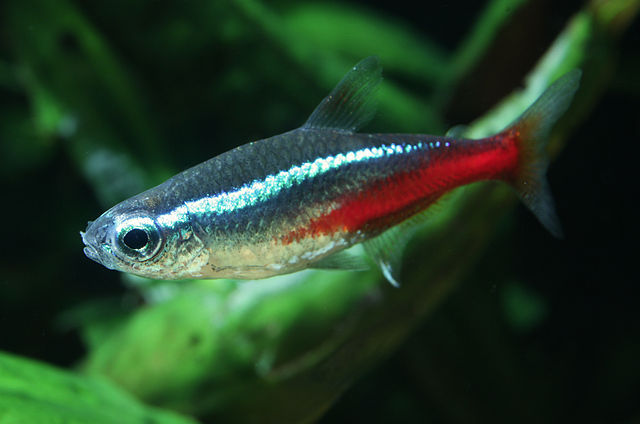
| Red stripe | Posterior belly only | Extends across entire belly |
| Body size | 3–4 cm | 4–5 cm |
| Water quality adaptability | Moderately wide (pH 5.5–7.5) | Narrow (pH 5.0–6.5 safest) |
| Breeding difficulty | Somewhat high | Very high |
| Availability | Almost exclusively cultured | Mostly wild-caught |
Cardinal tetras have stricter water requirements, making them significantly harder to breed. For your first attempt, neon tetras are the more realistic choice.
Creating the Proper Water Conditions for Breeding
Target Water Parameters
| Parameter | Target Value |
|---|
| pH | 5.0–6.5 (neon) / 4.5–6.0 (cardinal) |
| General Hardness (GH) | 0–4°dH (as soft as possible) |
| Carbonate Hardness (KH) | 0–2°KH |
| Temperature | 26–28°C |
| Nitrite and nitrate | As close to zero as possible |
| Electrical conductivity (EC) | 50–150 µS/cm |
How to Achieve Soft, Acidic Water
Using RO water (reverse osmosis water) is the most reliable approach. Pure water from an RO purifier has nearly zero hardness and neutral pH; add tannin sources (magic leaves or peat moss) to lower the pH.
- Magic leaves (Monkeypod leaves): Sink one leaf per 10 liters of tank water as a guide. pH typically drops 0.5–1.0 within about a week.
- Peat moss filter: Place peat moss in an external filter's media compartment and run water through it for continuous pH control.
- Commercial blackwater additives (e.g., Sera Black Peat, JBL Torfgranulat): Convenient, but effects vary in consistency.
In regions with hard tap water—such as Tokyo or Osaka—reaching target parameters without RO water is practically impossible.
Setting Up a Breeding Tank
A dedicated spawning tank is strongly recommended for breeding.
Basic Setup
- Tank size: 30–45 cm (smaller is easier to maintain)
- Lighting: Minimal or off (eggs and fry are light-sensitive and easily die)
- Filter: Sponge filter (doesn't suck up fry and provides biological filtration)
- Substrate: None (bare-bottom) is ideal; makes checking the bottom easy after spawning
- Spawning medium: Place fine-leaved plants (riccardia or sprite), willow moss, or spawning mops
The Importance of Light Blocking
Cover all four sides of the spawning tank with black plastic sheeting or cardboard to block light completely. Neon and cardinal tetra eggs stop developing or die when exposed to light—this step is essential. Continue blocking light for 3–4 days even after eggs hatch.
The Breeding Process: From Conditioning to Fry Rearing
Step 1: Conditioning Parent Fish (Start 2–3 Weeks Prior)
Separate the male and female into individual conditioning tanks (or divided tanks) and feed them high-quality live and frozen foods.
- Frozen brine shrimp (2–3 times daily)
- Daphnia
- Frozen bloodworms (2–3 times weekly)
When the female's belly becomes visibly rounded, she's ready to spawn.
Step 2: Inducing Spawning
After conditioning, place the male and female together in the spawning tank.
Temporarily lowering the temperature to 24–25°C and then raising it back to 28°C can trigger spawning (mimicking seasonal temperature fluctuations). Adding small amounts of fresh soft, acidic water also works well.
Spawning typically occurs early morning to late morning. The female will curve her body near the spawning medium while the male positions himself alongside her in a T-shaped formation (the spawning embrace).
Approximately 100–400 eggs are laid; they are transparent and nearly invisible, so careful observation is necessary.
Step 3: Post-Spawning Egg Care
Remove the parent fish immediately after spawning. Tetras eat their own eggs, so leaving them in the tank is strictly forbidden.
Eggs attach to spawning media or the tank bottom. Keep them in darkness at 28°C in acidic conditions. Adding a very small amount of methylene blue (about 1/10–1/5 of standard dosage) effectively prevents fungal growth.
Incubation time: 24–36 hours (depending on temperature and water quality)
Step 4: Fry Management (The Most Challenging Phase)
Newly hatched fry are 0.5 mm or smaller and barely visible to the naked eye. Continue blocking light for 3–4 days until fry absorb their yolk sacs and begin swimming independently.
Initial feeding is the biggest hurdle.
| Food Type | Characteristics |
|---|
| Paramecia (infusoria) | Smallest initial food; requires home culturing |
| Daphnia nauplii | Feed 2–3 days after fry can eat paramecia |
| Brine shrimp nauplii | Can feed after fry reach approximately 5 mm |
Paramecia are typically cultured by placing commercially available "paramecia cultures" (available online) in containers with Ebios tablets, wheat straw, or hay to encourage growth.
Step 5: Growth Management
Fry are extremely small and sensitive to water quality changes.
- Water changes: 1–2 times daily at 10–20% of tank volume (avoid sudden changes)
- Lighting: Introduce light gradually once fry reach 5 mm or longer
- Change water quality: Always use RO-based soft, acidic water to match tank conditions
- Avoid overcrowding: Cramped conditions lead to cannibalism and oxygen depletion
Once fry reach 1.5–2 cm, they can eat standard fine powdered foods, making management significantly easier.
Common Failure Points and Solutions
Failure Example 1: All Eggs and Fry Died
Cause: Insufficient light blocking, sudden water quality changes, or fungal growth
Solution: Completely block light in the spawning tank and add a small amount of methylene blue; perform water changes carefully in small amounts.
Failure Example 2: Fish Won't Spawn
Cause: Insufficient conditioning, water parameters off target, or mismatched male/female
Solution: Ensure the female is visibly full-bodied before introducing them; remeasure pH and hardness and adjust toward target values.
Failure Example 3: Fry Disappear
Cause: Fry are too small to see, or initial food is inappropriate
Solution: Feed paramecia daily in small amounts; use a pipette to remove debris from the bottom.
Summary: Worth the Challenge Because It's Difficult
Neon and cardinal tetra breeding is an advanced challenge in tropical fish keeping. However, if you establish four conditions—ultra-soft water, acidic pH, light blocking, and proper initial feeding—success is absolutely achievable.
The joy of success is incomparable. Watching tiny millimeter-sized fry grow in crystal-clear water is the very essence of being a tropical fish breeder. Challenge yourself to breed these beautiful tetras while gradually establishing the proper environment.