Introduction to Selective Breeding of Tropical Fish | How to Challenge Selective Breeding of Guppies and Bettas
Explanation of how to begin selective breeding and selective crossing of guppies and bettas. Introduces basic genetic knowledge, selection criteria, lineage management, and tips for increasing fixation rates.
Key Takeaways
Explanation of how to begin selective breeding and selective crossing of guppies and bettas. Introduces basic genetic knowledge, selection criteria, lineage management, and tips for increasing fixation rates.
Related Species
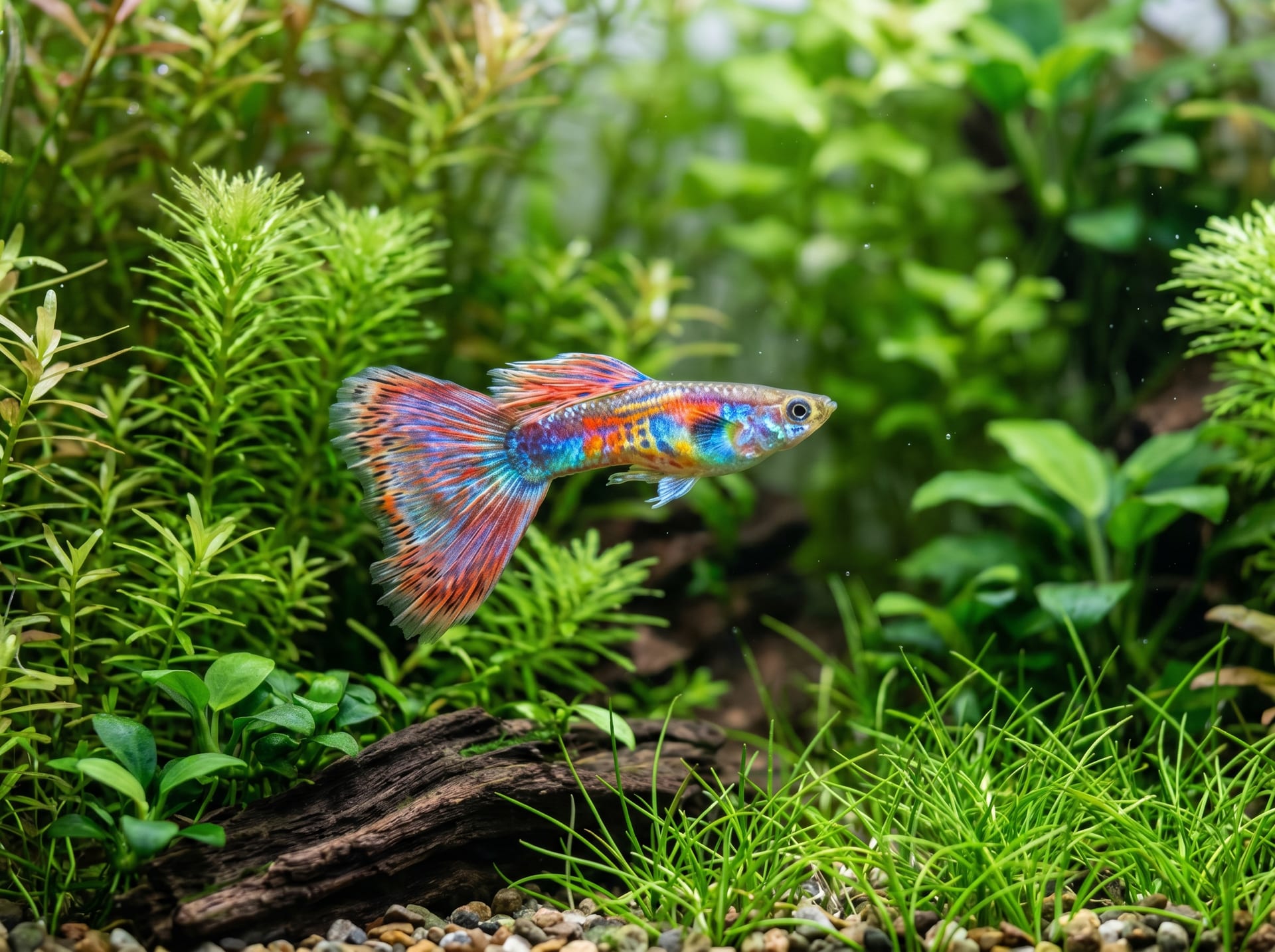
As you continue keeping tropical fish, many people eventually develop the dream of "creating their own unique variety." Guppies and bettas have a long history of selective breeding and are fish species that even amateurs can easily attempt selective crossing with. This article explains the fundamental knowledge of selective breeding and practical methods for proceeding.
What is Selective Breeding?
Selective breeding (selective breeding) is a method in which individuals with ideal traits (body color, fin shape, pattern, etc.) are selected and bred with each other to fix the desired traits in the next generation. It is the deliberate human application of the selection process that occurs in nature. The beautiful fin patterns of guppies and the vivid body colors of bettas are the results of selective breeding across many generations. What is important in selective breeding is "goal setting" and "patience." It is necessary to set a clear goal (what body color, body shape, and fin shape to aim for) and have the perseverance to repeat breeding and selection over many generations toward that goal. Dramatic changes do not occur in a single generation, but the process of getting closer to the ideal with each generation is the true joy of selective breeding.
Basic Genetic Knowledge
To conduct selective breeding effectively, basic knowledge of Mendelian genetics is useful. Genes have dominant and recessive traits, and organisms inherit one gene from each parent. In the case of guppies, many body color genes are linked to the X chromosome, and the phenotype of males is heavily influenced by the genes on the female's X chromosome. This is called "X-linked inheritance." More detailed inheritance patterns are also covered in Introduction to Guppy Genetics and Selective Breeding, and reading it together will deepen your understanding. In bettas, body color inheritance involves multiple genes on autosomes and is more complex. For example, even if two red bettas are bred together, unexpected colors can appear due to recessive gene combinations. By keeping detailed breeding records and recording what types of offspring are produced from each combination, you can begin to infer inheritance patterns.
How to Proceed with Selective Breeding of Guppies
Guppies produce 20 to 60 fry in a gestation period of about one month, so the generation cycle is short and well-suited for selective breeding. First, obtain a pair of bloodlines that are close to the target type. Purchasing from a breeder is most reliable. When F1 (first generation) fry are born, sex can be determined at 2 to 3 months of age, and the body color and fin patterns of males begin to become visible. At this stage, select individuals close to the target and move the others to a separate tank. From the selected individuals, breed 1 to 2 ideal males with 3 to 5 females to obtain F2. Using line breeding (breeding within the same line) as the foundation, introducing males from different lines every 3 to 4 generations ensures genetic diversity and prevents the drawbacks of inbreeding (small body size, increased deformities). The actual procedures for line fixation are explained in detail in Guppy Generational Selection Practical Guide.
How to Proceed with Selective Breeding of Bettas
Bettas are a species that breed by building a bubble nest, and they produce 100 to 300 eggs per spawning. Because the number of fry is large, there is the advantage of a wider selection range. For breeding, males and females are kept in separate tanks, and after conditioning, they are brought together in a breeding tank. After spawning and hatching, the male cares for the fry, but the male is removed once the fry begin free swimming. Betta fry are extremely small, so the initial food is infusoria (microorganisms) or newly hatched brine shrimp larvae. Around 2 months of age, fighting begins between males, so promising individuals must be separated into individual containers. This management is the most labor-intensive part, and sometimes dozens to over a hundred containers are needed. Selection criteria evaluate fin spread, body color intensity, and body shape balance comprehensively.
Tips for Record Keeping and Lineage Maintenance
To proceed systematically with selective breeding, thorough record keeping is essential. Record information about each breeding pair (parent lineage names, body color, fin shape, breeding date), the number of fry born, selection results, and characteristics of each generation. Taking photographs is useful for visually comparing changes between generations. Manage by assigning lineage names, and clearly note the breeding history with other lines. When maintaining multiple lines simultaneously, label the tanks to prevent confusion. The fixation rate (the proportion of target traits that appear in the next generation) is low at first, but becomes clearly higher after continuing selective breeding for 5 to 7 generations. Success lies in steadily advancing generations without rushing.
To Avoid Failure in Choosing Bloodlines
When beginning selective breeding, the quality of the parent fish you initially choose greatly affects the results. Do not choose carelessly based solely on appearance and color pattern; if possible, confirm the background of the bloodline (how many generations it has been selectively bred, whether there is a history of inbreeding). Carelessly mixing different lines makes it difficult to fix the target traits, and years of accumulated progress can collapse. Obtaining clear-pedigreed individuals from a trusted breeder may seem roundabout but is actually the shortest path. Also, be careful not to neglect basic health factors like body size and swimming ability while chasing only color and pattern—individual fish tend to become weak over generations if you do.
Tips for Setting Up Breeding Environment
The success of selective breeding depends not only on genetic selection but also greatly on the conditioning of the parent fish. Feed parent fish high-protein foods (frozen bloodworms, brine shrimp, etc.) before breeding to build up sufficient stamina. Maintain water temperature at 24 to 26°C for guppies and 26 to 28°C for bettas, and avoid sudden changes in water quality to increase spawning and hatching rates. Early selection and thinning of fry tanks to prevent overcrowding and to minimize growth variation is also important. Raising in tight conditions causes poor growth and deformities, so regularly divide tanks to prevent too many fry relative to water volume.
Handling Individuals Excluded During Selection
In selective breeding, there will always be occasions when individuals that do not meet the target traits must be excluded. This is a problem that all breeders who engage in reproduction must face. The following options are available.
- Give to acquaintances or hobbyists: Sharing with acquaintances interested in guppies or bettas is most ideal
- Have pet shops take them in: Some shops will take them in for free
- Exchange and transfer through hobby clubs: Regional hobby clubs sometimes conduct exchanges of individuals among members
- Find adoptive homes through online communities: You can also recruit adoptive homes through tropical fish enthusiast communities
Selection is unavoidable work for raising high-quality individuals, but do not forget that the excluded individuals also have lives, and make every effort to handle them responsibly.
The starting point for selective breeding is obtaining high-quality foundational bloodlines. On BreederDirect, you can purchase directly from guppy and betta breeders and learn in detail about the background of the bloodline and genetic characteristics. Learning breeding tips and selection criteria from breeders who are pioneers in selective breeding will be invaluable learning. Please experience the joy of creating your own unique variety.