A Guide to Tropical Fish in Small Tanks | The World of 10–30cm Cube Aquariums
Discover the right fish species, water quality maintenance tips, layout ideas, and how to choose filters and heaters for small aquariums.
Key Takeaways
Discover the right fish species, water quality maintenance tips, layout ideas, and how to choose filters and heaters for small aquariums.
Related Species
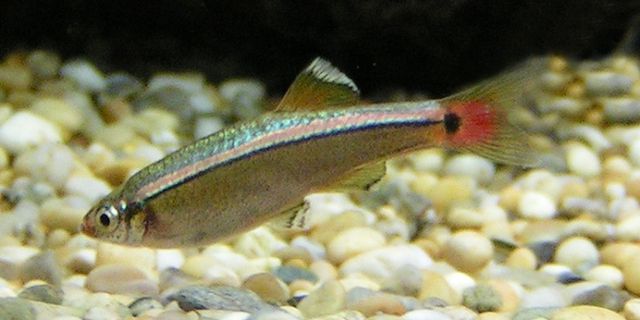
Small aquariums (nano tanks) that fit on desks or shelves are an attractive option for beginning tropical fish keeping. Cube tanks in the 10–30cm range are space-efficient and highly decorative, growing increasingly popular in recent years. However, because they hold less water, management requires different techniques than large aquariums. This article explores key points for successfully maintaining a small aquarium.
Pros and Cons of Small Aquariums
While nano tanks have charms that large aquariums lack, they also present challenges stemming from lower water volume. It's important to understand their characteristics before getting started.
- Advantage: Space-saving: A 10cm cube holds about 1 liter, a 20cm cube about 8 liters, and a 30cm cube about 27 liters. Can be placed on a desk.
- Advantage: Low cost: Initial expenses for the tank, filter, and lighting are lower. Water and electricity costs are also minimal.
- Advantage: Aesthetic appeal: Stylish glass cubes look great as décor. They can serve as an accent in living rooms or bedrooms.
- Disadvantage: Unstable water quality: With less water, temperature and water quality changes occur rapidly. Overfeeding or fish death immediately impacts water quality.
- Disadvantage: Limited stocking capacity: Overcrowding is the biggest risk in small tanks. It's important to embrace keeping fewer fish of higher quality.
- Disadvantage: Rapid evaporation: With limited water volume relative to surface area, water level drops quickly due to evaporation. In summer, you may need to top off water daily.
While small aquariums may look easy to manage, they actually require more care than larger tanks due to their lower water volume. I recommend 20–30cm cubes for beginners; 10cm tanks are better suited for experienced aquarists. One advantage unique to small tanks is their lower power consumption thanks to shorter heater and light operating times. For detailed cost information, see Tropical Fish Tank Electricity Costs and Savings Tips.
Choosing Tropical Fish Suitable for Small Aquariums
Suitable fish species for small tanks are small-bodied, peaceful, and relatively hardy. Below are recommended species.
- Boraras brigittae: An ultra-small species reaching about 2cm. Their beautiful red coloration makes them ideal for small tanks. They look best kept in groups of 5–6.
- Microrasbora galaxy: About 2.5cm in length. Their navy bodies spotted with orange shine like a starry sky. They pair beautifully with planted tanks.
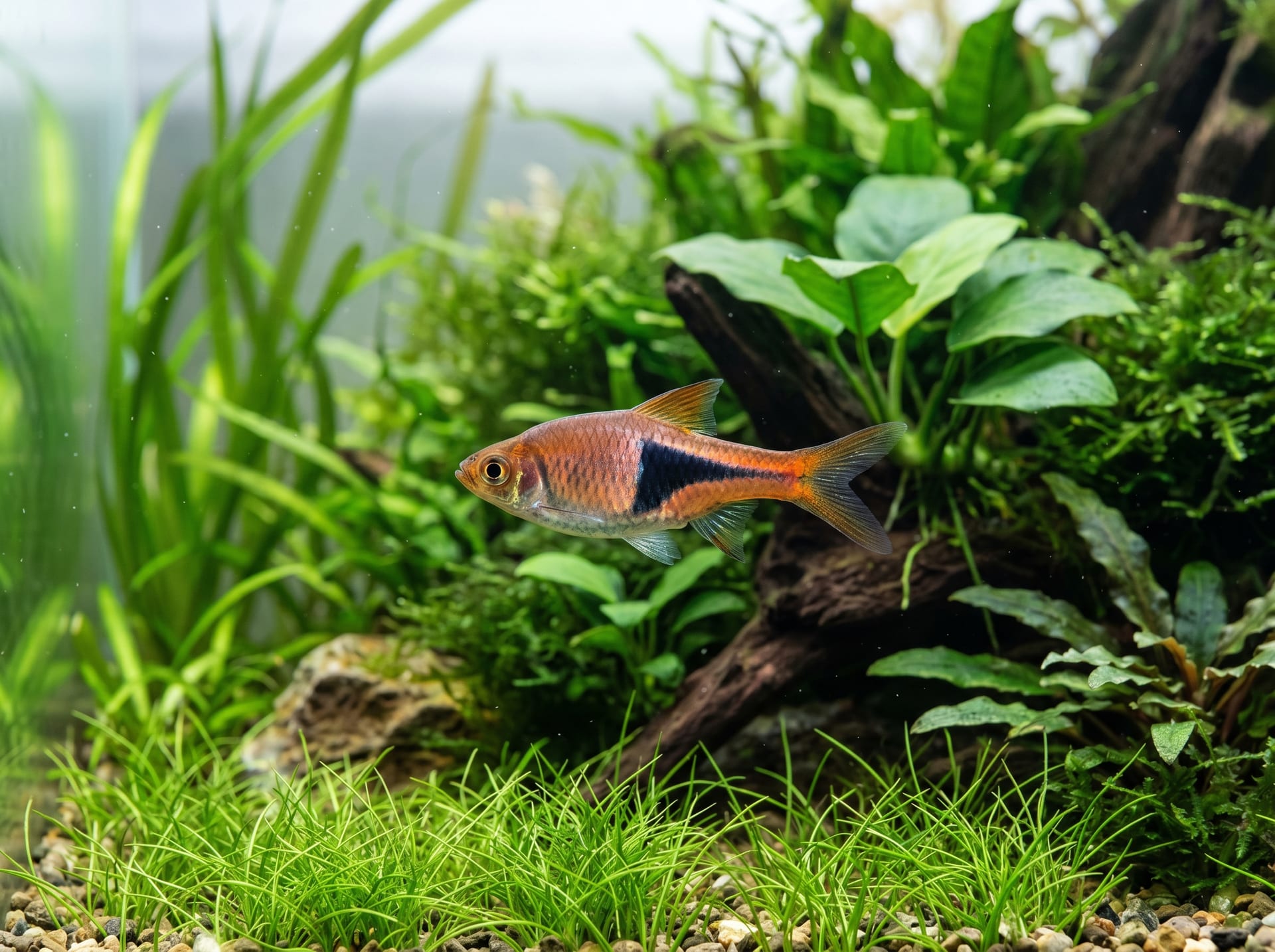
- Red-fin species: About 3cm in length. Extremely hardy and tolerant of temperature fluctuations. Can be kept without heating, making it the most recommended species for beginners.
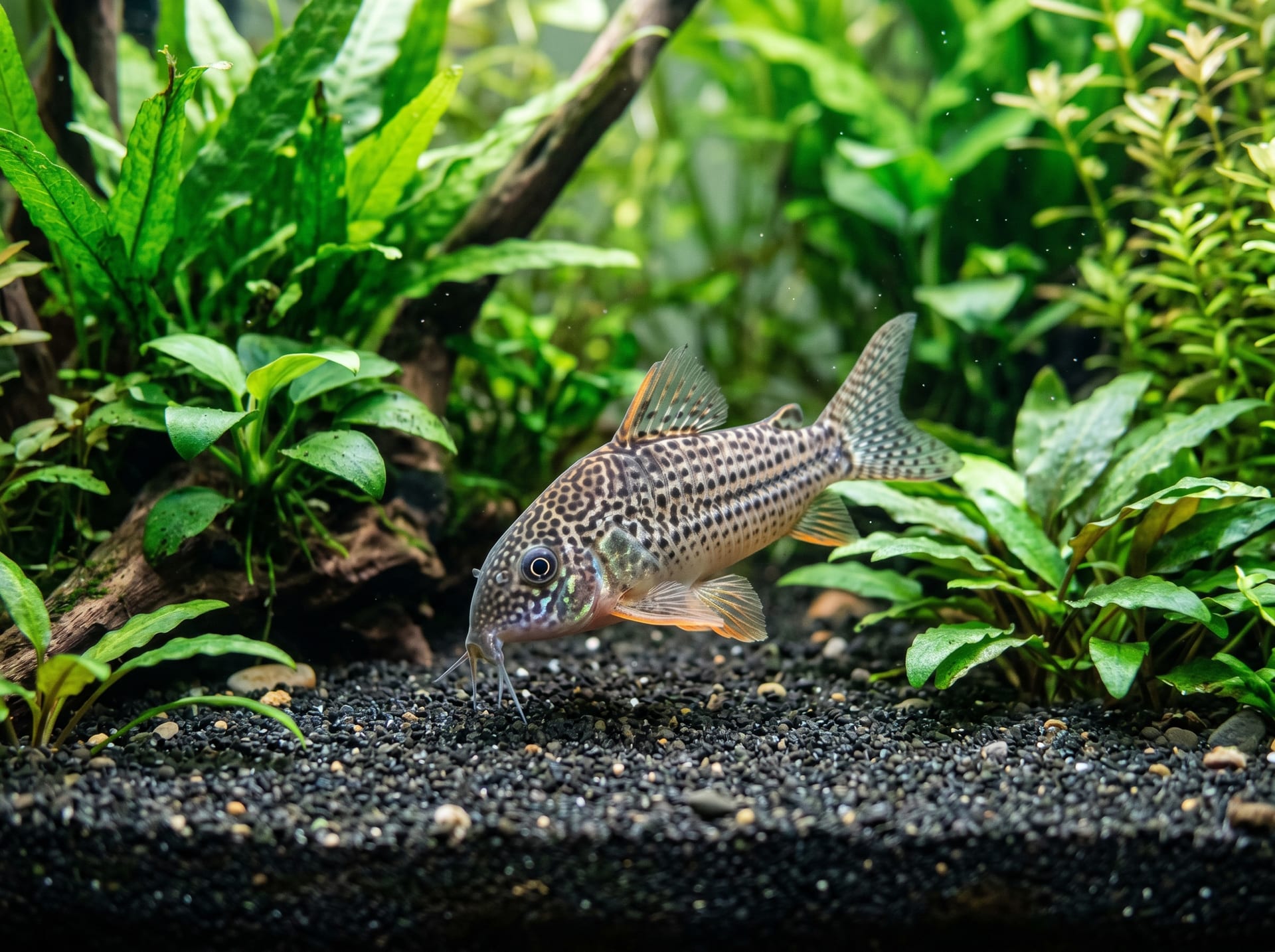
- Corydoras pygmaeus: A miniature catfish reaching about 2.5cm. Their active bottom-dwelling behavior is charming. Keep in groups of 3–5.
- Betta: About 5cm in length. Renowned for their stunning fins, but must be kept alone in small tanks. Avoid mixing with other fish.
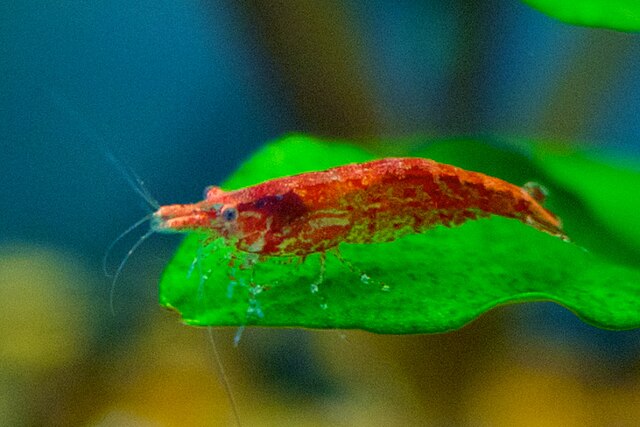
- Red cherry shrimp: A small shrimp about 2.5cm in length. Their red coloration stands out against aquatic plants and they work as algae eaters. Can be housed with fish (provided the fish are large enough not to eat them).
- Otocinclus: A small algae-eating fish about 4cm in length. Excellent for small tanks as they consume algae on glass and plants.
The basic rule for stocking is "1cm of fish per liter of water." For a 20cm cube (about 8 liters), the maximum is roughly 4–5 fish of 2cm length. Keeping below capacity is the secret to long-term success.
Tips for Maintaining Water Quality
Water quality management in small tanks requires frequent, careful attention. Pollutants have a greater impact on limited water volume, so regular maintenance is essential.
- Water change frequency: Change 20–30% of the water 2–3 times per week. Increase frequency compared to large tanks to maintain stability.
- Top-off practice: As water evaporates, water quality changes. Check water level daily and top off with dechlorinated water at matching temperature.
- Strict feeding management: Uneaten food is fatal in small tanks. Feed only what can be consumed within 1–2 minutes per feeding. Once daily is sufficient.
- Substrate cleaning: During water changes, remove accumulated debris from gravel or substrate using a thin siphon tube or dropper.
- Regular testing: Check ammonia, nitrite, and pH at least once weekly using test strips or digital meters. Perform an immediate water change if abnormal values appear.
The quantity of filter media that serves as bacteria habitat is equally important. Since small tank filters have limited media capacity, using a thicker substrate layer increases the surface area for bacterial colonization. For detailed water change procedures and common pitfalls, see Proper Tropical Fish Tank Water Change Method.
Choosing Filters and Heaters
Filter and heater options for small tanks are limited, but choosing appropriately ensures adequate performance.
- Sponge filter: Used with an air pump. Creates gentle flow safe for small fish and fry. Offers large surface area for bacteria. Best for 10–20cm tanks.
- Hang-on-back filter: Clips to the tank rim. High filtration capacity with a cleaner look inside. Suits 20–30cm tanks. Choose models with adjustable flow.
- Undergravel filter: The substrate itself serves as filter media, maximizing filtration area even in small tanks. Airlifted types provide gentle flow.
- Ultra-compact heater: 10–20W heaters suit tanks 20cm or smaller. Choose wattage matched to tank size. Oversized heaters risk rapid temperature spikes.
- Panel heater: Placed under the tank. Keeps the interior clean since no heater submerges inside. However, insufficient heating in cold winter rooms.
- Thermostat importance: Small tanks experience drastic temperature swings, so a thermostat-controlled heater is preferable to fixed-temperature types.
Small Aquarium Layout Ideas
Here are layout concepts to maximize limited space.
- Single stone layout: Place one prominent stone in the small tank, surrounding it with dwarf pearl grass or glossostigma. Simple yet refined.
- Branch wood layout: Attach willow moss to thin, branchy driftwood. Creates a miniature forest feel.
- Moss ball: Simple and effective—arrange several moss-wrapped stones to create a green aquascape with minimal effort.
- Bottle aquarium style: Use thin substrate with only slow-growing plants like marimo and Anubias nana. Low-maintenance design.
- Foreground grass carpet: In a 30cm cube, add CO2 and grow dwarf hair grass or pearl grass into a lush carpet. Stunning effect in a small tank.
In small tank layouts, material size selection is critical. Oversized stones or driftwood consume valuable space and restrict fish swimming area. Choose materials no larger than one-third of tank size.
Placement and Precautions for Small Aquariums
Placement significantly impacts fish health and tank safety.
- Avoid direct sunlight: Small tanks experience rapid temperature swings. Avoid direct sun to prevent algae blooms and temperature instability.
- Away from air conditioning vents: Direct airflow destabilizes water temperature and accelerates evaporation.
- Stable, level surface: Place tanks on level, sturdy surfaces. Even small tanks weigh several kilograms when filled; verify load capacity.
- Low-vibration location: Avoid areas near doors or speakers. Vibrations stress fish.
- Power access: Ensure nearby outlets for filter, lights, and heater. Plan wiring to keep it dry.
Find the Perfect Fish for Your Small Tank on BreederDirect
Tropical fish keeping in small tanks is a wonderful hobby that lets you enjoy a beautiful world in a compact space. On BreederDirect, you can purchase healthy tropical fish suited to small tanks directly from trusted breeders. Share your tank size and conditions with breeders for personalized recommendations on species and stocking. Why not bring your favorite fish home to your custom small tank through BreederDirect?