Tropical Fish Biotope Tanks and Geological Environment Guide | How to Recreate South American and Southeast Asian Riverbeds
A detailed explanation of Amazon blackwater environments, Southeast Asian river laterite sand layers, how geological structures impact fish ecology, territory systems through driftwood placement, and methods to recreate natural light cycles. This guide covers biotope design techniques for scientifically reproducing the geological environments of fish habitats.
Key Takeaways
A detailed explanation of Amazon blackwater environments, Southeast Asian river laterite sand layers, how geological structures impact fish ecology, territory systems through driftwood placement, and methods to recreate natural light cycles. This guide covers biotope design techniques for scientifically reproducing the geological environments of fish habitats.
Related Species
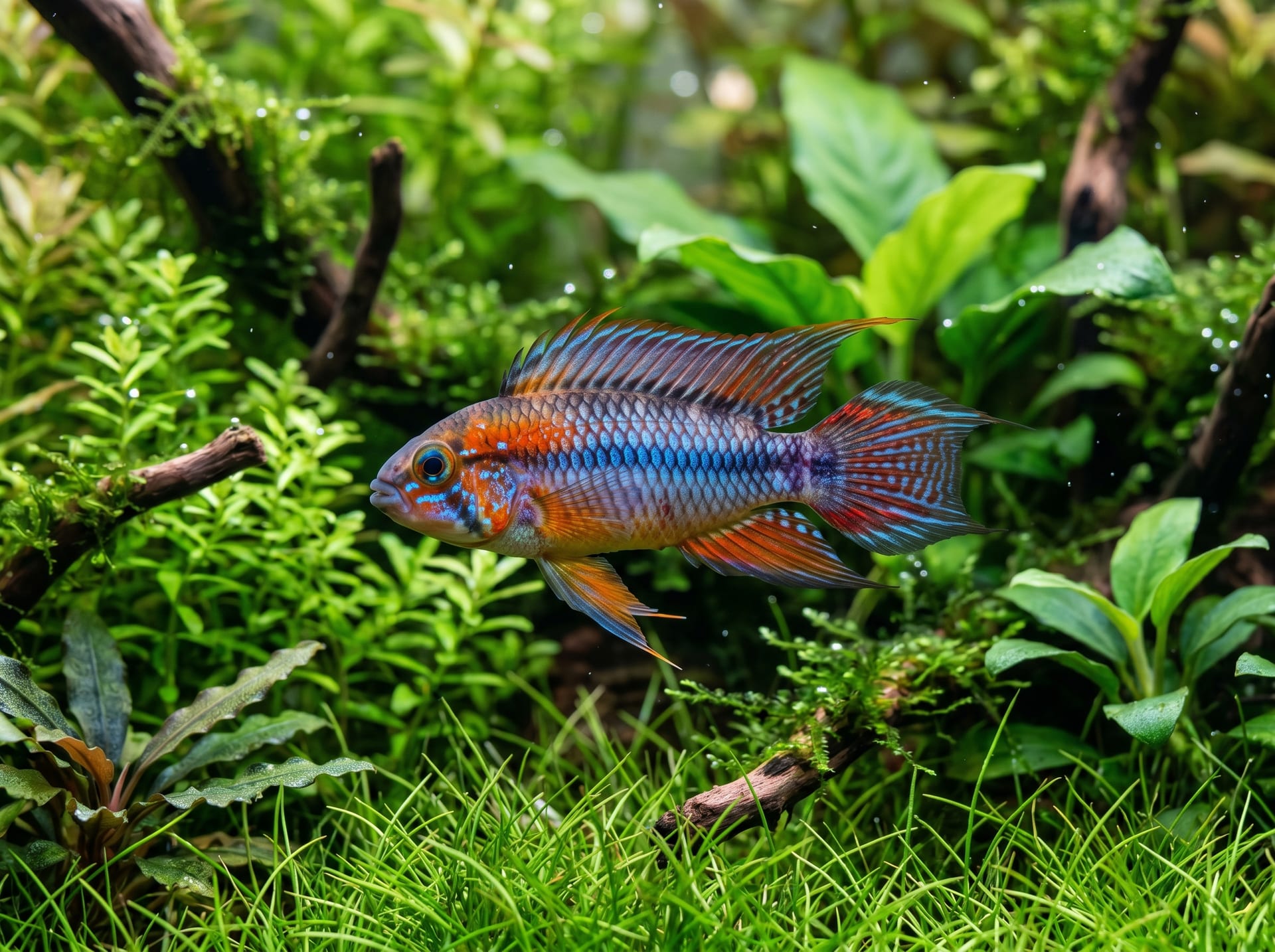
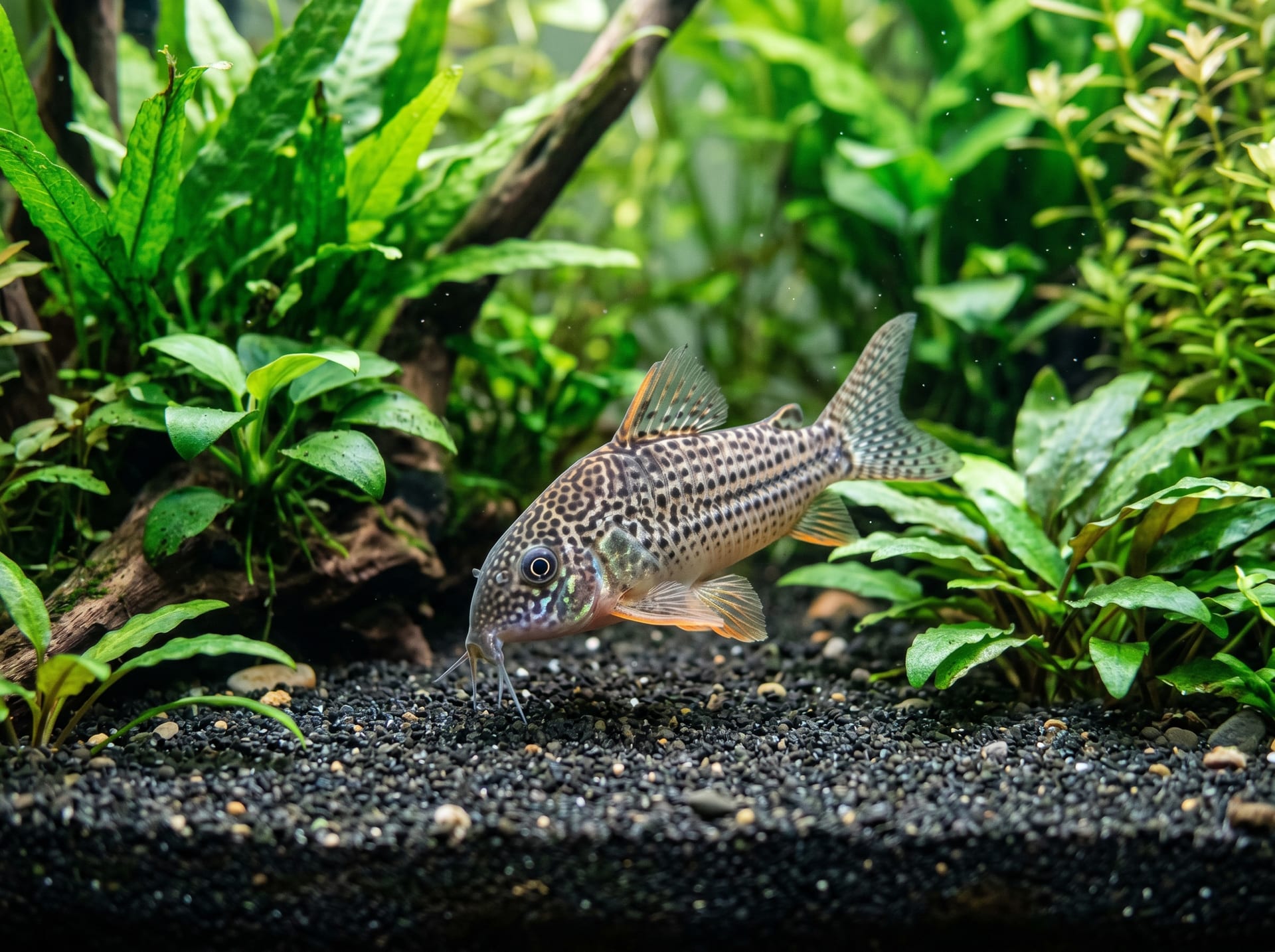
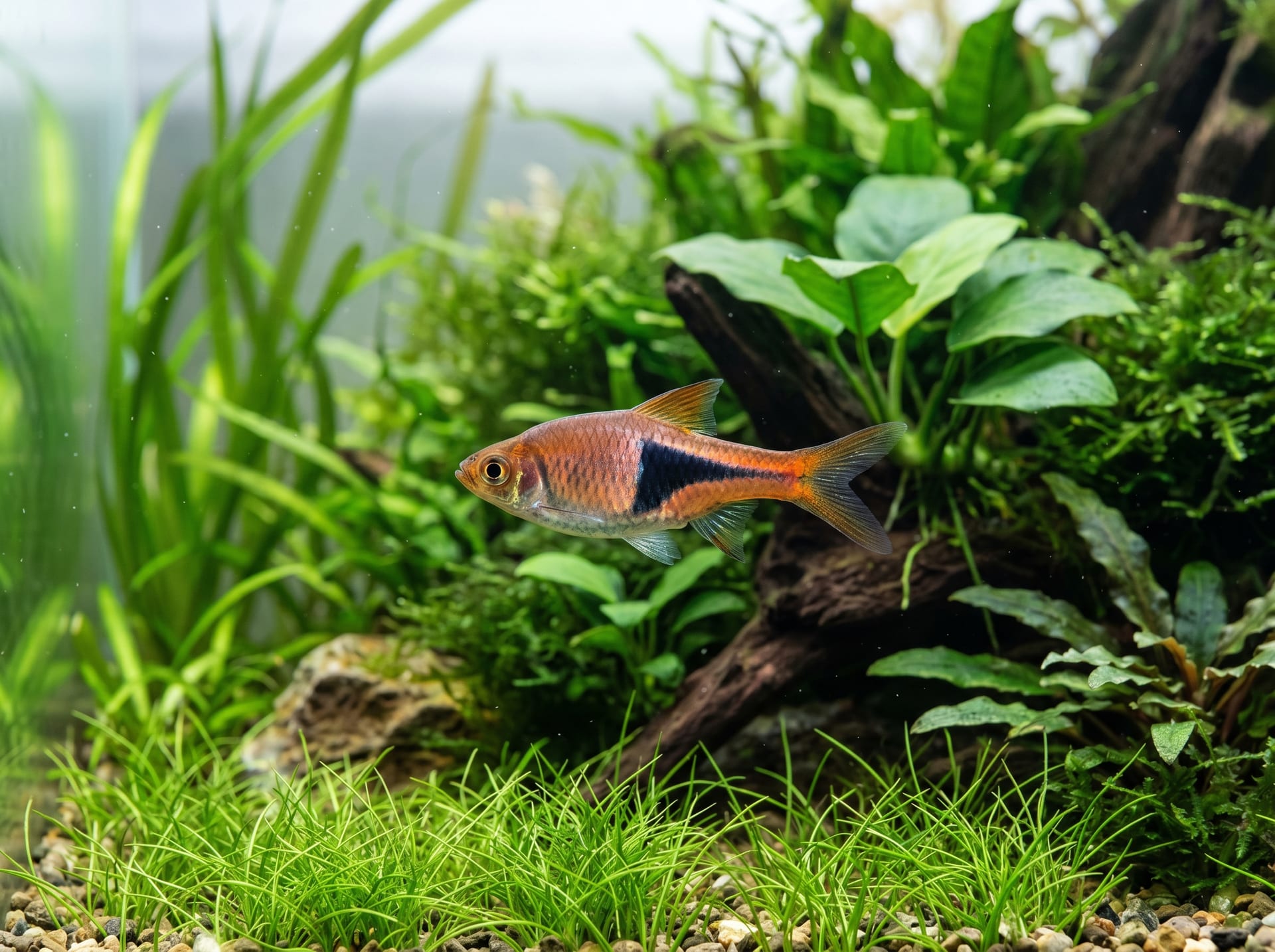
When keeping tropical fish, there is a clear difference in coloration, behavior, and breeding rate between tanks designed with only aesthetic layout in mind and tanks that scientifically recreate the fish's natural habitat at a geological level. This article focuses on the "riverbed structure" of South American Amazon systems and Southeast Asian rivers, explaining biotope design methods that scientifically mimic soil layers, substrate composition, and bedrock formations.
Why Geological Environment Determines Fish Ecology
The substrate of tropical rivers is not merely "sand"—it consists of geological layers of humus, fine sand, clay, and organic matter accumulated over thousands of years. In the Rio Negro basin of the upper Amazon, decayed plant-derived black humus layers accumulate on top of white sand (quartz sand), creating an extremely acidic environment with pH 3.5–5.0. It is no coincidence that Apistogramma and Tocorinas spawn only in this environment; geology functions as a reproductive signal.
Meanwhile, in the Kapuas River basin of Southeast Asia, weathered red laterite soil with high iron content spreads across the substrate, directly linked to territory formation in Sumatras and Rasboras. The chemical composition of the substrate changes water quality, and water quality acts on the nervous system, hormone secretion, and pigment cells—recreating this cycle in the aquarium is the starting point for true biotope design.
South American Amazon Type: Layering Humic Acid and White Sand
The core of Amazon-type biotope design is "two-layer substrate structure."
Lower layer (4–6cm): Lay nutrient-rich substrate such as fine akadama soil or aquatic soil. This serves simultaneously as a nutrient base for rooted plants and functions as an organic matter layer that establishes microbial colonies.
Upper layer (2–3cm): Cover with fine white sand (ADA Amazonia sand or quartz sand). This sand mimics the Cretaceous-origin quartz sand unique to Rio Negro, with high light reflectivity, and triggers male Apistogramma to excavate the white sand when displaying territory.
Equally important is the use of peat. By embedding sphagnum moss or peat blocks at the edges of the substrate, humic acids gradually leach out, promoting tannin coloration and acidification of the water. This "blackwater formation" is more sustained than commercial humic acid solutions and maintains a natural blackwater environment while preventing sharp pH fluctuations.
Southeast Asian Type: Laterite Gravel and Recreation of Rapids and Pools
For biotopes modeled after the Kapuas or middle Mekong rivers, the topographical variation between "rapids (shallow fast-flow areas)" and "pools (deep slow-flow areas)" holds the key.
For the substrate, combine laterite sand (red gravel with iron content) with river gravel (rounded, oval-shaped pebbles). Build up the back of the tank and create a gentle slope toward the front so water flows along the incline, creating a natural distribution of "fast current + slow current."
Rock selection should also consider geology. Arrange multiple granite-based rounded stones (pH neutral to slightly alkaline), common in Southeast Asian rivers, and create "shadow areas" in rock crevices. Sumatras and Tetras recognize shaded rock areas as territories and establish their activity range centered on these spots. Rather than evenly lighting the entire tank, creating intentional light-and-shadow gradients leads to geological realism.
Driftwood Placement: Organic Structure as a Territory System
In biotopes, driftwood is not "decoration"—it is "part of the terrain." In the Amazon Igapó (floodplain forest), submerged tree root systems form complex labyrinthine spaces where various fish occupy different layers.
To recreate this in the aquarium, fix large driftwood pieces (Amazon driftwood, hornwood) at the back and extend fine branch material toward the front, mimicking "root structure." The "density" of gaps between driftwood pieces becomes the unit of territory division—Apistogramma pairs naturally exhibit behavior where they occupy specific areas under driftwood as spawning sites and chase away other individuals.
If driftwood is pre-soaked for an extended period to leach out tannins sufficiently before use, water quality fluctuations after introduction are minimized. Even pre-leached driftwood gradually releases humic acids in water, and when combined with peat, it contributes to enhancing the blackwater environment.
Recreation of Natural Light Cycles: Tropical Day Length and Evening Ambiance
In tropical rivers near the equator, photoperiod remains stable at 11–13 hours year-round, with 30–60 minute periods of "twilight" in early morning and evening. Changes in this light environment trigger spawning, feeding, and territory behavior.
Use timer control to set a gradient: "lights on → maximum brightness → dimming → lights off." Modern LED lighting controllers (GEX, ADA, Kessil, etc.) support this setting, and incorporating a one-hour dimming phase in the evening often concentrates Corydoras and Apistogramma spawning behavior just before sunset.
Lighting angle is also important; rather than shining vertically from above, angling the light slightly (70–80 degrees from the water surface) creates natural shadows from driftwood and rocks, making fish more likely to recognize these as "safe shadowed areas."
Summary: Recreating Geological Environment Brings Out Fish's "True Nature"
The essence of biotope design is not managing fish as "collections" but returning them to the ecological context of geology, water quality, and light environment. Substrate layering, peat's humic acids, laterite's iron content, driftwood structure, and light gradients—these are not individual techniques but elements that constitute the riverbed "system."
By selecting and combining each element according to the geology of the fish's native habitat, captive fish achieve stable coloration, display spontaneous spawning behavior, and exhibit species-typical behavioral patterns within the tank. Recreating geological environment is "respect for fish" at the deepest level.