Tetra and Characin Care Comparison Guide | Neon, Cardinal, and Red-Nosed Tetra Differences and Care Tips
A comprehensive comparison of Neon Tetra, Cardinal Tetra, and Red-Nosed Tetra differences, care difficulty, water quality requirements, and schooling beauty. From beginner-friendly Neon to advanced-level Red-Nosed Tetra, this guide explains each species' characteristics and compatibility with tank mates and aquatic plants.
Key Takeaways
A comprehensive comparison of Neon Tetra, Cardinal Tetra, and Red-Nosed Tetra differences, care difficulty, water quality requirements, and schooling beauty. From beginner-friendly Neon to advanced-level Red-Nosed Tetra, this guide explains each species' characteristics and compatibility with tank mates and aquatic plants.
Tetras and Characins
✍️
BreederDirect Editorial
The BreederDirect editorial team specializes in care information for animals, covering veterinary care and breeding to deliver beginner-friendly guides.
Find Tropical Fish on BreederDirect
Buy directly from verified breeders
Browse Related Listings
Find Tropical Fish listings related to this article on BreederDirect. Buy directly from verified breeders.
"Tetra" is a collective term for small characin species native to South America and Africa, and many are popular for their beautiful coloration and active schooling behavior. Starting with the Neon Tetra, the most commonly recommended beginner fish, there are many varieties including Cardinal Tetra and Red-Nosed Tetra, each with different care difficulty, optimal water conditions, and schooling characteristics.
This article focuses on three particularly popular species—Neon Tetra, Cardinal Tetra, and Red-Nosed Tetra—and provides a comprehensive comparison of care tips and differences.
Neon Tetra: The Beginner's Standard
Basic Profile
Scientific Name: Paracheirodon innesi
Origin: Peru and Colombia (upper Amazon region)
Length: 3–4 cm
Lifespan: 3–5 years
Care Difficulty: ★☆☆☆☆ (Beginner)
Price Range: $0.50–$1.50 per fish
Characteristics
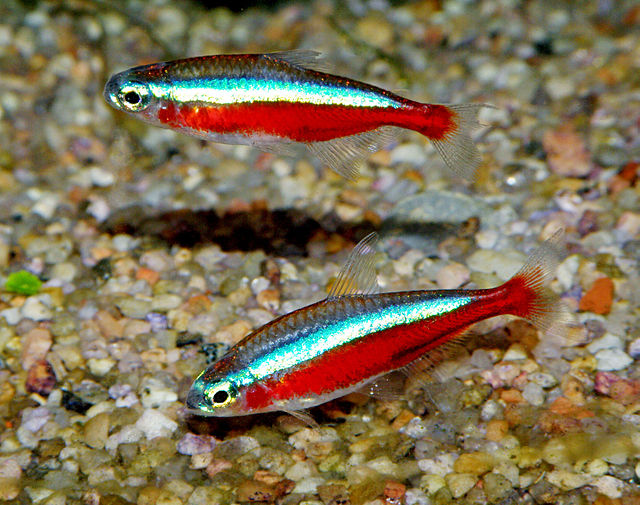
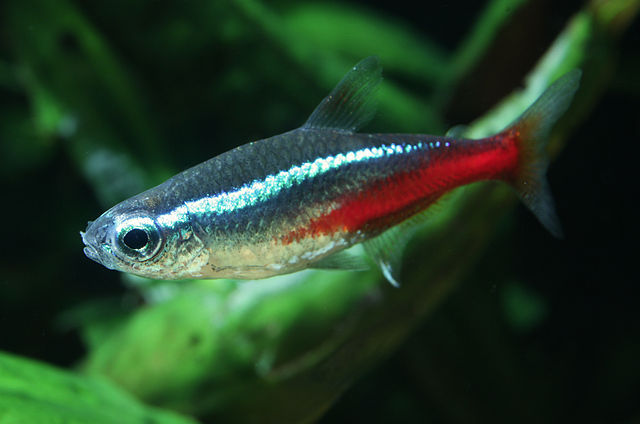
The Neon Tetra is distinguished by a bright blue metallic line along its side and a red line on the belly. They are hardy with high adaptability to water conditions, thriving in pH 6.0–7.5 and temperatures of 23–27°C. Due to mass availability, they are inexpensive and available at virtually all pet shops.
Care Tips
Water Quality: Slightly acidic water (pH 6.5–7.0) provides the most stable conditions. Dechlorinated tap water is sufficient for their care.
Schooling: A group of at least 10 fish brings out the beauty of schooling behavior. A large school of 30–50 fish is one of the highlights of aquarium keeping.
Caution: Watch for "Neon Tetra Disease" (columnaris infection). If the fish's fluorescent color fades and becomes cloudy, immediate isolation and medication bath are necessary.
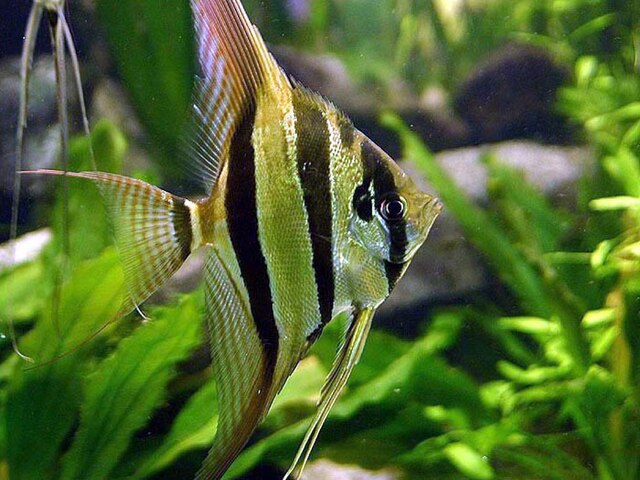
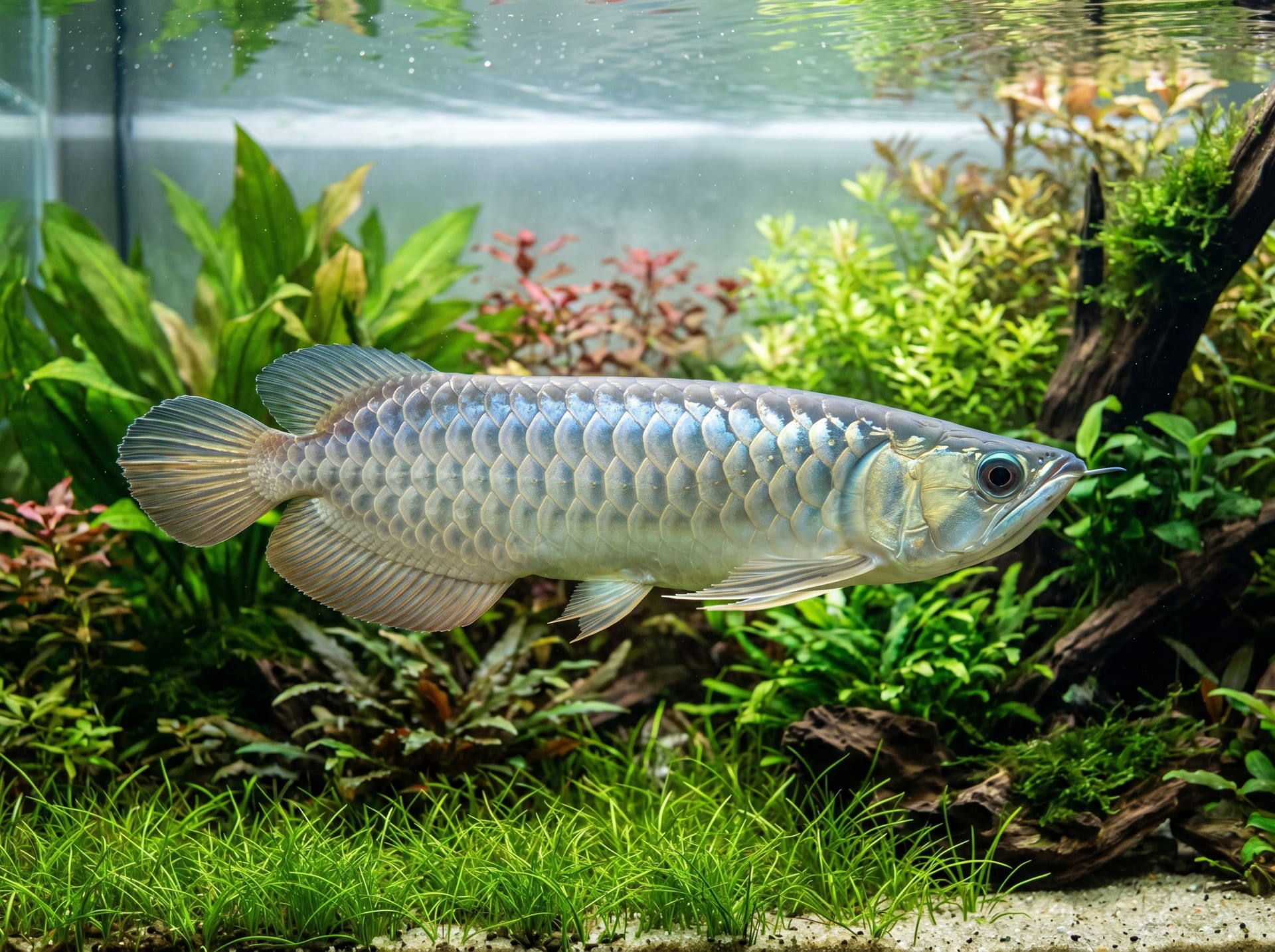
Tank Mates: Compatible with nearly all peaceful tropical fish. However, they cannot be kept with large fish such as Angelfish or Arowana (they will be preyed upon).
Cardinal Tetra: Deeper, Richer Coloration
Basic Profile
Scientific Name: Paracheirodon axelrodi
Origin: Brazil and Venezuela (Rio Negro and Orinoco river systems)
Length: 4–5 cm
Lifespan: 5–7 years
Care Difficulty: ★★☆☆☆ (Beginner to Intermediate)
Price Range: $1.50–$4.00 per fish
Differences from Neon Tetra
Cardinal Tetra closely resembles Neon Tetra but can be distinguished by the following:
Feature
Neon Tetra
Cardinal Tetra
Red Line
Belly only
Head to tail (entire body)
Length
3–4 cm
4–5 cm
Price
Inexpensive
Moderately expensive
Water Requirements
Broad range
Slightly soft, weakly acidic
Origin
Upper Amazon
Rio Negro (blackwater)
Cardinal Tetra has red coloring extending across the entire body, making it more vibrant and striking. However, since it is adapted to the soft, weakly acidic waters of Rio Negro, it may lose condition in hard water or neutral to alkaline pH.
Care Tips
Water Quality: pH 5.5–7.0, hardness 4–8 dGH. Water similar to blackwater (weakly acidic soft water containing humic acids) is ideal. Adding commercial blackwater conditioner or fulvic acid in small amounts improves coloration.
Water Changes: Large water changes can cause rapid water quality fluctuations, so it is safer to perform small 10–15% changes once weekly.
Tank Mates: Like Neon Tetras, they are peaceful and suitable for community tanks. They rarely compete with each other and display beautiful schooling behavior when grouped together.
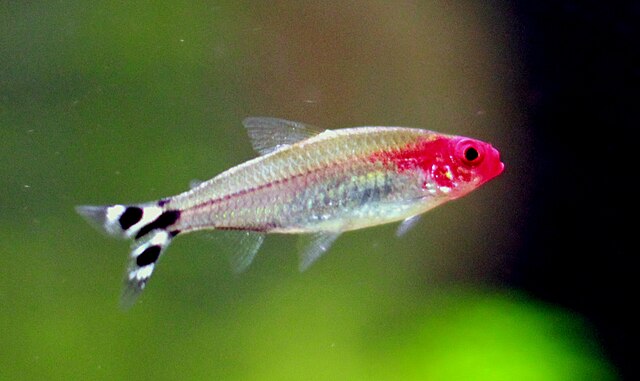
Red-Nosed Tetra is distinguished by a bright red head and a black-and-white checkerboard pattern on the tail fin. The most notable feature is orderly, directional schooling behavior—swimming in formation with all fish facing the same direction, which is said to be "among the most beautiful schooling displays in the tropical aquarium hobby."
Care Tips
Water Quality Sensitivity: Red-Nosed Tetra is sensitive to water quality changes, particularly ammonia and nitrite. Introducing them into a tank that has not completed its nitrogen cycle (before beneficial bacteria establish) is inadvisable.
Coloration and Water Quality: The red coloring of the head fades under stress or poor water conditions. Keeping them in slightly acidic, soft water (pH 6.0–7.0) produces the best coloration. If coloration is pale, improving water quality is the priority.
Achieving Schooling Behavior: A school of 20 or more fish begins to display beautiful schooling, and 50 or more creates a spectacular display. However, increase numbers only as your tank size and water management can accommodate.
Tank Mates: Though peaceful, their small mouths make them vulnerable to being sucked in by larger-mouthed fish. Keeping them with same-sized characins (Neon or Cardinal Tetra) is safer.
Summary of Care Difficulty Comparison for All Three Species
Feature
Neon Tetra
Cardinal Tetra
Red-Nosed Tetra
Price
Inexpensive
Moderate
Moderate to High
Water Adaptability
High
Moderate
Low (Sensitive)
Coloration Beauty
Good
Excellent
Excellent
Schooling Orderliness
Average
Average
Outstanding
Disease Resistance
Moderate (Neon Tetra Disease)
Moderate
Slightly Weak
Availability
Highest
High
Moderate
Recommended For
Beginners
Beginners to Intermediate
Intermediate and Above
Common Care Tips
Tank Setup
All three species will likely not survive if added to an uncycled tank. The fundamental rule is to introduce them only after the nitrogen cycle (ammonia → nitrite → nitrate) is complete. Tank setup typically takes 2–4 weeks.
Creating Schooling Display
They do not display their full beauty when alone or in small numbers. Keeping a larger school of the same species within your budget is the most effective way to enhance their visual appeal.
Compatibility with Aquatic Plants
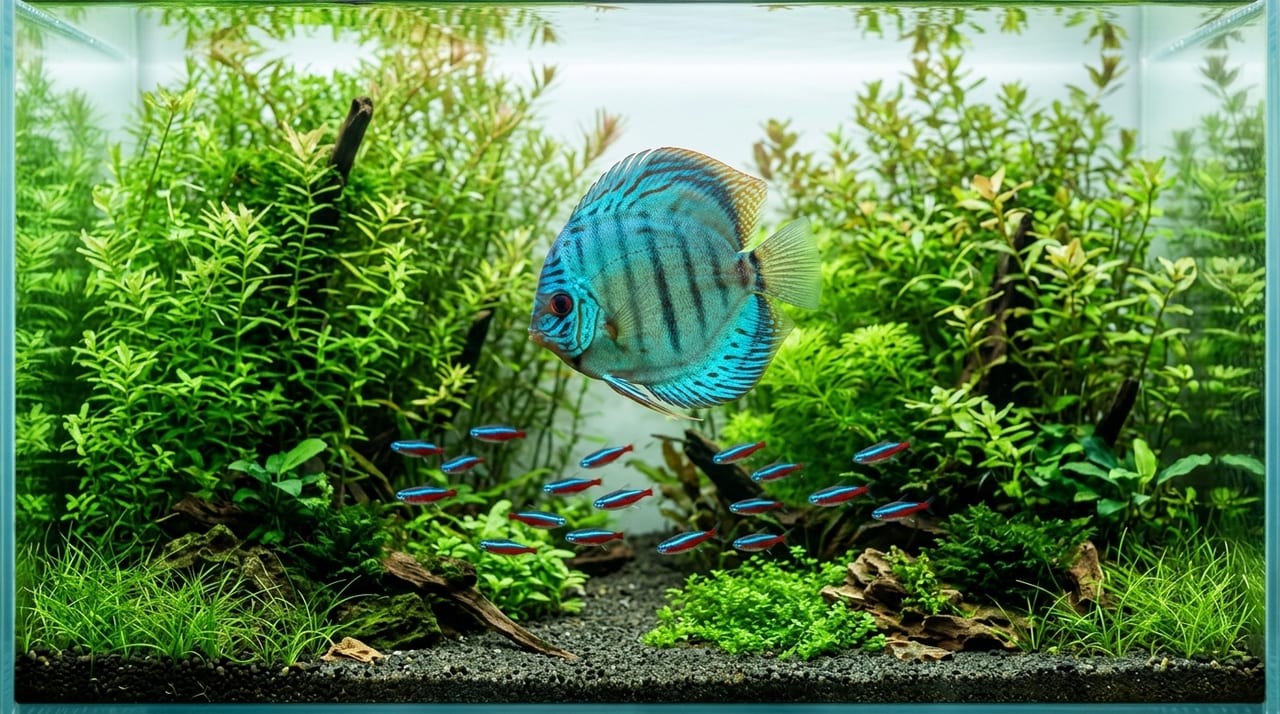
All three are native to the Amazon region and have excellent compatibility with Amazon Sword, Vallisneria, and stem plants. The contrast between the red and blue coloration against green plant backgrounds is a fundamental nature aquarium layout design.
Feeding
Due to their small mouths, fine, flake-type foods are appropriate. Breaking up TetraMin flakes or Kyorin Hikari into smaller pieces makes feeding easier. Weekly or bi-weekly feedings of brine shrimp effectively improve coloration.
Neon, Cardinal, and Red-Nosed Tetras each possess distinct personalities while serving as beautiful supporting players that add color and vitality to tropical aquariums. For beginners, starting with Neon Tetra and progressing to Cardinal or Red-Nosed Tetra after gaining experience is the recommended advancement path.