Complete Guide to Medaka Aquarium Layout | Fundamentals and Practice for Creating Natural Aquascapes
Learn how to choose layout materials, techniques for arranging driftwood, stones, and aquatic plants, and methods for creating Japanese and nature-style designs to transform your medaka tank into a beautiful aquascape.
Key Takeaways
Learn how to choose layout materials, techniques for arranging driftwood, stones, and aquatic plants, and methods for creating Japanese and nature-style designs to transform your medaka tank into a beautiful aquascape.
Related Species
The Appeal of Medaka Aquarium Layouts
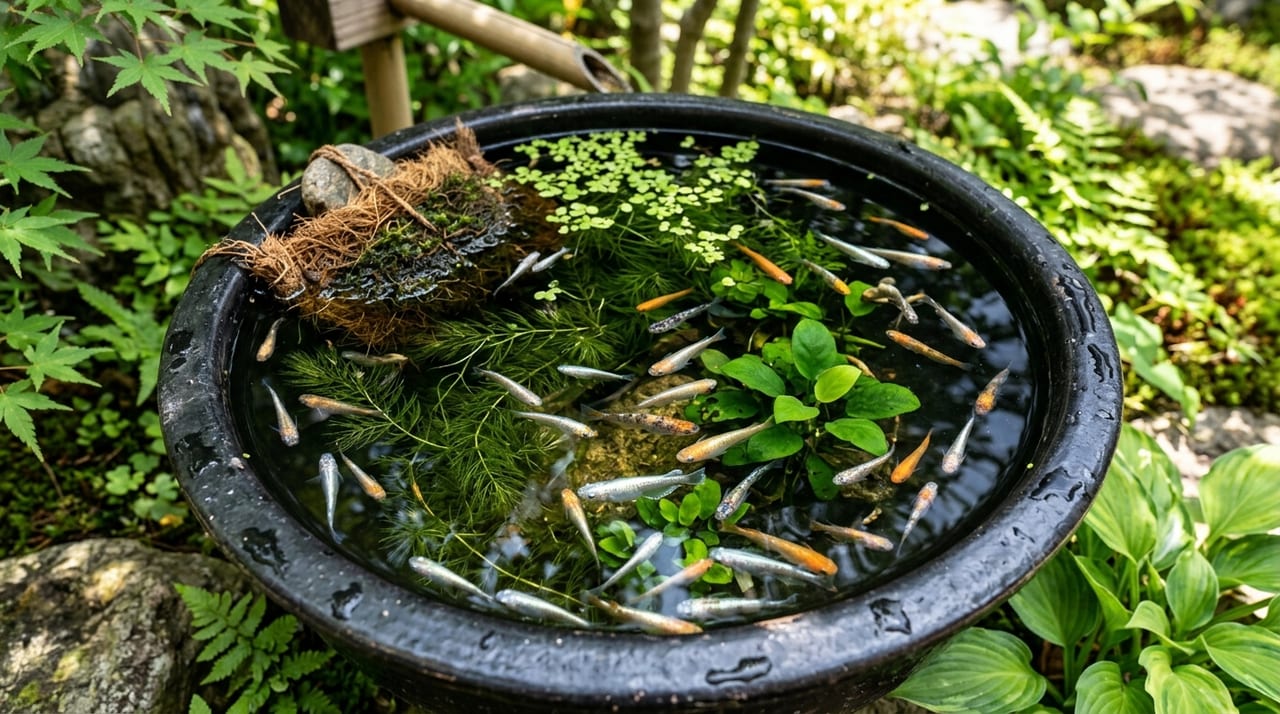
Medaka are small fish with gentle movements, making them ideal for beautiful layout tanks combined with aquatic plants and natural materials. Medaka swimming through clear water and green plants have a high visual healing effect and have recently become increasingly popular as interior décor.
However, many people say "I don't know where to start" or "the layout I created doesn't feel right." This article systematically explains everything from material selection to compositional fundamentals, specific ways to create popular styles, and tips for maintenance.
Choosing and Understanding Materials
Substrate (Aquasoil, Gravel, and Agricultural Soil)
Substrate is the foundation that determines the overall impression of the layout and directly affects water quality.
- Aquasoil: Allows aquatic plants to root easily and maintains slightly acidic water conditions. The black color enhances medaka coloration, particularly showcasing body-light varieties like Hikarimono and Yangguifei. However, particles break down after 1-2 years, requiring periodic replacement.
- River Sand and Fine Gravel: Offer a natural appearance and are easy to clean. White sand tends to cause "color fading" where medaka lighten their coloration to match their environment, so choose black or brown sand if vibrant coloration is a priority.
- Agricultural Soil (Arakida-tsuchi): Paddy field soil widely used for outdoor medaka keeping and biotopes. Rich in nutrients, it promotes good rooting of aquatic and emergent plants, and encourages the development of daphnia and plankton.
Choosing Aquatic Plants
Aquatic plants suitable for medaka tanks meet three criteria: "No CO2 supplementation required," "Grow in low light," and "Easy to manage propagation."
- Anacharis (Giant Waterweed): Hardy, fast-growing, and excellent at water purification. Density is easily adjusted through repeated trimming.
- Water Sprite: No need to root; simply float it. Its vigorous photosynthesis absorbs excess nutrients and suppresses algae growth.
- Water Hyacinth: A floating plant whose roots serve as a medaka spawning bed. In summer, it covers the water surface and reduces temperature rise, but due to vigorous propagation, it requires periodic thinning.
- Water Sprite: Delicate leaves sway in the current, adding movement to the aquascape. Also provides shelter for fry.
- Willow Moss: Can be attached to stones and driftwood, creating a moss-covered natural appearance. Also ideal for tanks with shrimp.
Driftwood and Stones (Rocks)
Combining natural materials creates dimensionality and depth in the layout.
- Driftwood: Tannins can leach out and turn the water brown, so boil it for 1-2 hours or soak it in a bucket for several days before use. If you intentionally want to create blackwater, using it as-is is an option.
- Lava Rock: Its porous structure provides excellent surfaces for beneficial bacteria colonization, supporting biological filtration. It has minimal pH impact and is easy to handle.
- Dragon Stone and Lava Stone: Features many fine crevices where moss and aquatic plants easily attach. Stone arrangements can recreate authentic mountain and stream landscapes.
Fundamentals of Aquascaping Composition
Aquarium layouts use a concept of "composition," and simply being aware of this greatly improves the final result.
Triangular Composition: Place tall plants or driftwood on one side, then progressively lower elements toward the opposite corner. This creates movement and direction, and is a well-balanced composition easy for beginners to create.
Concave Composition: Lower the center while raising both ends. This easily creates depth, with the raised elements at the ends framing medaka swimming through the center beautifully.
Convex Composition: Raise the center high while lowering both ends. This creates a dynamic landscape suggesting mountains or islands, but requires care to maintain height stability.
Regardless of which composition you choose, placing focal materials with the "golden ratio (1:1.618)" in mind creates a more natural and harmonious aquascape.
Popular Layout Styles and How to Create Them
Layout Style Comparison Table
| Style | Substrate | Primary Materials | Striking Varieties |
|---|---|---|---|
| Biotope | Agricultural soil / Sand | Anacharis / Water Sprite / Water Lily | Native types / Hikarimono |
| Japanese (Wabi-sabi) | Black substrate | Dragon Stone / Stone arrangements / Acorus gramineus | Hikarimono (body-light) |
| Nordic Natural | White sand | Driftwood / Willow Moss | Yangguifei / Tri-color / Red-white |
※White sand tends to cause color fading, so black or brown substrate is safer if vibrant coloration is a priority.
Biotope Style
This style uses agricultural soil or sand as substrate and features Japanese native aquatic plants like anacharis, water sprite, water lilies, and sweet flag, recreating a satoyama (rural mountain village) water's edge. It can also be enjoyed outdoors in plastic tubs or lily ponds.
Basic creation steps:
- Layer 5-7cm of agricultural soil or fine sand at the bottom
- Plant aquatic plants and rooted vegetation
- Arrange driftwood and stones in a natural configuration
- Gently pour in water, and once the water clears, introduce medaka (guideline: 1 fish per liter)
Japanese (Wabi-sabi) Style
Based on black substrate, dragon stone, and stone arrangements, this style embodies "the aesthetics of subtraction" with medaka swimming through a simple space. It pairs well with plants that evoke Japanese atmosphere like dwarf water lilies, water coins, and sweet flag, creating an elegant layout where hikarimono's body light shines against the stone work.
Nordic Natural Style
This clean aquascape uses bright, natural materials like white sand, driftwood, and willow moss, matching Scandinavian interior design. Colorful varieties in red, white, and black—such as Yangguifei, tri-color, and red-white—appear even more vivid against white sand.
Spawning, Fry Care, and Maintenance
Maintaining a beautiful layout long-term requires balancing aesthetics with functionality.
Spawning and Breeding Considerations
- Water hyacinth and water sprite roots function as spawning beds. Adding dedicated spawning mats during spawning season (April-September) makes egg collection easier.
- Fry risk being eaten by adults, so after collection, move them to a separate tank or satellite container to raise them.
- Substrate that is too fine risks newborn fry burrowing into it, so 2-3mm grain size is most practical.
Tips for Maintaining the Layout
- Trim plants about once a week so light reaches the substrate.
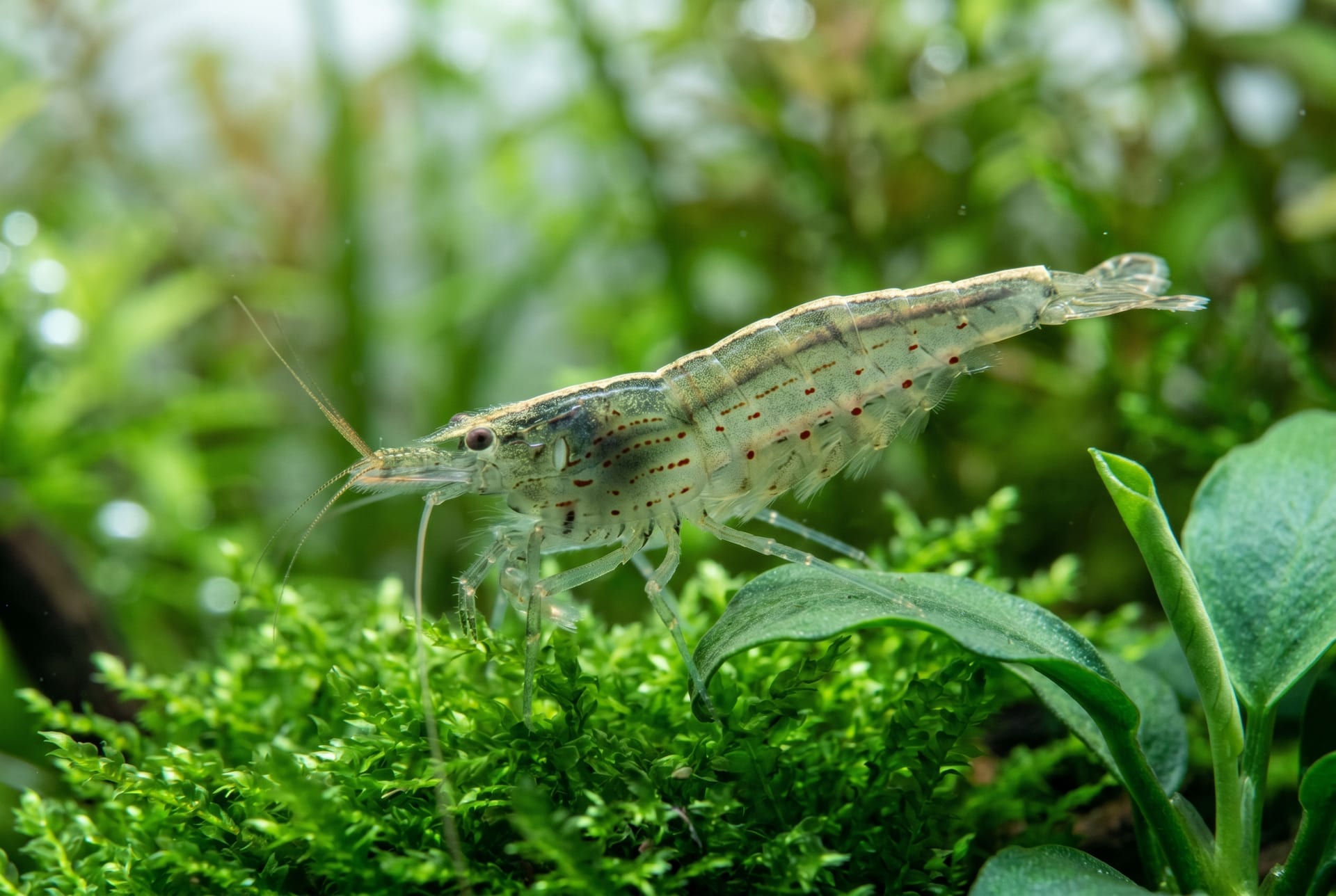
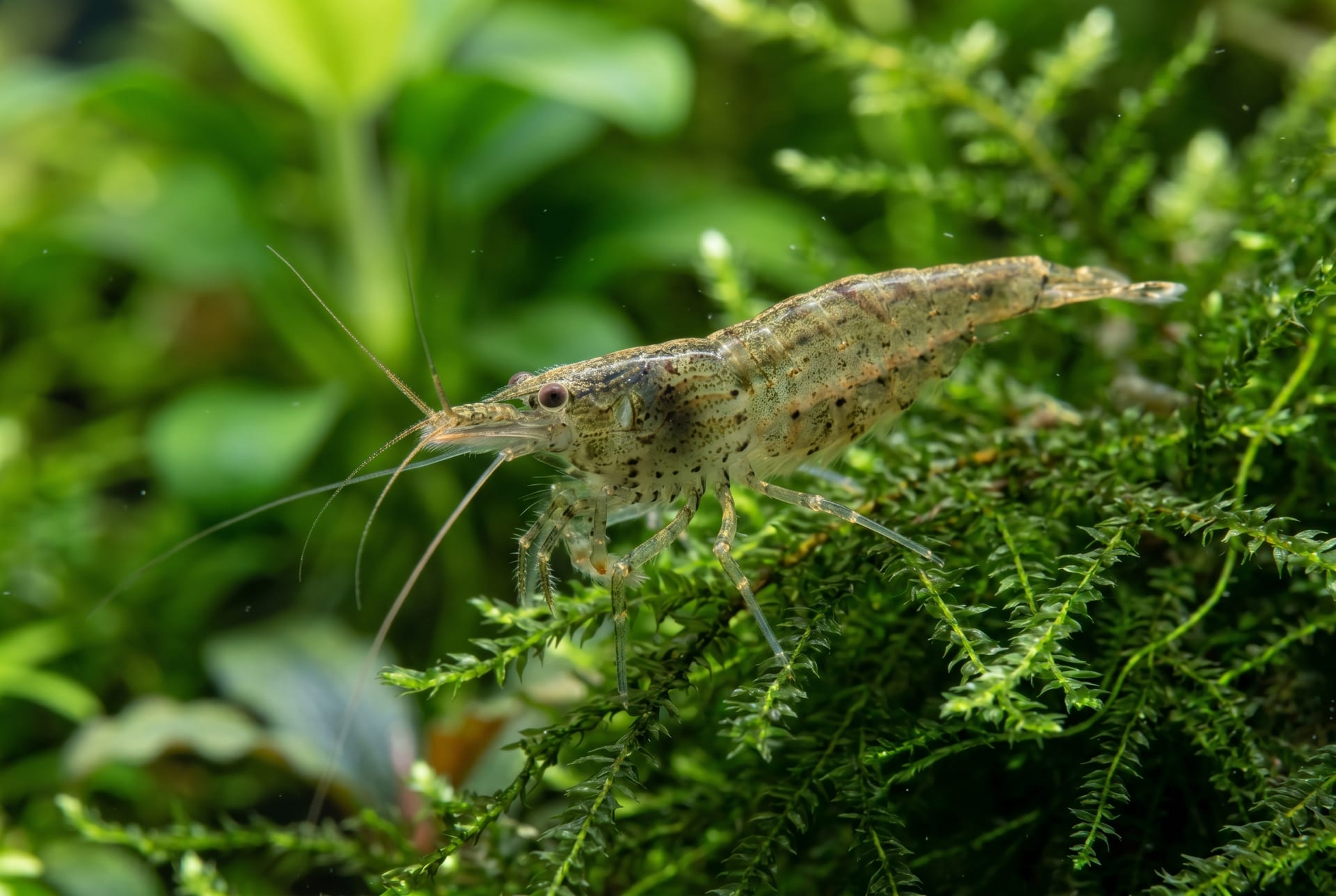
- If algae becomes visible, add a few Yamato shrimp or Amano shrimp—they are effective and compatible with medaka.
- Driftwood can leach tannins again, so remove and rinse it once a year to maintain the layout's clear appearance.
Choosing Medaka to Match Your Layout on BreederDirect
On BreederDirect, you can choose medaka varieties to match your desired layout style by consulting with breeders. Breeders knowledgeable about varieties will patiently answer questions like "What varieties have striking colors for Nordic-style white sand layouts?" and "Do you have any medaka in subdued colors that suit Japanese stone arrangements?" By focusing on both variety and layout, you can create a medaka tank that is satisfying both as décor and as a breeding project. Please find your ideal medaka on BreederDirect.