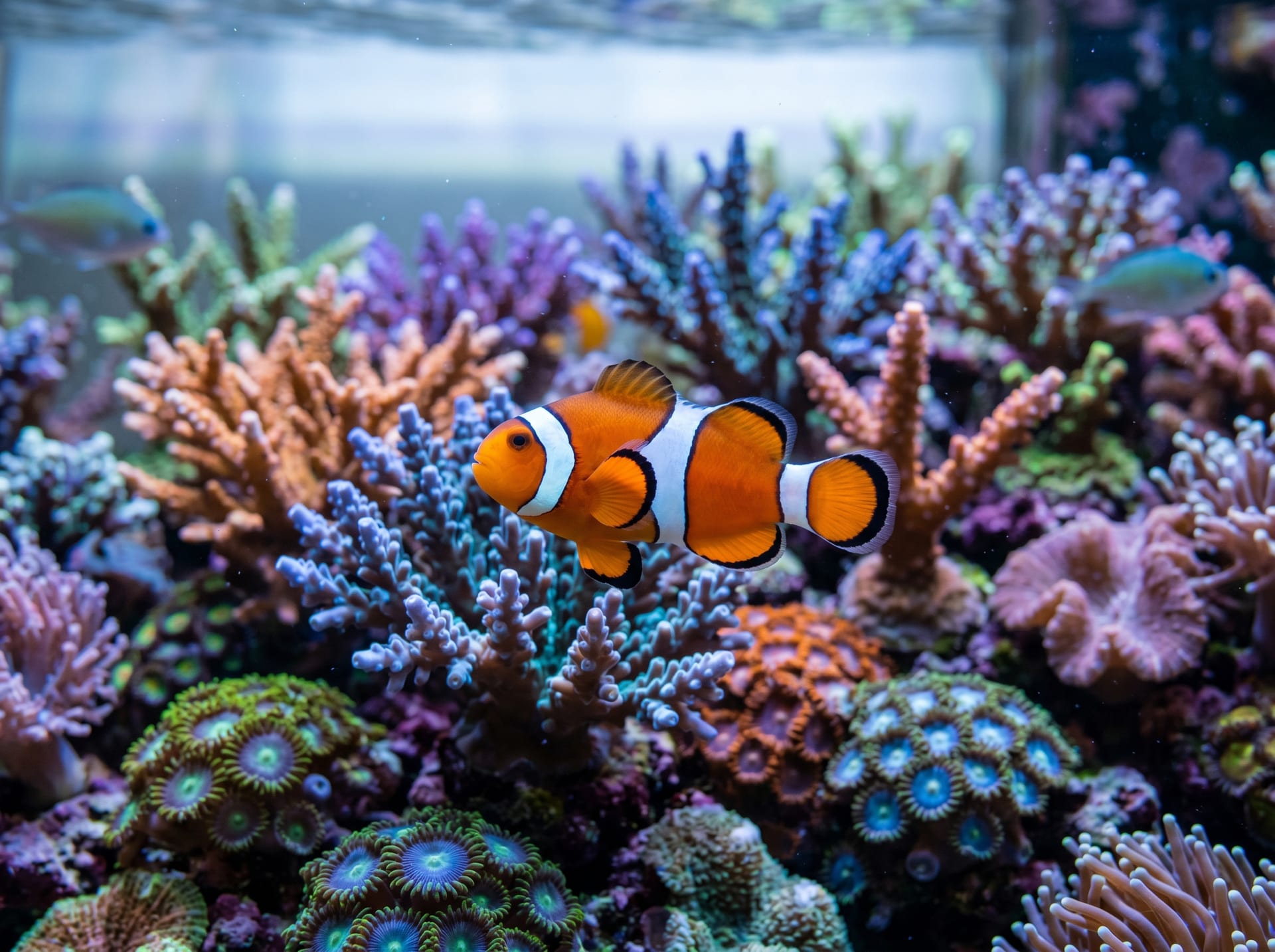
Saltwater Fish Compatibility Guide | Best Pairings and Precautions
A compatibility guide to ensure successful saltwater fish tankmate pairings. This guide explains popular species combinations like Ocellaris Clownfish, Tangs, and Angelfish, along with incompatible combinations.
Key Takeaways
A compatibility guide to ensure successful saltwater fish tankmate pairings. This guide explains popular species combinations like Ocellaris Clownfish, Tangs, and Angelfish, along with incompatible combinations.
Related Species
Saltwater fish tankmate combinations are one of the great joys of aquarium keeping. The sight of colorful fish swimming together in schools is as if you've captured a piece of the real ocean. However, saltwater fish have a much stronger territorial instinct than freshwater fish, and incompatible pairings can often lead to serious problems. This article explains everything from the basic rules for successful tankmate setups to popular species compatibility and recommended combination patterns, all in a way that beginners can easily understand.
5 Basic Rules for Successful Tankmate Pairings
Prior knowledge and planning are essential for successful saltwater tankmate combinations. Let's make sure to understand the following five key points.
1. Provide Adequate Tank Size
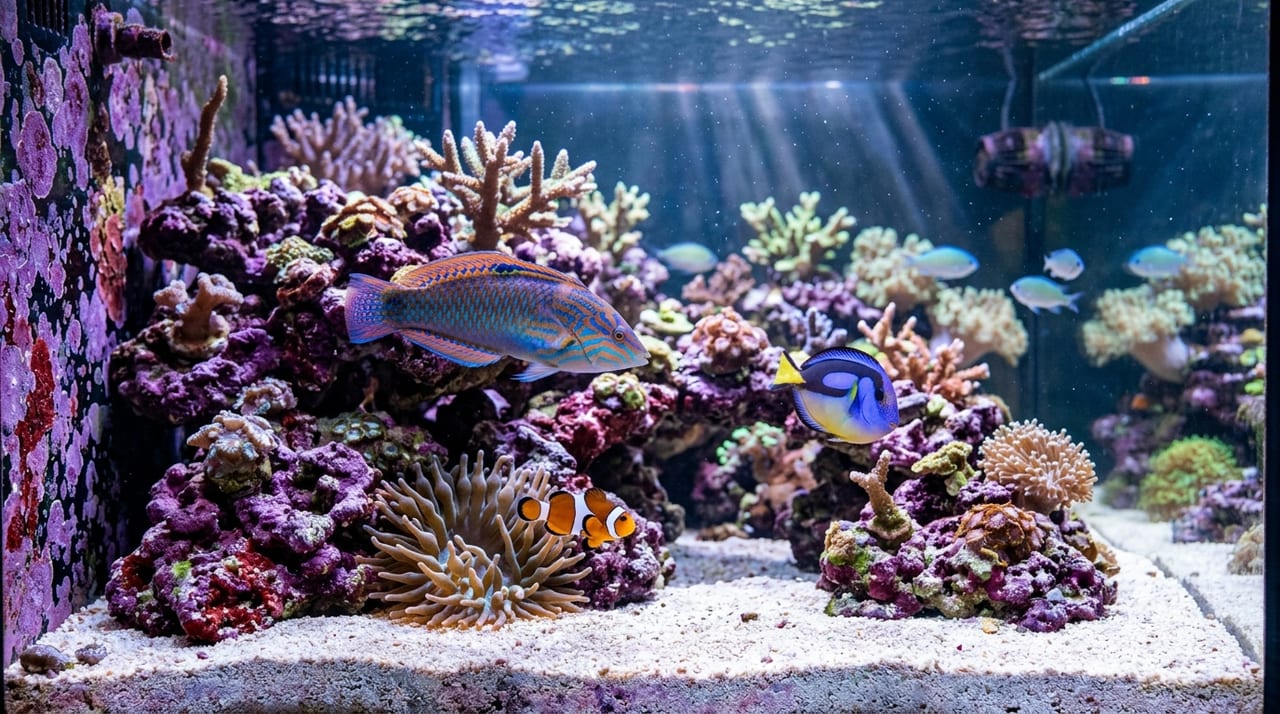
The more fish species you combine, the larger your tank needs to be. As a general guide, a 60cm tank is suitable for 2-3 species, while 90cm or larger is necessary if you want to maintain 4-6 species together. In cramped spaces, fish have nowhere to escape, and weaker individuals get cornered. A larger tank naturally reduces territorial disputes.
2. Avoid Introducing Multiple Individuals of the Same or Closely Related Species
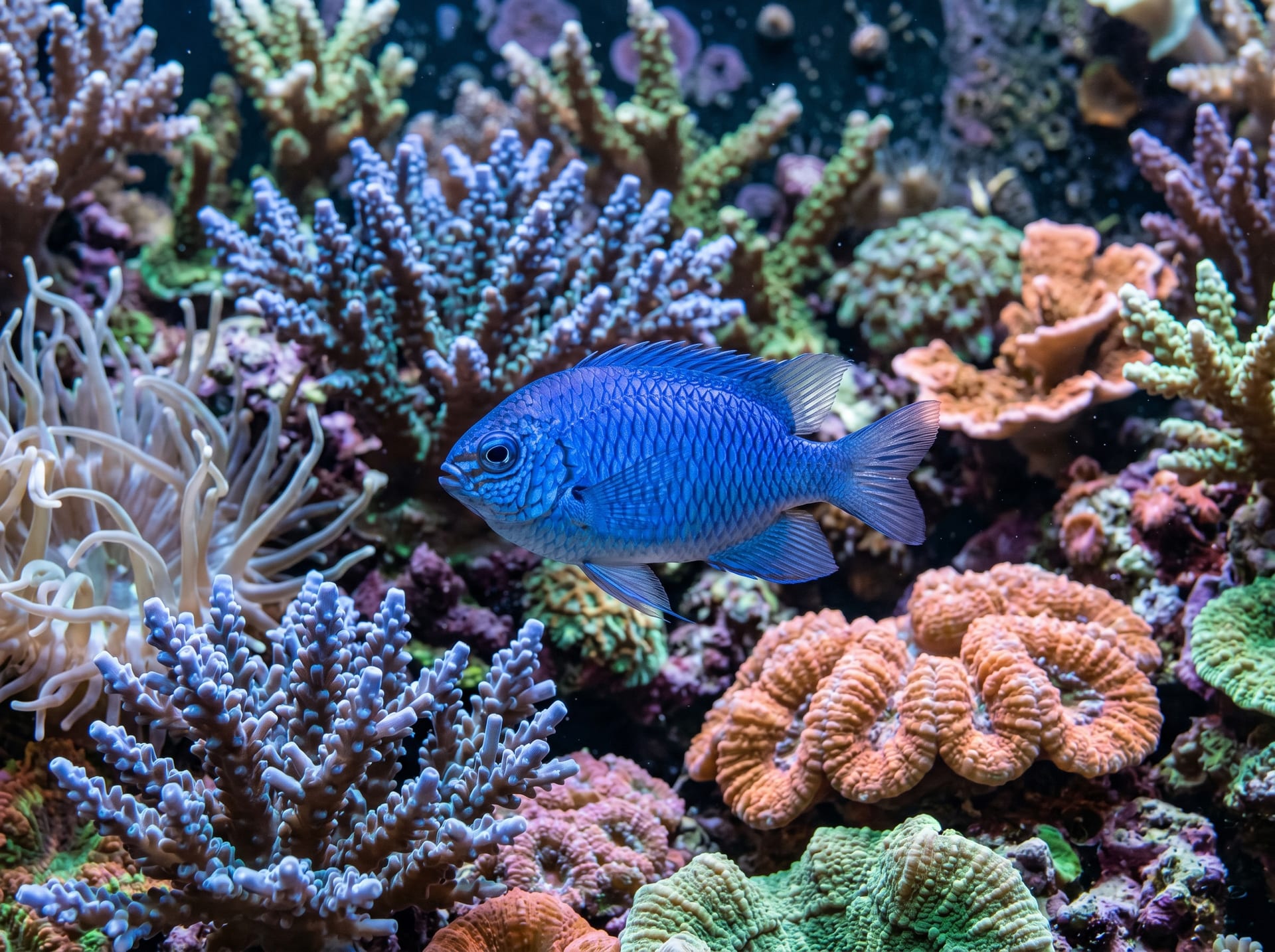
Angelfish (Pomacanthidae) and Damselfish are notorious for intense intraspecific aggression. Angelfish in particular should follow the "one species per tank" principle. If you absolutely must keep multiple individuals, you'll need to significantly increase tank size and create a layout that minimizes visual contact between them.
3. Plan the Introduction Order Carefully
The golden rule is to introduce docile and shy species first and aggressive species later. If you add aggressive species after established residents have set up their territories, the newcomers are more likely to be bullied. Conversely, adding aggressive species last makes the established residents more dominant, making balance easier to achieve.
4. Create Complex Layouts with Live Rock
It's important to use live rock to create hiding spaces and visual barriers for fish. Even fish with strong territorial instincts experience reduced stress when they can't constantly see each other. Species with distinct ecological niches—such as gobies that prefer the bottom and tangs that swim in the middle water column—are less likely to interfere with each other.