Coral and Saltwater Fish Compatibility Guide | How to Choose Reef-Safe Fish Species
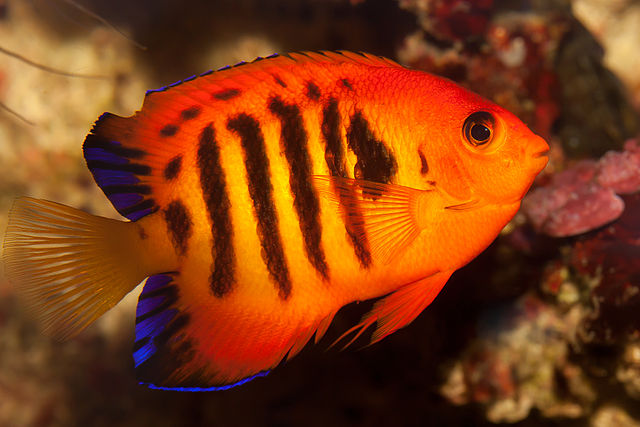
This guide explains the difference between saltwater fish that can and cannot be kept in coral tanks. We cover the definition of reef-safe, the risks posed by angelfish and butterflyfish species, and examples of fish combinations that are gentle on corals.
Key Takeaways
This guide explains the difference between saltwater fish that can and cannot be kept in coral tanks. We cover the definition of reef-safe, the risks posed by angelfish and butterflyfish species, and examples of fish combinations that are gentle on corals.
Related Species
What Is Reef-Safe?
When setting up a coral reef tank, the first challenge you'll encounter is deciding which fish to keep together. Many saltwater fish have the habit of pecking at corals to eat them, some damage corals with their mucus, and others dig through sand to expose coral roots.
"Reef-safe" is an industry term referring to fish that can coexist with corals and invertebrates. However, this is not a certification that guarantees "absolute safety." Results vary depending on individual variation, feeding practices, and tank size. It should be used only as a guideline indicating "lower risk."
In this article, we'll explain the characteristics of commonly selected fish species for reef tanks and specific precautions to take when combining them.
Popular Reef-Safe Fish Species
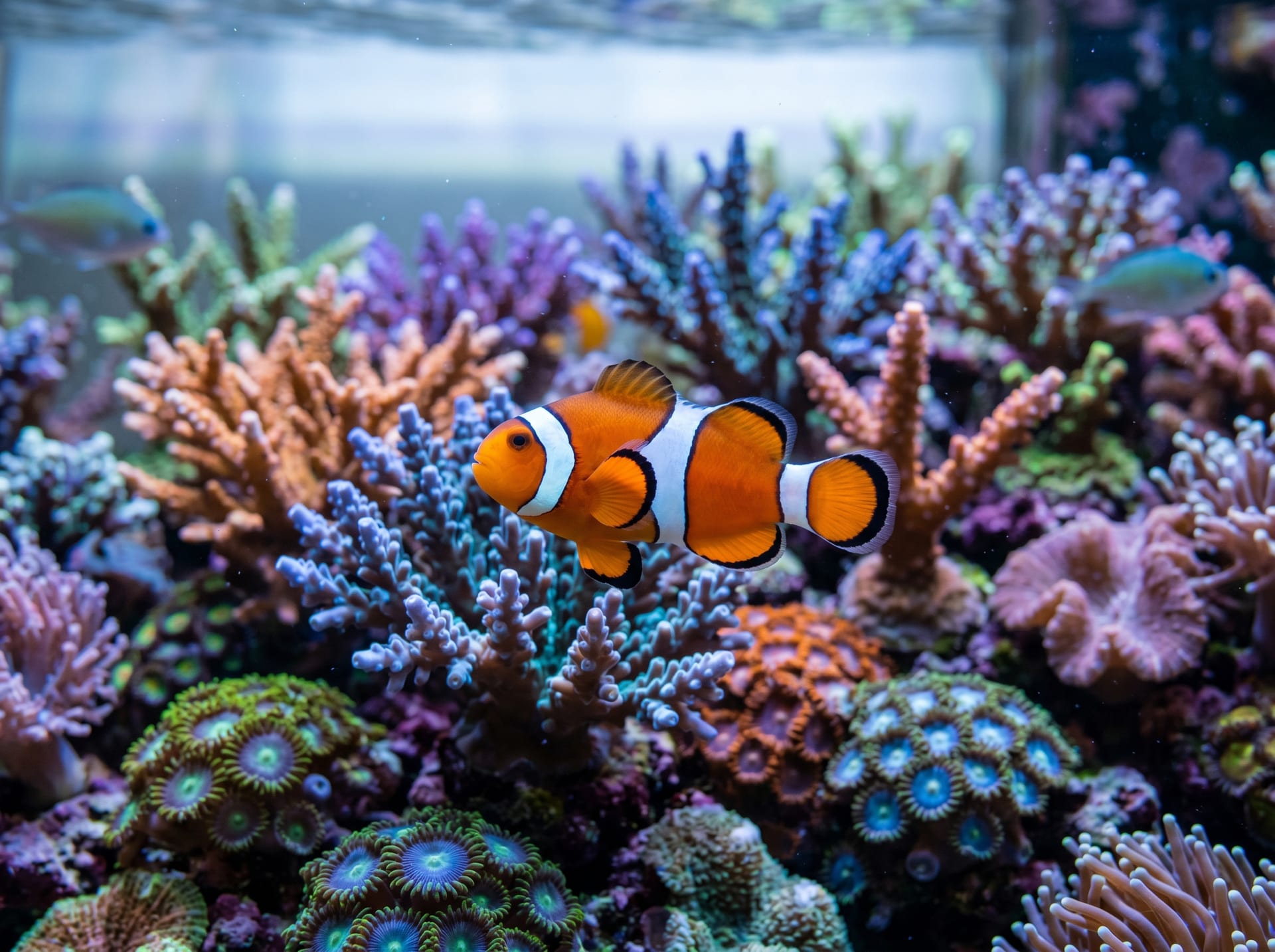
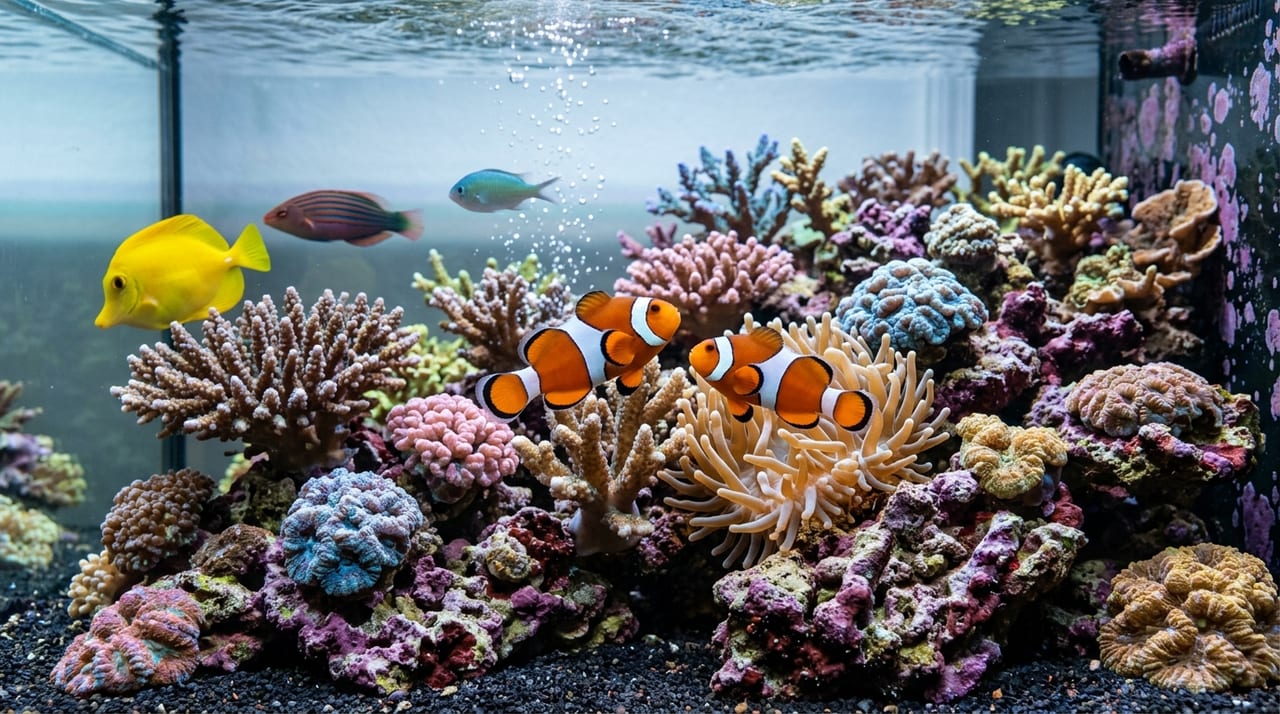
Ocellaris Clownfish (Amphiprion ocellaris)
This is the most well-known reef-safe fish. Its symbiotic relationship with anemones is popular, and it has almost no habit of pecking at corals. However, if you introduce an anemone, it may digest nearby SPS corals, so careful placement is necessary.
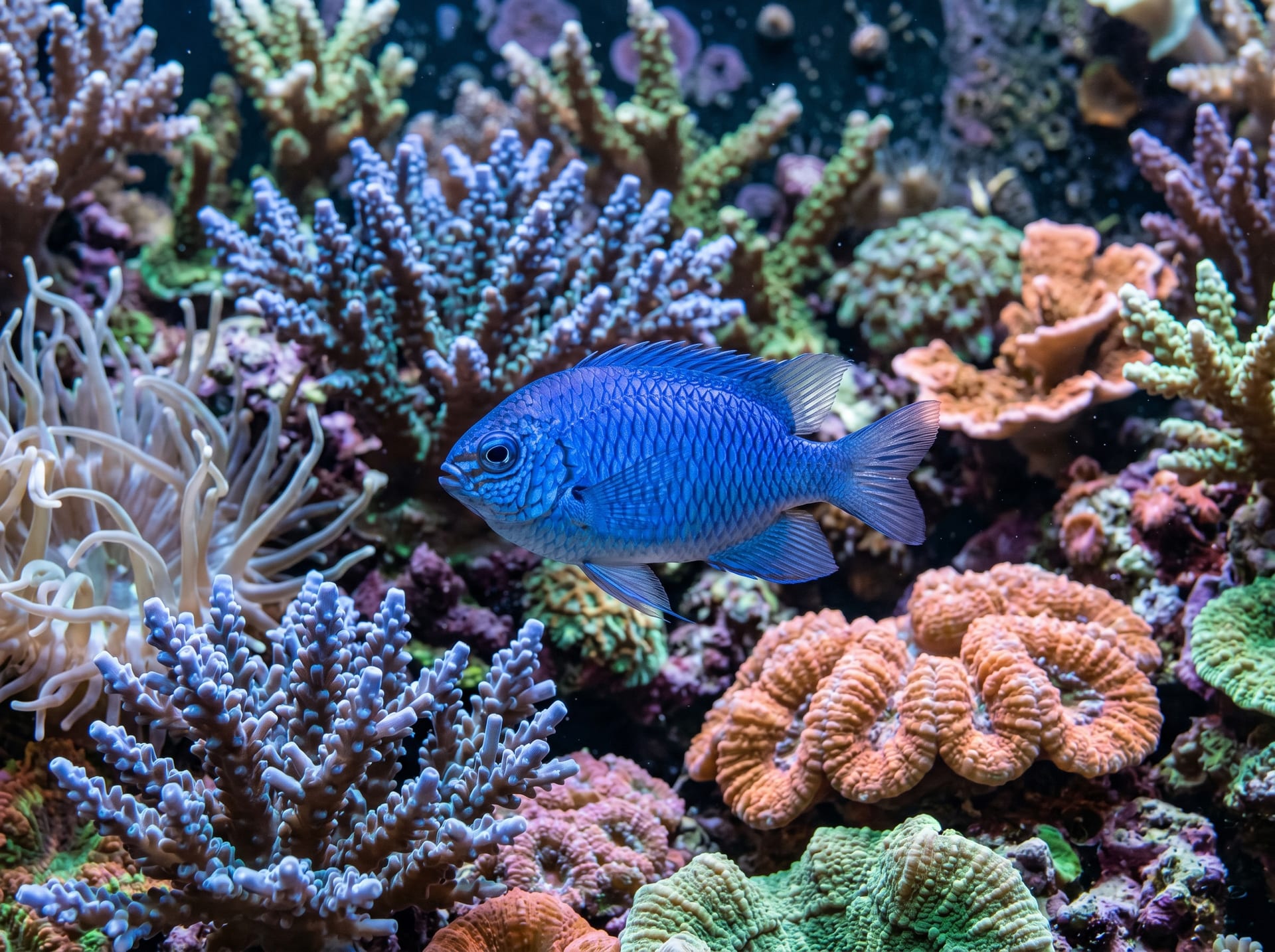
Green Chromis (Chromis viridis)
Small and peaceful, they look great when kept in groups. They prefer zooplankton and artificial foods and don't interfere with corals. However, they tend to have territorial disputes with their own species, and keeping even numbers may sometimes result in less stability than odd numbers.
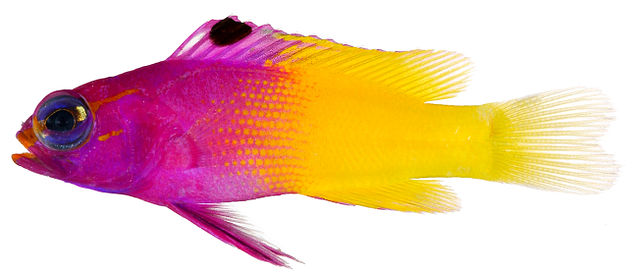
Royal Dottyback (Gramma loreto)
A small fish with striking purple and yellow contrast. It prefers rocky crevices and has low risk of harming corals. Its gentle temperament makes it well-suited for community tanks.
Fridman's Dottyback (Pseudochromis fridmani)
A beautiful deep purple damselfish relative. It has minimal impact on corals, but shows aggression toward its own species and closely related species. Single specimens or multiple fish in large tanks are the standard approach.
Twincspot Goby and Other Goby Species