Display Terrarium Technique for Insect Rearing | Balancing Display and Care
Learn how to transform stag beetle and rhinoceros beetle rearing cases into beautiful display terrariums. We introduce how to choose layout materials, techniques for recreating natural environments, and how to balance aesthetics with proper care.
Key Takeaways
Learn how to transform stag beetle and rhinoceros beetle rearing cases into beautiful display terrariums. We introduce how to choose layout materials, techniques for recreating natural environments, and how to balance aesthetics with proper care.
Related Species

Stag beetle and rhinoceros beetle rearing cases typically follow a simple style: plastic containers lined with substrate and insect jelly placed inside. However, by carefully selecting layout materials and recreating a natural environment as a display terrarium, the enjoyment of rearing is multiplied many times over. We introduce how to create an insect terrarium that also works as interior décor.
What is a Display Terrarium?
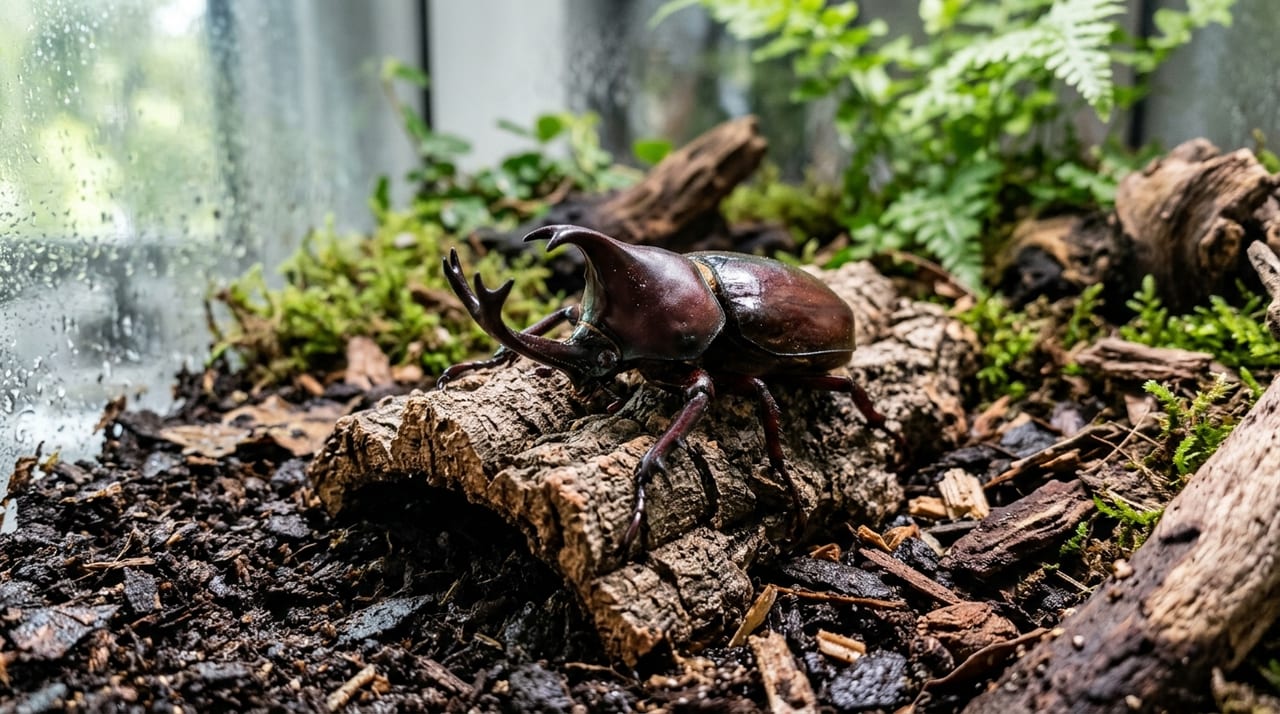
A display terrarium is a rearing space beautifully laid out to resemble a corner of a natural mixed forest, creating an environment where insects live. Natural materials such as driftwood, moss, bark, and fallen leaves are used to create an atmosphere as if the insects were living in a forest.
Beyond mere visual appeal, display terrariums also reduce stress for the insects by providing hiding places and footholds, allowing for observation of more natural behavior. The sight of nocturnal stag beetles walking across driftwood or rhinoceros beetles burrowing under bark—sights rarely seen in standard rearing cases—is the real appeal of this approach.
Choosing Your Container
For a display terrarium, use a container with better visibility than standard plastic rearing cases.
- Glass terrarium: Reptile glass cases such as Exo Terra or glass terrariums have high visibility with their glass front panels and are ideal for insect terrariums. Front-opening doors make feeding and maintenance easy.
- Acrylic case: Clear acrylic cases with high transparency are lightweight, easy to place on shelves, and work well as décor. Choose one with a mesh ventilation opening at the top to ensure adequate airflow.
- Tall cases: For multi-layered layouts, choose a case with sufficient height. To observe insects climbing vertically, a case at least 30 cm tall is ideal.
- Preventing fruit flies: Regardless of which case you choose, fine mesh ventilation openings are necessary to prevent fruit fly entry. If fruit flies get in, they swarm the insect jelly, significantly reducing both hygiene and visual appeal.
Choosing Layout Materials
Here are the key layout materials that form the centerpiece of your terrarium.
- Driftwood: The most important material for the framework of your terrarium. Reptile or aquarium driftwood works well. Pieces with complex, branching shapes allow stag beetles and rhinoceros beetles to climb and walk naturally. After purchase, soak in water for several days to remove tannins, or boil to sterilize before use. If you want to incorporate breeding, consider using a spawning log as part of the landscape, as introduced in Stag Beetle Spawning Log Selection and Preparation Guide.
- Cork bark: Dried bark from cork oak. Lightweight and easy to work with, its curved form is ideal as a hiding place for insects. Leaning it against the back panel creates a natural atmosphere immediately.
- Moss: An important material that brings life to your terrarium. Species like slender peat moss, pillow moss, and maidenhair fern moss work well. Moss also has moisture-retention benefits, preventing substrate from drying out. However, excessive humidity can cause mite infestations, so partial placement is key.
- Fallen leaves: Leaves from trees like Japanese oak or konara oak recreate a forest floor. Use pesticide-free natural leaves collected outdoors or commercially available terrarium leaves. Fallen leaves also serve as food for rhinoceros beetle larvae, making them useful if breeding is intended.
- Stones: Natural stones add weight and depth to your layout. Choose smooth stones and place carefully so insects don't get their legs caught. Areas under stones become hiding places where you can observe stag beetles burrowing.
Layout Steps
Here is the actual layout process.
- Step 1 Prepare the substrate: Place properly degassed and moisture-adjusted substrate in the case. Making the background thicker and foreground thinner creates a sense of depth.
- Step 2 Position the main driftwood: Place the large driftwood that will be the focal point of your layout. Leaning it at an angle creates three-dimensionality. Embed the base firmly in the substrate for stability.
- Step 3 Position secondary materials: Place cork bark on the back and sides, filling gaps with smaller driftwood and stones. Deliberately create spaces where insects can hide.
- Step 4 Position moss: Place moss around the base of driftwood and around stones. Lightly mist the moss before carefully positioning with tweezers. Rather than covering the entire surface, leave some substrate visible for visual contrast.
- Step 5 Scatter fallen leaves: Finally, scatter fallen leaves naturally. Avoid uniform distribution and create some irregularity for a natural appearance.
- Step 6 Set up the jelly dish: Place the insect jelly dish in a location that looks as natural as possible. Using a log-shaped jelly dish placed near driftwood avoids compromising the scenery.
Balancing Display and Care
Here are key points for maintaining a beautiful terrarium while protecting insect health.
- Feeding management: Replace insect jelly every 2-3 days and avoid leaving uneaten food. Always use a jelly dish to prevent jelly spills from soiling the substrate and moss.
- Humidity management: Moss maintenance requires appropriate humidity, but overly moist substrate becomes a breeding ground for mites and fruit flies. Limit misting to the moss itself, and avoid soaking the entire substrate.
- Temperature management: Dense layout materials can reduce airflow. Watch for overheating in summer—place your case in a well-ventilated location or use air conditioning to manage room temperature.
- Maintenance frequency: About once per week, replace jelly, remove waste, and check moss condition. Monthly, partially refresh the layout, replacing soiled materials and replenishing moss to keep the terrarium looking its best.
Lighting Techniques
Lighting is also important for maximizing your terrarium's visual appeal.
Though insects are basically nocturnal, adding LED lighting allows you to enjoy the terrarium's beauty during the day. White LEDs illuminate everything brightly, while warm-toned LEDs create a dappled forest-light atmosphere. Moss requires adequate light to thrive, so lighting is also beneficial for maintaining your moss.
However, since stag beetles and rhinoceros beetles typically hide when exposed to light, it is best to use illumination only when needed rather than leaving lights on continuously.
Find Stunning Specimens on BreederDirect
A beautiful terrarium calls for equally striking insects. On BreederDirect, you can purchase directly from breeders, selecting individuals with excellent color, shine, and build. For example, species like the rainbow stag beetle featured in Caring for Rainbow Stag Beetles are prime examples of display-terrarium showstoppers. You can consult with breeders about rearing environment layouts, gaining tips for balancing display appeal with proper care. Once your insect's life is complete, you may also enjoy seeing it beautifully preserved—check out Creating Displays for Stag Beetles and Rhinoceros Beetles as well.