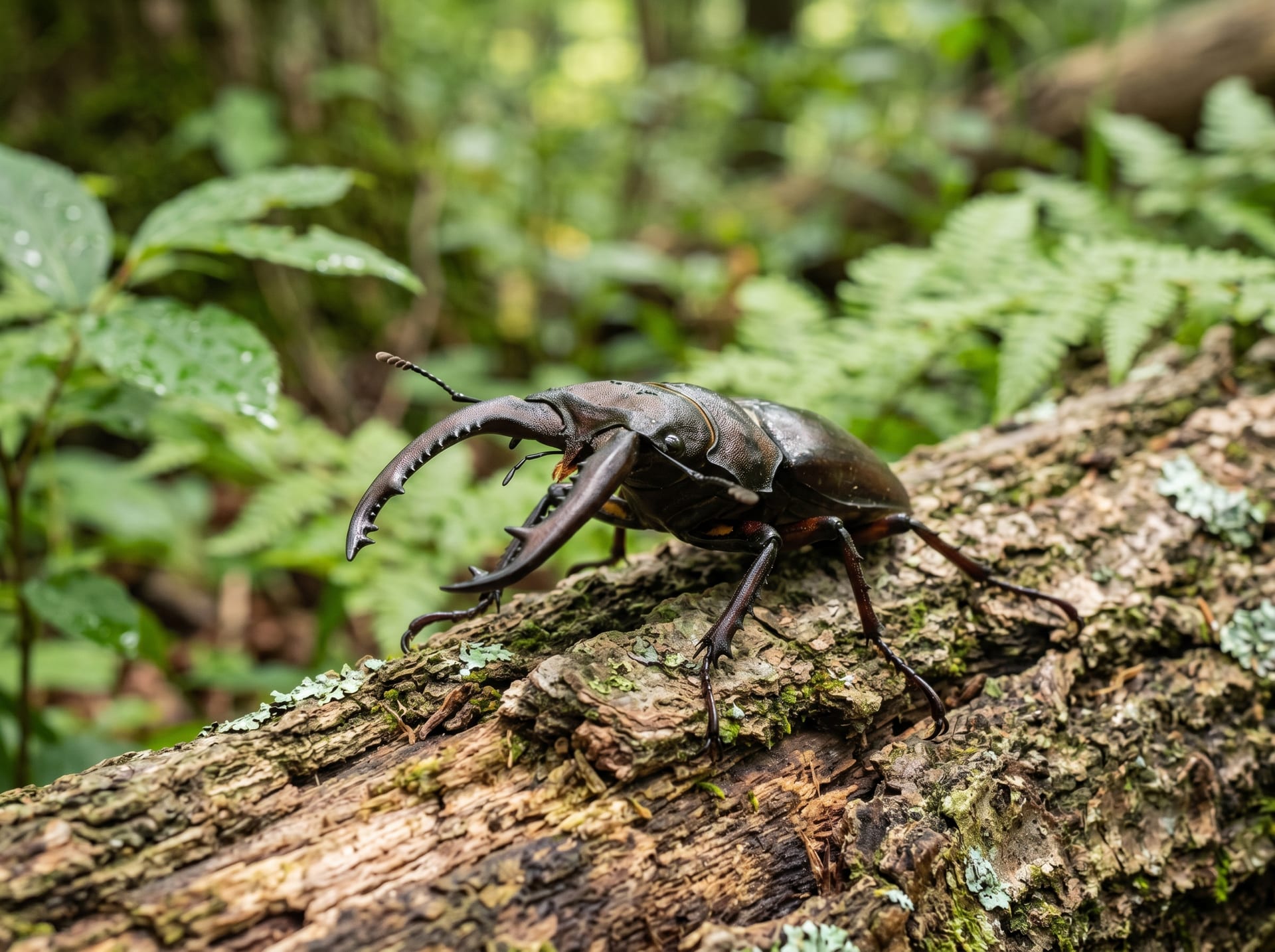
Breeding Guide for Stag Beetles and Rhinoceros Beetles | From Pairing to Spawning Substrate Setup
Comprehensive guide to breeding methods for stag beetles and rhinoceros beetles. Covering pairing methods and timing, how to set up spawning substrates, selecting spawning wood and bedding materials, and timing for larval separation.
Key Takeaways
Comprehensive guide to breeding methods for stag beetles and rhinoceros beetles. Covering pairing methods and timing, how to set up spawning substrates, selecting spawning wood and bedding materials, and timing for larval separation.
Related Species
Breeding (breeding) rhinoceros beetles and stag beetles is one of the greatest joys of keeping them. Inducing your own eggs to hatch, raising larvae, and experiencing the emotion of holding the fully emerged adult beetle in your hands is truly special. In this article, we'll explain in detail everything from the basics of pairing to how to set up spawning substrates and species-specific tips.
Pairing Methods and Timing
The first step in breeding is pairing (mating). Timing and method are critical for success.
Prerequisites for Pairing
Post-emergence feeding completed: Use mature individuals that are at least one month past emergence after they first begin feeding
Both males and females must be healthy: Individuals with minimal tarsal damage and active movement are ideal
Place the female in the container first and allow her to feed on jelly
Place the male on the female's back
Once mating begins, observe for approximately 30 minutes to 1 hour
Separate the pair immediately after mating
✍️
BreederDirect Editorial
The BreederDirect editorial team specializes in care information for animals, covering veterinary care and breeding to deliver beginner-friendly guides.
Find Insects on BreederDirect
Buy directly from verified breeders
Browse Related Listings
Find Insects listings related to this article on BreederDirect. Buy directly from verified breeders.
The main advantage is being able to confirm mating for certain. However, some species may be cautious and refuse to mate.
Setting Up Spawning Substrate
There are two types of spawning substrates: "wood spawning" and "bedding spawning."
Wood Spawning (Japanese Giant Stag Beetles, Small Stag Beetles, etc.)
Prepare spawning wood: Soak Sawtooth Oak or Brush Cherry spawning wood in water for 6–12 hours
Dry in shade: Allow to air dry in shade for 2–3 hours until the surface is dry
Remove bark: Either completely remove the bark or partially peel it away
Set in container: Layer 3 cm of fine particle bedding on the bottom, place the spawning wood, and surround with bedding
Introduce the female: Add an anti-tipping material and jelly, then introduce the female only
Softer spawning wood makes it easier for females to lay eggs. The ideal hardness is approximately the consistency where a nail can easily penetrate it.
Sawtooth Oak: The most common. Versatile material suitable for most stag beetles
Brush Cherry: Slightly harder than Sawtooth Oak. Commonly used for Japanese Giant Stag Beetles
Kawara wood: Soft material colonized by Kawara fungus. Essential for Tarandus and Golden Stag Beetles
Reishi wood: Material colonized by Reishi fungus. Proven highly effective for Tarandus egg-laying
Ideal diameter: 8–12 cm diameter is most manageable
Bedding
Fine particle fermented bedding: Fine texture, ideal for bedding-spawning species
Fully fermented bedding: Highly fermented and dark. Ideal for rhinoceros beetle spawning
Unfermented bedding: Not suitable for spawning. For adult management only
Supplemented bedding: Contains added nutrients for larval rearing. Some varieties can also be used for spawning
Timing for Larval Separation
The process of extracting larvae from a spawning substrate after a certain period is called "separation" or "excavation."
Rhinoceros beetles: Separate larvae 1–1.5 months after setup. You may also manage eggs separately once visible
Wood-spawning stag beetles: Separate 1.5–2 months after setup. Split the spawning wood to recover larvae
Bedding-spawning stag beetles: Separate 1.5–2 months after setup. Gently crumble the bedding to find larvae
Important Notes During Separation
Handle eggs gently with a spoon (squeezing with your fingers will crush them)
First-instar larvae are extremely small—be careful not to overlook them
Manage separated larvae individually in small cups (120–200 cc)
Once they reach the second instar, transfer to mushroom spawn bottles or rearing bedding
Species-Specific Tips
Japanese Giant Stag Beetle
Wood spawning is the standard method. Kawara fungal substrate spawning has the highest success rate. Females live long after spawning, allowing for multiple setup cycles.
Rainbow Stag Beetle
Easy to spawn with bedding. Firmly compress fine particle bedding and including spawning wood will increase egg count. They are prolific, producing 30–50+ eggs. For detailed care information on Rainbow Stag Beetles, see Rainbow Stag Beetle Care and Breeding Guide.
Hercules Beetle
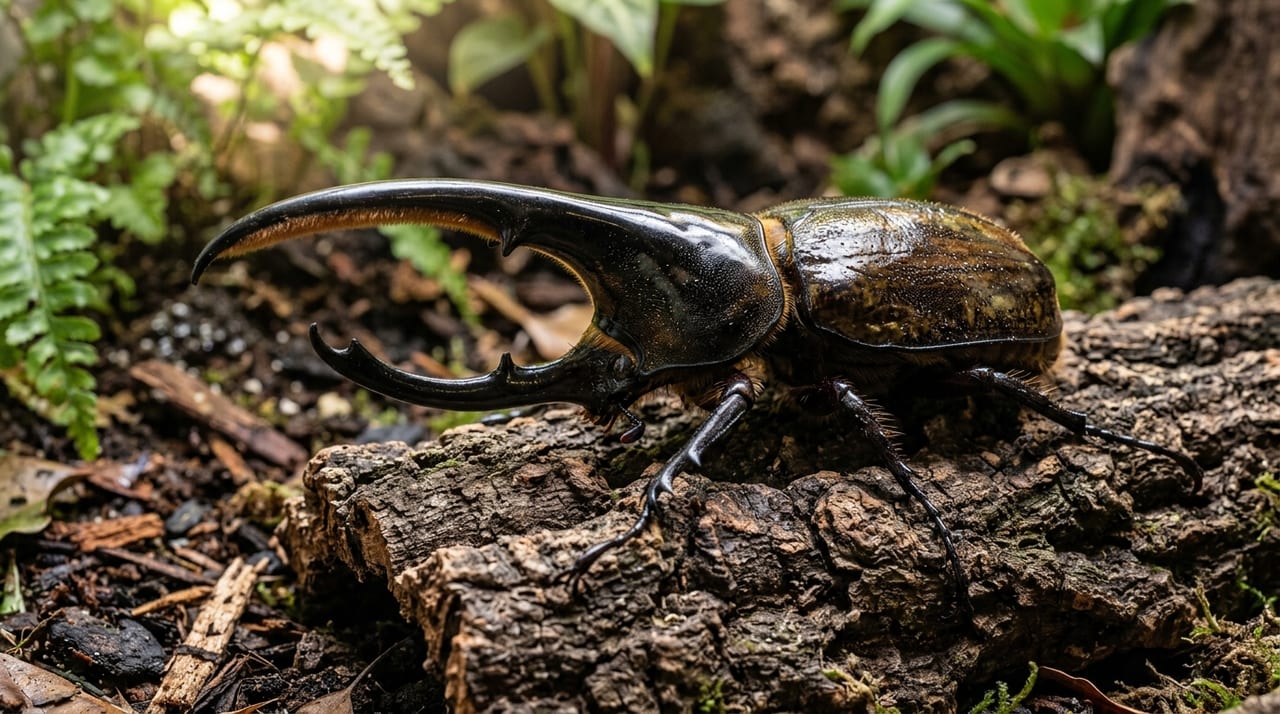
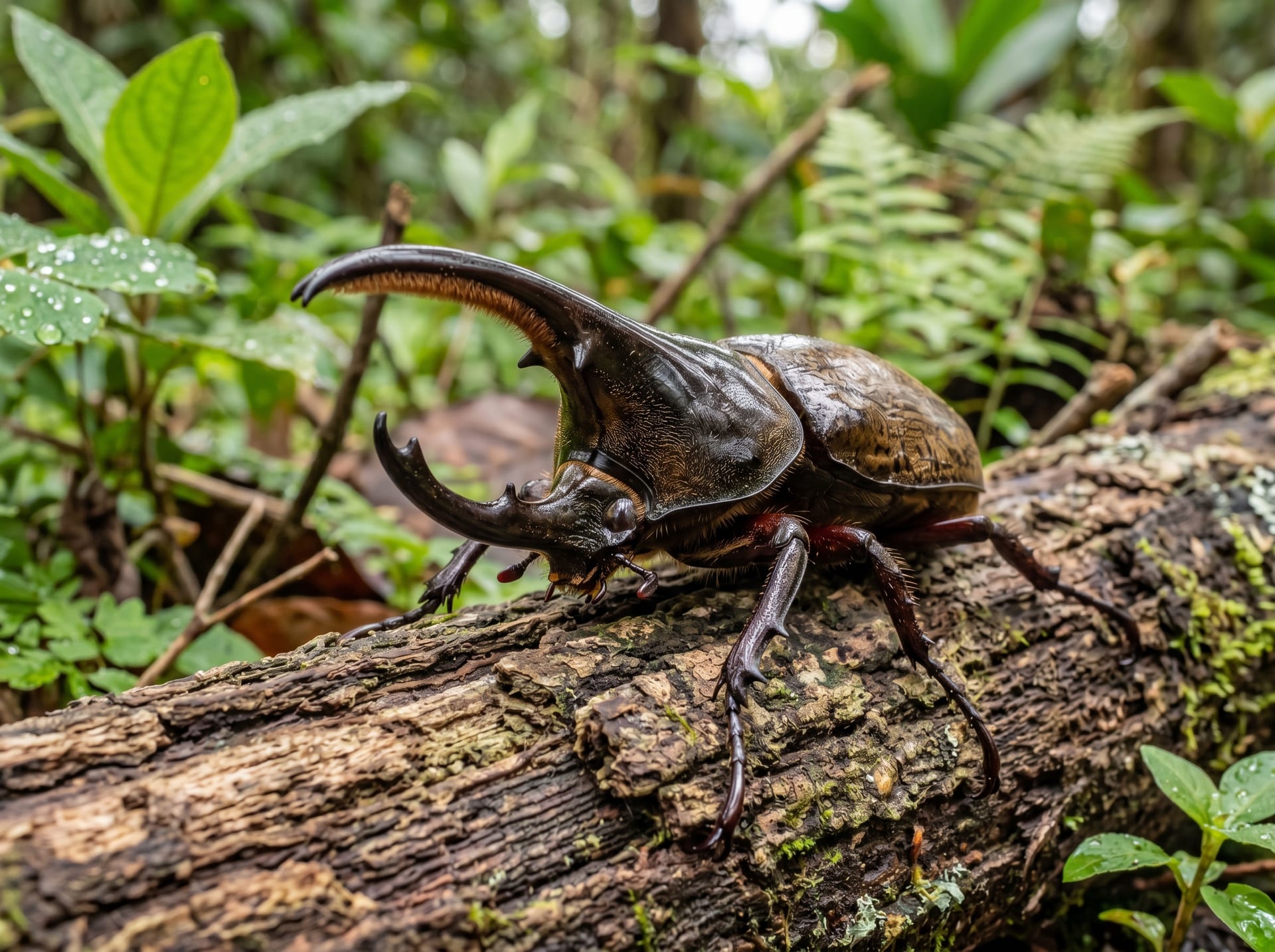
Fill a large container with fully fermented bedding to a depth of 20+ cm. Females are voracious eaters—ensure a constant supply of jelly. The spawning period lasts 1–2 months.
Flathorn Stag Beetle
Bedding spawning is the primary method, but they also spawn in wood. Female killing risk is high—mandible binding is essential for cohabitation pairing.
Saw Stag Beetle
They prefer bedding spawning with fully fermented bedding resembling dark soil. Placing soft spawning wood at the bottom is beneficial.