A Guide to Choosing Goldfish Substrate & Gravel | Comparison of Bare Bottom, Gravel & Sand
A complete guide to choosing goldfish tank substrate. Covers the pros and cons of bare bottom, gravel (Oiso sand), and fine sand, recommended substrates by breed, and how to prevent accidental ingestion risks.
Key Takeaways
A complete guide to choosing goldfish tank substrate. Covers the pros and cons of bare bottom, gravel (Oiso sand), and fine sand, recommended substrates by breed, and how to prevent accidental ingestion risks.
The Role of Substrate and Its Importance in Goldfish Care
✍️
BreederDirect Editorial
The BreederDirect editorial team specializes in care information for animals, covering veterinary care and breeding to deliver beginner-friendly guides.
Find Goldfish on BreederDirect
Buy directly from verified breeders
Browse Related Listings
Find Goldfish listings related to this article on BreederDirect. Buy directly from verified breeders.
Related Tools
Related Articles
Browse by Category
🪸Coral
🐠Marine Fish
🐟Tropical Fish
🐡Goldfish
🐟Medaka
🦎Reptiles
Share
The material placed on the bottom of a tank is called "substrate" or "bottom sand." In goldfish keeping, substrate is not merely a matter of appearance—it is a crucial element that directly impacts biological filtration, goldfish behavior, and water stability.
Bacteria colonize the substrate and play a role in biological filtration, breaking down ammonia. Additionally, goldfish have an innate behavior of poking around sand or mud with their mouths to search for food—a habit referred to as "rooting the bottom." Whether and how well this natural behavior is expressed depends on the presence and type of substrate.
Substrate selection falls into three broad patterns: "no substrate (bare bottom)," "gravel," and "sand (fine grain)," each with distinct advantages and disadvantages.
Advantages and Disadvantages of Bare Bottom
Bare bottom is a style where the glass surface at the bottom of the tank is left exposed without any material.
Advantages
Extremely easy to clean: Feces and leftover food can be immediately removed with a siphon or hose
Easier water management: Since debris doesn't accumulate on the substrate, the risk of ammonia and nitrite buildup is reduced
Early detection of illness: Changes in the goldfish's feces or body are easily visible, making it easier to notice abnormalities
No substrate disturbance: There is zero risk of goldfish inhaling bottom sand and accidentally ingesting it
Disadvantages
Limited bacterial colonization sites: Without substrate, biological filtration capacity is limited to the filter
Appearance can be bare and sterile: It's difficult to create a natural look, and aesthetic appeal is reduced
Goldfish may become stressed: Some individuals experience stress because their rooting behavior cannot be satisfied
Strong light reflection: Reflections from the glass bottom can cause significant stress to goldfish (placing white paper under the bottom is an effective countermeasure)
Many ranchu and premium goldfish breeders adopt bare bottom, prioritizing ease of water quality management and health monitoring.
Advantages and Disadvantages of Gravel
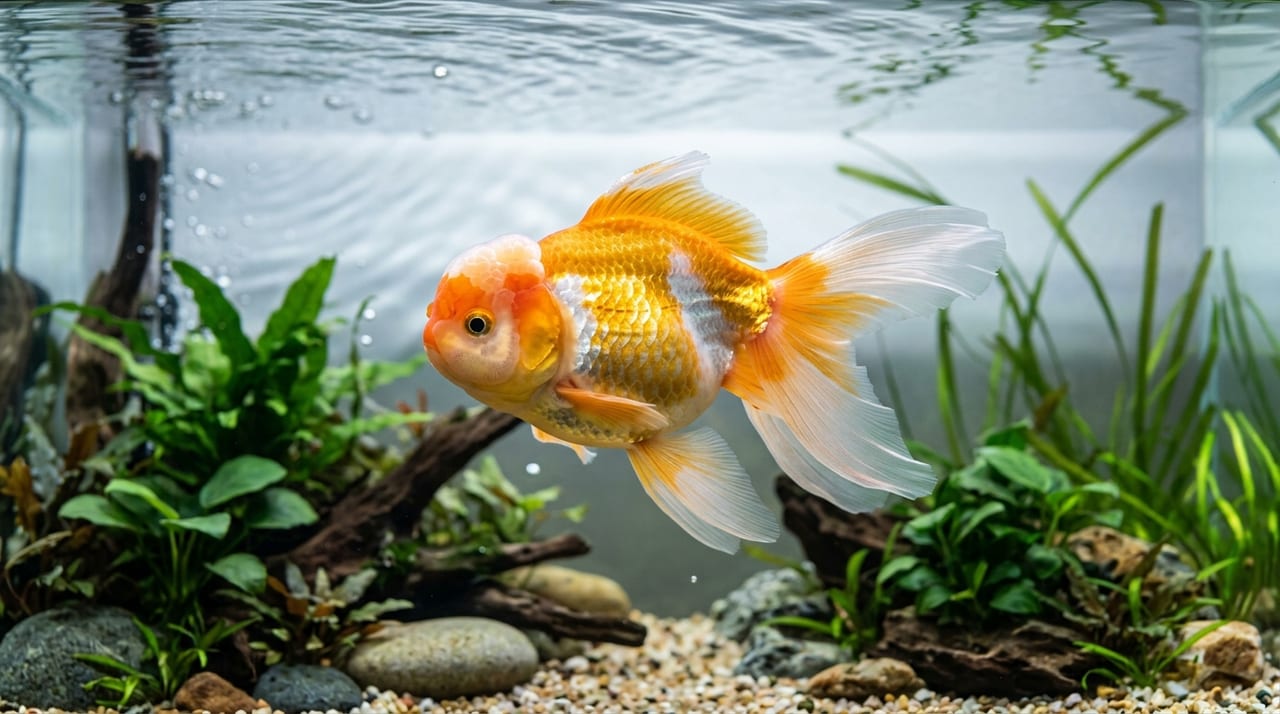
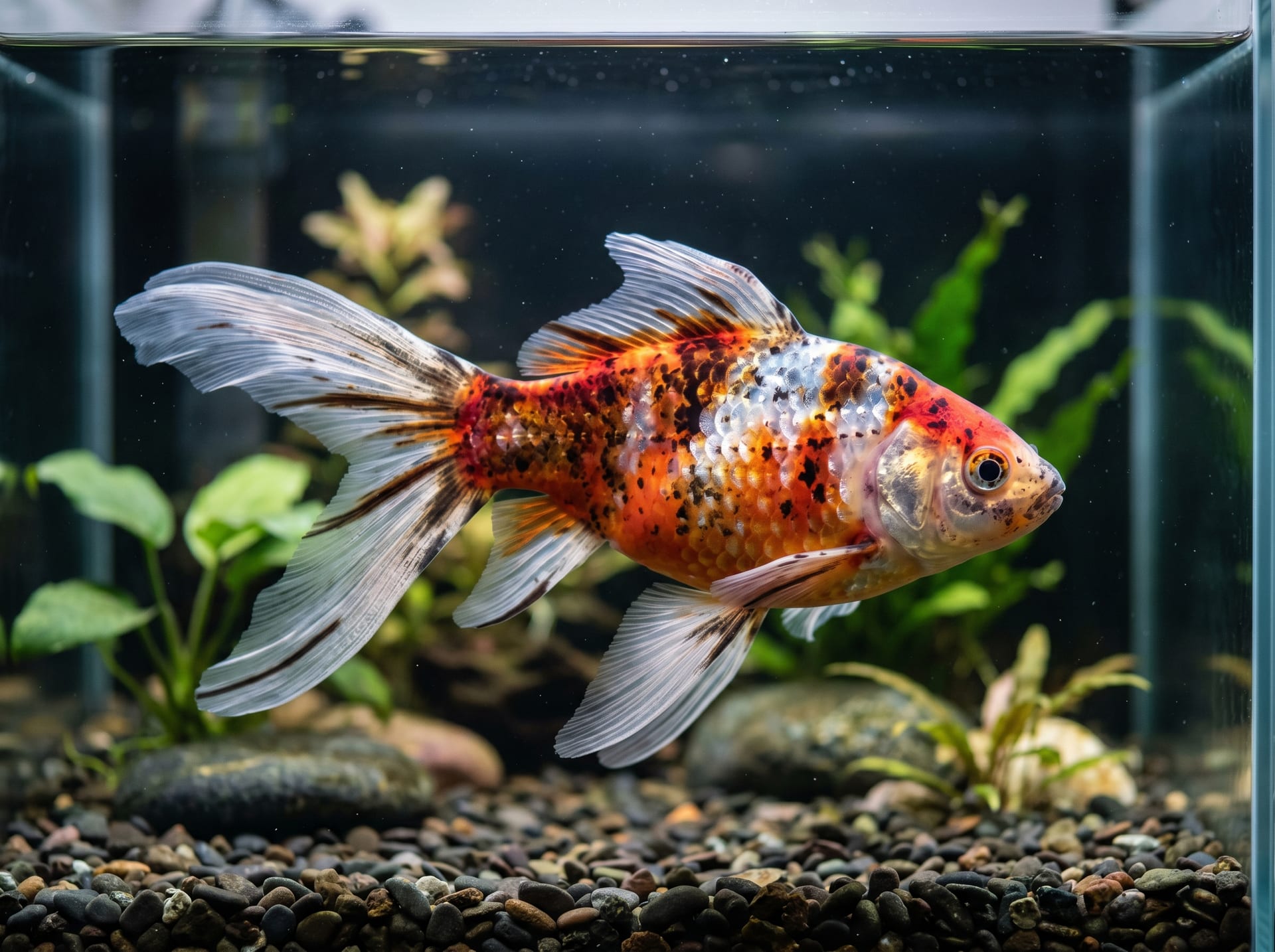
Gravel is the most popular substrate, consisting of pea-sized stones approximately 2–5mm in diameter. Options include river gravel, Oiso sand, and colored gravel.
Advantages
Serves as a habitat for bacteria: The large surface area of gravel makes it ideal for bacterial colonization and strengthens biological filtration
Beautiful aquascaping: Creates a natural appearance, and goldfish colors are displayed nicely
Encourages natural goldfish behavior: Rooting behavior is satisfied, which can reduce stress
Disadvantages
Debris accumulates between gravel particles: Feces and leftover food can become trapped between grains, potentially creating anaerobic bacteria and gas pockets
Regular maintenance is necessary: During water changes, debris must be siphoned from the gravel using a gravel vacuum
Risk of accidental ingestion: Overly fine gravel poses a danger of goldfish swallowing it. It's important to select gravel grain size appropriate to the fish's mouth
When using gravel, aim for a depth of 3–5cm and make regular cleaning with a gravel vacuum (sand cleaner) a routine habit.
Advantages and Disadvantages of Sand (Fine Grain)
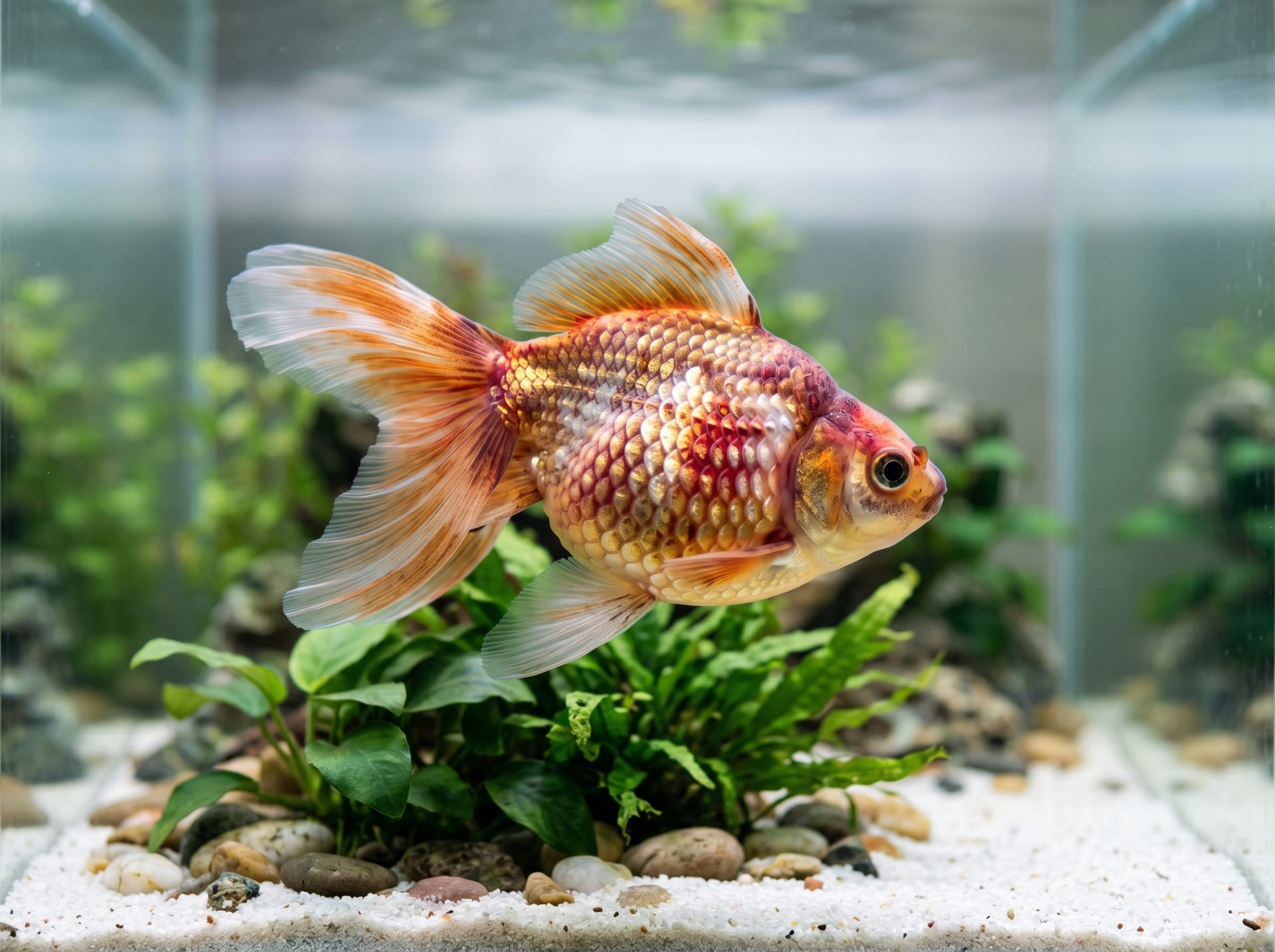
Sand is a fine substrate with a grain size of 1mm or less. Options include river sand, cherry blossom sand, and white sand.
Advantages
Most closely mimics the natural goldfish bottom-rooting behavior: It recreates a bottom environment similar to the wild state, and is said to reduce goldfish stress
Beautiful appearance: Bright white sand, for example, brightens the overall aquascape and enhances the goldfish's coloration
Less likely to damage the body than a hard surface: More gentle for individuals with a habit of resting their bellies on the bottom (ranchu lineage)
Disadvantages
Debris accumulates on the surface more easily: Because sand particles are finer than gravel, they tend to be siphoned up along with the debris during gravel vacuum cleaning
More difficult to manage: With fine sand, anaerobic zones form more easily, requiring periodic stirring and maintenance
Risk of filter intake: Occasionally, fine sand can enter the filter's intake
When using sand, combining it with a "bottom filter" is an effective way to enhance biological filtration.
Recommended Substrate by Goldfish Breed & Purpose
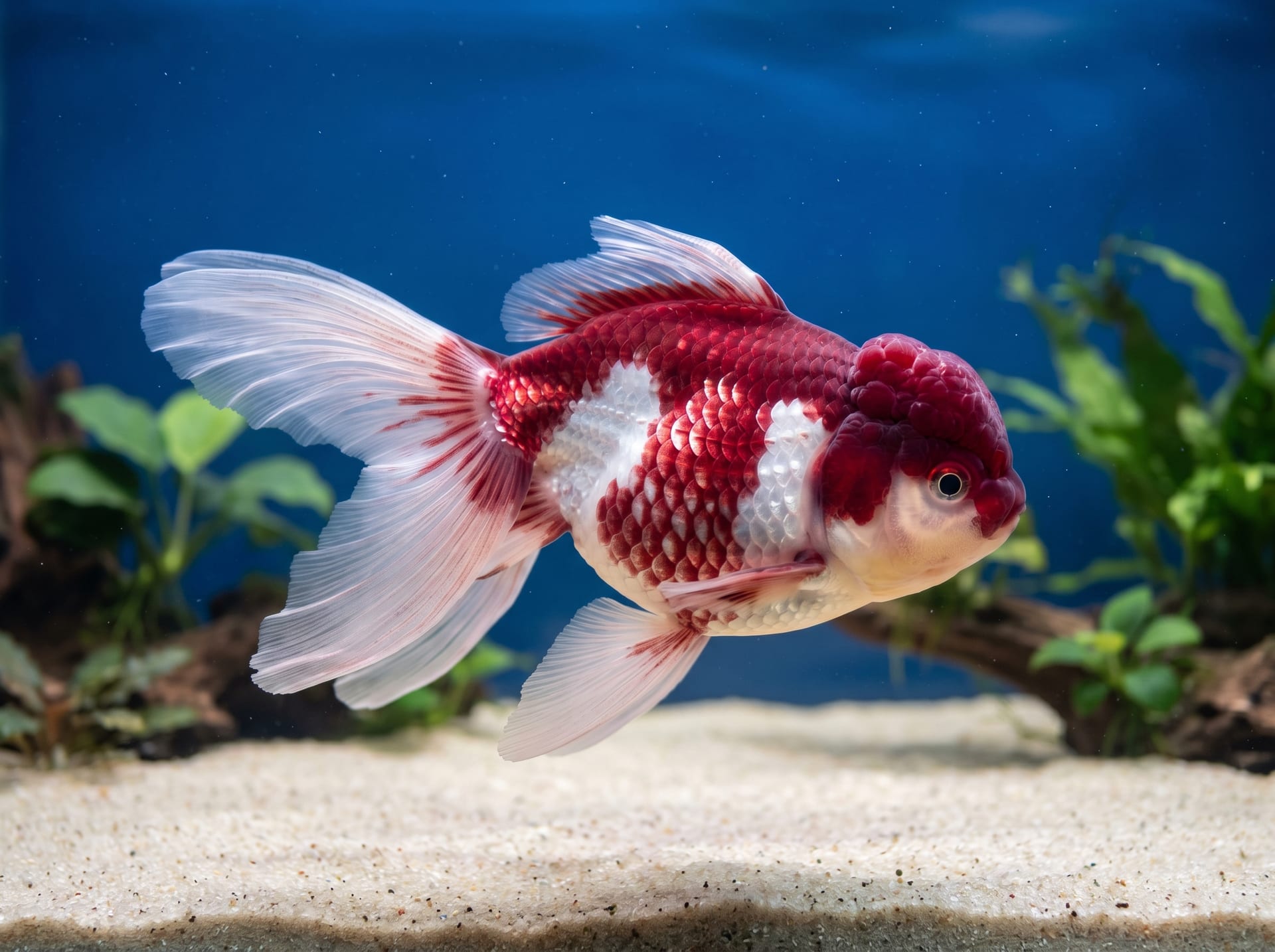
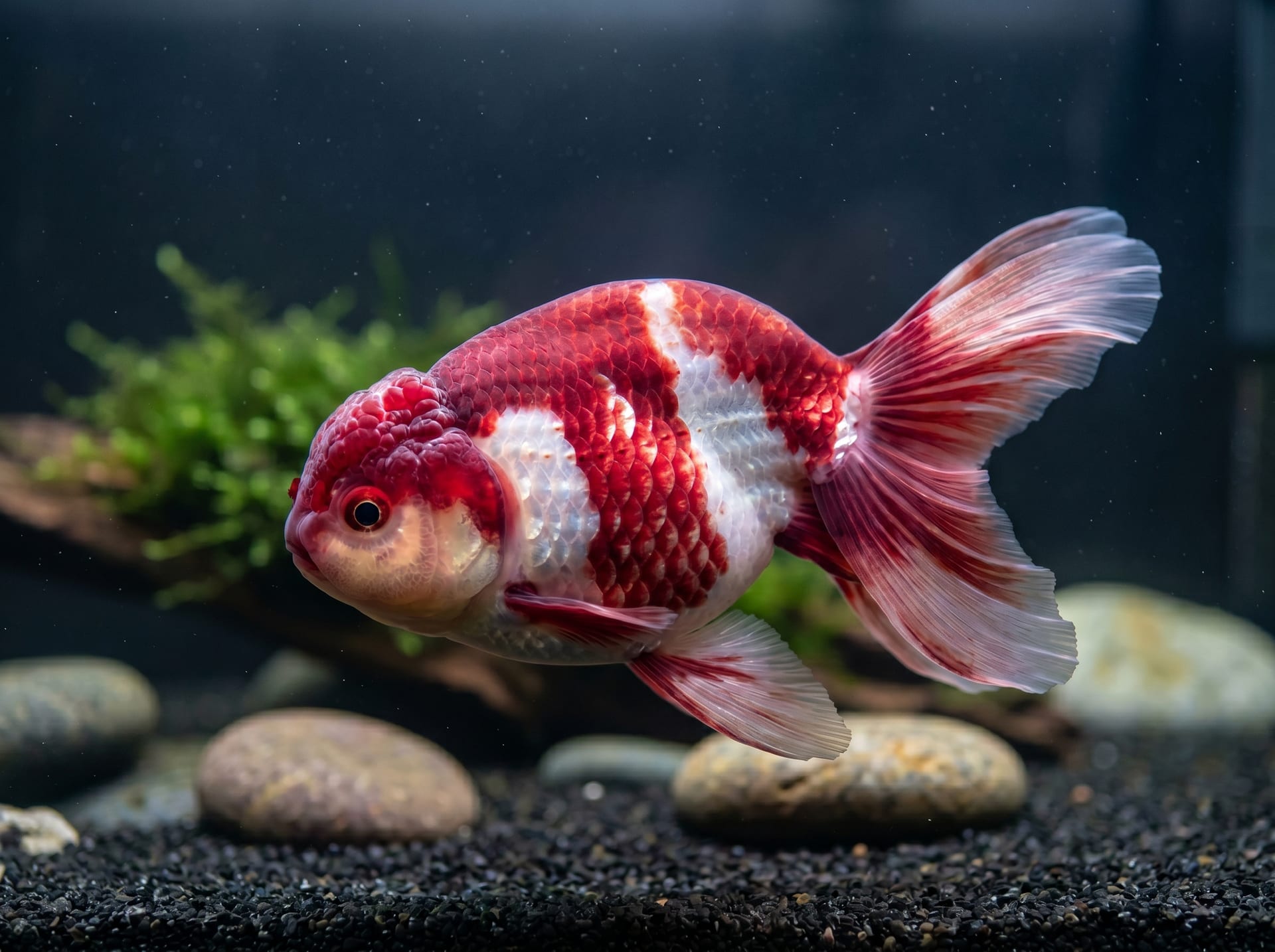
Ranchu & Oranda Lionhead (no dorsal fin, bottom-swimming types)
Since the belly easily touches the bottom, bare bottom or fine sand is recommended. There is a risk of the belly being scratched by sharp gravel edges.
Wakin, Kohaku, & Comet (active swimmers)
Because swimming is active, gravel can easily be disturbed, but if you want to strengthen biological filtration, medium-grain Oiso sand is suitable. Bare bottom management is also an option.
Ryukin, Telescope Eye, & Ping Pong Pearl (round-bodied, short-tailed types)
Swimming is slower and there's a strong tendency to root the bottom, so fine sand or small-grain gravel is appropriate. Pay attention to gravel size to prevent accidental ingestion.
Beginners & Water Quality Management Priority
Bare bottom has the fewest problems and is the easiest to manage. While the appearance is plain, it's an effective choice if prioritizing goldfish health maintenance.
There is no single "correct" choice for substrate—the optimal choice depends on the breed of goldfish kept, the purpose of keeping them, and the time available for management. If unsure, a safe approach is to "start with bare bottom and gradually experiment with different substrates."
Regardless of which substrate you use, maintaining your filter and performing regular water changes are the fundamentals of keeping your goldfish healthy. Don't forget this.