Coral Placement Technique | Basic Rules to Avoid Layout Failures
Explains the basic rules of coral placement in reef tank layouts. Introduces placement locations based on light intensity and water flow, distance between corals, handling of aggressive species, and tips for creating beautiful displays.
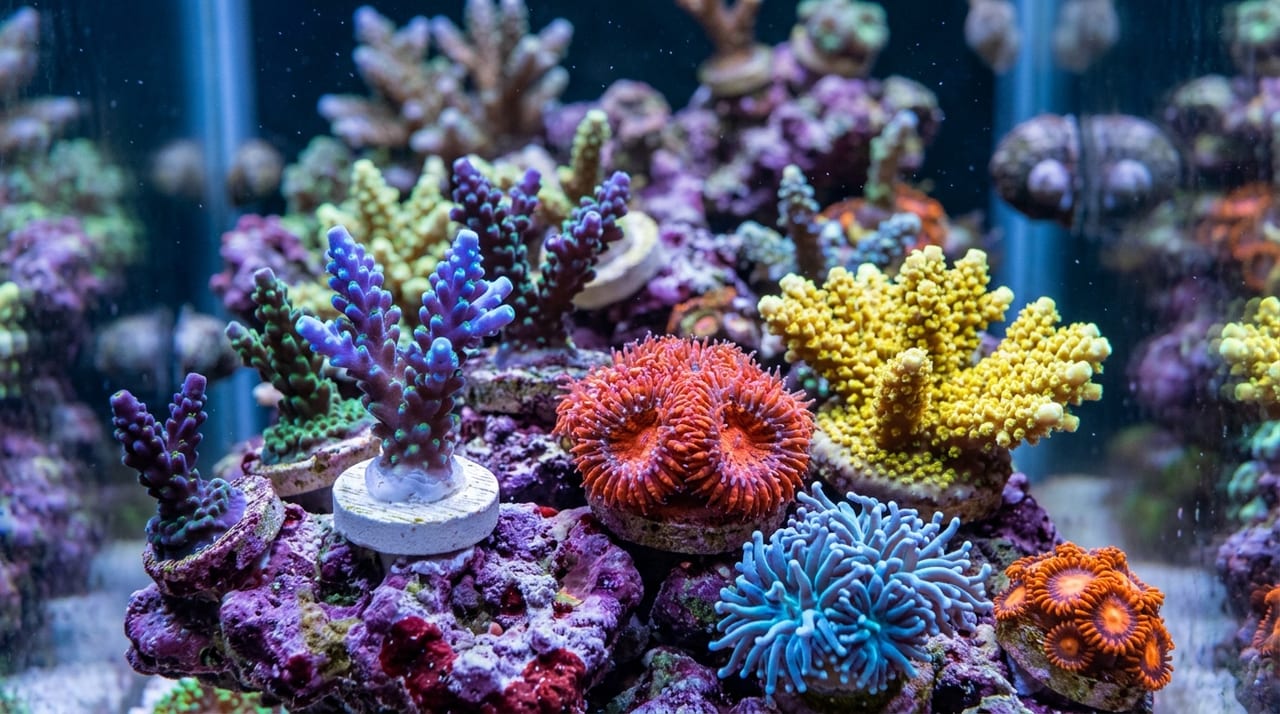
Key Takeaways
Explains the basic rules of coral placement in reef tank layouts. Introduces placement locations based on light intensity and water flow, distance between corals, handling of aggressive species, and tips for creating beautiful displays.
Related Species
Coral Placement Technique | Basic Rules to Avoid Layout Failures
The beauty of a coral tank depends not solely on your sense of layout design. Understanding three key elements—light intensity, water flow, and chemical attack (chemical warfare)—and placing each coral species in a location suited to its habits is the most important fundamental principle for maintaining a healthy and beautiful tank.
Most beginners who struggle with "corals shrinking for some reason" or "colors fading" are facing placement failures. This article systematically explains the basic rules of coral placement to avoid these mistakes. If you're setting up a layout in a small tank under 60cm, also check Nano Reef Tank Setup Guide to make placement easier according to space constraints.
---
Using Different Heights Based on Light Intensity | The Most Basic Fundamental
Corals have vastly different light requirements depending on species. Light reaches easily near the top of the tank and diminishes toward the bottom. Leveraging this characteristic by dividing your tank into three layers—top, middle, and bottom—is the starting point of placement planning.
Upper Level (Near the Water Surface)
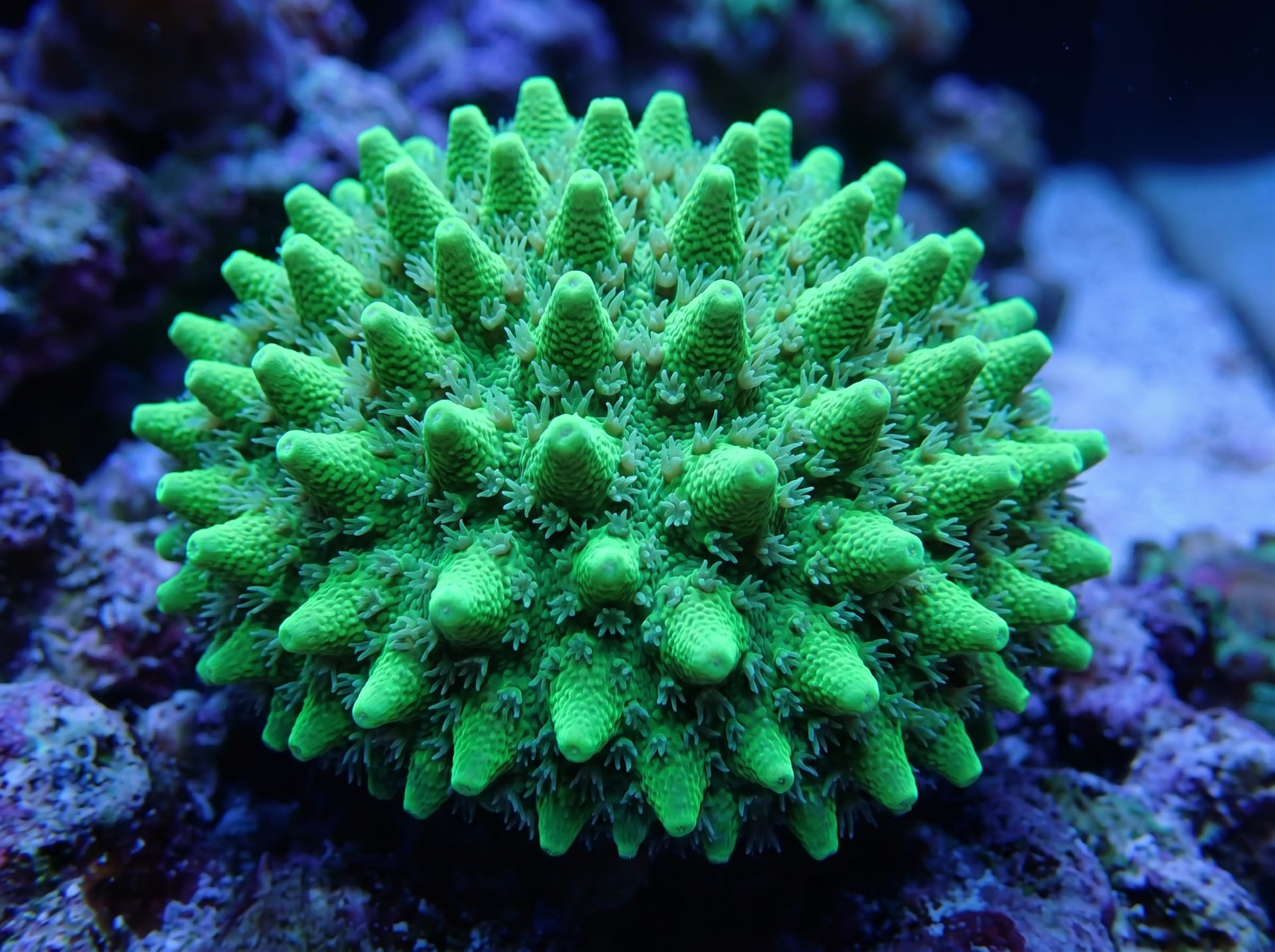
This zone is ideal for corals that require strong light: SPS (stony corals like Acropora, Montipora, and common corals). Insufficient light causes zooxanthellae to increase, turning the coral brown and eventually leading to bleaching. Place them directly under the LED light, roughly 10–20cm from the water surface.
Middle Level (Tank Midwater)
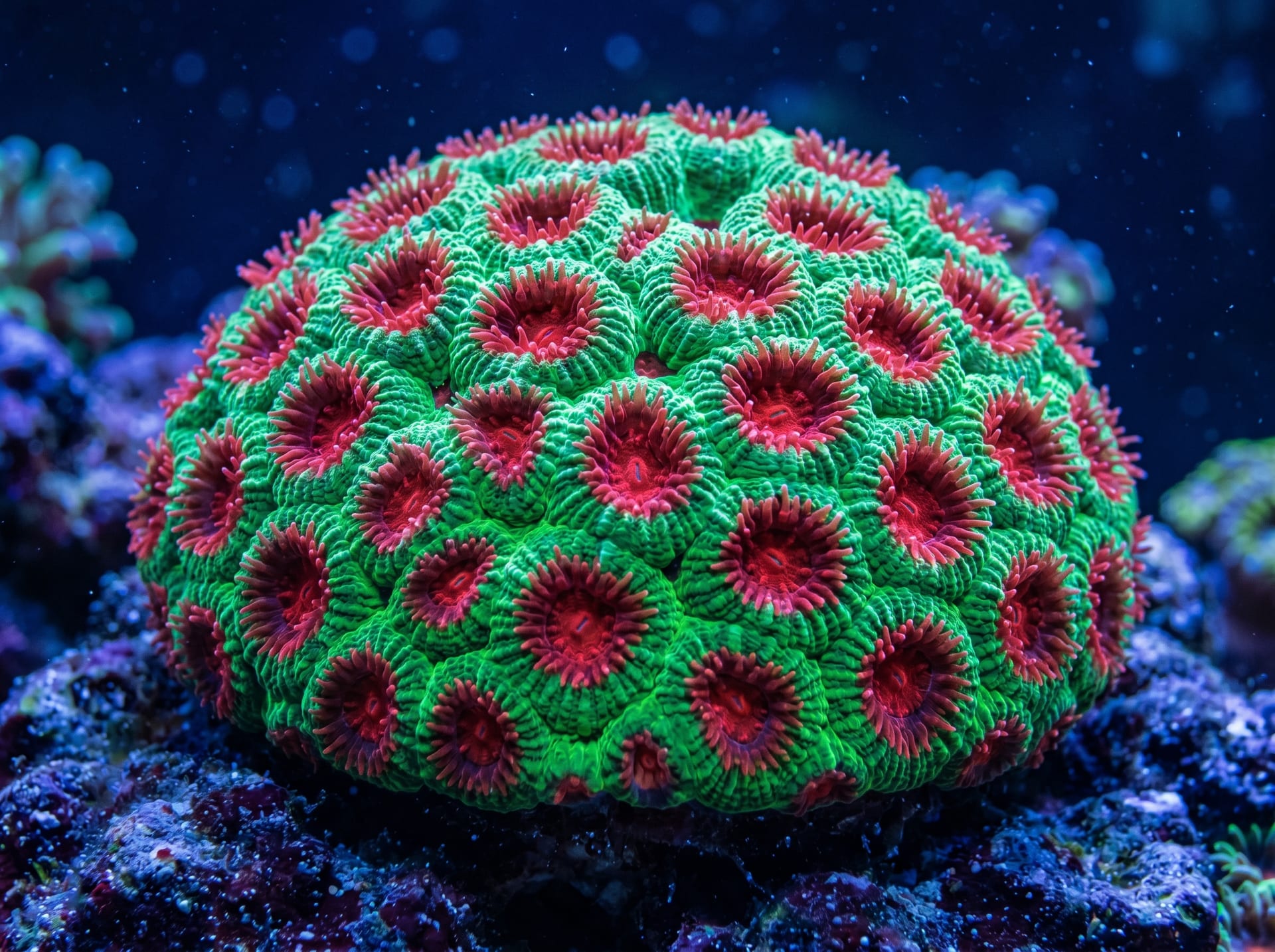
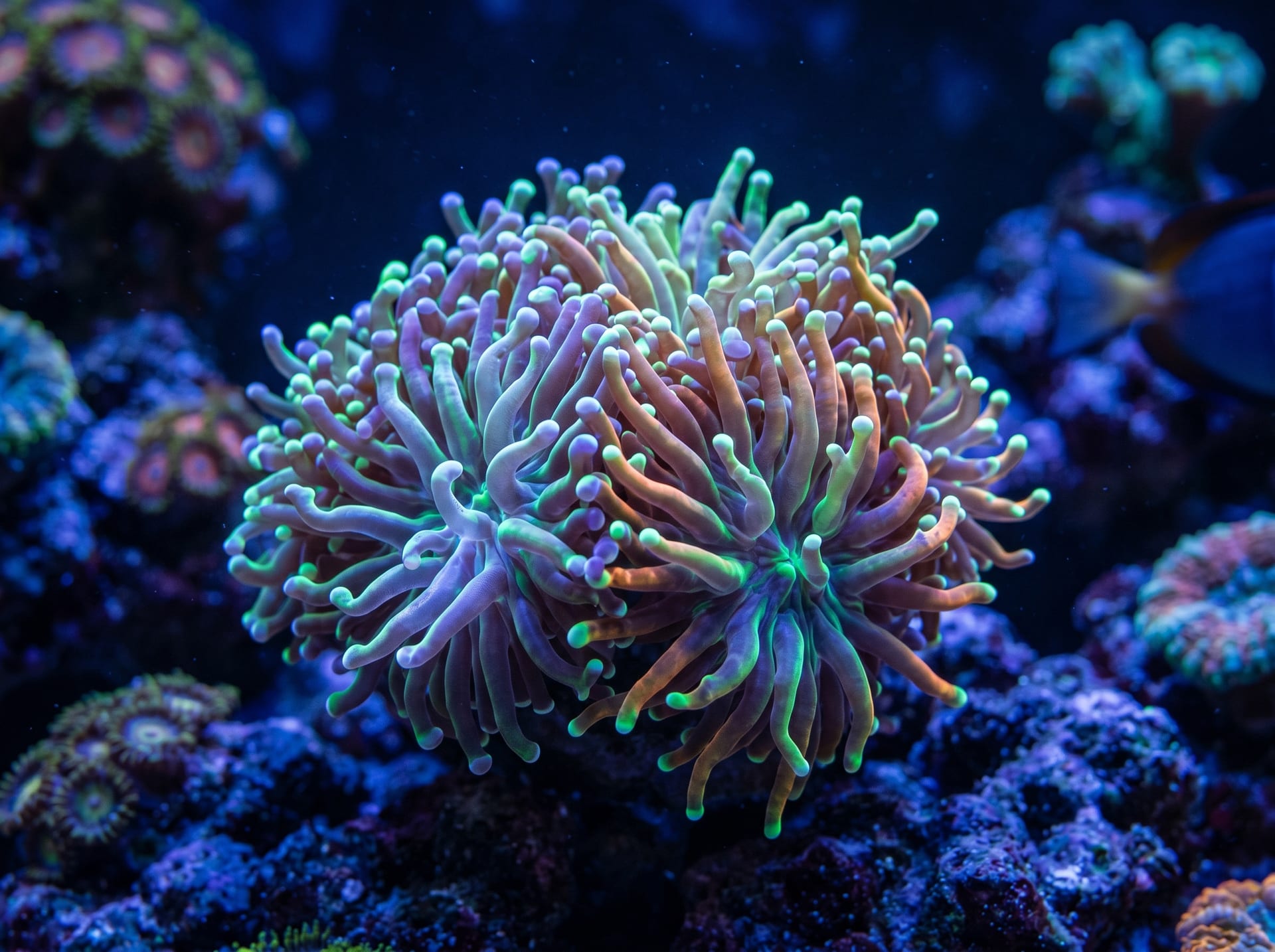
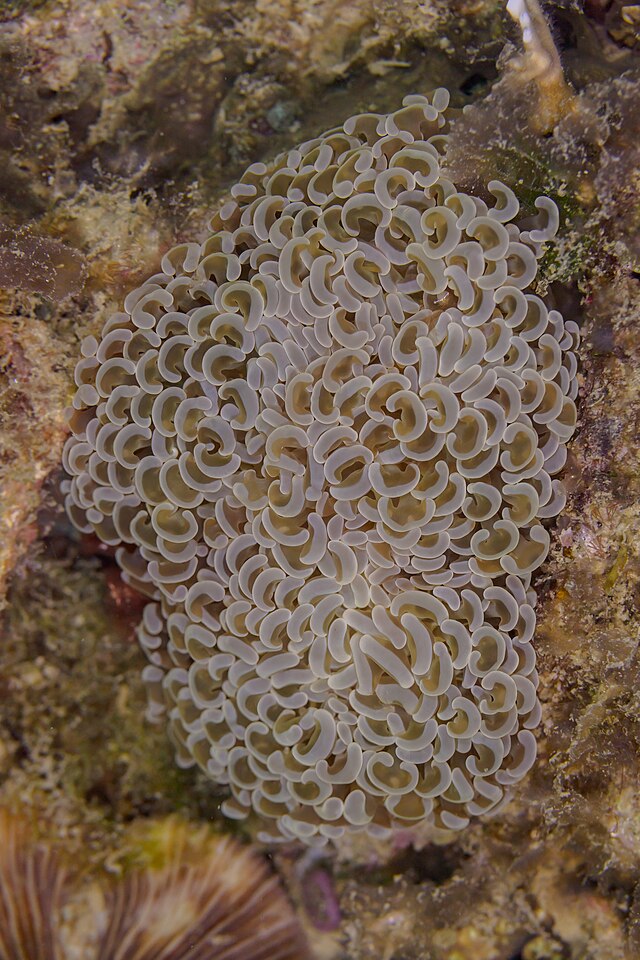
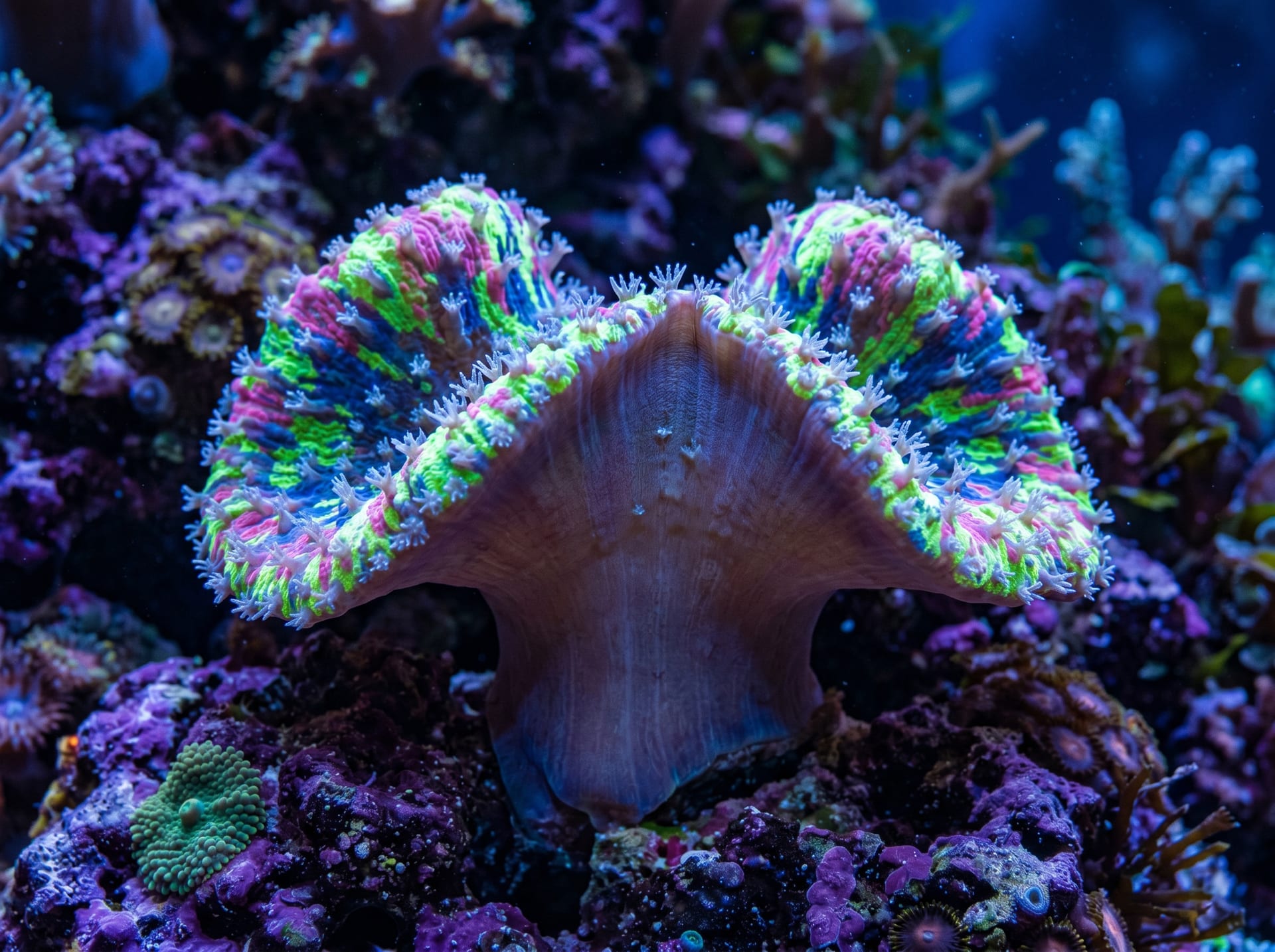
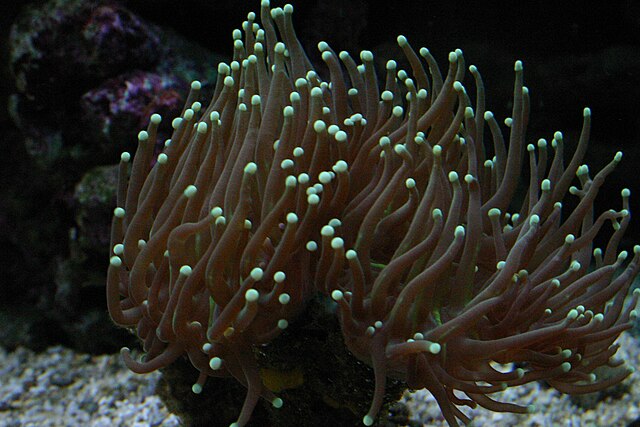
This zone is suitable for LPS (large-polyp stony corals like Elegance, Bubble, and Toadstool corals) and some soft corals (Finger Leather, Mushroom corals). These species are prone to color fade under excessive light, so the middle level with moderate light penetration is ideal.
Lower Level and Sand Bottom
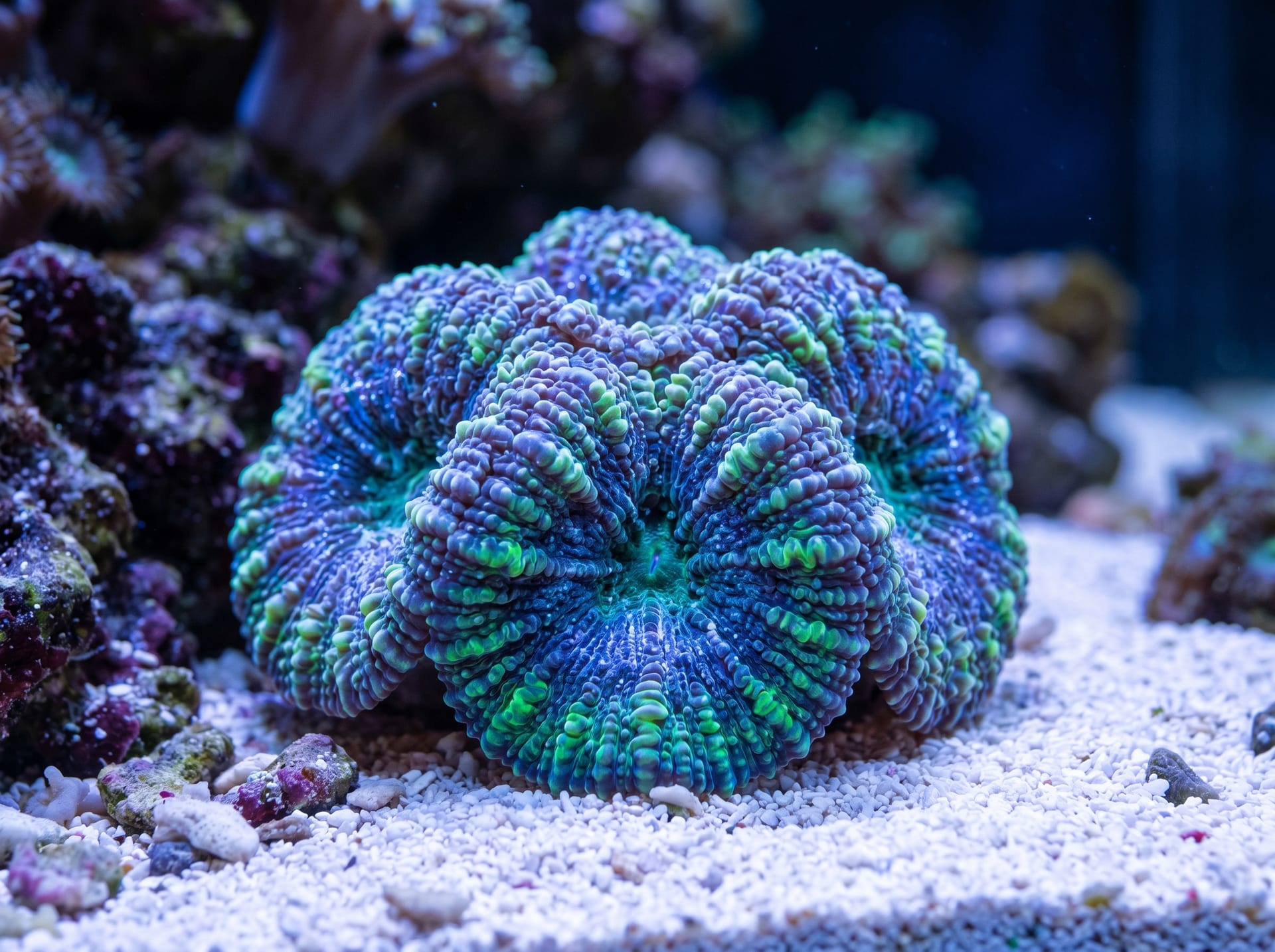
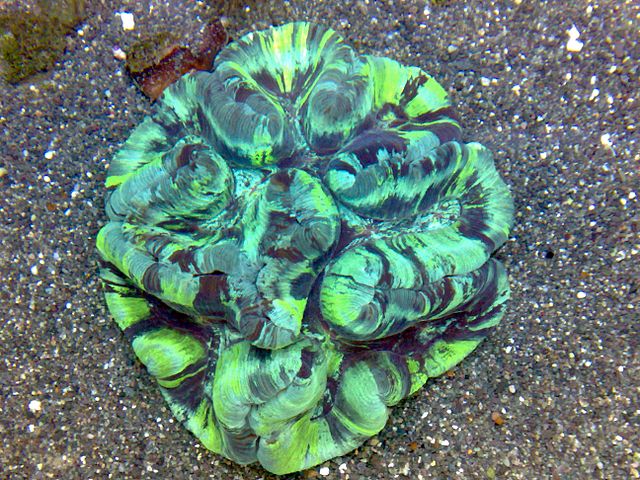
Place species that prefer low light here. Representative examples include Plate corals, Disc corals, and Brain corals. Plate corals display their natural form when placed directly on sand. Placing them in areas with excessively bright light causes polyps to retract and fail to open, so be careful.