Complete Guide to Coral Tank Lighting | LED Selection, Spectrum, and PAR Value Basics | ブリちょく
Coral| ✍️ BreederDirect Editorial
Complete Guide to Coral Tank Lighting | LED Selection, Spectrum, and PAR Value Basics
Explains how to choose the best lighting for corals. A comprehensive lighting guide covering LED spectrum settings, PAR value guidelines, comparisons of major manufacturers' features, and lighting timer setup methods.
Key Takeaways
Explains how to choose the best lighting for corals. A comprehensive lighting guide covering LED spectrum settings, PAR value guidelines, comparisons of major manufacturers' features, and lighting timer setup methods.
Related Species
The Relationship Between Coral Keeping and Lighting | Why Light is So Critical
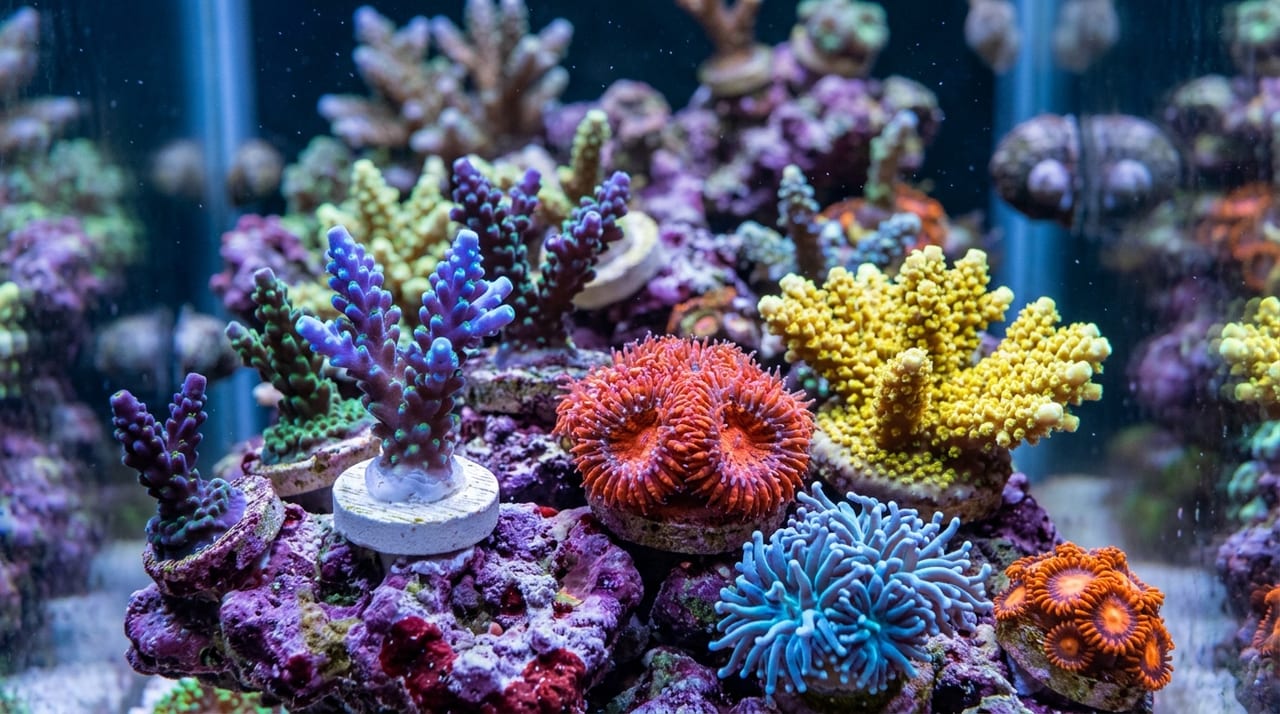
In coral keeping, lighting is far more than just "decorative illumination." Corals have a symbiotic relationship with microscopic algae called zooxanthellae living within their tissues. These zooxanthellae conduct photosynthesis, providing the majority of the coral's energy. In other words, the quality of the lighting environment directly determines the coral's health, growth rate, and color vibrancy.
In nature, corals living at different depths experience vastly different amounts and qualities of light. SPS (Small Polyp Stony) corals in shallow waters require intense light, while LPS (Large Polyp Stony) corals and soft corals found at slightly greater depths have different light requirements. The key to successful long-term coral keeping is recreating lighting conditions in an aquarium that closely mimic each coral's natural habitat.
A common misconception among beginners is that "more light is always better." Excessive light not only causes algae blooms but can also damage corals that cannot adapt to such intense conditions. Understanding appropriate light levels is the first step in choosing the right lighting. For information on selecting reef-safe fish for coral tanks, see How to Choose Reef-Safe Fish.
---
PAR Values and Spectrum | Understanding the Two Key Metrics of Coral Lighting
What is PAR (Photosynthetically Active Radiation)?
PAR (Photosynthetically Active Radiation) is a numerical measure of the light intensity within the wavelength range (400–700 nm) that plants and zooxanthellae can use for photosynthesis. It is measured in units of μmol/m²/s and can be measured with a PAR meter (quantum sensor).
Recommended PAR values for different coral types are as follows:
Coral Type
Recommended PAR
Representative Species
✍️
BreederDirect Editorial
The BreederDirect editorial team specializes in care information for animals, covering veterinary care and breeding to deliver beginner-friendly guides.
Find Coral on BreederDirect
Buy directly from verified breeders
Browse Related Listings
Find Coral listings related to this article on BreederDirect. Buy directly from verified breeders.
When keeping multiple coral types in the same tank, the basic layout is to utilize rockwork height to position SPS corals in bright upper areas, LPS corals in the mid-level, and soft corals in shaded or lower areas.
The Role of Spectrum (Light Color)
The "color" of lighting is expressed as spectrum (wavelength). Effective coral lighting is not simply white but rather a combination of multiple wavelengths.
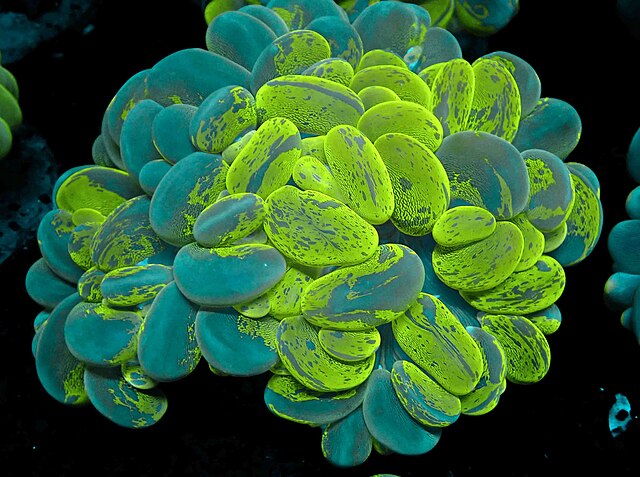
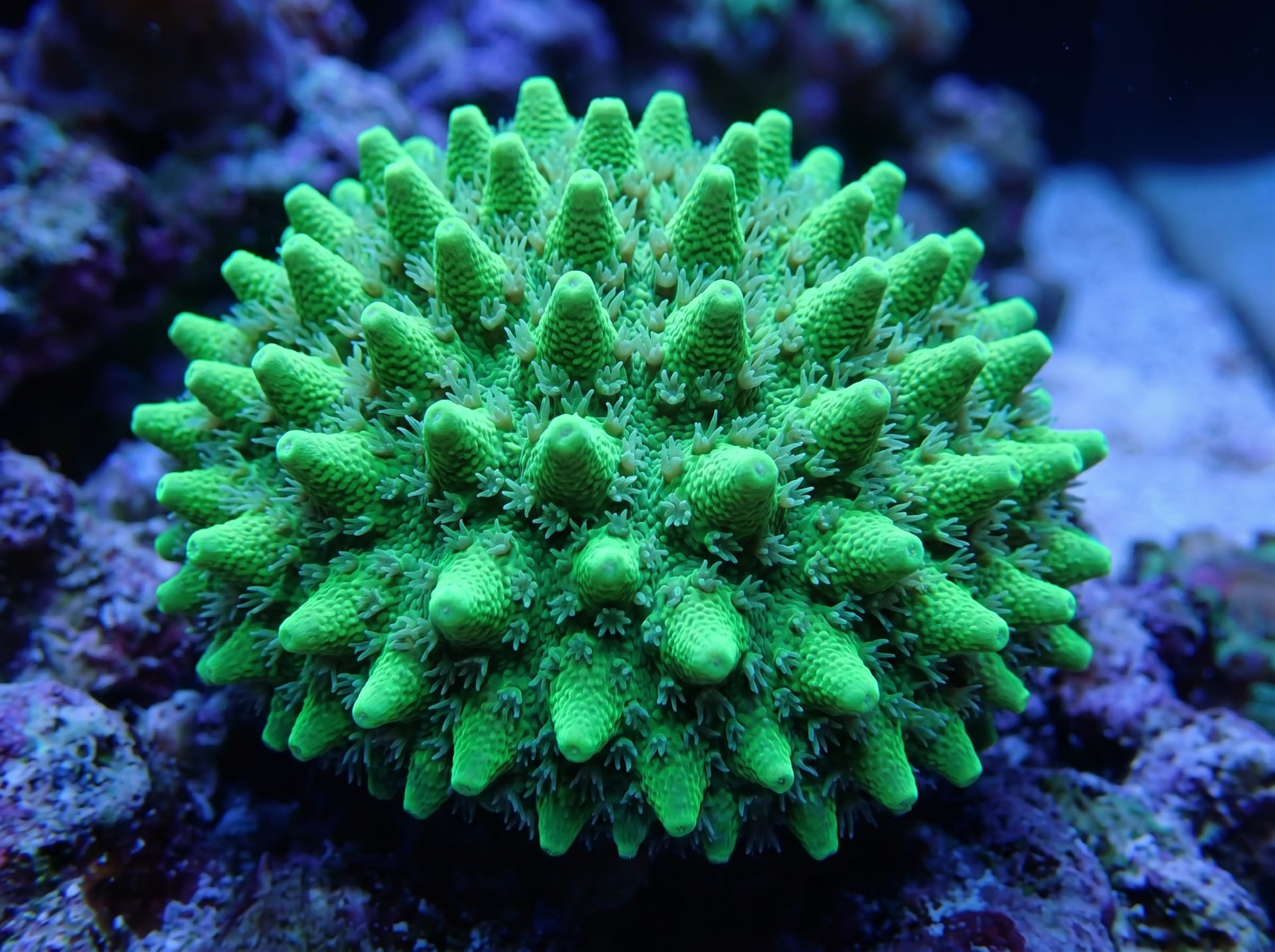
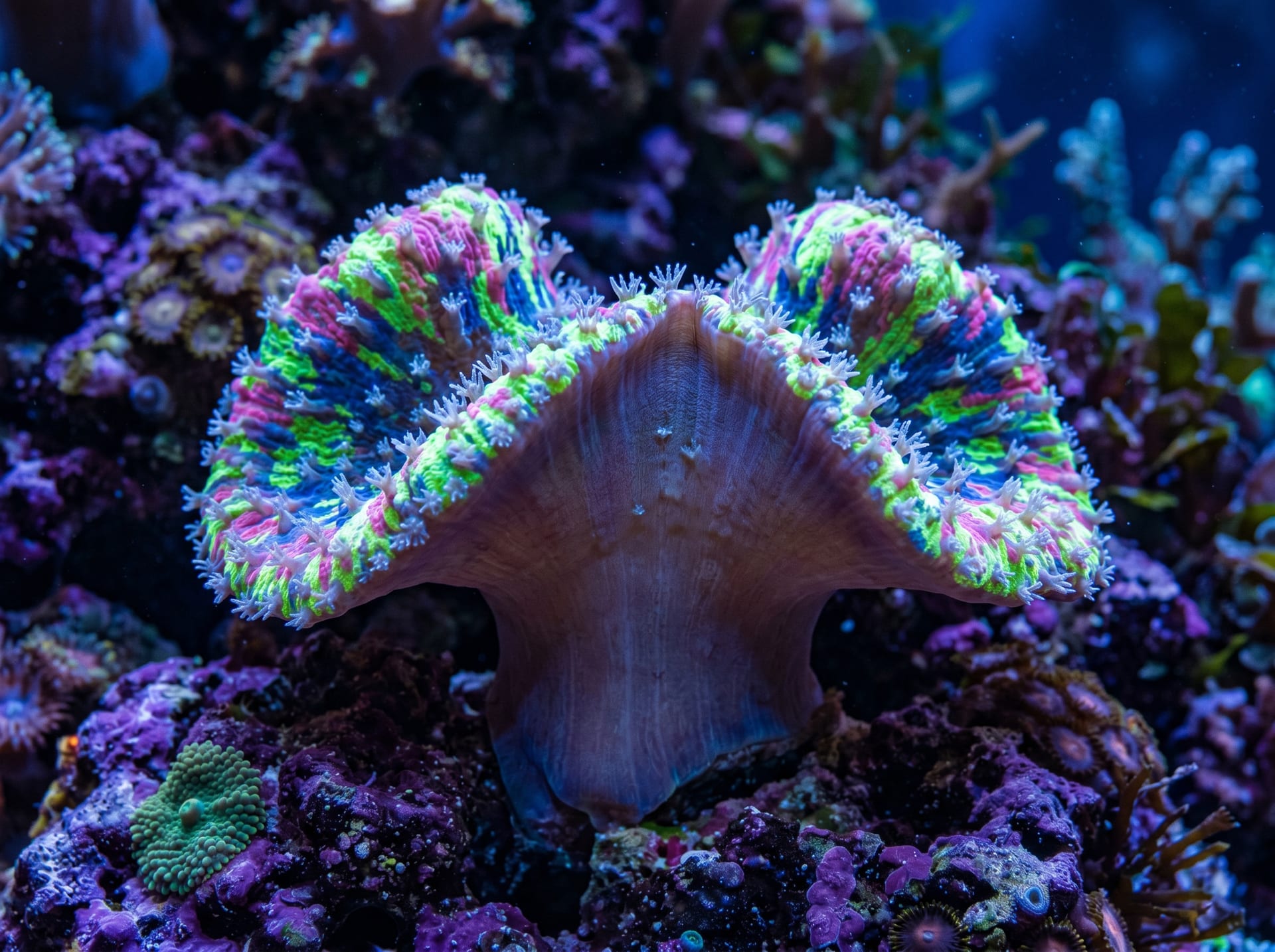
Near-ultraviolet (380–420 nm): Strongly excites fluorescent proteins in corals. This wavelength is essential for bringing out maximum green and purple coloration.
Blue (420–470 nm): The core of coral lighting. It promotes zooxanthellae photosynthesis and mimics the bluish natural light of deep ocean environments. Visually appealing and the most valued wavelength range.
White (approximately 5500–7000K): Produces a natural-looking appearance and brightens the entire aquarium. Important for enhancing viewing aesthetics.
Red (620–680 nm): Effective for zooxanthellae photosynthesis (wavelengths absorbed by chlorophyll), but excessive amounts can promote algae growth. Small amounts are ideal.
---
How to Choose LED Lighting | Four Essential Points to Avoid Mistakes
As of 2026, LED lights are now the dominant choice for coral keeping. They offer significant advantages over metal halide and fluorescent lamps: lower power consumption, reduced heat output, and fine-tunable spectrum control.
Point 1: Number of Channels (Dimming Flexibility)
Entry-level models typically have around two channels (blue and white), while mid-to-high-end models offer 5–7+ independently dimmable channels (UV, blue, cyan, white, red, etc.). More channels enable finer spectrum customization, allowing optimization for your specific corals' needs.
Point 2: Coverage Area and Number of Fixtures
While manufacturers specify the lighting coverage area, the actual number of fixtures needed depends on your tank size. For a 60 cm tank (60×30 cm), one medium-to-high-output fixture suffices; for tanks 90 cm or larger, two or more fixtures arranged to eliminate shadows is ideal. Uneven lighting causes inconsistent coral growth and promotes algae in darker areas.
Point 3: Control Features (Timer, Sunrise/Sunset)
Abrupt on/off cycles cause significant stress to corals. Choose a model with smartphone integration or programmable timer features to create lighting schedules that mimic natural day cycles. This feature is not merely "nice to have" but virtually "essential" for long-term coral health.
Point 4: Heat Dissipation Design and Lifespan
LEDs are sensitive to heat; inadequate cooling causes rapid performance degradation. Check the heatsink size and whether cooling fans are present. While LED chips typically last 30,000–50,000 hours, poor-quality models may show significant light output loss within 1–2 years. Choosing reliable, trusted brands saves money in the long run.
---
Practical Lighting Timer Setup Example
The following schedule mimics natural tropical ocean lighting cycles:
Time
Schedule
7:30–8:00
Sunrise (blue only, gradually increasing from low to full output)
8:00–17:00
Main Period (blue + white + UV, maximum output)
17:00–18:00
Sunset (gradually decreasing to off)
18:00–20:00
Moonlight (blue only at very low output, simulating moonlight)
Target lighting duration is 8–10 hours daily. Exceeding 10 hours promotes algae growth, while less than 8 hours deprives high-light corals like SPS of sufficient photosynthesis.
When introducing new corals, start at about 60–70% of maximum output and gradually increase over 1–2 weeks—a process called "light acclimation." Sudden exposure to intense light can cause zooxanthellae to expel, leading to coral bleaching.
---
Common Lighting Problems and Solutions
Excessive Algae Growth
The most common issue. It usually results from a combination of excessive lighting duration, too much red spectrum, or high nitrate/phosphate levels in the water. First, reduce lighting to 8 hours or less and check water quality.
Coral Bleaching or Discoloration
Bleaching indicates light is too intense (or too weak). Measure PAR values and confirm they match your coral species. Additionally, temperatures above 28°C reduce photosynthetic efficiency and can cause bleaching even with adequate light. Review both lighting and temperature management.
Fluorescence Not Showing or Colors Look Dull
You likely lack sufficient UV-to-blue wavelengths. Increase the output of the blue and UV channels to improve fluorescence. Additionally, older fixtures may output less even at the same settings, so regular PAR measurements are recommended.
---
Brichoku's Safe and Reliable System
Even with comprehensive lighting knowledge, practical questions remain: "Will this really work in my tank?" This is where direct communication with Brichoku breeders becomes invaluable.
Brichoku's coral breeders are professionals with years of hands-on experience. Before purchasing, you can ask questions like "What lighting do you use?" and "What PAR values do you maintain?" to learn the actual conditions in which your prospective corals were raised.
Matching your lighting to the conditions where your coral was grown is one of the most reliable ways to ensure stability after purchase. Brichoku's platform enables direct breeder-buyer communication, making it easy to discuss husbandry details. For more information on spectrum basics, see Lighting Spectrum Fundamentals for Coral Tanks.
All transactions occur safely through the platform, so even first-time coral buyers can purchase with confidence. Combining proper lighting knowledge with corals from trusted breeders is the fastest path to successful coral keeping.