[2026 Edition] 10 Common Coral Care Mistakes and How to Avoid Them
A thorough explanation of 10 common mistakes beginners make in coral keeping, including insufficient lighting, weak water flow, and overdosing additives. Learn specific precautions and practical solutions for soft corals, LPS, and SPS corals.
![[2026 Edition] 10 Common Coral Care Mistakes and How to Avoid Them](https://img.br-choku.com/column-images/sps-acropora-coloring-husbandry-guide/hero-1778480173209.jpg)
Key Takeaways
A thorough explanation of 10 common mistakes beginners make in coral keeping, including insufficient lighting, weak water flow, and overdosing additives. Learn specific precautions and practical solutions for soft corals, LPS, and SPS corals.
Related Species
While coral keeping is the pinnacle of saltwater aquarium keeping, it requires far more delicate management than freshwater fish. In this article, we'll explain 10 common mistakes that beginners make and their specific solutions.
Mistake 1. Tank Startup Period Is Too Short
What's the Mistake? Adding corals just 1-2 weeks after setting up the tank.
Why Is It Dangerous? Bacterial stability is even more critical in coral tanks than in freshwater tanks. If corals are added before the nitrification cycle is established on the live rock, ammonia and nitrite will cause corals to dissolve and bleach. Early-stage dinoflagellate and cyanobacteria blooms also damage corals.
Solutions
- Allow at least 1 month, ideally 2-3 months of maturation time after adding live rock
- Confirm with a test kit that the ammonia → nitrite → nitrate cycle is completely established
- Introduce corals only after nitrate stabilizes below 10 ppm
- Start with hardy soft corals (Ricordea, zoanthids)
Mistake 2. Inadequate Lighting or Incorrect Spectrum
What's the Mistake? Attempting to keep corals with cheap white LEDs or freshwater aquarium lights.
Why Is It Dangerous? Corals obtain nutrients through the photosynthesis of zooxanthellae (symbiotic algae) within their tissues. Without sufficient light, zooxanthellae cannot function, leading corals through a process of weakening, browning → bleaching → death. Strong lighting is especially essential for SPS corals.
Solutions
- Invest in coral-specific LED lighting (full spectrum: blue/violet/UV + white)
- Soft corals and LPS: approximately 100-200 PAR is sufficient
- SPS (such as Acropora): 300-500+ PAR required
- Manage lighting duration with a timer: 8-10 hours per day
- Place new corals in the lower part of the tank and acclimate them to light over 1-2 weeks (photo-acclimation)
Mistake 3. Weak or Improper Water Flow
What's the Mistake? Relying solely on the filter outlet for water flow.
Why Is It Dangerous? Corals remove waste and receive oxygen and nutrients through water flow. Weak flow causes detritus to accumulate on coral surfaces, leading to tissue necrosis. Conversely, excessively strong direct flow also damages corals.
Solutions
- Install a circulation pump (wave maker). Random intermittent flow is ideal.
- Soft corals: gentle indirect flow / LPS: moderate indirect flow / SPS: strong random flow
- Adjust flow direction so it doesn't hit corals directly; reflect it off walls and rocks.
Mistake 4. Overdosing Additives or Adding Without Testing
What's the Mistake? Adding additives excessively thinking "more is better," or adding supplements by feel without testing water parameters.
Why Is It Dangerous? Excess calcium, KH (carbonate hardness), and magnesium cause rapid pH swings and precipitation, damaging corals. Rapid KH fluctuations are especially lethal to corals.
Solutions
- Always test water parameters before adding additives
- Target values: calcium 420-450 ppm, KH 7-9 dKH, magnesium 1,280-1,350 ppm
- Add in small amounts and monitor changes. Avoid large single doses.
- Beginners should safely replenish trace elements through regular water changes rather than additives.
Mistake 5. Neglecting Water Changes
What's the Mistake? Thinking "additives eliminate the need for water changes."
Why Is It Dangerous? Water changes remove not only nitrate and phosphate, but also replenish trace elements that additives cannot provide. Skipping water changes causes harmful substances to accumulate, gradually degrading coral health.
Solutions
- Beginners should perform weekly 10-20% water changes as a baseline.
- Use coral-specific artificial sea salt (rich in trace elements).
- Prepare sea water with RO/DI water and match specific gravity precisely before water change.
- Match the water temperature to the tank before adding.
Mistake 6. Not Using RO/DI Water
What's the Mistake? Making artificial sea water directly with tap water.
Why Is It Dangerous? Tap water contains silicate, phosphate, and heavy metals beyond just chlorine. Silicate causes brown algae, and phosphate inhibits coral growth while promoting algae.
Solutions
- Install an RO (reverse osmosis) filter. At minimum, pass water through a DI (deionization resin) filter.
- If cost is a concern, purchase RO water by the gallon from aquarium shops.
- Verify pure water quality with a TDS (total dissolved solids) meter (target: 0-5 ppm).
Mistake 7. Careless Specific Gravity Management
What's the Mistake? Allowing water to evaporate, gradually raising specific gravity, or measuring with an inexpensive floating hydrometer.
Why Is It Dangerous? As seawater evaporates, its salinity (specific gravity) increases. Excessive specific gravity stresses corals, and rapid fluctuations cause bleaching.
Solutions
- Measure specific gravity daily with a digital refractometer. Target: 1.024-1.026.
- Replace evaporated water daily with RO water (top-off). Use pure water, not sea water.
- An automatic top-off (ATO) system stabilizes specific gravity and simplifies management.
Mistake 8. Incorrect Coral Placement
What's the Mistake? Placing corals with different light and flow requirements in the same location.
Why Is It Dangerous? Placing light-demanding SPS in dark bottom areas causes browning from light deficiency. Conversely, placing light-sensitive soft corals near the surface causes photodamage. Additionally, when corals touch, they can attack each other with sweeper tentacles.
Solutions
- Near the surface (high light, strong flow): SPS such as Acropora
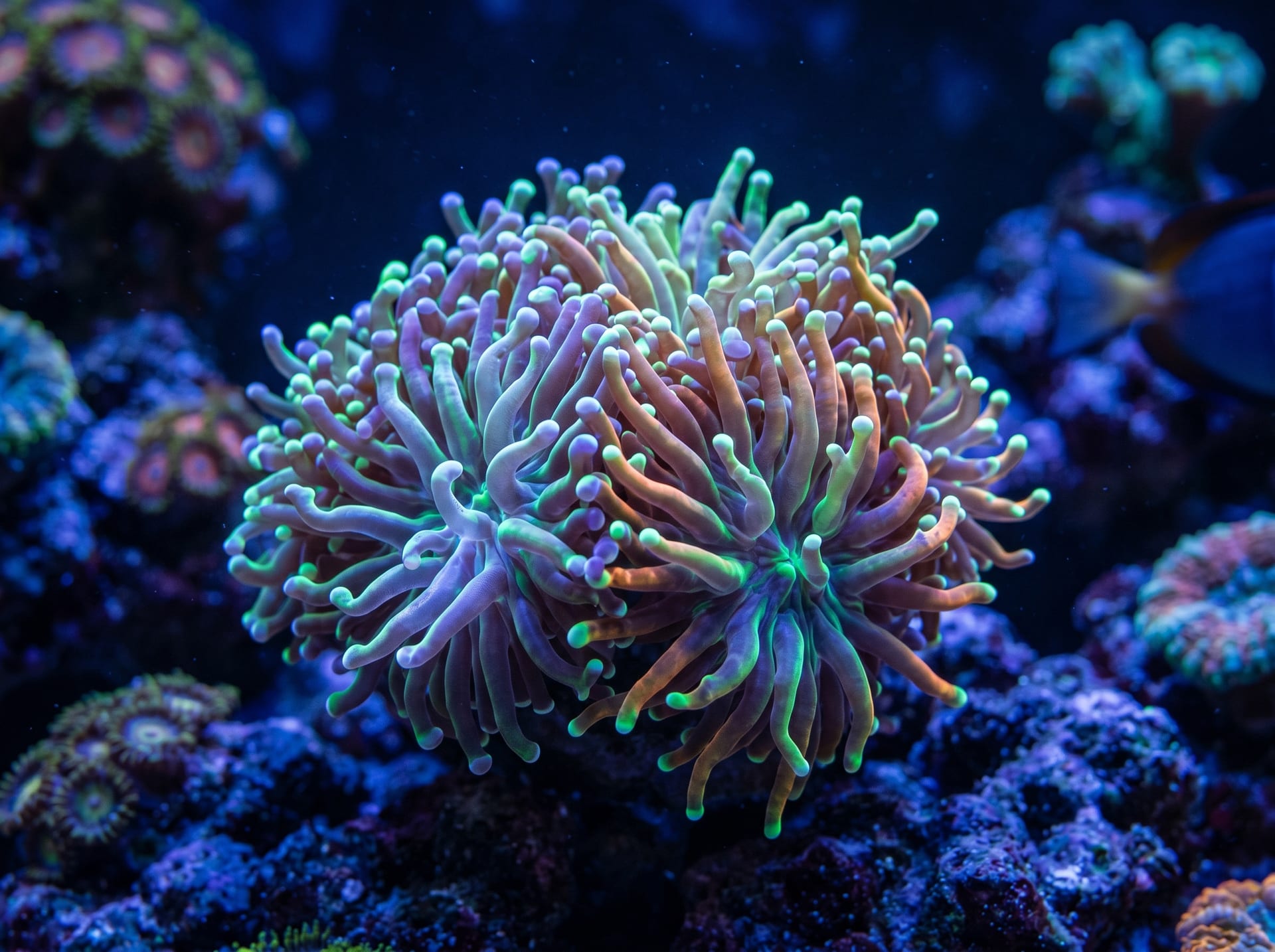
- Mid-water (moderate light, flow): LPS such as hammer corals and torch corals
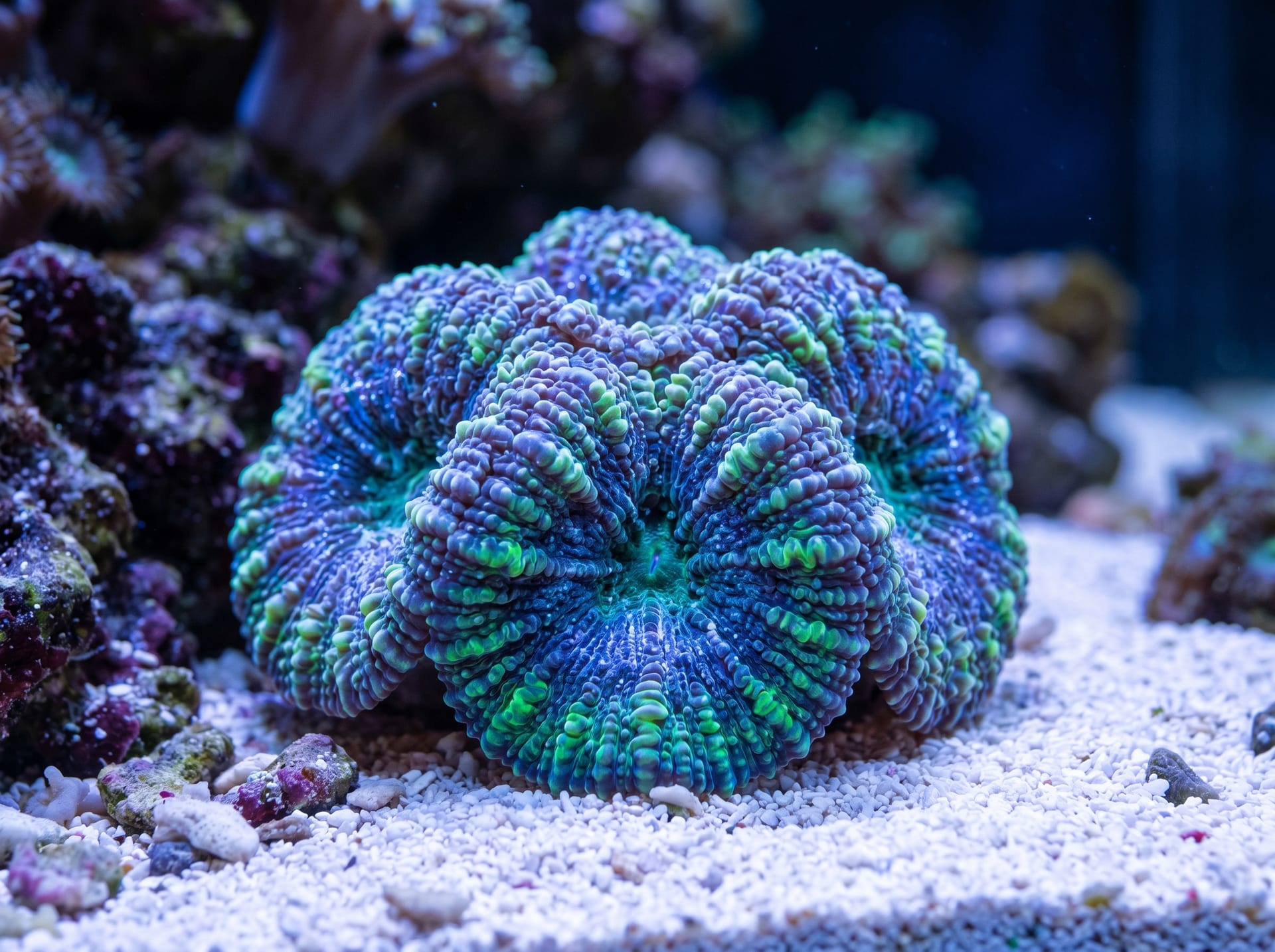
- Bottom and rock crevices (low light): Soft corals such as Ricordea and disc corals
- Maintain at least 5 cm spacing between corals.
Mistake 9. Overstocking Fish in Coral Tanks
What's the Mistake? Adding excessive numbers of fish to coral tanks as if they were freshwater aquariums.
Why Is It Dangerous? Fish waste is a major source of nitrate and phosphate. Corals prefer low-nutrient environments, so excessive fish cause nutrient overload, fading coral colors and promoting algae overgrowth.
Solutions
- Aim for half or fewer fish than you would in a freshwater tank.
- A 60 cm tank should have approximately 3-5 fish.
- Avoid fish species that harm corals (such as butterflyfish that eat corals).
- Feed sparingly and avoid uneaten food.
Mistake 10. Rushing Into Expensive Corals Without Experience
What's the Mistake? Buying high-difficulty, expensive corals like Acropora or premium LPS without sufficient experience.
Why Is It Dangerous? Placing difficult corals in unstable tanks without experience causes rapid mortality, resulting in significant financial and emotional loss.
Solutions
- Start with hardy soft corals (Ricordea, zoanthids, disc corals).
- After 6-12 months of stable care, try LPS (hammer corals and torch corals).
- Attempt SPS only after at least 1 year of experience.
- Tell BreederDirect breeders about your tank conditions, and they can recommend suitable species. You can browse abundant listings in the coral category.
Summary: 3 Principles for Successful Coral Keeping
- Don't Rush: "Slow and steady" is the key to success, from tank maturation to coral introduction.
- Test Regularly: Monitor specific gravity, temperature, KH, calcium, and nitrate.
- Start Simple: Advance from soft corals → LPS → SPS.
Frequently Asked Questions (FAQ)
Q. What's the initial cost for coral keeping? A. A small 30 cm soft coral setup costs approximately ¥50,000-100,000. A full 60 cm coral tank costs around ¥150,000-300,000.
Q. Do corals need to be fed? A. Corals obtain most nutrients through photosynthesis, but LPS benefit from feeding 1-2 times weekly (liquid food, frozen copepods, etc.). SPS generally don't require feeding.
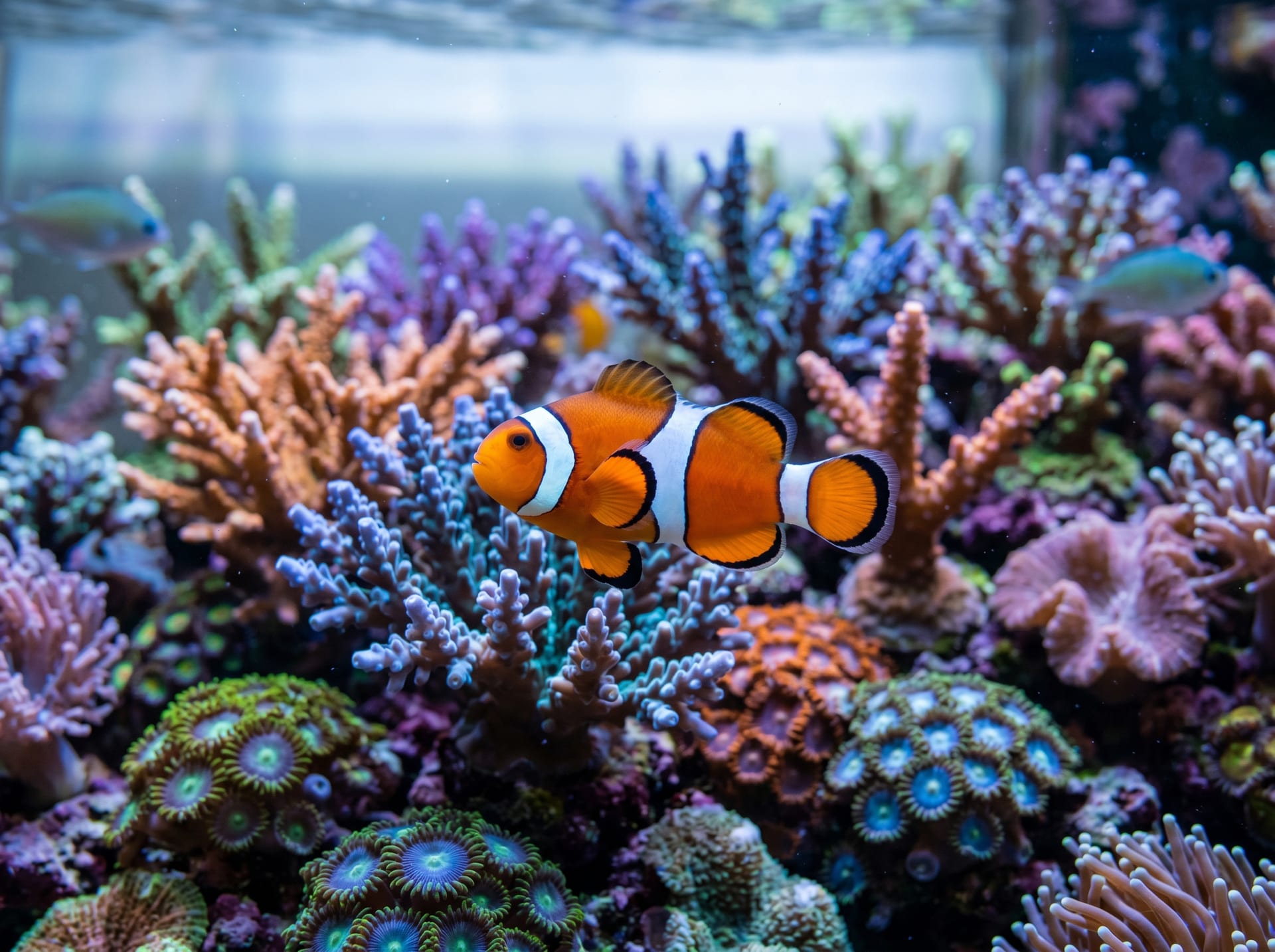
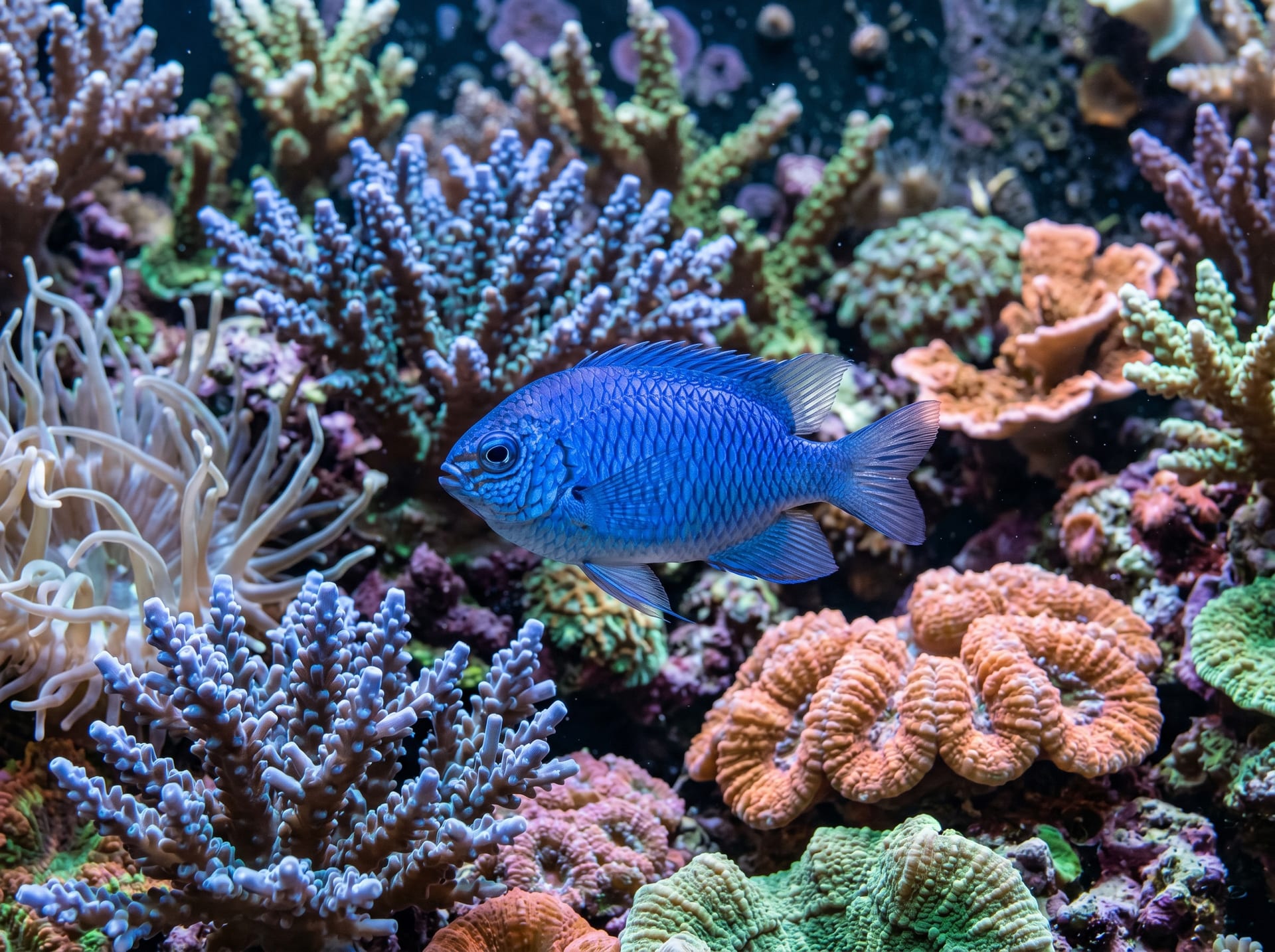
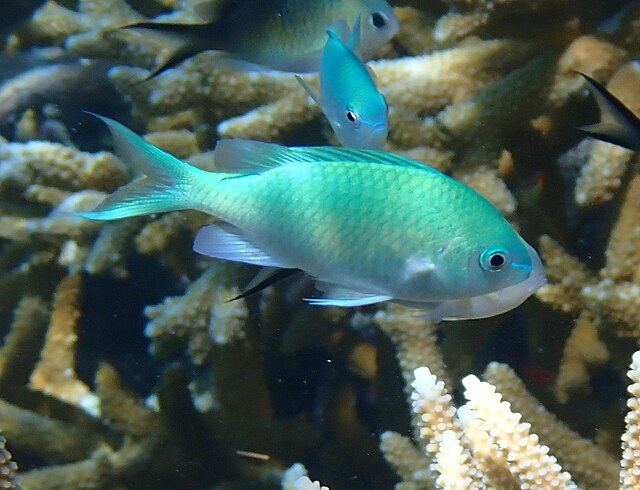
Q. Can saltwater fish and corals be kept together? A. Yes. Small, coral-safe fish such as clownfish, jawfish, and chromis can coexist. However, keep fish numbers modest.
Q. What if corals start bleaching? A. Early-stage bleaching can recover. Check light, flow, temperature, and nutrient levels to improve conditions. Avoid sudden changes and adjust gradually.
At BreederDirect, you can purchase coral frags and cultivated corals directly from specialized coral breeders. Tank environment consultation is available before purchase. Beginners should also check out Common Coral Care Mistakes Beginners Make.