LED Light Schedule Optimization Guide for Coral Tanks | Setting Light Intensity, Spectrum, and Nighttime Darkness
A comprehensive guide to setting LED light schedules for coral tanks. We cover everything from ramping up light intensity and maintaining peak illumination to the importance of nighttime darkness, plus specific methods to enhance coral color through spectrum adjustment.
Key Takeaways
A comprehensive guide to setting LED light schedules for coral tanks. We cover everything from ramping up light intensity and maintaining peak illumination to the importance of nighttime darkness, plus specific methods to enhance coral color through spectrum adjustment.
Why Light Schedules Are Critical for Coral Tanks
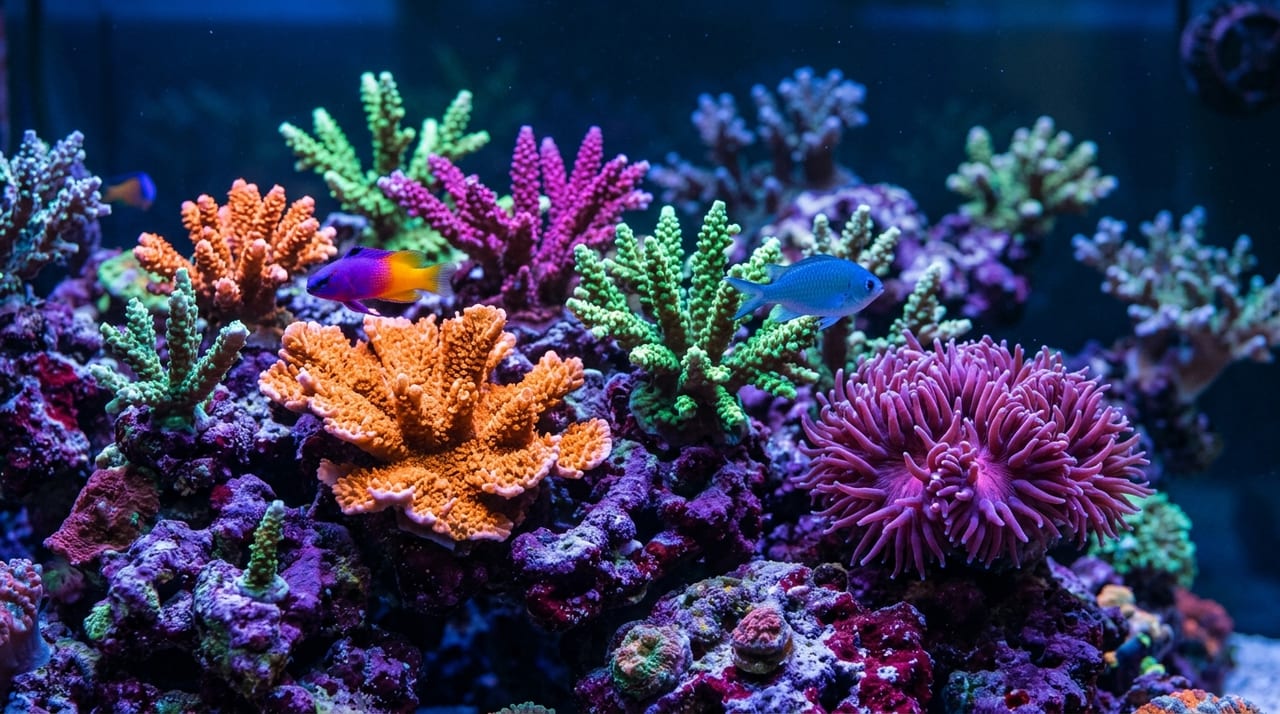
Corals derive most of their energy from photosynthesis by symbiotic zooxanthellae, and three elements—light intensity, spectrum, and photoperiod—determine their survival and coloration. In nature, sunlight rises gradually in the morning and falls in the evening, so home LED systems should replicate this rhythm to minimize stress and enhance coloration.
Two common mistakes cause particular problems: turning lights on suddenly at maximum intensity, and keeping weak light on 24 hours a day. The former causes photoinhibition in corals, causing polyps to close, while the latter disrupts circadian rhythms, leading to immune suppression and bleaching.
Proper schedule management is the most cost-effective improvement you can make without any equipment investment. Even without a dedicated LED controller, you can achieve basic replication by pairing an outlet timer with an LED that has ramping capability.
When establishing a new tank, pay special attention to the temptation to run lights at maximum intensity from the start. During the early stages of tank cycling, corals have not yet acclimated to light, and intense illumination can directly cause bleaching. The "slow-start protocol"—beginning at 30–50% of maximum intensity for the first 4–6 weeks and increasing by 10% weekly—significantly reduces bleaching risk.
Designing a Basic Schedule: Ramp-Up, Peak, and Ramp-Down
Design your LED light schedule in three major phases.
Ramp-Up (Dawn Phase): Start at 0% intensity around 6–8 AM and gradually increase to maximum over 2–3 hours. Most controller-compatible LEDs allow you to set hourly ramp rates; avoid steep increases that reach maximum in under an hour. A gentle ramp gives zooxanthellae time to acclimate to increasing light.
Peak Phase (Daytime): Maintain peak intensity for 8–10 hours for SPS corals (Acropora), or 5–7 hours for LPS and soft corals. Optimal PAR values depend on your LED's output: aim for 300–500 μmol/m²/s for SPS and 100–250 μmol/m²/s for LPS at water surface. If you lack a PAR meter, gradually approach optimal values by observing polyp extension and color changes.
Ramp-Down (Dusk Phase): After peak hours, gradually dim over 1.5–2.5 hours. Keeping blue (450 nm) and UV channels on longer than white during this phase accentuates coral fluorescent pigments and enhances visual appeal. This creates a natural dusk-like color transition and a gradual shutdown that mirrors nature.
Spectrum Settings and Color Enhancement
Each LED channel setting directly affects color intensity. Standard channel ratios for multi-channel LEDs are as follows.
Blue (420–460 nm) excites coral fluorescent proteins, bringing out pink, green, and yellow fluorescence. A 40–60% ratio is standard; to prioritize color enhancement, boost blue channels.
Violet/UV (380–420 nm) promotes skeletal growth and stimulates pigment production. Aim for 15–25%; many modern LEDs without dedicated UV now include a violet channel.
White (5000–6500K) provides base light output and natural viewing appeal. Standard range is 15–35%. Excess white can cause a browning "tanning" effect, so to emphasize color, increase blue and reduce white. However, too little white makes the tank look unnaturally blue to the human eye, so balance aesthetics with color goals.
Cyan/Green (480–520 nm) boosts zooxanthellae activity in LPS and should comprise 10–20%.
Color changes manifest over weeks. Making repeated changes immediately after adjustment causes stress; observe settings for at least 2–3 weeks before making further changes.
Nighttime Darkness and Moonlight Channel Usage
Ensure at least 8 hours of complete darkness after lights-off. Corals have circadian clocks; without darkness, reproduction and immune function suffer. Studies show that continuous 24-hour illumination increases bleaching risk.
Many premium LEDs include a "moonlight" mode that runs only blue-violet channels at ultra-low intensities (0.1–1%). This mimics natural moonlight color temperature, triggering reproductive behavior (synchronized spawning) and promoting nocturnal activity in amphipods and copepods. Use moonlight mode for 1–2 hours after full lights-out, not as a substitute for true darkness.
In a dark room after lights-out, you'll often observe nocturnal amphipods and shrimp actively moving across live rock. This "nightlife" of your tank is one of the great joys of coral keeping.
Seasonal Adjustment and Controller Tips
In the ocean, daylight hours vary between summer and winter. Advanced controllers (like Apex, GHL, or Kessil App) can auto-adjust by entering your latitude. For manual management, simply extend peak duration by 1 hour in summer (June–September) and shorten it by 1 hour in winter (December–February).
Adjust seasonally gradually over 1–2 weeks rather than making sudden changes. Abruptly cutting an hour in the transition from summer to winter can stress corals.
Without a controller, you can layer multiple smart plugs to stagger on/off times for different channels. While full ramping is difficult, a three-stage on/off schedule (dawn, noon, dusk) works well enough for soft corals and LPS.
Optimizing light schedules is ongoing; continually fine-tune by observing polyp extension, color, and growth—this is the path to mastery. Combine measurement, observation, and record-keeping to discover the optimal schedule for your specific tank.