Complete Guide to Phosphate Adsorbents in Coral Aquariums | Types, Usage Methods, Replacement Timing, and Precautions
Detailed explanation of how to select and use phosphate adsorbents for managing phosphate in coral aquariums. Comparison of GFO, alumina, and lanthanum-based adsorbent characteristics and how to determine replacement timing.
Key Takeaways
Detailed explanation of how to select and use phosphate adsorbents for managing phosphate in coral aquariums. Comparison of GFO, alumina, and lanthanum-based adsorbent characteristics and how to determine replacement timing.
To keep coral healthy during long-term cultivation, phosphate (PO₄) management is essential. Phosphate constantly arises from leftover food and fish waste. While small amounts are not a problem, excess phosphate prevents coral color enhancement and causes abnormal algae proliferation. This article provides detailed explanations of phosphate adsorbent types, proper usage methods, and replacement timing.
Impact of Phosphate on Coral Aquariums
In natural coral reefs, phosphate is maintained at extremely low concentrations (0.01 mg/L or below). In aquariums, it tends to accumulate easily. Once it exceeds 0.05–0.1 mg/L, the following problems begin to appear.
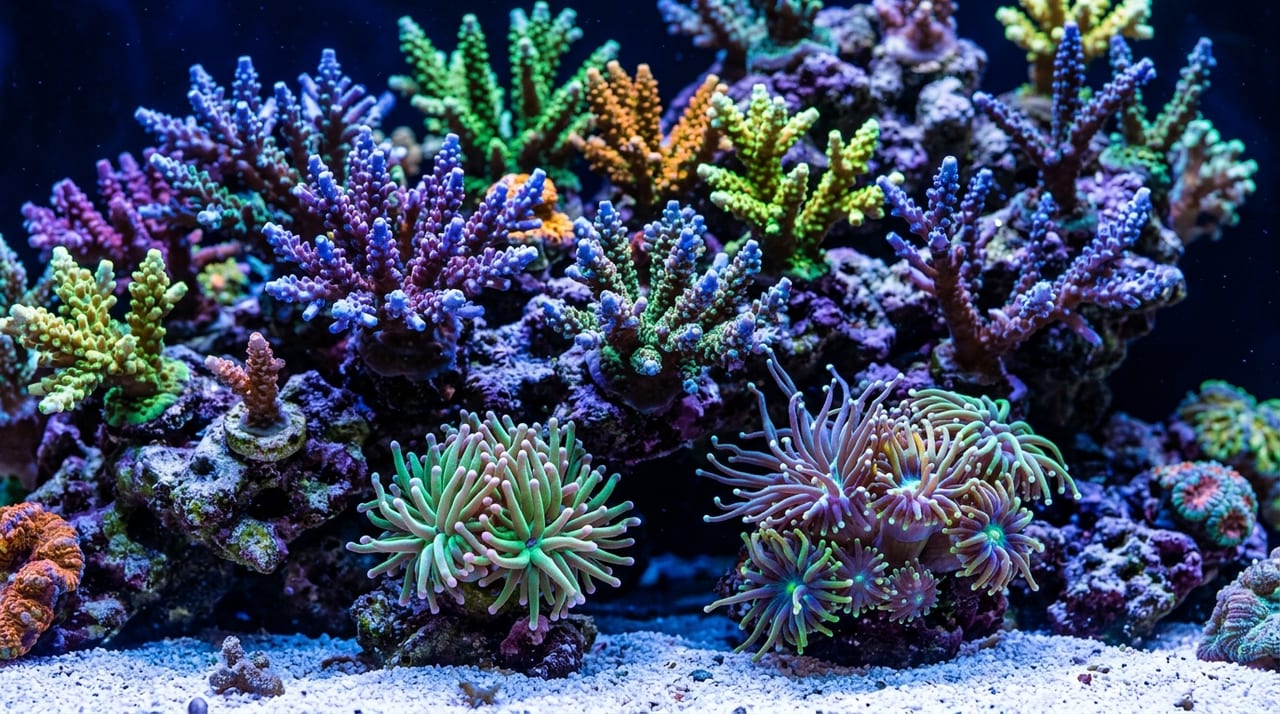
Color Fade High phosphate levels cause excessive growth of zooxanthellae (symbiotic algae) within coral, which masks the natural color pigments. This is one reason why vibrant greens and purples turn brown or grayish.
Slowed Growth SPS coral (such as Acropora) is particularly sensitive. When phosphate exceeds 0.08 mg/L, calcification rates decline significantly. Even with calcium reactor or dosing pump supplementation, if growth is not observed, phosphate management must be reviewed.
Algae and Cyanobacteria Explosions Algae use phosphate as a nutrient source. If you notice red-brown stains on substrate or rapid growth of green algae on live rock surfaces, it signals that phosphate has exceeded acceptable levels.
Main Adsorbent Types and Comparison
1. GFO (Granular Ferric Oxide)
The most popular adsorbent, with ferric oxide granules binding powerfully to phosphate.
- Adsorption capacity: High. Remains stable even at concentrations above 0.1 mg/L
- Usage method: Use in a fluidized reactor (rotating) or dedicated mesh sock (static)
- Replacement frequency: Generally every 4–8 weeks. Replace when color changes from tan to dark brown
- Precautions: If old GFO is left unused, it may re-release previously adsorbed phosphate (leakage). Over-rotating in a fluidized reactor causes pulverization, releasing iron into the tank and potentially damaging coral. Low-speed rotation is essential.
2. Alumina (Activated Alumina)
An aluminum-based adsorbent that works more slowly than GFO but lasts longer.
- Adsorption capacity: Moderate. Suited for maintaining low concentrations (0.05 mg/L or below)
- Usage method: Fluidized reactor or filter sock in sump
- Replacement frequency: Every 2–3 months. Color change serves as a guide
- Precautions: In high-pH reef aquariums (8.3 or higher), adsorption efficiency may decrease slightly
3. Lanthanum-based (Lanthanum Chloride and Lanthanum Additives)
A liquid-type phosphate removal agent. Lanthanum ions in the water immediately bind to phosphate and precipitate for removal.
- Adsorption capacity: Very fast and powerful
- Usage method: Add small amounts gradually to the protein skimmer neck or directly into the tank
- Replacement frequency: Regular small additions (daily to several times per week)
- Precautions: Overdosing causes rapid phosphate depletion, stressing coral. Never add large amounts at once. Always confirm tank size and current values before using small increments.
4. Charcoal + Phosphate Removal Hybrid Media
A combination of activated carbon and phosphate adsorbent in a single media. While offering both effects at once, adsorption capacity is lower than individual products. Best suited for small tanks (60 cm or smaller) where maintenance costs are a priority.
Correct Usage: Placement and Flow
Water flow is critical to maximizing adsorbent effectiveness.
Using a Fluidized Reactor Install it before the return line in the sump and adjust rotation speed to "media rolling slowly." Excessive rotation causes pulverization and clogging. For GFO, 30–60 rotations per minute per liter is a general target.
Passive (Static) Method Simply place media in a mesh sock or bag in an area of the sump with water flow. Effectiveness is lower than a fluidized reactor, but equipment costs are minimal. Suitable for small to medium tanks or when phosphate levels are not severely elevated.
Determining Replacement Timing
"I don't know when to replace it" is a common question. Use the following indicators in combination to decide.
- Test Kit or Meter Reading: Measure weekly using a color comparator (such as Hanna HI736) or test kit. If you maintain 0.02 mg/L or below, the adsorbent is functioning. When levels begin to rise, it's time to replace.
- Color Change: Replace GFO when it darkens. Alumina barely changes color, so record the start date when first using it.
- Usage Duration: Replace any product after 2–3 months of use. Continuing with old adsorbent increases leakage risk.
- Return of Algae: If algae that previously subsided begins growing again, the adsorbent's effectiveness is declining.
Common Mistakes When Using Adsorbents and Solutions
Rapid Phosphate Depletion is Dangerous Adding large amounts of adsorbent to a tank with long-term high phosphate can cause it to drop sharply over days. This risks zooxanthellae sudden die-off and rapid coral bleaching. Gradually lower to target levels over 2–3 weeks for safety.
Continued Use Without Measurement Without using test kits and relying only on vague feelings like "the color looks bad," adsorbent may be over-applied, leading to excessive removal. Always measure regularly while using.
Static Placement of GFO GFO tends to clump in passive setups, preventing uniform water flow and severely reducing efficiency. Combine it with a fluidized reactor whenever possible.
Summary: Make Phosphate Management a Habit
In coral aquarium water quality management, phosphate is one of the most important parameters alongside nitrate. Adsorbents are powerful tools, but they are not a "set it and forget it" solution—regular measurement and replacement are essential. Making weekly test checks and monthly adsorbent status reviews a habit allows you to enjoy vibrant coral aquariums for years. Start with GFO and choose products suited to your tank size and phosphate production level.