Collector's Coral Types and Value Guide | How to Identify Rare Corals and Tips for Purchasing
Explains representative types of expensive collector's corals (rare corals) and how their value is determined. Introduces points for distinguishing premium specimens of zoanthids, acropora, and mushroom corals.
Key Takeaways
Explains representative types of expensive collector's corals (rare corals) and how their value is determined. Introduces points for distinguishing premium specimens of zoanthids, acropora, and mushroom corals.
Related Species
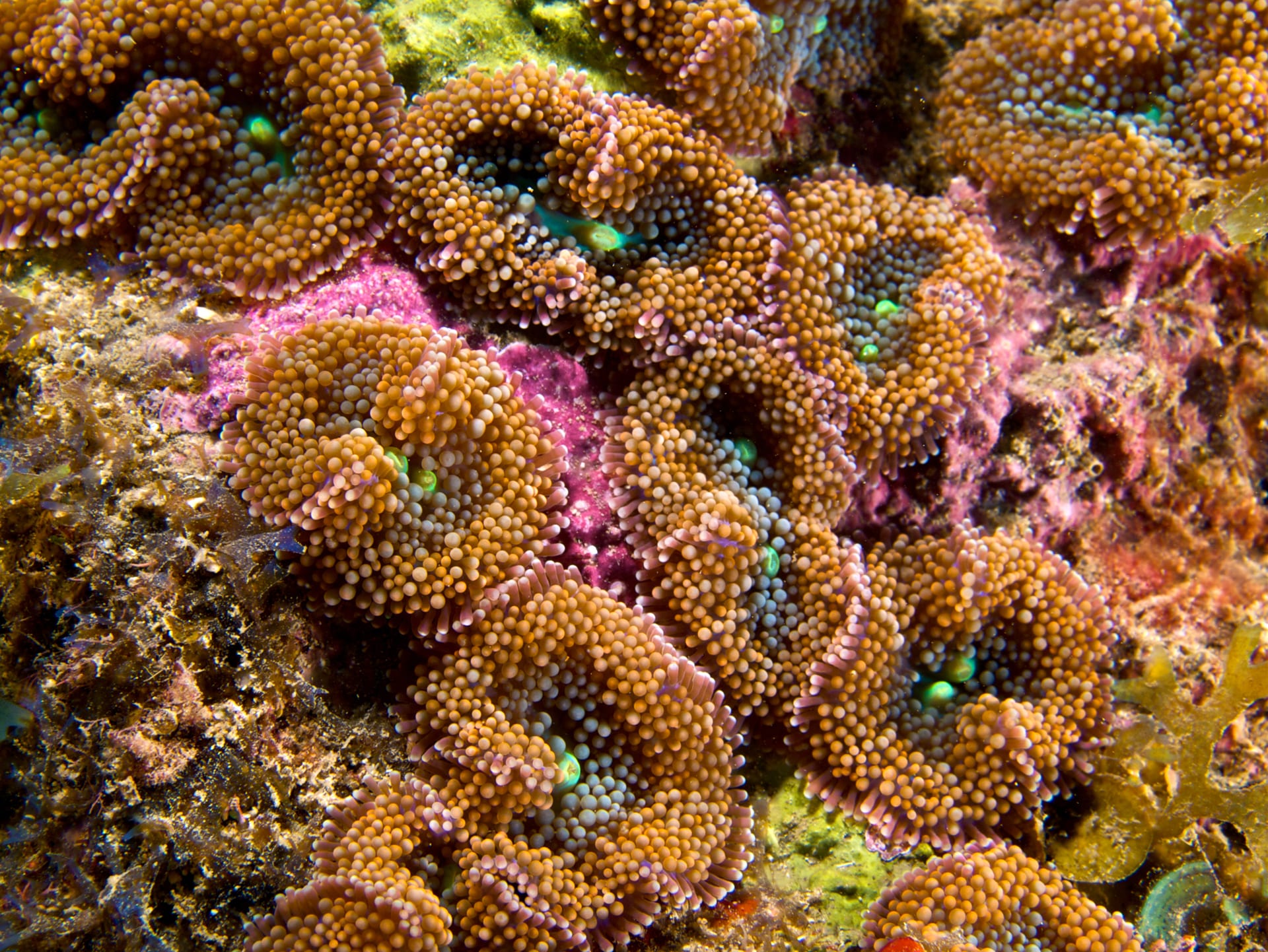
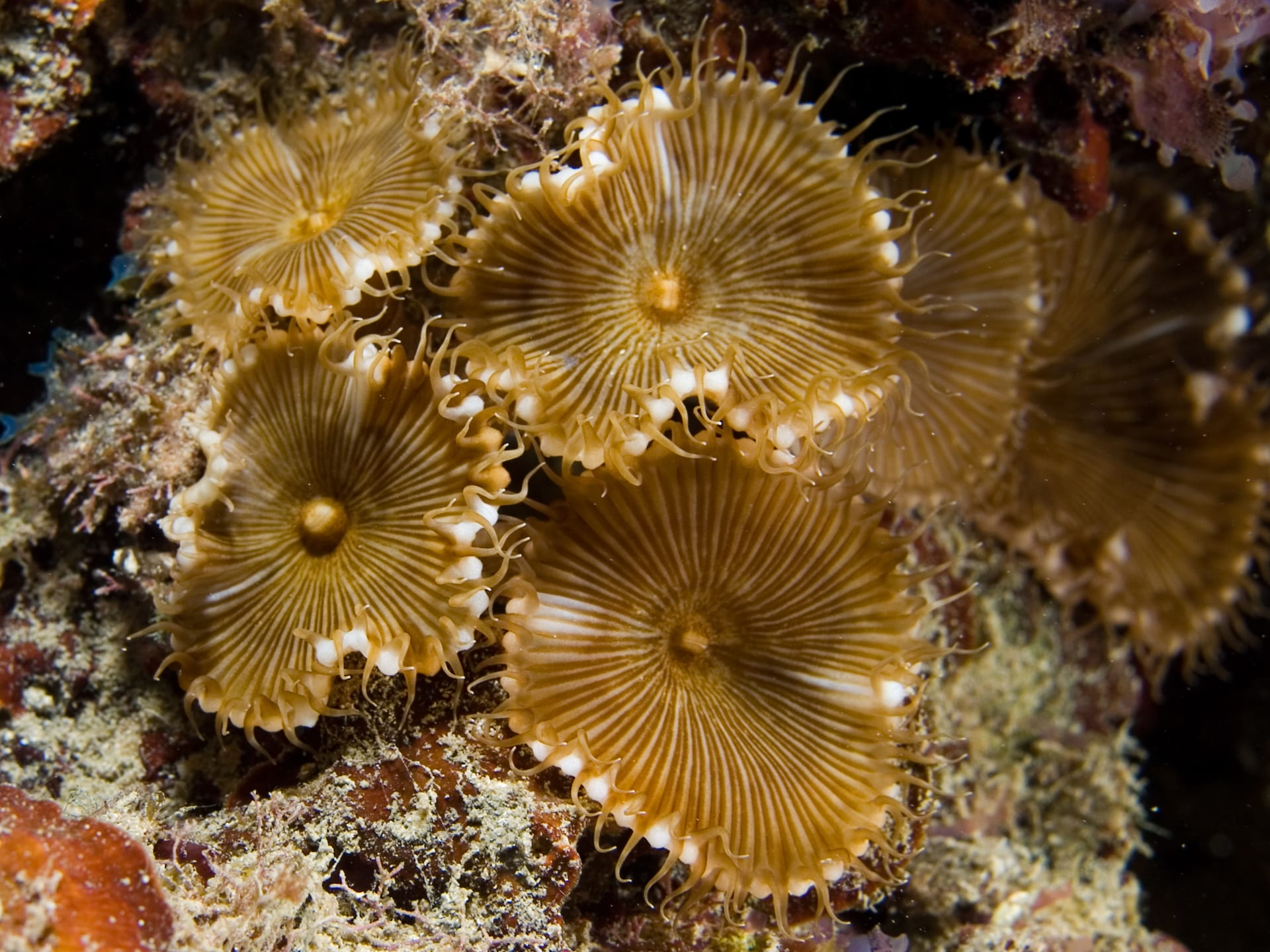
In the world of reef tank enthusiasts, there exist specimens that stand apart from ordinary corals, called "collector's corals" or "rare corals." These corals, which possess rare colors, patterns, and fluorescent coloration, are sometimes traded at prices ranging from thousands to tens of thousands of yen, and occasionally exceeding hundreds of thousands of yen. In this article, we explain the background behind how collector's corals come to exist, introduce representative types, and clearly explain how to discern their value.
Why Do "Collector's Corals" Come to Exist?
The main factors that determine coral value are the following four:
- Coloration
- Fluorescent coloration
- Growth form
- Availability
Even among the same species, specimens that glow in vivid green or red under UV lighting become significantly rarer compared to normal-colored individuals.
Since corals circulate while repeatedly propagating (fragging), the fewer the original specimens (mother colonies) initially, the more the frags retain their rarity value. Additionally, named "collector's clones" allow traceability of origin (native habitat, collector, colony ID), so reliability adds to the price.
Representative Collector's Corals
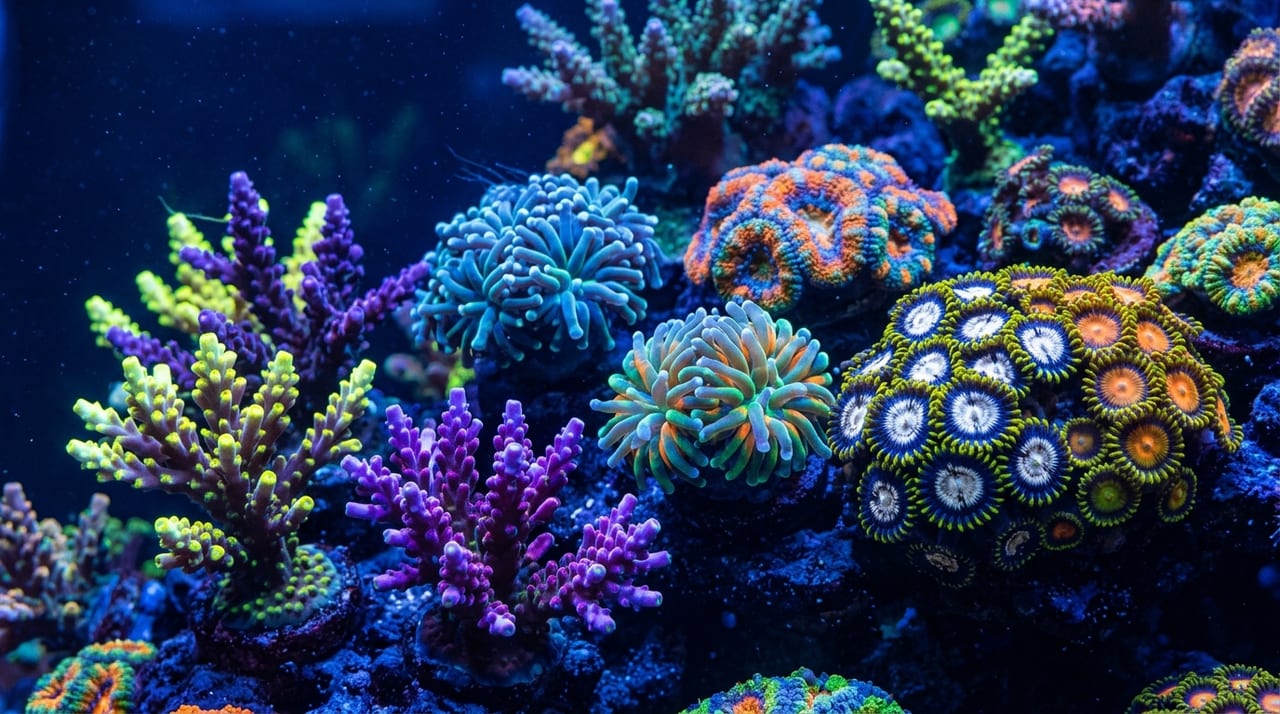
Zoanthids & Palythoa
Zoanthids are the group with the most developed collector's coral market. Representative collector's varieties include the following:
- Pink Diamond: Characterized by a vibrant pink skirt with a silver-white center. Fluoresces strongly under UV light.
- Armageddon: The combination of a reddish skirt and a bright yellow center is popular.
- Rainbow Infusion: A rare specimen with multiple color gradations in a single polyp; it commands a high price because coloration is not uniform even within the same colony.
Acropora
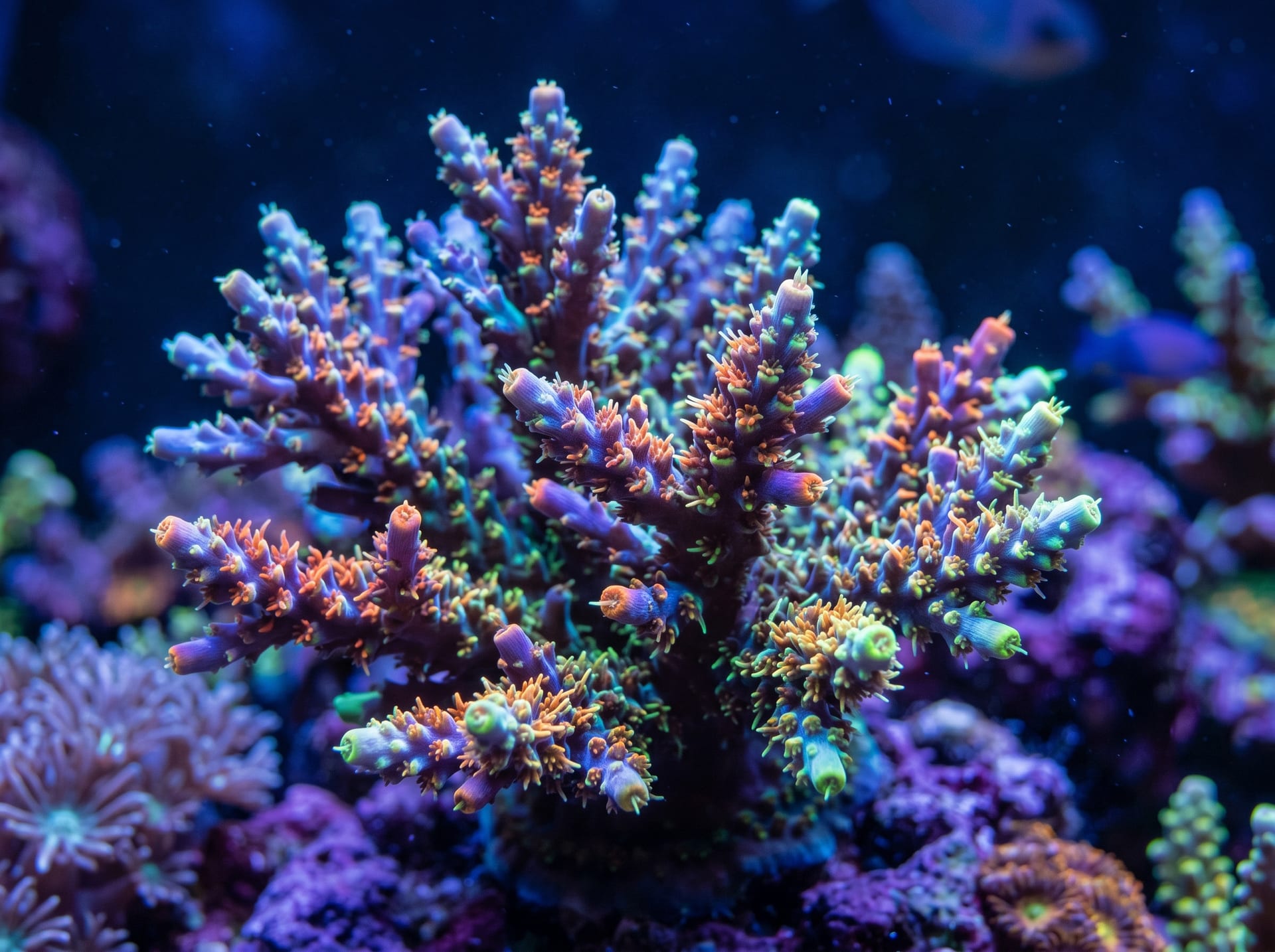
Even acropora, the standard-bearer of SPS, commands high prices for rare-colored specimens. Specimens named by renowned farms such as ORA (Oceans, Reefs & Aquariums) and WWC (World Wide Corals) can cost tens of thousands of yen or more even as frags. Specimens with chip colors (tip colors of branches) that are neon yellow, purple, or pink are especially popular, and the fact that coloration fades if stable water quality is not maintained is also a factor in their rarity.
Mushroom Corals
Ricordea florida and Ricordea yuma are popular even in normal varieties, but those considered collector's quality are specimens that display uniform blue, orange, or multi-color coloration throughout. Super Red and Orange Cream are particularly popular. Fancy specimens called False Parker, which show white shimmer visible on the polyp, also command high prices.
Goniopora
While ordinary Goniopora are considered difficult to keep, collector's colored Goniopora (red, bright pink, purple) are highly valued alongside specimens that can be kept stably. In recent years, captive-bred specimens have begun to circulate, and these are said to have better environmental adaptation than field-collected specimens.
Practical Points for Judging Value
- Confirm Fluorescence with UV/Blue Light: Most collector's corals possess fluorescent proteins, and their true color appears under UV lighting. Before purchasing, be sure to illuminate with specialized lighting (around 20000K, including UV) to confirm the coloration.
- Verify Origin and Naming: Collector's corals with source information such as "〇〇 farm-bred" or "frag of an original specimen collected in △△ year" have higher credibility. If there is only a name without substantiation, there is a possibility of overvaluation.
- Frag Size and Health: While some varieties command high prices even as "single polyp frags" rather than colony size, colonial species often increase in value with size. Before purchasing, check whether polyps are open and whether coloration is stable.
- Balance with Care Difficulty: The rarer the coral, the more stringent its demands tend to be on water quality parameters. Without stable Ca/KH/Mg management in your tank, coloration will deteriorate and value cannot be maintained. The most important thing is to prepare your tank environment before purchasing.
Precautions When Purchasing and Responsible Trading
Many collector's corals are subject to Washington Convention (CITES) Appendix II, and documents are required to import wild-collected specimens. While most collector's corals circulating domestically are captive-bred (tank-raised) frags, it is recommended to verify if the source is unclear.
When purchasing expensive corals, purchase from trusted shops and breeders, and verify traceability as needed. Purchasing expensive specimens without proper husbandry conditions in place is high-risk, and the sustainable way to enjoy the hobby is to first prove your tank's stability with normal species before attempting collector's corals.