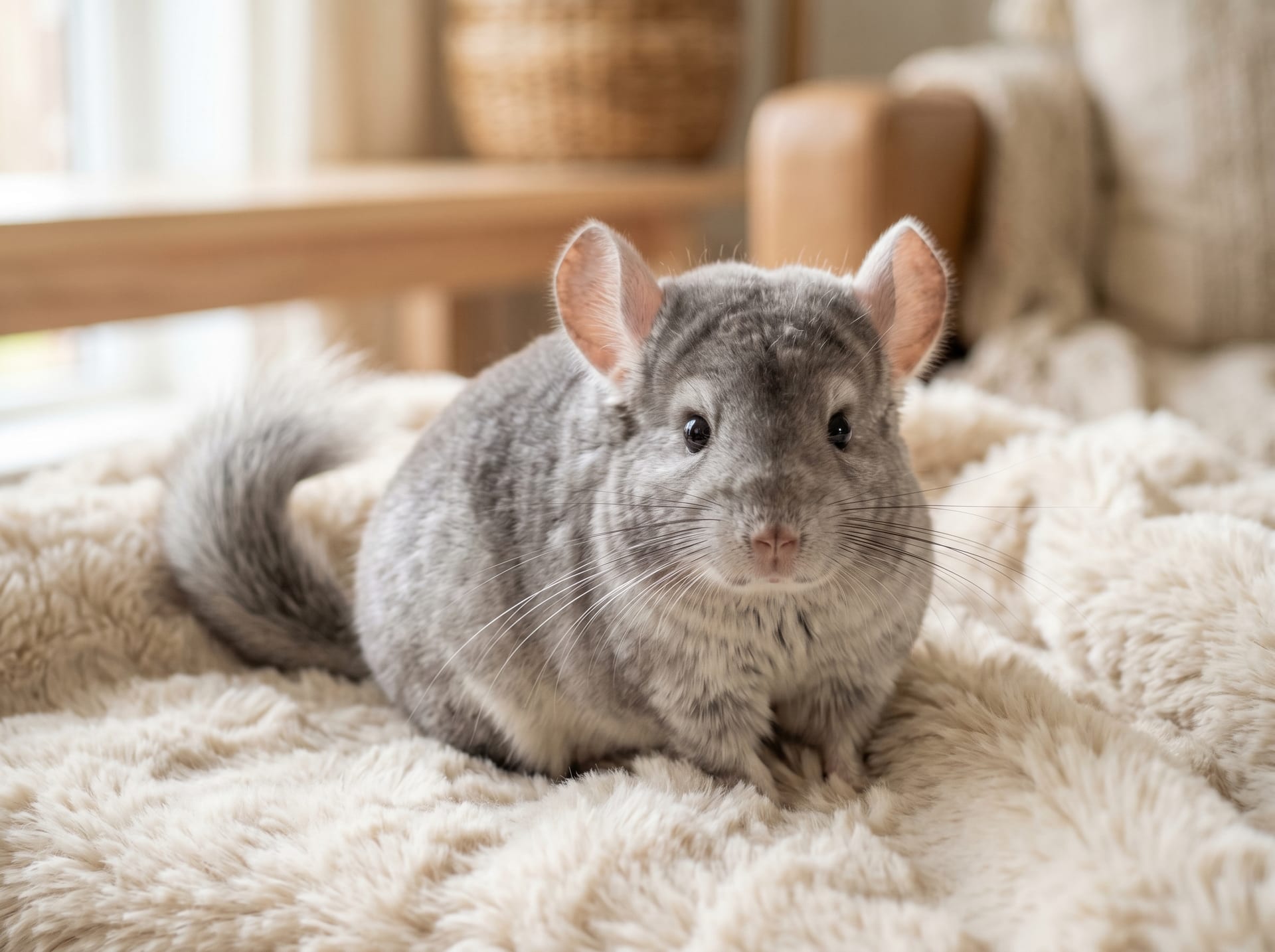
What Are Chinchillas? Basic Characteristics and Mindset for Raising Them
Chinchillas are rodents native to the Andes Mountains of South America, and are popular pets known for their extremely dense, beautiful fur and endearing mannerisms. They are nocturnal and become active from evening into the night. Their basic characteristics are as follows.
| Item | Details |
|---|
| Body Length | Approximately 25–35 cm |
| Body Weight | 400–800 g (females are slightly larger) |
| Lifespan | 10–20 years |
| Jumping Ability | High; can leap over 1 meter vertically |
In the wild, they inhabit cool and dry rocky areas at altitudes of 3,000 to 5,000 meters, so their extreme sensitivity to high temperatures and humidity is the most critical point in their care. Chinchilla fur grows over 60 hairs from a single hair follicle, and this high density makes thermoregulation difficult. For this reason, Japan's summers pose a life-threatening risk, making thorough temperature management essential.
Before starting to raise a chinchilla, please carefully confirm the following points.
- Can you maintain temperature control via air conditioning 24 hours a day, 365 days a year?
- Can you commit to long-term care for over 10 years?
- Can you tolerate nighttime activity noise?
The Importance of Temperature and Humidity Management
Temperature management is the most important aspect of chinchilla care. The target ranges are as follows.
| Item | Value |
|---|
| Ideal Temperature | 15–21°C |
| Upper Limit | 25°C |
| Danger Line | Risk of heat stroke increases sharply above 26°C |
| Ideal Humidity | 40–50% |
| Dangerous Humidity | Risk of skin disease and mold increases above 60% |
In summer, maintain room temperature at 20–23°C with air conditioning running 24 hours a day, and we strongly recommend preparing an uninterruptible power supply (UPS) or battery-powered fan as a backup against power outages. Never turn off the air conditioning at night or when going out. Install a temperature and humidity gauge inside the cage and make it a habit to check it daily.
In winter, care must be taken to prevent room temperature from dropping too low; however, since chinchillas are relatively tolerant of cold, approximately 15°C is sufficient. However, avoid sudden temperature changes, and if using heating equipment, position it so that warm air does not blow directly on the chinchilla.
Using a dehumidifier is effective for humidity management. Especially during the rainy season and typhoon season, humidity can exceed 70%, so consider using a dedicated dehumidifier in addition to your air conditioner's dehumidifying function.
Choosing and Positioning a Cage
Since chinchillas are highly active, they need as large a cage as possible. Because chinchillas prefer vertical movement, choose a cage with sufficient height. Cage size guidelines are as follows.
- Minimum Size: Width 60 cm × Depth 60 cm × Height 90 cm
- Ideal Size: Width 80 cm × Depth 60 cm × Height 120 cm or taller
Equip the cage with the following features.
- Levels: Install multiple levels with approximately 20–30 cm between steps.
- Wooden Steps: Recommended because chinchillas can chew and play on them, but they need regular replacement.
- Nest Box: Essential. Provide a dark, confined space where the chinchilla can rest securely.
The following are suitable for water bottles and food bowls.
- Water Bottle: Bottle type
- Food Bowl: Ceramic bowls with weight are suitable because they resist chewing and tipping over.
The toilet cannot be fixed in place, but since some individuals defecate in specific locations, try observing.
Choose a location without direct sunlight and away from direct air conditioner airflow. Avoid noisy places such as near TVs or speakers, and a quiet location where human activity patterns are visible is ideal. Placing a soundproof mat under the cage can reduce nighttime activity noise.
Use wood chips or paper chips for bedding and replace them completely about once a week. Since coniferous wood chips may have negative health effects due to their resin content, choose hardwood chips (such as aspen).
The Necessity and Method of Dust Baths
Dust bathing is essential for chinchillas to maintain coat cleanliness. Never use water for bathing; always use specialized dust bath sand. Chinchilla fur, with its high density, dries slowly when wet and can lead to skin disease or fungal infection.
Prepare the dust bath container and sand with the following considerations.
- Container: Diameter of 25 cm or more, depth of 15 cm or more
- Amount of Sand: Fill to a depth of approximately 3–5 cm
- Sand to Use: Commercial chinchilla dust bath sand (fine sand made from volcanic ash)
- Sand to Avoid: Do not use cat litter or river sand, as their coarse particles damage the fur.
Ideally, dust baths should be offered for about 10–20 minutes daily. If the dust bath is left in the cage at all times, some individuals may use it as a toilet, so it is recommended to place it 1–2 times per day at set times. When a chinchilla enters the dust bath container, you will see the adorable sight of it rolling on its back while covering itself in sand.
Remove fecal matter and dirt from the sand weekly using a sieve, and replace it completely about once a month. You can also heat-sterilize reused sand in a pan, but it is more reliable to replace it with fresh sand considering the effort involved.
On humid days, sand absorbs moisture, so store it in a sealed container and keep it in a dry place after use, outside the cage.
Proper Diet and Treat Feeding
Chinchillas are completely herbivorous, and their main diet is hay centered on timothy grass (a grass family forage). Hay is essential for preventing excessive tooth growth and maintaining digestive health. Pellets are important because they provide balanced nutrition, but overfeeding can cause obesity and loss of appetite for hay. Chinchillas are sensitive to sugar, and excessive intake can cause diabetes and obesity. Feeding guidelines are as follows.
| Type | Feeding Method |
|---|
| Timothy Hay | Provide first-cut hay (high in fiber) unlimited, and ensure fresh hay is always available |
| Pellets (Chinchilla Specific) | Give approximately 2–3% of body weight (about 8–12 g for a 400 g individual) once or twice daily in divided amounts |
| Treats | Limit dried fruits (apples, raisins, etc.) and seeds to 2–3 times per week, about the size of a pinky fingernail per serving |
| Water | Provide fresh tap water in a bottle at all times, and change it daily |
For store-bought chinchilla treats, check the ingredient label and avoid high-sugar options. Do not feed the following.
- Fresh Vegetables or Fruit: Generally do not feed as they contain too much water and can cause diarrhea.
- Almonds or Peanuts: Avoid as they are too high in fat.
- Mineral Water: Do not use as it poses a risk of stone formation.
Daily Care and Health Checks
Chinchillas are cautious animals, but with daily gradual interaction, they will become accustomed to you. Begin by offering treats from your hand without forcing physical contact, and build a relationship of trust. As they become comfortable, they may climb onto your hand or perch on your shoulder.
Daily observation is the basis for health checks. Confirm the following items.
- Appetite
- Droppings (healthy fecal pellets are oval-shaped, about the size of a grain of rice, and firm)
- Activity level
- Condition of the fur
If you notice any of the following abnormalities, take your chinchilla to a veterinarian immediately.
- Eye discharge
- Nasal discharge
- Sneezing
- Drooling
- Diarrhea
- Loss of appetite
Overgrown teeth are a life-threatening problem. Since incisors continuously grow, ensure your chinchilla eats plenty of hay and provide chew wood to allow natural wearing. Since molars are difficult to see, if you notice loss of appetite or drooling, malocclusion is possible, and veterinary treatment is necessary.
Since there are limited veterinary clinics that can examine chinchillas, we strongly recommend finding an exotic animal specialist nearby before starting care. Consider an annual health check-up as well.
Cage cleaning should consist of daily spot cleaning (removal of fecal matter and food scraps) and weekly full cleaning. When washing the cage, rinse detergent thoroughly and ensure it is completely dry before use.
Chinchillas are long-lived and affectionate companion animals. With proper environment and loving care, you can spend wonderful years together for over 10 years.
Sociability and Multi-Animal Housing
Chinchillas naturally live in groups, and housing two or more individuals is considered ideal compared to solitary housing. Individuals raised as same-sex pairs tend to maintain a more stable mental state.
However, placing multiple individuals in the same cage suddenly can cause intense fighting. A "gradual introduction" is necessary, observing them in separate cages for several weeks while slowly allowing contact.