Senior Cat Care Guide — Living Comfortably with an Aging Cat | ブリちょく
Cats| ✍️ BreederDirect Editorial
Senior Cat Care Guide — Living Comfortably with an Aging Cat
Comprehensive senior cat care: aging changes, environment adjustments, nutrition management, common conditions, and end-of-life support.
Key Takeaways
Comprehensive senior cat care: aging changes, environment adjustments, nutrition management, common conditions, and end-of-life support.
The lifespan of cats has extended significantly in recent years due to advances in veterinary medicine and the prevalence of indoor living, with cats living to 15-20 years or more becoming increasingly common. Generally, cats are classified as entering their senior phase around age 11, and their super-senior phase at age 15 and above. Senior cats require care different from their younger years, and by appropriately responding to age-related changes, you can help them spend their later years peacefully and comfortably.
✍️
BreederDirect Editorial
The BreederDirect editorial team specializes in care information for animals, covering veterinary care and breeding to deliver beginner-friendly guides.
Find Cats on BreederDirect
Buy directly from verified breeders
Browse Related Listings
Find Cats listings related to this article on BreederDirect. Buy directly from verified breeders.
Various changes appear in cats' bodies and behavior as they age.
Physical changes: These typically include decreased muscle mass (particularly around the hips and thighs), dull and dry coat, nails becoming thicker and more prone to curling, declining vision and hearing, restricted range of motion in joints, oral problems (tooth loss, gingivitis), and changes in body weight (obesity or weight loss).
Behavioral changes: These include no longer climbing to high places, reduced grooming frequency (especially the back and rear), increased toilet accidents, decreased activity level, vocalizing at night, appetite fluctuations, and changes in water consumption.
It's important not to dismiss these changes as "just age." They often overlap with early symptoms of diseases common in senior cats such as hyperthyroidism, chronic kidney disease, and diabetes. If you notice any changes, consult your veterinarian.
Environmental Adjustments
Review your home environment so your senior cat can live comfortably.
Litter box redesign: For senior cats whose joints have become stiff, switch to a litter box with a low entrance edge. Standard litter boxes have entrances 10cm or higher, but for senior cats, ones 5cm or lower are ideal. Increase the number of litter boxes and place them near areas where your cat frequently stays to shorten the distance to the toilet.
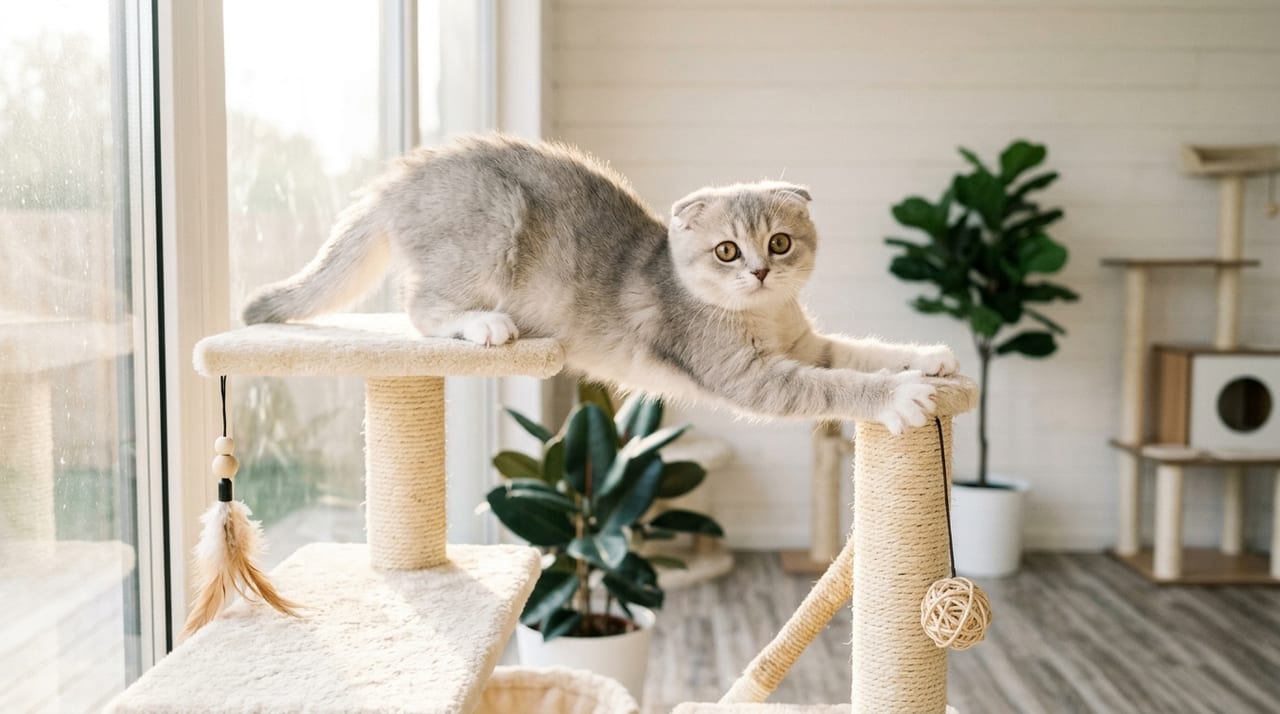
Step assistance: Install steps or ramps to assist access to high places like beds or sofas that cats prefer. Consider switching to a cat tree with smaller steps or replacing it with a lower tower.
Warm bedding: Senior cats become less capable of thermoregulation, so provide warm bedding during winter. A pet heating pad or hot water bottle (be careful of low-temperature burns) placed in the bed works well. Placing the bed in a sunny spot is also effective.
Non-slip flooring: If hardwood floors are slippery, lay carpets or rugs to stabilize the senior cat's footing.
Diet and Nutrition Management
The nutritional needs of senior cats differ from younger cats.
Switching to senior food: Consider switching to senior food around age 11. Senior food typically has lower calories and adjusted phosphorus and sodium levels to reduce kidney burden. High-quality protein is necessary for maintaining muscle mass, so there's no need to drastically restrict protein (unless your cat has been diagnosed with kidney disease).
Promoting water intake: Senior cats face increased dehydration risk. Increase water stations and find out which water delivery method your cat prefers. A pet water fountain (recirculating water dispenser) is effective for cats that prefer running water. Incorporating wet food (canned or pouched) into meals also increases water intake from food.
Tips when appetite declines: Warming food to body temperature makes the aroma more appealing and stimulates appetite. Changing food texture from dry to wet, or dividing portions into smaller, multiple feedings is also helpful. Using a food stand with adjustable height reduces the strain of lowering the neck.
Diseases Common in Senior Cats
Be aware of major diseases that senior cats are prone to developing.
Chronic Kidney Disease (CKD): This is the most common disease, affecting over 30% of cats aged 15 and older. Main symptoms include excessive drinking and urination, weight loss, decreased appetite, and vomiting. Regular blood tests and urinalysis are important for early detection, and SDMA testing can detect kidney abnormalities at an earlier stage than traditional BUN and creatinine tests.
Hyperthyroidism: This is an endocrine disease common in cats aged 10 and older. Characteristic symptoms include voracious appetite with weight loss, abnormally increased activity, excessive drinking and urination, vomiting, and diarrhea. Diagnosis is made by measuring thyroid hormone (T4) levels in blood tests, and treatment includes medication, dietary therapy, or surgery.
Diabetes: This disease is common in obese cats, with excessive drinking and urination and weight loss as main symptoms. Insulin injections and dietary management are the pillars of treatment.
Osteoarthritis: It is reported that approximately 90% of senior cats have some form of joint problems. Since cats hide pain, symptoms can be difficult to detect, but behavioral changes such as no longer climbing to high places, reduced grooming, or reluctance to step over the litter box rim can give clues.
Cognitive dysfunction: Cats can develop dementia, and it's reported that approximately half of cats aged 15 and older show some degree of cognitive decline. Symptoms include nighttime vocalizations, loss of directional sense, failure to recognize the owner, and litter box accidents.
Importance of Regular Health Checkups
Semi-annual health checkups are recommended for senior cats. The standard tests include blood tests (complete blood count, blood chemistry, thyroid hormone), urinalysis, and blood pressure measurement, with X-rays and ultrasound performed as needed. Early detection and early treatment significantly impact the quality of life (QOL) of senior cats.
Grooming Assistance
Senior cats have difficulty grooming their backs and rear areas due to joint stiffness. Regularly brushing your cat as the owner helps maintain coat cleanliness and promote circulation. Especially for long-haired cats, frequent brushing is necessary as matting becomes more likely.
Nail curling that causes claws to dig into the paw pads is also a common problem in senior cats. Check nails every 2-3 weeks and trim as needed. Senior cat nails become harder, so use sharp nail clippers and cut small amounts at a time.
Find Long-Lived Bloodline Cats at BR-CHOKU
Genetic factors play a role in a cat's healthy lifespan. At BR-CHOKU, you can directly welcome cats from breeders with healthy, long-lived family lines, and can also verify the health status of parent cats and results of past health checkups. Use BR-CHOKU to help you select a cat with senior years in mind and to build long-term relationships with breeders.