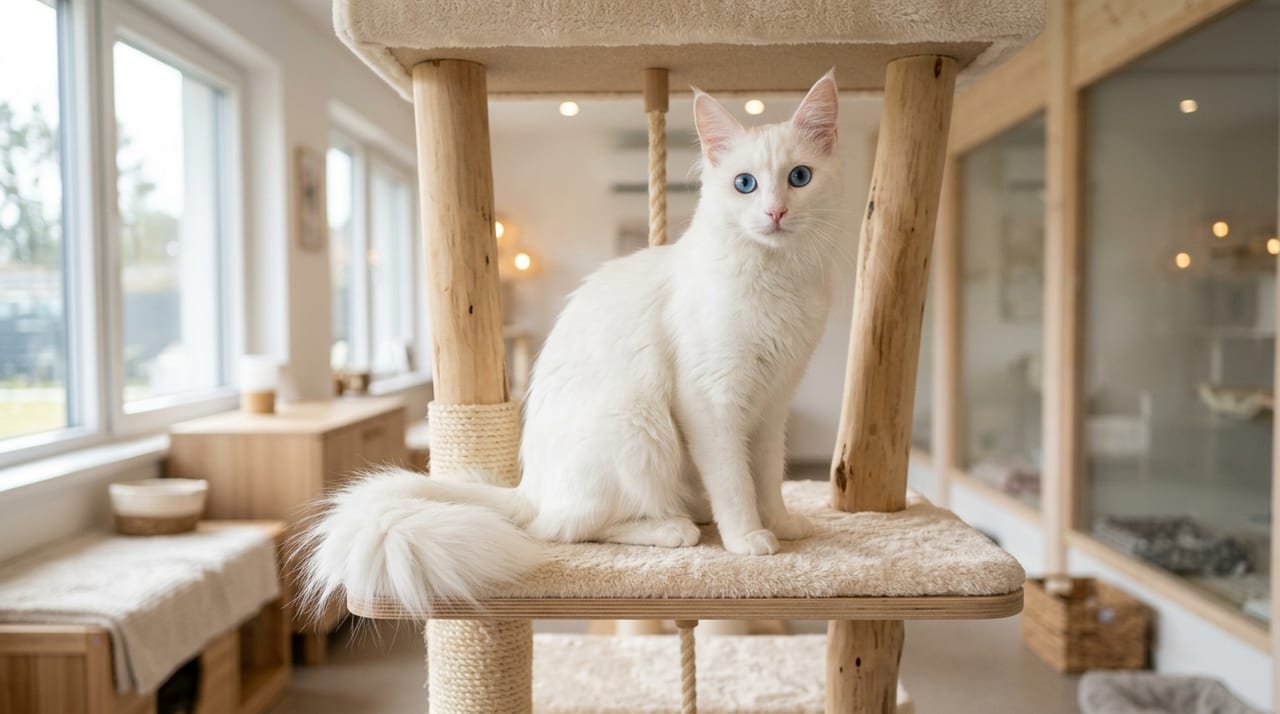
Complete guide to cat microchipping: mandatory law details, benefits for indoor cats, registration procedures, and lost cat prevention.
Key Takeaways
Complete guide to cat microchipping: mandatory law details, benefits for indoor cats, registration procedures, and lost cat prevention.
With the enforcement of the revised Animal Welfare and Management Act in June 2022, microchip implantation became mandatory for cats sold by breeders and pet shops. Some owners of indoor cats may think "this doesn't apply to me since my cat stays indoors," but microchips are especially important for indoor cats. This article provides a detailed explanation of microchips for cats.
How Microchips Work and the Implantation Process
✍️
BreederDirect Editorial
The BreederDirect editorial team specializes in care information for animals, covering veterinary care and breeding to deliver beginner-friendly guides.
Find Cats on BreederDirect
Buy directly from verified breeders
Browse Related Listings
Find Cats listings related to this article on BreederDirect. Buy directly from verified breeders.
A microchip is an ultra-small electronic identification device approximately 2 mm in diameter and 12 mm long, containing a unique 15-digit identification number. When a dedicated reader is brought near the implanted chip, the ID number is read via radio waves. No battery is required, and once implanted, it functions for the animal's entire lifetime.
Implantation is performed at a veterinary clinic. The most common method is injection under the skin at the back of the neck (dorsal cervical region) using a specialized syringe. The needle is slightly thicker than a standard vaccination needle, but most cats experience only momentary pain and show little reaction. The procedure itself takes just seconds and typically requires no anesthesia. Many owners combine it with spay/neuter surgery, in which case there is no pain concern since the cat is under anesthesia.
The risk of post-implantation migration within the body is extremely low, and the chip is coated with a highly biocompatible material that does not cause chemical reactions inside the body. Safety has been well established through decades of worldwide use. Temporary swelling at the implantation site occurs rarely but typically resolves naturally within a few days.
Costs vary by veterinary clinic, but implantation typically runs 3,000-5,000 yen, with online registration in the Ministry of the Environment database costing 300 yen (1,000 yen for postal registration). Some municipalities offer subsidy programs, so check the programs available in your area.
Why Indoor Cats Need Microchips
Thinking "my cat won't get lost because it's strictly indoors" is dangerous. In reality, escape incidents involving indoor cats are not uncommon. The most frequent cause of escape is slipping through the front door when it opens and closes. Cats can dart outside during package deliveries, when guests visit, or when taking out the trash.
Escape through windows and screen doors is also common. Screen doors can easily be torn or dislodged by cat claws, and a cat watching through a window may leap out the moment it is opened. Falls from balconies pose a similar risk.
Escape risk skyrockets during disasters. Past disasters have seen numerous cases of cats going missing when doors or windows open during earthquakes, or when carriers break during evacuation and cats escape. Collars can come off, but a microchip is inside the body and can reliably prove identity.
According to Ministry of the Environment data, the owner return rate for cats with microchips is significantly higher after being found. When an escaped cat is brought to a veterinary clinic, shelter, or public health center, the number is read with a scanner and the owner is contacted through the database.
Details of the Mandate and Owner Responsibilities
The mandate applies to Class 1 animal handling businesses that sell dogs and cats (breeders, pet shops, etc.). Dogs and cats sold after June 1, 2022 must have a microchip implanted before sale. This means that when purchasing a cat from a breeder, it will already have a microchip when handed over.
As the owner's obligation, you must file a change of ownership on the Ministry of the Environment's "Dog and Cat Microchip Information Registration" website within 30 days of purchase. This updates the registration from the breeder's information to the owner's. Failing to file this change means you cannot be reached if your cat goes missing.
Microchipping of cats already owned or adopted from rescue organizations is an "effort obligation" with no legal penalties. However, given the escape and disaster risks described above, implantation is strongly recommended. Rescue cats in particular may be prone to escaping due to past trauma, making microchipping even more important.
When changes occur in registered information -- moving, phone number changes, cat's death, or transfer of the cat -- promptly file updates. If contact information is outdated, a microchip serves no purpose even if implanted.
Combining Microchips with Other Lost-Cat Measures
Microchips provide reliable identification but lack GPS functionality and cannot track a cat's location in real time. They are only effective once a found cat is scanned with a reader. Therefore, do not rely solely on microchips -- use them in combination with other lost-cat measures.
Attaching an ID tag (with name and phone number) to a collar is the simplest and most immediately effective measure. Even a member of the public who finds the cat can make contact without a microchip reader. However, cat collars should have safety breakaway buckles (which release under sufficient force) to prevent snag accidents, so they may come off. Combining a collar tag with a microchip is ideal.
GPS tracking devices attached to collars are another option. They let you check real-time location via a smartphone app, enabling rapid searches when a cat escapes. However, verify that the device's weight will not burden the cat and that battery life is adequate.
Posting photos of your cat in each room and at the entrance is also useful for search efforts. Have photos ready for immediate use when distributing flyers in the neighborhood. Ideally, have both a full-body photo showing distinctive markings and a close-up of the face.
Frequently Asked Questions About Microchips
The concern that "the cat will be in constant pain after microchipping" is unfounded. Aside from the momentary pain at implantation, the cat is not aware of the chip's presence. While the chip's position may sometimes be felt during palpation, cats show no signs of discomfort, and it has absolutely no impact on daily life.
"Will it affect MRI or CT scans?" is another common question. Modern microchips are designed to resist magnetic interference, and their impact on MRI scans is minimal. However, since image noise may appear near the chip, inform the veterinarian about the microchip before any scan.
Regarding "Can the chip break or reach end of life?" -- microchips have no moving parts and no battery, making their structure simple enough to function virtually indefinitely. However, since extremely rare cases of chip read failure have been reported, it is reassuring to request a chip read confirmation during annual checkups.
On BriChoku, you can welcome a properly microchipped cat directly from a breeder. You will receive the "registration certificate" from the breeder at purchase, and they can assist with the ownership transfer procedure. Meeting a trustworthy breeder who complies with regulations is the first step toward worry-free cat ownership.